Construction Podcast Marketing: Strategy & Tactics (2026)

Construction podcast marketing is the practice of building and promoting a branded audio or video show that puts a contractor’s expertise in front of buyers, partners, and future hires. It works because decision makers in building and the trades now listen while they drive, plan, and manage jobs. Done well, a modest show turns quiet listening time into booked projects and referrals.
Why Contractors Trust Our Podcast Advice:
Our 28 specialists carry more than 190 combined years of marketing work across 14 industries. We’ve run over 180 campaigns, so we know which shows earn a builder real attention and which quietly fade.
Want Help Launching a Show?
Get in touch and we’ll fold a podcast into your integrated marketing program, not treat it as a side project. You keep running jobs while the show builds an audience.
What Is Construction Podcast Marketing?
Construction podcast marketing means using a regular show, in audio or video, to share job stories, industry takes, and practical advice that draws in clients, subcontractors, and future hires. It builds trust over time instead of chasing a single click.
The format fits the trade better than most owners expect. Crews already spend hours in trucks and on sites, so a show meets your audience where they already are.
A podcast rarely stands alone. It works best as one piece of a wider marketing strategy, feeding your blog, email, and social from a single recording.
Worth knowing: a podcast is a slow-burn channel, not a lead faucet. The early episodes mostly build familiarity, so the payoff usually shows up as warmer sales calls months before it ever shows up in raw download counts.
Why Does Podcasting Work So Well for Construction Brands?
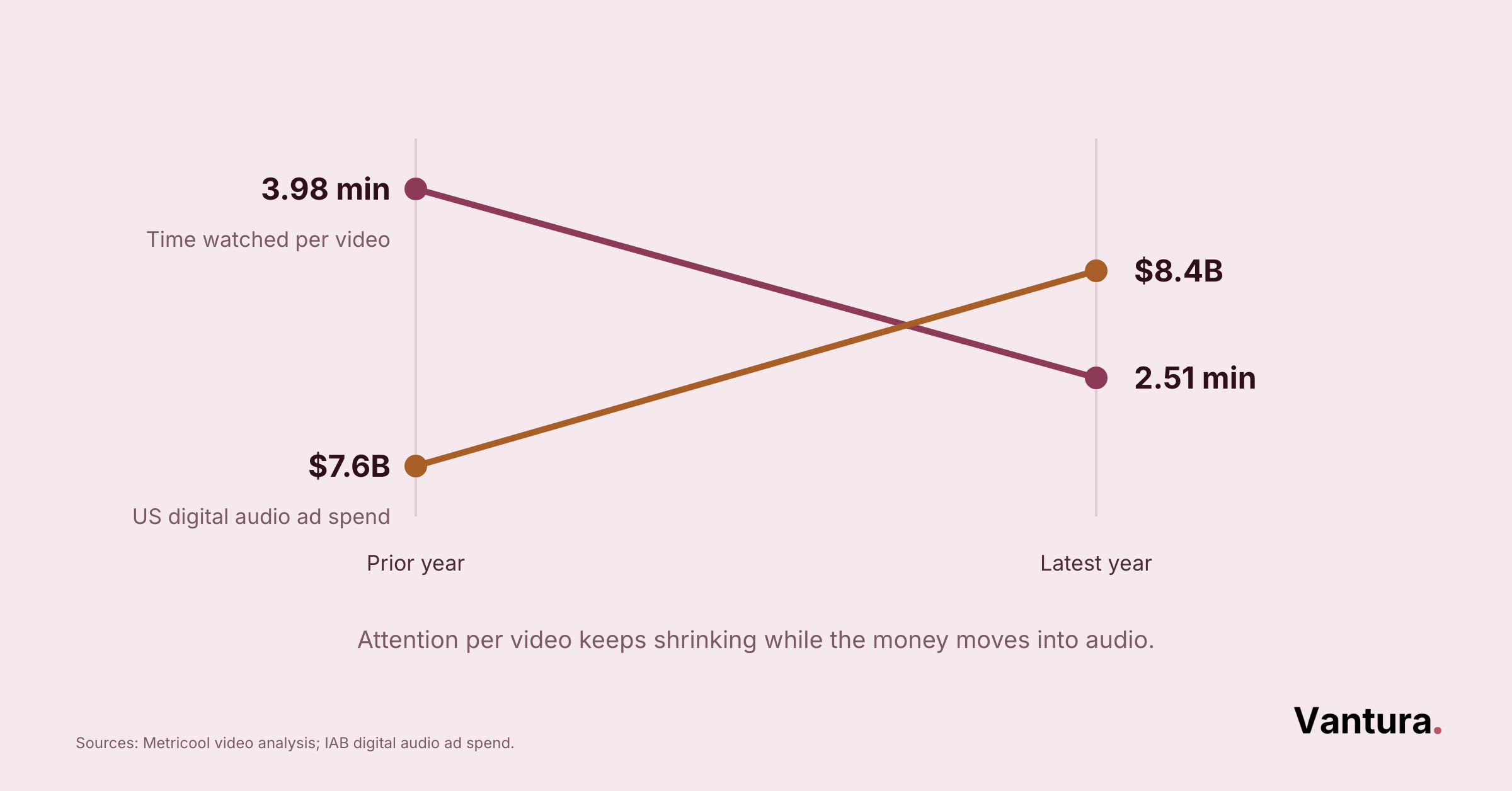
Podcasting works for construction brands because it turns dead driving and jobsite time into an audience, and because spoken expertise builds trust faster than text. Buyers hear how a contractor thinks long before they ever request a quote.
Listening habits have shifted hard toward audio. About 58 percent of Americans age twelve and older now listen to a podcast in a given month, an all time high, according to Edison Research.
A few reasons the format punches above its weight for builders:
- Longer episodes suit complex, high-trust buying decisions
- Regulars come back week after week, unlike a one-off ad
- One recording can feed a month of other content
It also reaches people other channels miss. A show aimed at general contractors and developers doubles as outreach to other construction businesses, the buyers who sign the biggest contracts.
How Do You Launch a Construction Marketing Podcast?
You launch a construction marketing podcast by picking a narrow audience, choosing a simple format, recording a short pilot, and publishing to the main directories before you spend on polish. Start small and let the show find its footing.
Most firms overthink the gear and underthink the listener. We usually push clients toward one clear audience, and for teams that want a second opinion, marketing consulting keeps that focus from drifting.
Here is the sequence we run with a firm starting from zero.
The launch sequence
- Pick one listener, like a commercial GC or a repeat remodel client
- Choose a format, whether a solo take, an interview, or a roundtable
- Buy a single decent mic and find a quiet corner
- Record a short pilot and a three-episode backlog
- Publish to the main directories, including Apple Podcasts and Spotify
- Review the first month, then adjust length and topics
Field note: the first ten episodes are practice, not performance. In our experience most firms only find their real voice and format around episode eight, so plan a backlog and don’t judge the show by week one.
How Do You Plan and Produce Each Episode?
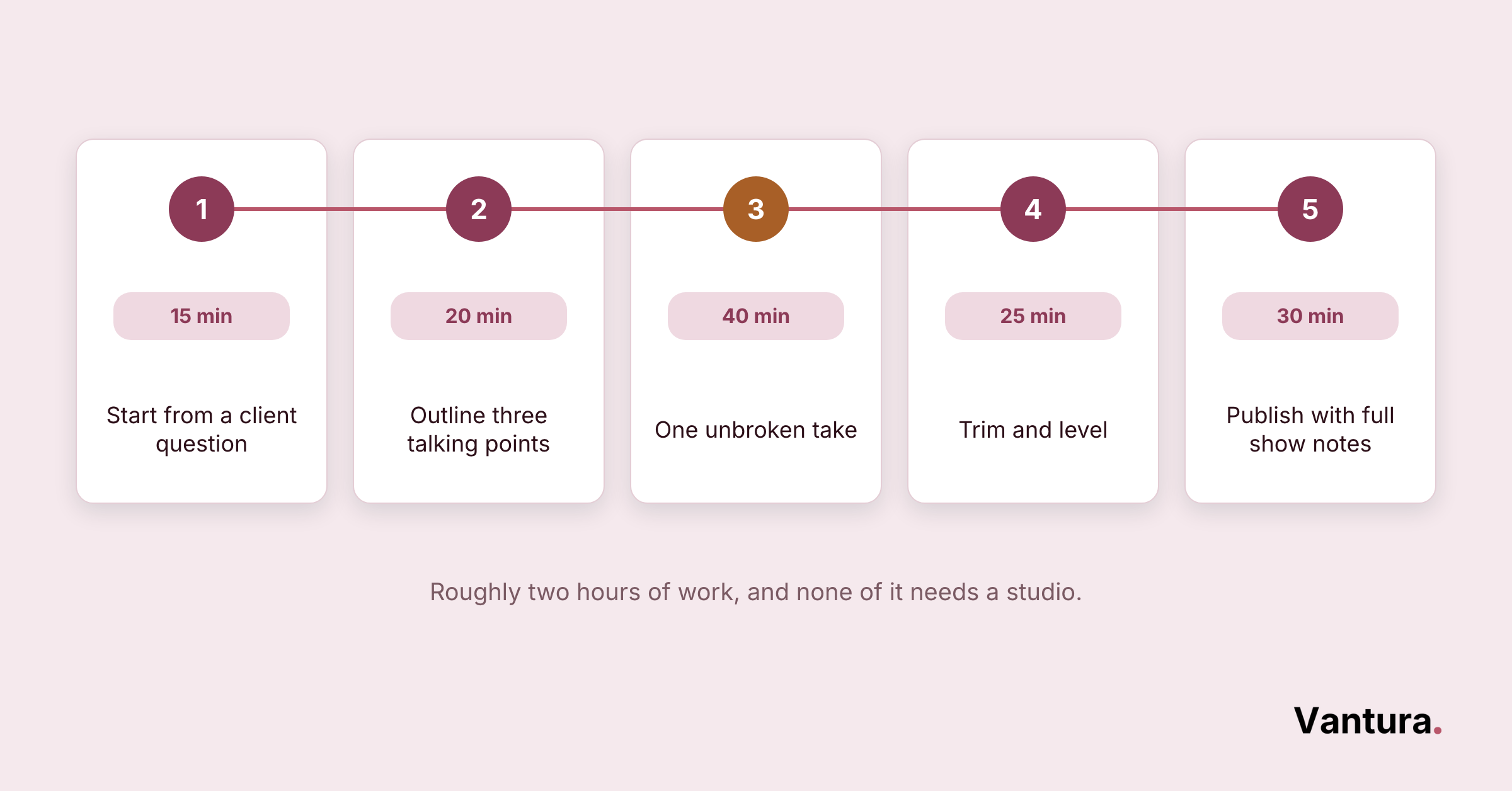
You plan a construction podcast by batching episode ideas around the questions clients keep asking, then producing on a repeatable setup so recording stays fast. A tight system beats studio quality for a busy crew.
Consistency is the whole game, and it is where most shows die. When recording starts eating owner evenings, some firms hand production to an outside team and just show up to talk.
Content Planning and Episode Ideas
The best episode ideas are already in your inbox. Every repeated client question, permit delay, or material debate is a ready topic.
- Walkthroughs of a tricky finished job
- Straight answers to common quote questions
- Interviews with a supplier or an inspector
- Seasonal prep for owners and other trades
We keep a running list in a phone note. Across our projects, the shows that never run dry are the ones that capture ideas on site, not in a planning meeting.
Recording and Production Basics
Good sound matters more than good video. Listeners forgive a plain background, but they drop a show that is hard to hear.
- One cardioid mic per speaker
- A soft, quiet room to kill echo
- A free editor to trim dead air
- A consistent intro and signoff
Keep the edit light. A quick trim and a level check are usually enough, and chasing a perfect edit is the fastest way to fall behind.
Which Podcast Hosting Platform Should You Use?
The right podcast host is the one that publishes to every major directory, reports honest download numbers, and fits your budget. For most construction firms a mid-tier plan covers everything they need for years.
Hosting is where your audio lives and where your feed gets generated. Pick one that distributes widely, and you rarely need to switch.
| Host option | Best for | Rough monthly cost |
|---|---|---|
| Free directory tools | Starting out with no budget | Around zero |
| Buzzsprout | Simple setup and clear stats | About 12 to 25 dollars |
| Podbean | Unlimited episodes on a budget | About 10 to 40 dollars |
| Transistor | Running several shows at once | About 19 to 50 dollars |
| Captivate | Growth tools and sponsor features | About 19 to 50 dollars |
How Do People Find Your Construction Podcast?
People find a construction podcast through directory search, smart titles, cross-posting to social, and steady promotion, not luck. Discovery is a job you work at every week, the same way you would chase referrals.
Most shows are not bad, they are just invisible. The same habits that lift a website in search help here, so it pays to audit your search visibility before blaming the content.
Podcast SEO and Discoverability
Podcast SEO starts with the words people search for. Put the real topic in the episode title, and write show notes that read like a short blog post.
- Use plain, searchable episode titles
- Write show notes that answer the key questions
- Add a full transcript to each episode page
- Keep the show name clear about what you do
Distribution Across Platforms
Publish once, appear everywhere. A good host pushes your feed to the major listening apps automatically, so you spend your time on promotion, not uploads.
Video changes the math. Posting the same episode to YouTube and short clips to social often out-reaches the audio apps for a local trade brand.
Promoting Each Episode
Promotion is where most shows quit too early. One post at launch is not a plan, so treat every episode like a small campaign.
- Share a thirty-second clip on social
- Email the episode to past clients
- Tag any guest so they reshare it
- Pin the newest episode on your profiles
Booking Guests That Grow the Show
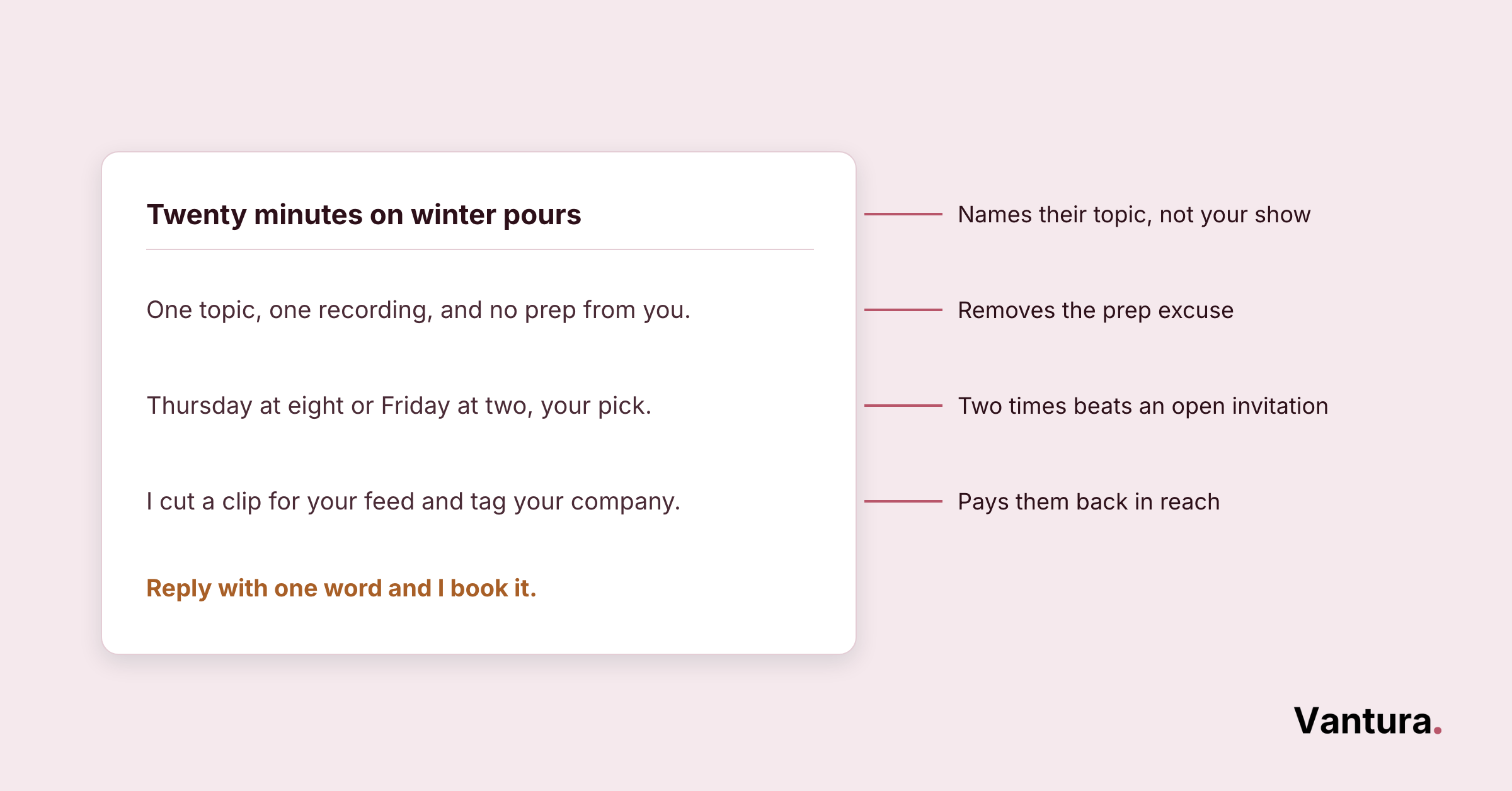
Guests are the fastest way to grow a small show. A supplier, an inspector, or a repeat client brings their own audience and a fresh voice your regulars have not heard.
Start local and specific. A show that features smaller contractors just getting online builds goodwill and a referral network at the same time.
Keep the ask simple. We have watched booked guests fall through over a five-page brief, so a short email and a clear date close far more of them.
- Suppliers and manufacturer reps
- Inspectors and local officials
- Repeat clients with a good story
- Peers in a trade you do not compete with
Turning a Construction Podcast Into Pipeline
[place image for S4 here, showing trading shoutouts with a non-competing trade show versus buying a national ad placement, reach compared]
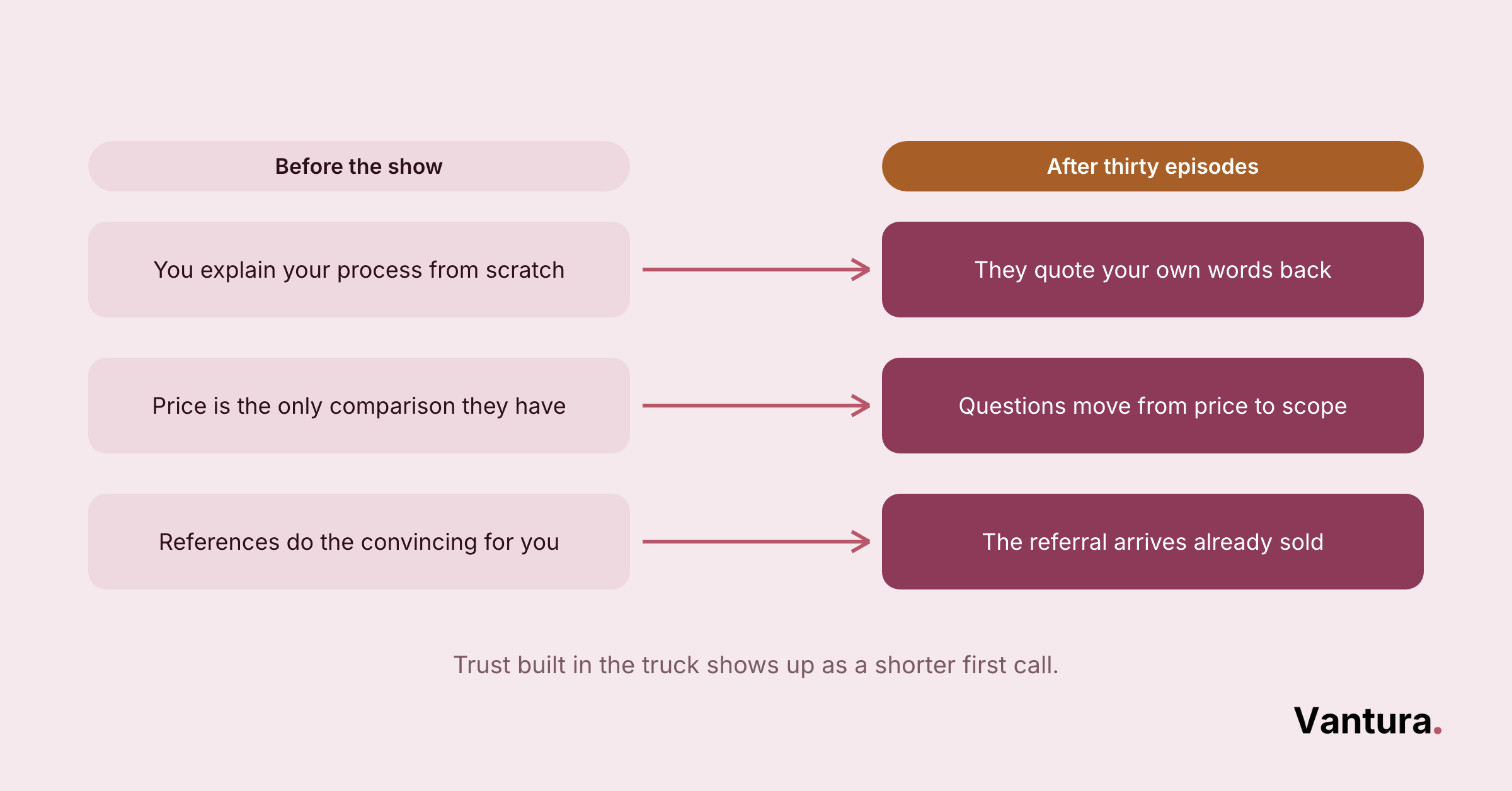
A podcast pays off when it feeds real pipeline, not just downloads. The show builds trust, and that trust is what shortens a sales conversation later.
Advertising and Sponsorships
Sponsorship works in two directions. You can host ads from suppliers you already trust, or buy spots on shows your buyers already follow.
For a local firm, a swap beats a big spend. Trading shoutouts with a non-competing trade show usually reaches more of the right people than a paid national placement.
The money behind podcast ads keeps climbing. Spending recently rose about 17.6 percent year over year to 2.9 billion dollars, according to the IAB.
The Podcast as a Lead Channel
Every episode should point somewhere. A clear next step, like a quote form or a free guide, turns a listener into a contact.
The handoff is where shows leak. Across our projects, adding a single spoken line to reach out at the end of each episode lifts replies more than any topic change.
Building Thought Leadership
Thought leadership sounds grand, but on a podcast it just means saying what you really think. A clear take on why a method fails marks you as the expert faster than any credential.
Bigger operators formalize this. Larger construction firms often run a show so every branch repeats the same point of view, which is how a company becomes a name people cite.
How Do You Measure a Construction Podcast?
You measure a construction podcast by tracking downloads, listener retention, and the leads it sends, not vanity numbers alone. Consistency and completion rate tell you more than a single big-download episode.
Watch the trend, not one spike. A show that holds listeners to the end is worth more than one with a viral moment and no follow-through.
Keep in mind: download counts flatter you and completion rate humbles you. A smaller audience that finishes every episode is a stronger sales asset than a big one that taps out after two minutes.
| Metric | What it tells you | How often to check |
|---|---|---|
| Downloads per episode | Whether reach is growing | Monthly |
| Completion rate | If the content holds attention | Monthly |
| Follower growth | How well promotion works | Monthly |
| Leads mentioning the show | Real pipeline impact | Quarterly |
| Guest reshares | How far each episode travels | Per episode |
Getting More Mileage From Every Episode
One recording should never do just one job. A single episode can become a blog post, a week of social clips, and an email, which is the only way a busy firm keeps the effort worth it.
The same clip can travel across audiences too. A segment on material sourcing speaks to homeowners and to the manufacturers and suppliers you work with without a re-record.
Repurposing Into Other Formats
Repurposing is where the hours pay back. Pull quotes for social, a transcript for the blog, and audiograms for feeds that favor video.
- A blog post from the transcript
- Short vertical clips for social
- An audiogram with captions
- A quote graphic for the newsletter
One choice shapes all of this, whether you record video or stay audio only.
Video adds reach on YouTube and social, and it shows the jobsite. It costs more time to shoot, light, and edit, so it suits firms with a bit more capacity.
Audio is faster, cheaper, and easier to keep up weekly. You lose the visual proof, but you gain the consistency that grows a show.
Most construction firms we work with start audio only, then add video once the habit sticks. That order keeps the show alive long enough to matter.
How Do You Connect the Podcast to Email?
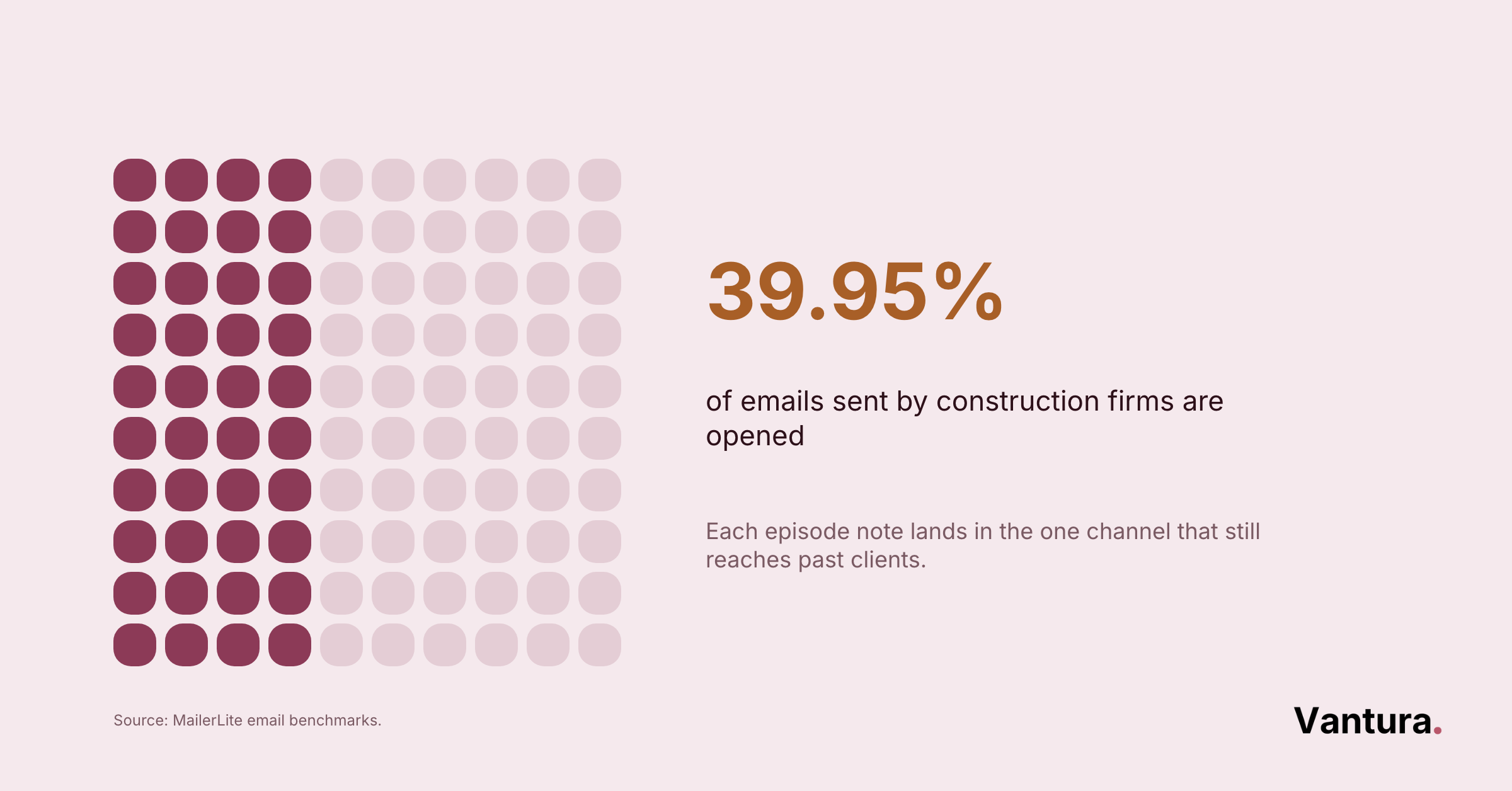
You connect a podcast to email by turning listeners into subscribers and emailing each new episode to your existing list. Email is what keeps a casual listener close enough to hire you.
Your past-client list is the warmest audience the show has. Folding episodes into a broader industrial marketing mix means one recording powers the newsletter too.
Keep the email simple. A short note with the episode link and one line on why it is worth a listen beats a heavy template for most trades.
What Does a Construction Podcast Cost?
A construction podcast costs very little to start, often under a few hundred dollars for a mic and hosting, and scales up only if you add video, editing, or ads. Time is the real budget line, not gear.
The math favors patience. For early-stage construction startups, a show is one of the cheaper trust builders available, as long as someone can commit the hours.
Costs and Budgeting
Costs fall into a few clear tiers. You can run a solid show on almost nothing, or invest for faster growth.
| Setup | What it includes | Rough monthly cost |
|---|---|---|
| Starter | Phone or one mic, free editor, basic host | Under 30 dollars |
| Standard | Better mic, paid host, light editing help | About 50 to 150 dollars |
| Growth | Video, an editor, and paid promotion | A few hundred dollars and up |
Examples That Drove Growth
The shows that grow share a pattern, not a budget. In our work the winners pick one narrow audience and stay ruthlessly consistent.
One remodeler we advised built a monthly show answering a single homeowner question per episode. Within a couple of seasons it was their top source of pre-qualified quote requests, ahead of paid ads.
Bottom line: a construction podcast rewards the firm that keeps showing up. Pick one audience, publish on a schedule you can hold through the busy season, and let each episode feed the rest of your marketing.
Disclaimer: This guide is shared for general informational purposes only and is not a substitute for tailored marketing, legal, or financial advice. Results depend on your firm’s own market, resources, and follow-through, so no specific outcome is guaranteed. Vantura Marketing holds no ownership stake or vendor tie to any platform or brand named above, and each remains the property of its own owner.