Construction Traditional vs Digital Marketing Compared

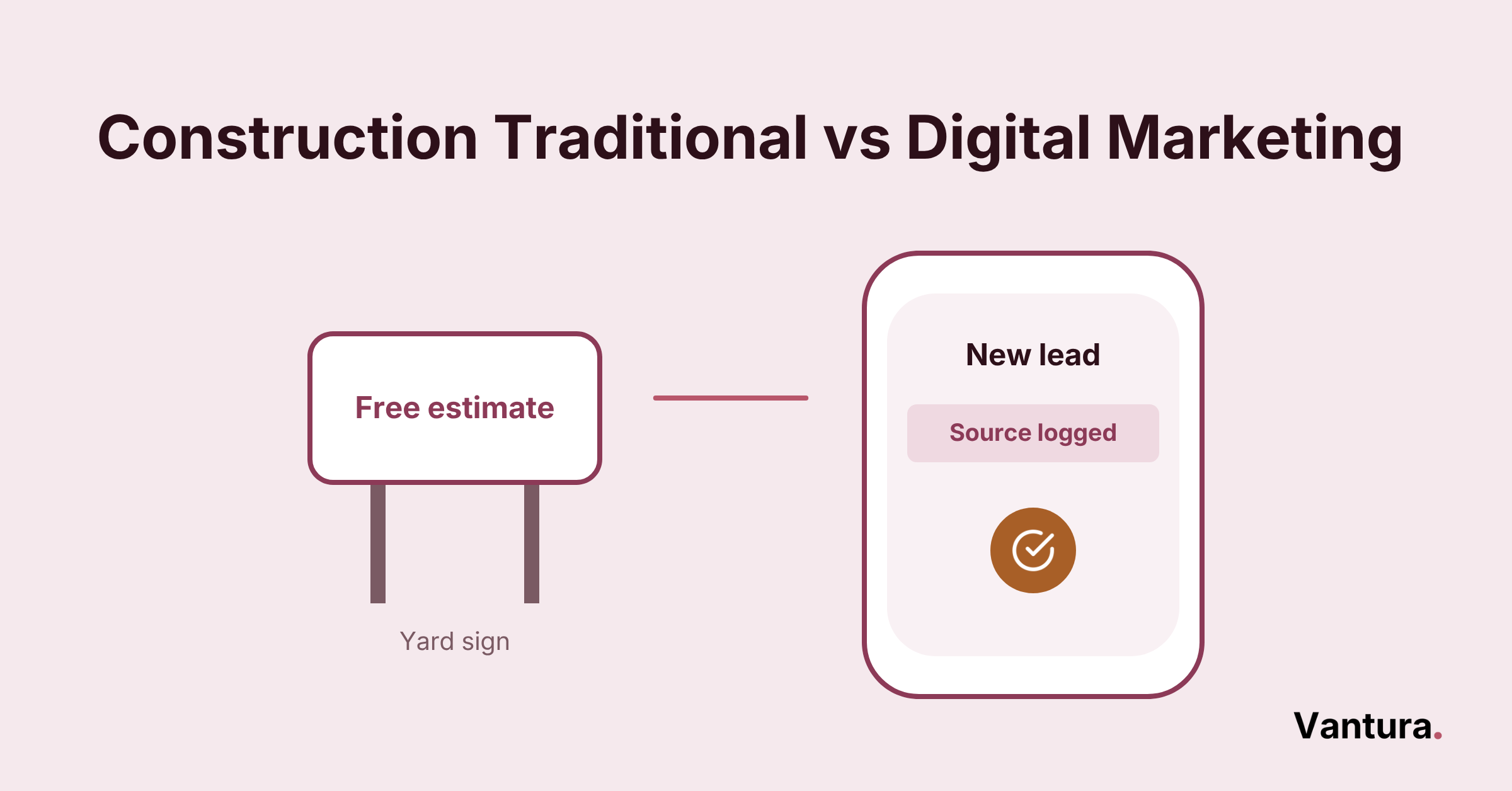
The core difference between traditional and digital construction marketing comes down to control, cost, and how clearly you can measure results. Contractors, remodelers, and specialty trades weigh the two whenever a print ad or trade show stops paying its way. For most firms today, digital wins on targeting and tracking, while a handful of traditional channels still earn a spot in the mix.
Why Trust Our Marketing Take:
Our 28 specialists bring 190 plus combined years across 14 industries, from residential remodelers to commercial builders. We have run 180 plus campaigns and stay fully independent, so our channel advice follows your projects, not a vendor deal.
Need Help Choosing Your Channels?
Get in touch for a construction digital marketing strategy that blends the traditional and digital channels worth keeping. We map spend to the work your crews win.
What Is Traditional Marketing in Construction?
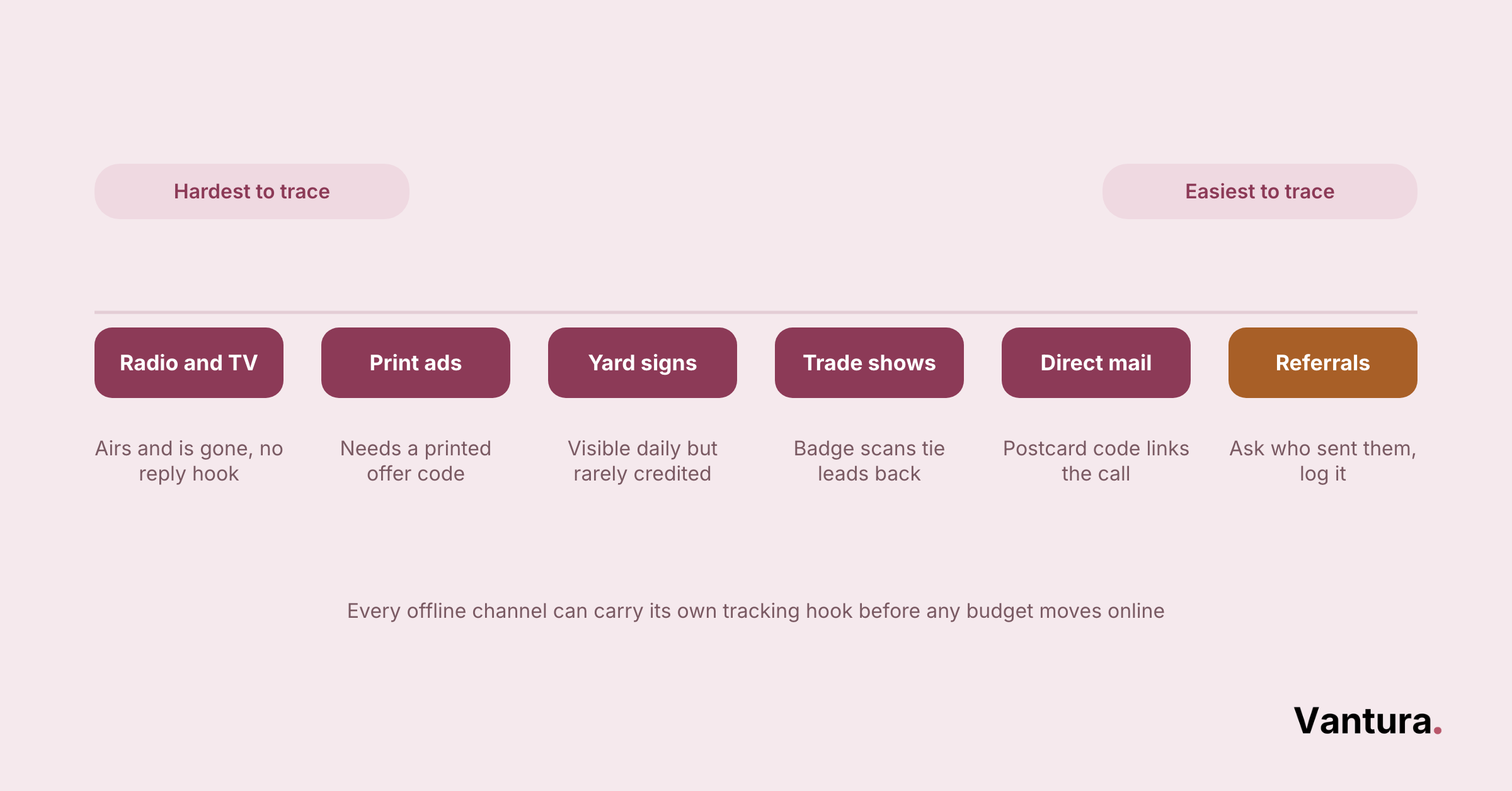
Traditional marketing in construction covers the offline channels contractors have used for decades to win work. Think print ads, direct mail, trade shows, yard signs, radio spots, and referrals passed along by hand.
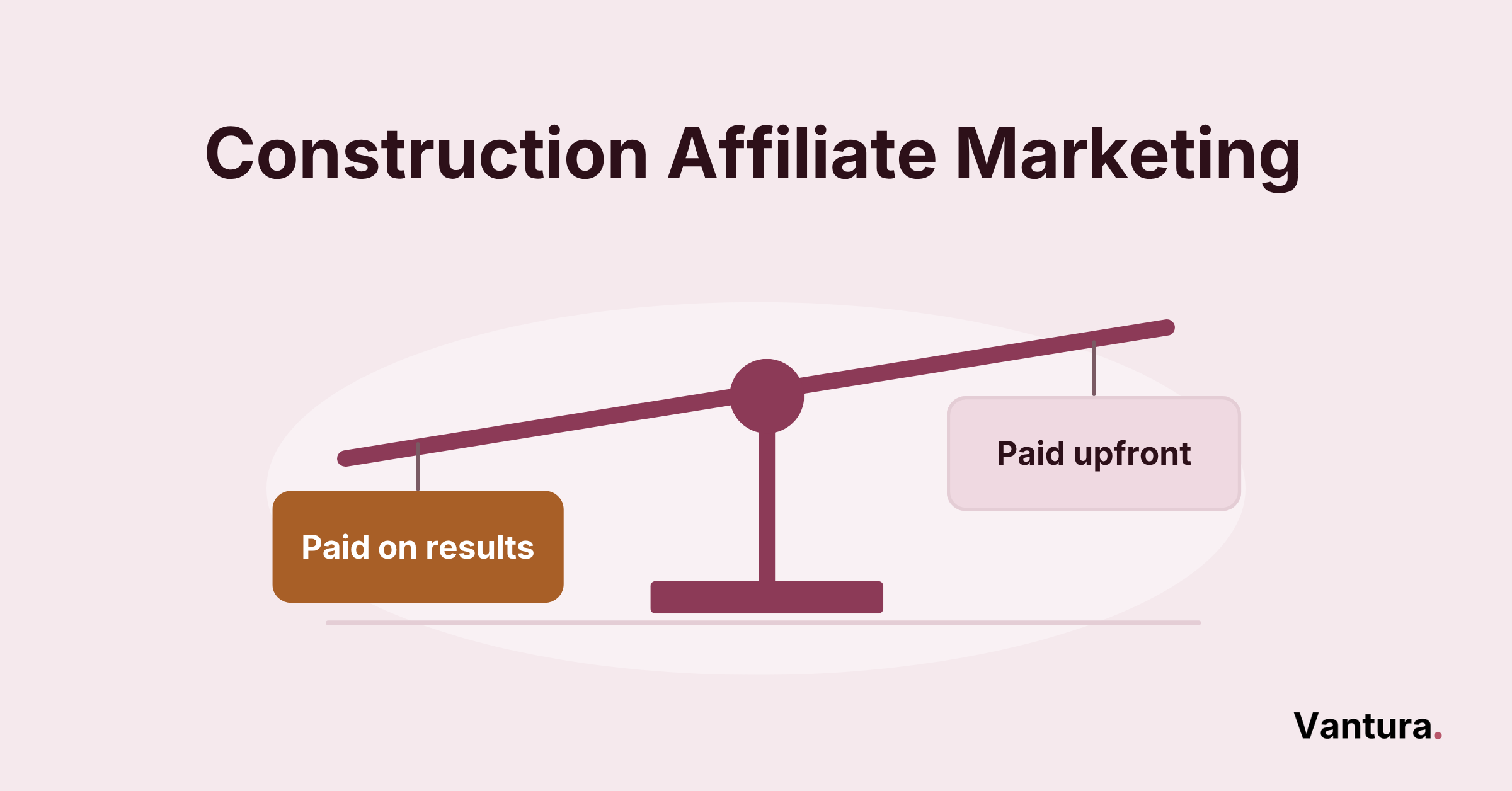
These channels build local familiarity and still carry weight in tight-knit trade communities. They also share one trait, you pay upfront and hope the right buyer sees them.
- Print ads in local papers and trade magazines
- Direct mail postcards to neighborhoods and past clients
- Trade shows and home improvement expos
- Yard signs and vehicle wraps on active job sites
- Radio and TV spots on regional stations
- Word of mouth referrals from past customers
Most established firms built their whole pipeline this way. The trouble starts when referrals slow down and there is no way to see which ad brought the call.
Worth knowing: most contractors we meet cannot say which traditional channel earned their last five jobs. That blind spot is the biggest reason offline budgets get renewed on habit instead of results. Digital did not invent tracking, but it made tracking the default.
What Are the Key Differences Between Traditional and Digital Construction Marketing?
The biggest differences come down to targeting, cost, and measurement. Traditional marketing casts a wide net and bills you for reach, while digital lets you aim at a specific buyer and pay mostly for results.
Buyers now start their research online well before they call anyone, even for work that used to move entirely by referral. We see that shift across nearly every trade we work with, construction included. It is just a step behind the pace software and retail buyers set.
| Factor | Traditional Marketing | Digital Marketing |
|---|---|---|
| Targeting | Broad local reach, little control over who sees it | Filter by location, service, and search intent |
| Cost model | Large fixed spend paid before any result | Start small, scale the channels that convert |
| Measurement | Hard to trace a lead back to a source | Every click, call, and form tracked to a campaign |
| Speed to change | Weeks of lead time for print or broadcast | Edit an ad or budget the same day |
| Best fit | Local trust and long-standing reputation | Fast lead flow and clear reporting |
Neither column is all good or all bad. The point is to match the channel to the job, not to run both on autopilot.
Cost Comparison: Construction Traditional vs Digital Marketing
Cost is where the two approaches split hardest. In our experience, traditional channels ask for a big fixed spend before you know if they work, and digital lets you begin small and grow what pays off.
| Channel Type | Traditional Cost Pattern | Digital Cost Pattern |
|---|---|---|
| Awareness | Trade show booth or print run, paid in one lump | Display or social ads billed by the click |
| Direct outreach | Printing and postage per mailer sent | Email at a low flat monthly rate |
| Local visibility | Billboard or signage on a fixed contract | Search ads that spend only on real queries |
Many small business marketing plans we run start under a few hundred dollars a month and scale only as the leads convert. A single trade show, by contrast, can eat several thousand dollars before a single card is scanned.
Keep in mind: the cheapest channel is not the one with the lowest sticker price. It is the one that turns spend into signed contracts. A postcard run that produces nothing costs more than a search campaign that books two jobs.
Which Reaches and Targets Your Construction Buyers Better, Offline or Online?
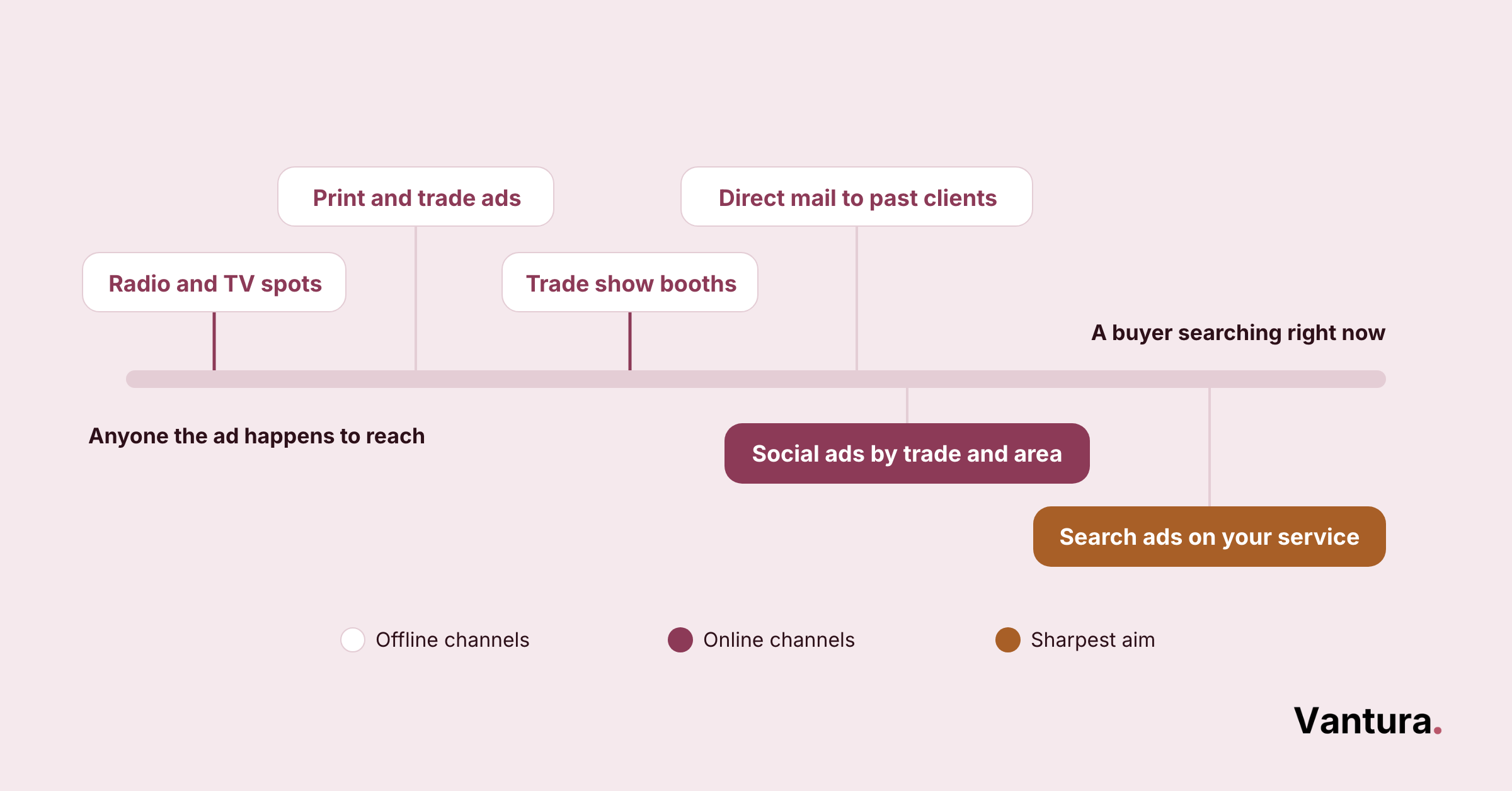
Digital reaches the right buyers more precisely, while traditional still reaches more people at once in a small area. The trade-off is scattershot volume against sharp aim.
Audience Reach: Print, TV, and Radio vs Digital
A radio spot or regional print ad can put your name in front of a whole metro at once. That reach looks impressive, but most of the audience will never hire a contractor.
Digital trades that raw scale for relevance. A campaign built around residential homeowner marketing can show up only for people searching your service in your service area, which wastes far less budget.
Targeting Precision: Offline vs Online
This is the widest gap between the two. Offline, you pick a rough audience and hope your buyer is in it, and online you pick the buyer.
- Chosen by publication, station, or zip code
- No way to filter by project type or budget
- Same message shown to everyone
- Filtered by search term, location, and device
- Reaches niche trade and community groups through niche audience targeting
- Different message for homeowners and developers
How Do You Measure ROI for Construction Traditional vs Digital?
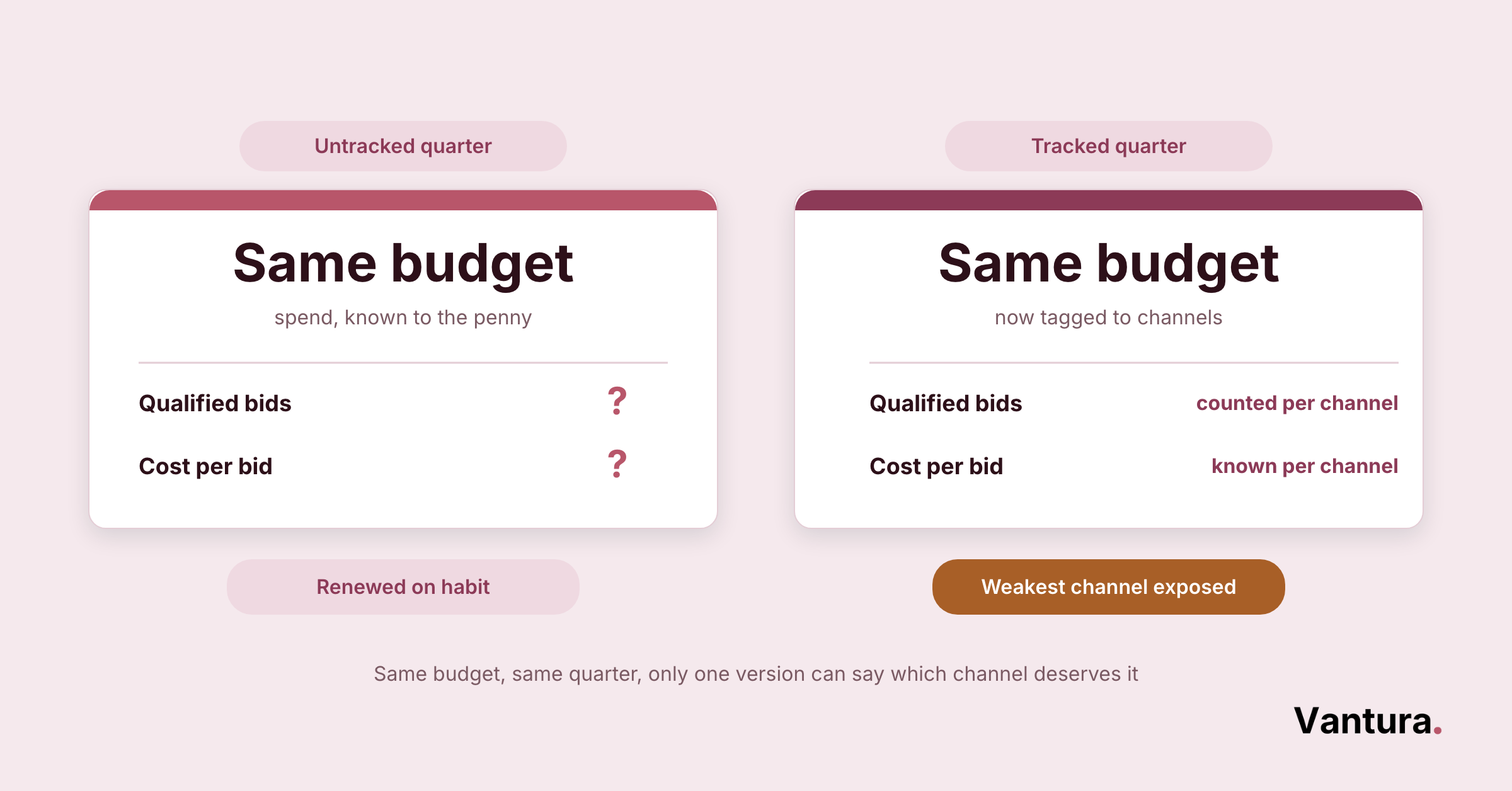
You measure it by tracing spend to signed contracts, which digital makes far easier than traditional. Offline channels usually get credited on a gut feeling, while online channels tie each lead to a source.
Across our projects, contractors who move about half their budget to digital tend to see cost per qualified bid drop within two or three quarters. The typical drop lands around 20 to 30 percent, and the gain comes less from cheaper leads and more from cutting the spend that never worked.
Traditional ROI is not always zero, though. A booth at the right regional expo can still pay for itself. You just have to ask every lead how they found you to prove it.
Field note: the firms with the clearest ROI are not the ones spending the most. They are the ones that ask every caller a single question, how did you hear about us, and write the answer down every time.
Channel Face-Offs: Traditional Formats vs Their Digital Equivalents
Almost every traditional channel now has a digital cousin that does a similar job with better tracking. Lining them up side by side makes the choice clearer.
Print Advertising vs Digital Display Ads
A print ad sits on one page and waits. A display ad follows your buyer across the sites they already read, and native display advertising places your project photos inside trade and news content. That is where contractors actually browse.
Direct Mail vs Email Effectiveness
Direct mail still lands well with older homeowners and past clients. Email does the same nurture work for a fraction of the cost, and it tells you who opened, clicked, and replied.
Billboard and Outdoor vs Geotargeted Ads
A billboard buys you a busy road for a month. Geotargeted mobile ads buy you the phones inside a specific neighborhood or job site radius, which fits a contractor working one area at a time.
TV and Radio vs Video and Podcast Marketing
TV and radio still build broad awareness in a region. Short project videos and a trade podcast reach a smaller but far warmer audience, and they keep working long after a broadcast slot ends.
A contractor publishing even a short project-update video is talking to an audience that keeps growing, not one that plateaued with broadcast. That warmer, repeat reach is why so many crews now film jobsite walkthroughs instead of buying another radio slot.
| Traditional Format | Digital Equivalent | Where Digital Wins |
|---|---|---|
| Print ad | Display and native ads | Tracking and repeat exposure |
| Direct mail | Email nurture | Cost and open-rate data |
| Billboard | Geotargeted mobile ads | Tight local control |
| TV and radio | Video and podcast | Longer shelf life |
Do Construction Events and Trade Shows Still Matter in a Digital World?
Yes, events and trade shows still matter, especially for commercial work and supplier relationships. They just work best when digital follow-up carries the momentum after everyone goes home.
The old model ended when the booth came down. Now a scanned badge can drop straight into an email sequence, and a solid industrial marketing plan turns one handshake into months of steady contact.
We tell clients to treat an event as the start of a campaign, not the whole thing. The firms that win keep talking to those leads for weeks, while the rest let a stack of business cards go cold.
When Does Traditional Marketing Still Work for Construction?
Traditional marketing still works when trust is local and personal, and when your buyers are not searching online yet. Some of the strongest referral engines we see run on channels you cannot click.
- Small towns where word of mouth beats any ad
- High-end residential work sold on reputation
- Repeat commercial clients who value a real relationship over commercial construction marketing alone
- Job-site signage that markets to a whole street for free
The mistake is treating traditional as the only plan. Used on its own it caps your growth at how many people already know your name.
Quick reality check: if your best jobs still come from a handshake and a yard sign, do not kill those channels. Add digital next to them so a slow referral season does not empty your calendar.
Traditional vs Digital: Which Builds a Stronger Construction Brand?
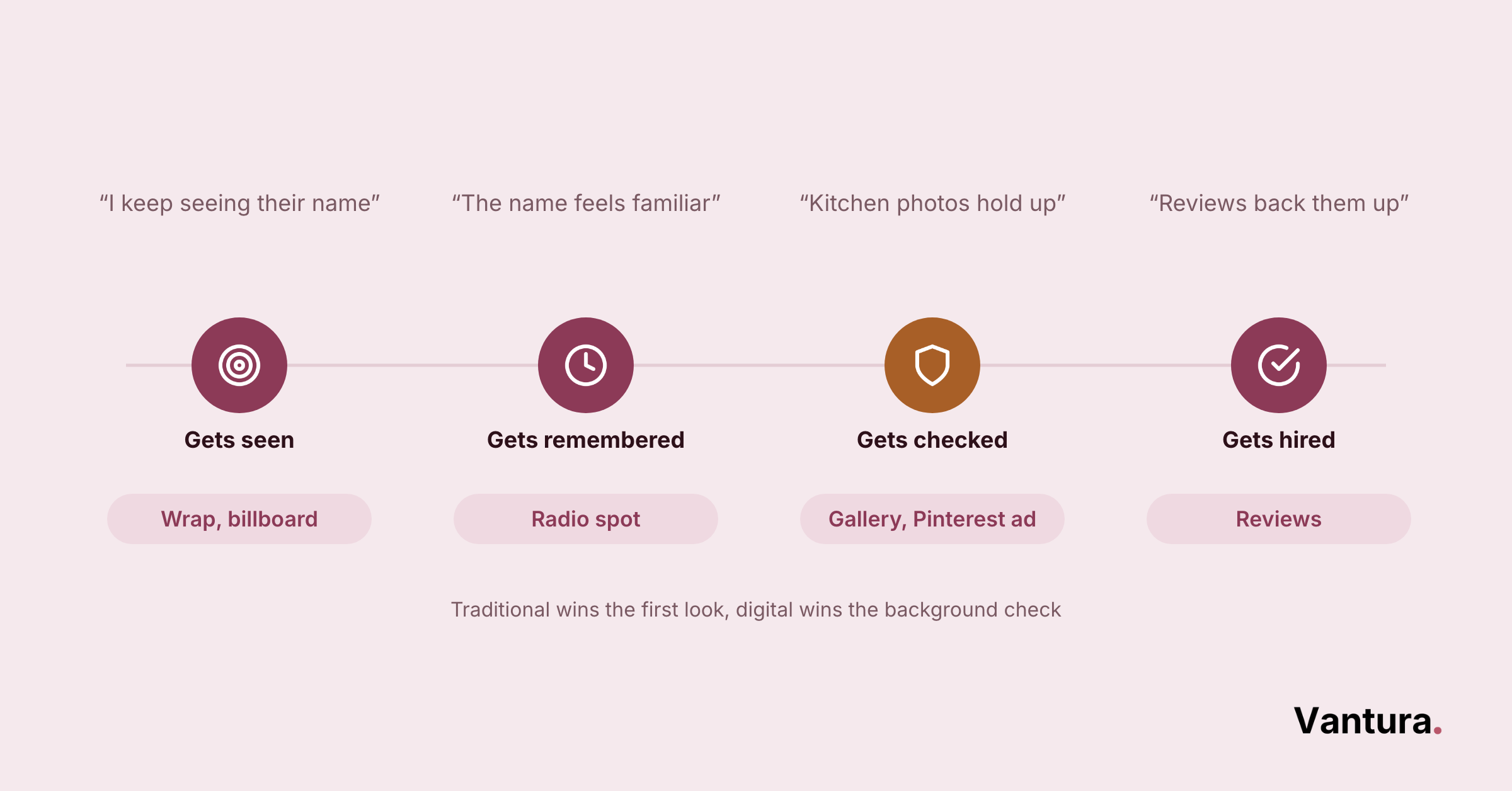
Traditional builds broad awareness fast, while digital builds deeper trust over time. A strong construction brand usually needs both working together.
Visual channels matter more here than in most trades. Real project photos shared through Pinterest ad campaigns and a clean gallery do more for a remodeler’s brand than any slogan on the radio.
Traditional channels are strong at raw awareness. A vehicle wrap, a billboard, and a radio slot make a local name feel established, which reassures buyers who have never worked with you before.
Digital channels are stronger at trust. Reviews, before-and-after galleries, and helpful content let a buyer vet you on their own time. That kind of research now shapes most big project decisions long before a call comes in.
Content builds that trust at scale. SoFi grew its overall site traffic by 970 percent and lifted monthly conversions through a steady content marketing program, according to Contently. A construction brand publishing real project write-ups earns the same slow-building trust.
Speed to Market and Feedback: Where Digital Pulls Ahead
Digital moves faster on both counts, launch speed and feedback speed. That pace is the reason most firms lead with it once they try both side by side.
Speed to Market: Traditional vs Digital
A print or broadcast buy needs weeks of lead time, from design to placement. A digital campaign can go live the same afternoon and shift budget by the next morning.
That speed matters most when work is seasonal. You can spin up a storm-repair campaign in hours, well before a mailer would even reach the printer.
Customer Feedback Loops: The Digital Advantage
Traditional marketing sends a message and waits. Digital sends the same message and reports back within hours on who clicked, called, or ignored it.
What Fast Feedback Lets You Do
- Kill an ad that is not booking jobs before the budget is gone
- Double down on the message that pulls the most bid requests
- Test two offers in a week instead of a whole season
How Do Construction Customers Move Between Offline and Online?
They cross back and forth constantly, and rarely in a straight line. A homeowner might spot a yard sign, search the company that night, read reviews, then call a week later.
That blended path is why offline and online cannot be judged in isolation. Lessons from real estate marketing apply well here, since both fields sell big, slow, considered purchases where buyers research long before they commit.
The takeaway is simple. Your sign, your website, and your reviews all have to tell the same story, because one buyer will touch all three.
How Do You Handle Attribution in Blended Construction Campaigns?
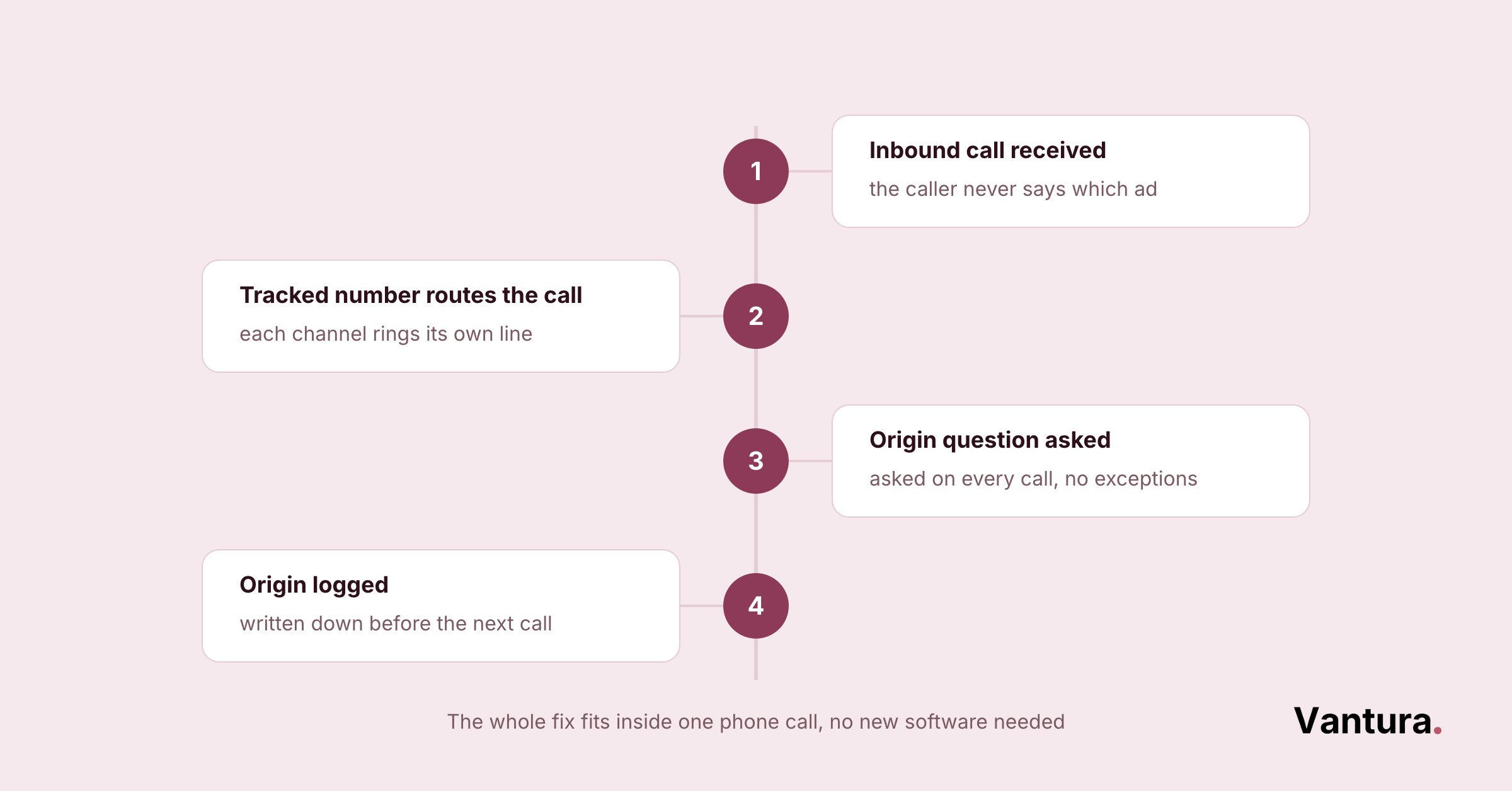
You handle it by capturing the source of every lead, even the offline ones, in one place. Attribution breaks when the phone rings and nobody asks or logs where the caller came from.
What We Track First
- A dedicated phone number on each traditional channel
- A simple “how did you hear about us” field on every form
- Call tracking tied back to the campaign that drove it
None of this needs expensive software to start. A shared spreadsheet and a rolling marketing audit catch most of the gaps in the first month.
Heads up: when a firm says digital does not work for them, weak attribution is usually the real culprit. The leads are there, but the offline touches that started them never got credited, so the numbers look worse than reality.
How Do You Combine Traditional and Digital for Construction?
You combine them by letting each channel do what it does best and pointing both at the same goal. Traditional earns local trust, digital captures and tracks the demand, and one integrated marketing plan keeps the message consistent across both.
- Keep the traditional channels that already produce steady referrals
- Add digital tracking so every offline touch gets credited
- Move fresh budget toward whichever mix books the most bids
The blend beats either approach alone almost every time. A yard sign that sends people to a strong website and a review-rich profile turns free local exposure into booked work.
How Do You Transition Your Construction Budget From Traditional to Digital?
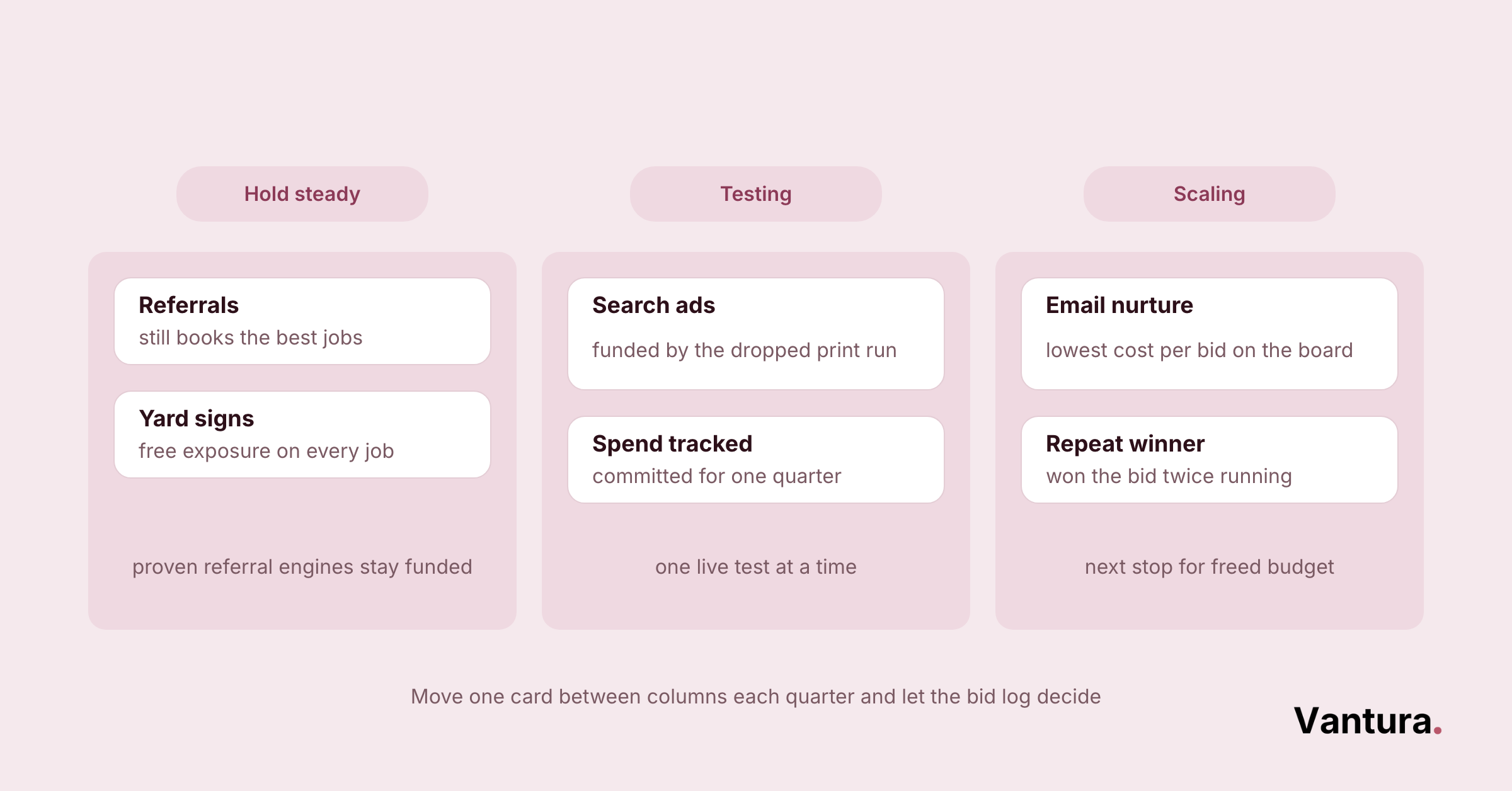
You transition it gradually, by proving digital results before you cut a working offline channel. A slow shift protects the pipeline while you learn what converts.
Phase 1: Measure What You Have
Before moving a dollar, tag every current lead with its source for a full quarter. This shows which traditional channels earn their keep and which ones run on habit.
Phase 2: Shift the Weakest Spend First
Take the offline channel with the least to show for it and move that budget into a tightly targeted digital test. Leave your reliable referral drivers alone for now.
Phase 3: Scale What Converts
Once a digital channel books jobs at a lower cost, feed it more. Many firms lean on an outsourced marketing support team at this stage so the crews can stay on the tools.
A Simple Split to Start
- Hold your best referral channels steady
- Route new growth budget to digital tests
- Review the split every quarter, not every year
Bottom line: the goal is not to abandon traditional marketing, it is to stop guessing. Keep what the numbers defend, move the rest to channels you can measure, and let signed contracts decide the split from there.
Disclaimer: This article is for general information only and is not financial, legal, or professional advice. Marketing results vary by contractor, market, and budget, and no channel guarantees a fixed outcome. Speak with a qualified advisor before committing budget based on anything written here.