10+ Construction Digital Marketing Mistakes to Avoid

The most common construction digital marketing mistakes come from spending on ads before the website, SEO, and tracking are ready. Most of them hit builders, remodelers, and specialty contractors who treat every channel as a separate chore instead of one connected system. Fix the foundation first, and the same budget starts pulling in stronger construction leads.
Why Trust Us on Construction Marketing Mistakes.
Our team of 28 specialists has run more than 180 campaigns across 14 industries, backed by over 190 combined years in marketing. That range is exactly why we spot these mistakes fast, before they drain your ad budget.
Catch Construction Marketing Mistakes Early.
Not sure which one is costing you jobs right now? A quick digital marketing audit shows exactly where budget leaks, so get in touch whenever you’re ready to fix it.
What Are the Most Common Construction Digital Marketing Mistakes?
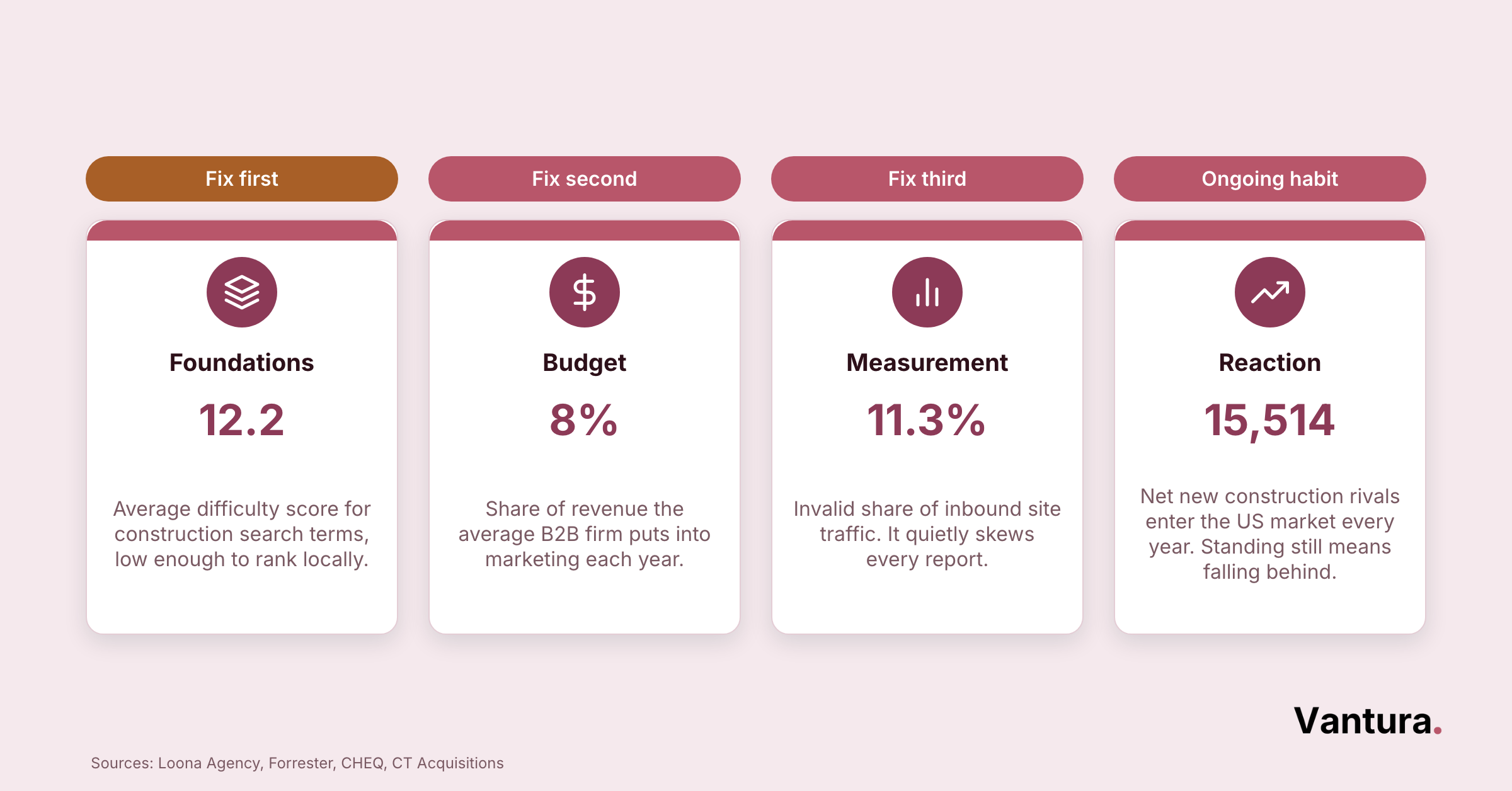
The most common construction digital marketing mistakes fall into four groups: weak foundations, wasted ad spend, sloppy measurement, and slow reactions to change. Get those four right and most of the smaller problems sort themselves out.
Buyers now research contractors online long before they ever call, and marketing budgets have held fairly steady around that shift. Companies across industries put about 7.7 percent of revenue toward marketing, a Gartner benchmark construction firms can use for sizing spend.
The same gaps we see in our industrial marketing work tend to repeat on construction accounts. Spot which group you fall into first, because the order you fix them in matters.
- Foundations: a fast, mobile-ready website and basic SEO.
- Budget: ad spend that matches landing pages and follow-up.
- Measurement: KPIs, clean tracking, and tidy data.
- Reaction: listening to feedback and adjusting to change.
Worth knowing: A slow site drags down everything downstream. If your pages take more than three seconds to load on mobile, paid clicks and hard-won rankings leak before anyone sees your work. Fixing speed usually lifts every channel at once.
Are You Marketing to the Wrong Construction Audience Online?
Yes, this is where a lot of budget quietly disappears, because a commercial general contractor and a kitchen remodeler need completely different messages. Aim at everyone and you connect with no one.
1. Chasing Every Job Instead of Your Best Ones
It feels safe to market to anyone with a building. In practice, the leads worth winning share a clear profile, like project size, location, and who signs the contract.
For commercial work, you reach procurement managers and developers, not homeowners, so your content has to speak to commercial and B2B construction buyers. Miss that and your form fills with tire-kickers.
2. Copying a Competitor’s Playbook Without the Context
Watching competitors is smart. Copying them blindly is not, because you rarely know their margins or whether that campaign even worked. It’s a trap we also see with developers and real estate marketing teams.
A tactic that fills a roofer’s calendar can sink a custom home builder. Borrow the idea, then test it small before you scale.
3. Treating a Whole Metro as One Market
A city is not one audience. Service areas, permit rules, and even language can shift from one suburb to the next.
In our experience, roughly 6 to 9 percent of a contractor’s ad spend leaks into towns they cannot profitably serve. Tight geo-targeting claws most of that back.
Where Localizing Pays Off
- Separate landing pages for each service area
- Reviews tied to every location you serve
- Ad radius set to real drive times, not zip codes
What Construction SEO and Website Mistakes Are Quietly Losing You Jobs?
Your website is the one channel you fully own. When it is slow or invisible in search, every other effort works harder for less.
Ignoring the SEO Basics That Bring Free Traffic
Plenty of contractors skip SEO because it feels slow, then pay for every single click forever. Basic local SEO is the cheapest lead source most smaller contractors ever build.
Claim your Google Business Profile, keep your listings consistent, and write a real page for each service. That alone lifts you above competitors who never bothered.
Forgetting That Most Searches Happen on a Phone
Your visitors are often standing on a job site, not sitting at a desktop. If your number is hard to tap or the form needs pinching to read, they leave.
Letting a Slow Website Undo Everything Else
Speed is not a nice-to-have. Across our projects, a quarter to a third of paid clicks bounce before a slow construction page even loads.
Fixing that usually drops cost per lead by about 20 to 30 percent, the same lift we see when we tune sites for roofing contractors. Compress images, cut heavy plugins, and test on a mid-range phone.
| Construction SEO Mistake | Why It Hurts | Quick Fix |
|---|---|---|
| Thin service pages | Google cannot tell what you do | One detailed page per service |
| No local citations | You miss the map pack | Same name, address, and phone everywhere |
| Slow mobile load | Clicks leave before the page appears | Compress images, trim scripts |
| No reviews habit | Lower trust and lower rankings | Ask every happy client, reply to all |
Where Is Your Construction Ad Budget Actually Going?
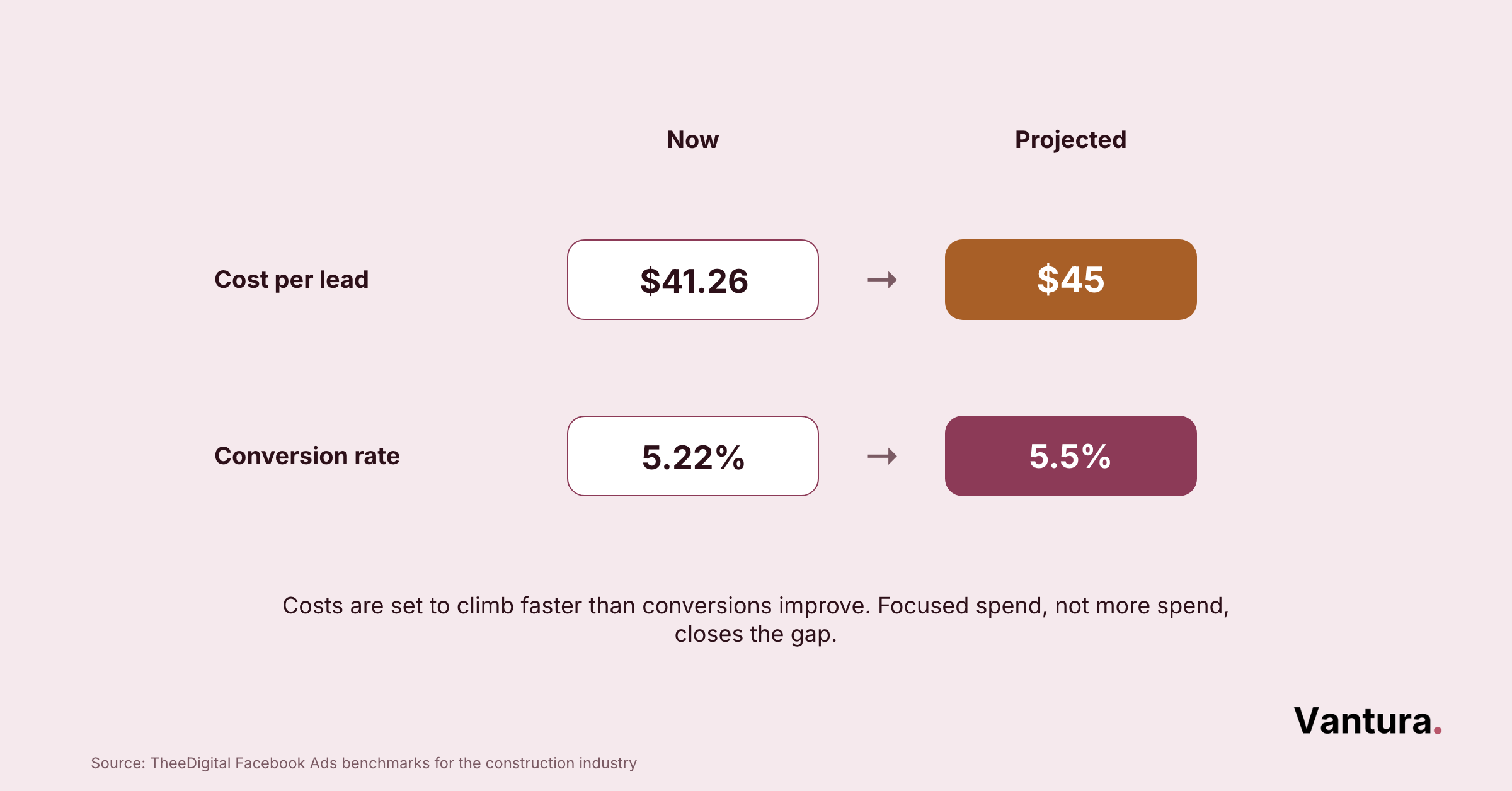
Usually into broad terms, mismatched landing pages, and clicks that never come back. Paid ads can fill a pipeline fast, or drain a bank account fast, and the difference is rarely the platform.
Spending Too Much, or Too Little, on Ads
Underspend and you never gather enough data to learn what works. Overspend on broad terms and you pay premium prices for clicks that never convert.
In our experience, most contractors find their footing on a focused budget aimed at a few high-intent searches. Start narrow, prove the return, then scale what works.
Sending Clicks to a Page That Does Not Match the Ad
An ad promising emergency roof repair should not land on your homepage. That mismatch tanks conversions, and it is one of the first things we fix in a marketing consulting review.
Match the headline, the offer, and the photo to the exact ad. One ad, one page, one clear action.
Never Following Up With the Visitors Who Left
Most people are not ready to book on the first visit. Retargeting brings them back, a habit long decision cycles make especially valuable.
Simple retargeting tends to recover 10 to 15 percent of visitors who slipped away. That is often your cheapest source of booked work.
Brand and Channel Mistakes in Construction Digital Marketing
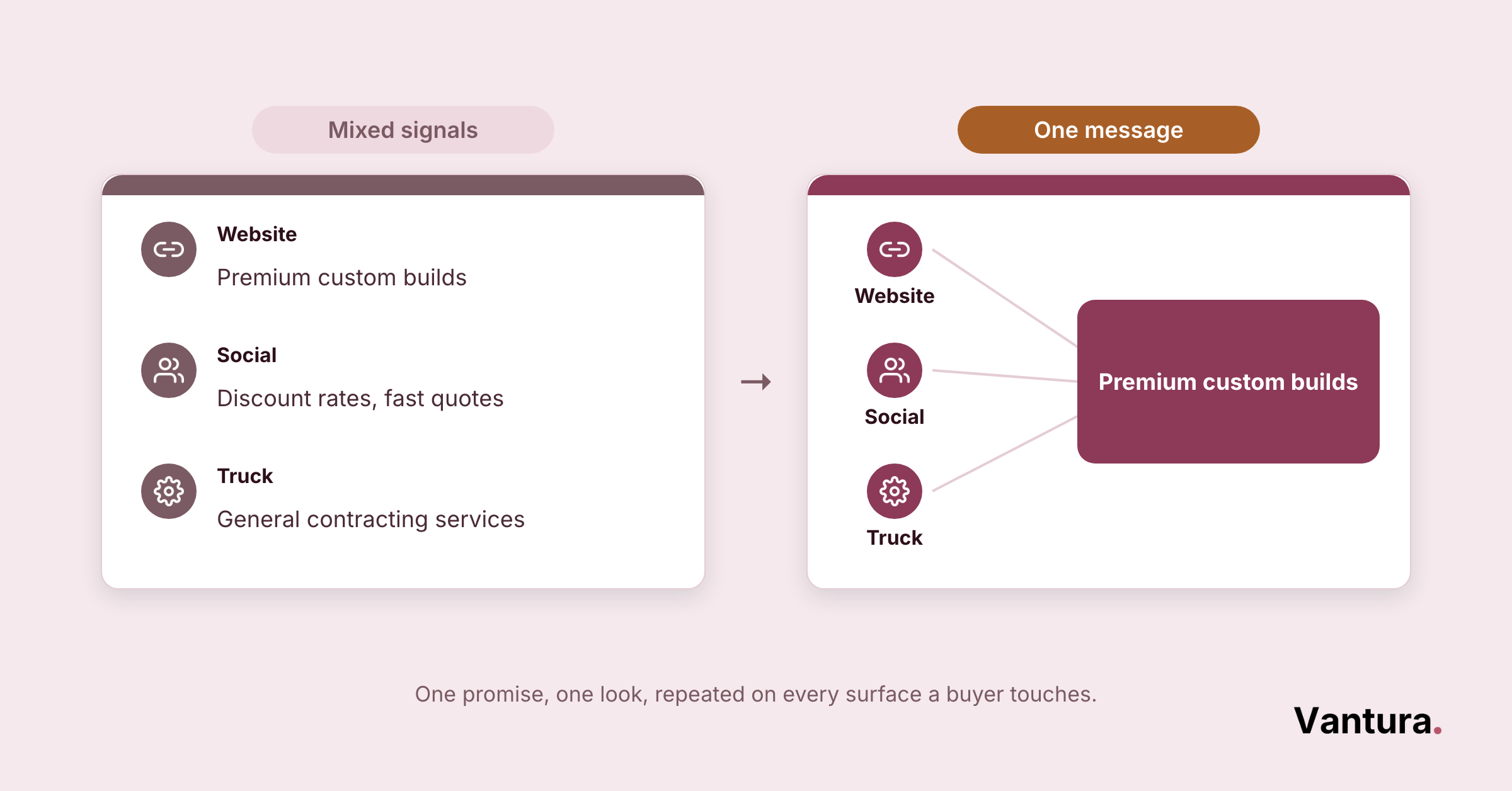
Confusion here rarely comes from a bad tactic. It comes from every channel telling buyers a slightly different story about who you are.
Saying Something Different on Every Channel
Your website says premium, your Facebook page says budget, and your truck says something else again. That scatter confuses buyers, and it is exactly what an integrated channel plan is built to fix.
Pick one promise and one look, then repeat them everywhere. Consistency is what makes a small contractor feel established.
Betting the Whole Pipeline on One Channel
One good lead source feels great until the algorithm shifts or the ad account gets suspended. We watched an electrical contractor lose half its leads overnight when a single platform changed its rules.
Spread the risk across channels you own and channels you rent. That balance matters just as much for seasonal trades like HVAC as it does for general contractors.
- Your website and SEO
- Your email list
- Your reviews and reputation
- Paid search and social ads
- Social media platforms
- Third-party directories
Lean on owned channels first, then bring in paid and social to fill whatever gaps owned channels cannot reach on their own.
Are You Measuring Construction Digital Marketing the Right Way?
Probably not fully, because most contractors track clicks and likes but cannot say which channel booked the last ten jobs. Without that line of sight, you keep funding what feels busy instead of what pays.
Not Tracking the KPIs That Map to Booked Work
Traffic is not revenue. The numbers that matter are cost per lead, lead-to-job rate, and revenue per channel, the same discipline we bring to building product manufacturers.
Set up call tracking and form tracking before you spend a dollar on ads, since you cannot improve what you never measured. That step matters more than most contractors think, since 21 percent of marketing leaders still don’t measure ROI at all.
Signs Your Tracking Needs a Fix
- No idea which channel booked your last five jobs
- No call tracking number on any of your ads
- Form fills that never sync back to your CRM
Chasing Vanity Metrics
Ten thousand followers feel great and pay nobody. The trick is reading the same numbers for what they actually tell you.
| Metric | Vanity Read | What It Means |
|---|---|---|
| Followers | Big audience | How many became leads |
| Impressions | Lots of reach | Clicks from your service area |
| Website visits | Traffic is up | Visits that request a quote |
| Email opens | People see us | Replies and booked jobs |
Ignoring Data and Email List Hygiene
Dirty data quietly wrecks campaigns. Duplicate contacts, dead emails, and stale numbers waste spend, which we clean up first for a plumbing business before touching the ads.
Prune a neglected email list and open rates often climb from around 12 percent to 18 percent. A smaller clean list beats a big rotten one every time.
- Remove bounced and inactive addresses
- Merge duplicate contacts
- Fix formatting on phone numbers
- Tag leads by service and stage
Keep in mind: One booked job is worth thousands, so tracking that ties a lead back to real revenue pays for itself in the first week. Even a simple spreadsheet that logs where each job came from beats guessing at the end of the month.
Which Construction Digital Marketing Mistakes Compound Over Time?
These are the ones nobody flags right away, because each one drains a little value every week until the losses show up in the numbers.
Slip #1: Publishing Content With No Strategy Behind It
Random blog posts and one-off videos rarely move anything. Content only compounds when it ladders up to a documented marketing strategy with clear goals.
Plan topics around what buyers search before, during, and after a project. Then every piece supports the next.
Slip #2: Ignoring What Customers Tell You
Your reviews and sales calls are free market research. The objections you hear on the phone are the exact words that should show up in your ads and pages.
Slip #3: Not Adapting When the Rules Change
Search and social algorithms shift constantly, and last season’s tactic can quietly stop working. Set a monthly check so you catch drops before they become droughts.
Slip #4: Treating Compliance as an Afterthought
Contact forms, tracking pixels, and email all carry privacy rules you cannot ignore. A clear consent notice and an honest privacy policy protect you and build trust.
Bottom line: The mistakes that hurt most are the slow ones. A thin content plan or a stale list costs you a little every week until it adds up to real money. Small monthly reviews catch them long before they turn into a bad quarter.
Turning Construction Marketing Mistakes Into Booked Work
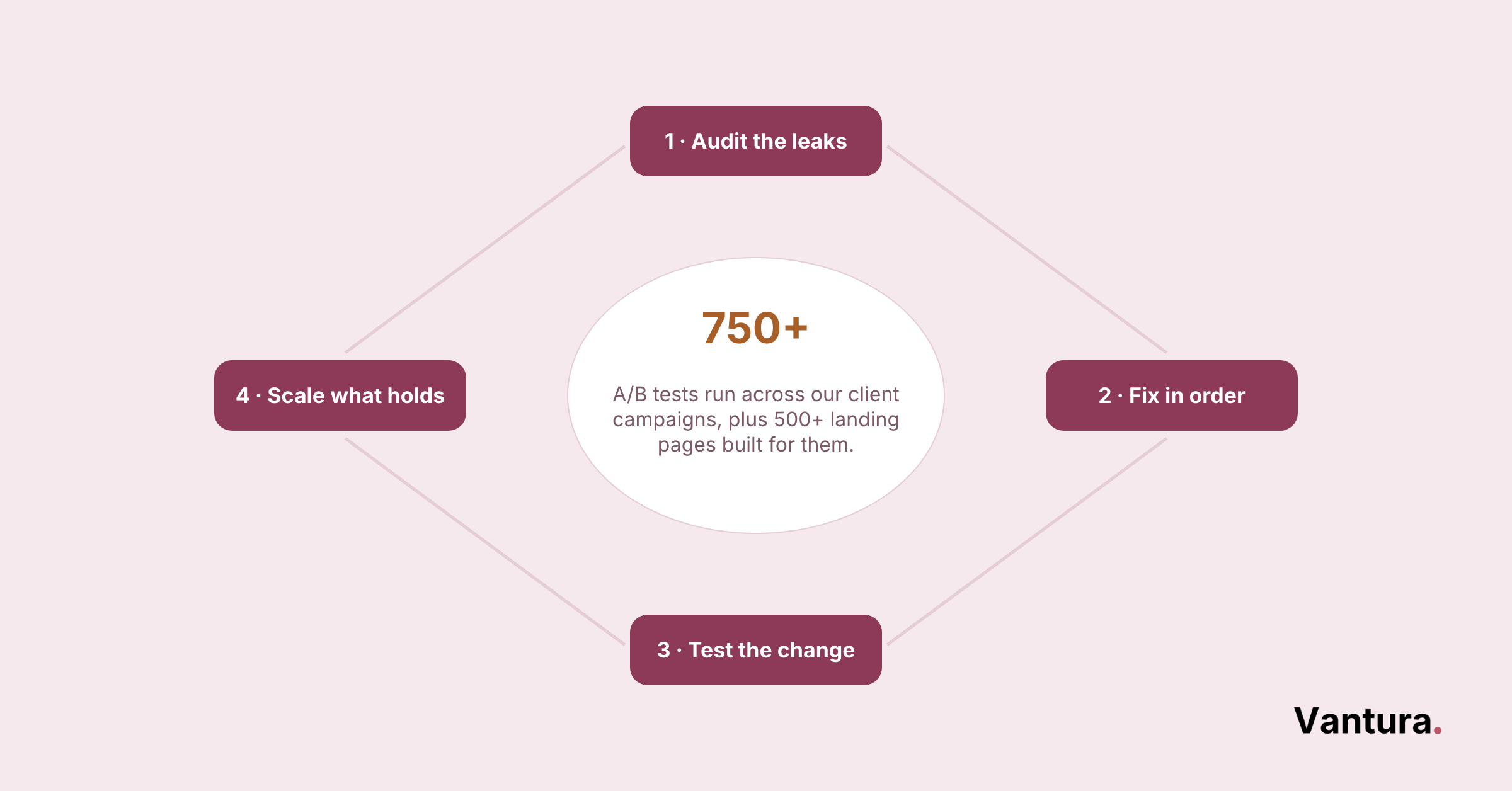
None of these mistakes are fatal, and most are quick to fix once you can see them. If your team is stretched thin, it can help to outsource the day to day and keep building instead.
Start with the foundation, then the money, then the measurement. Work in that order and the same budget simply does more.
One more thing: The order you fix these in matters more than the effort you throw at them. Foundation before budget before measurement, because paid traffic sent to a broken, unmeasured site just wastes money faster than before.
Disclaimer: This article is provided for general informational purposes only and does not constitute professional, legal, or financial advice. Vantura Marketing makes no guarantees about specific results, and any figures shown reflect our own experience rather than a promise of performance. Always consult a qualified professional before making marketing or compliance decisions.