Construction Digital Marketing ROI: How to Track & Scale

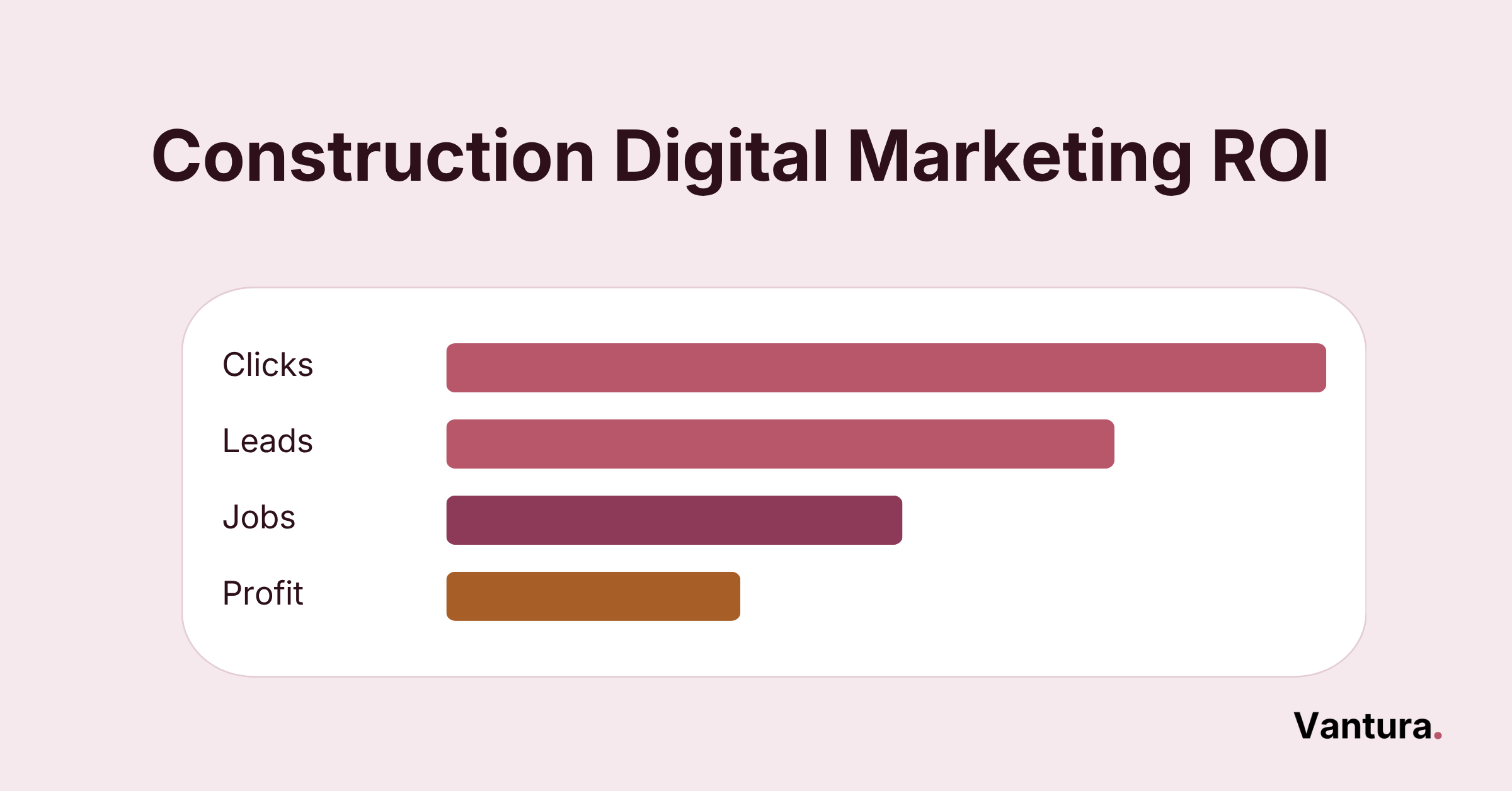
Construction digital marketing ROI is the profit your marketing returns for every dollar you spend, tracked by tying leads and closed jobs back to each channel. It matters most for contractors with long sales cycles and high-value projects, where a single signed bid can outweigh a month of ad spend. Track it well and you learn exactly which channels to scale and which to drop.
Why contractors trust our ROI numbers:
We’ve run and analyzed 750 plus A/B tests and delivered over 180 campaigns from launch to full scale. Our clients see a 4.2x average lift in qualified leads within 90 days. That comes from 190 plus combined years of marketing experience.
Need help proving your marketing pays?
Get in touch and we’ll map your construction marketing to real revenue, then show you where the budget works hardest. Our digital marketing consulting team can pressure test the numbers before you scale.
What Is Construction Digital Marketing ROI?
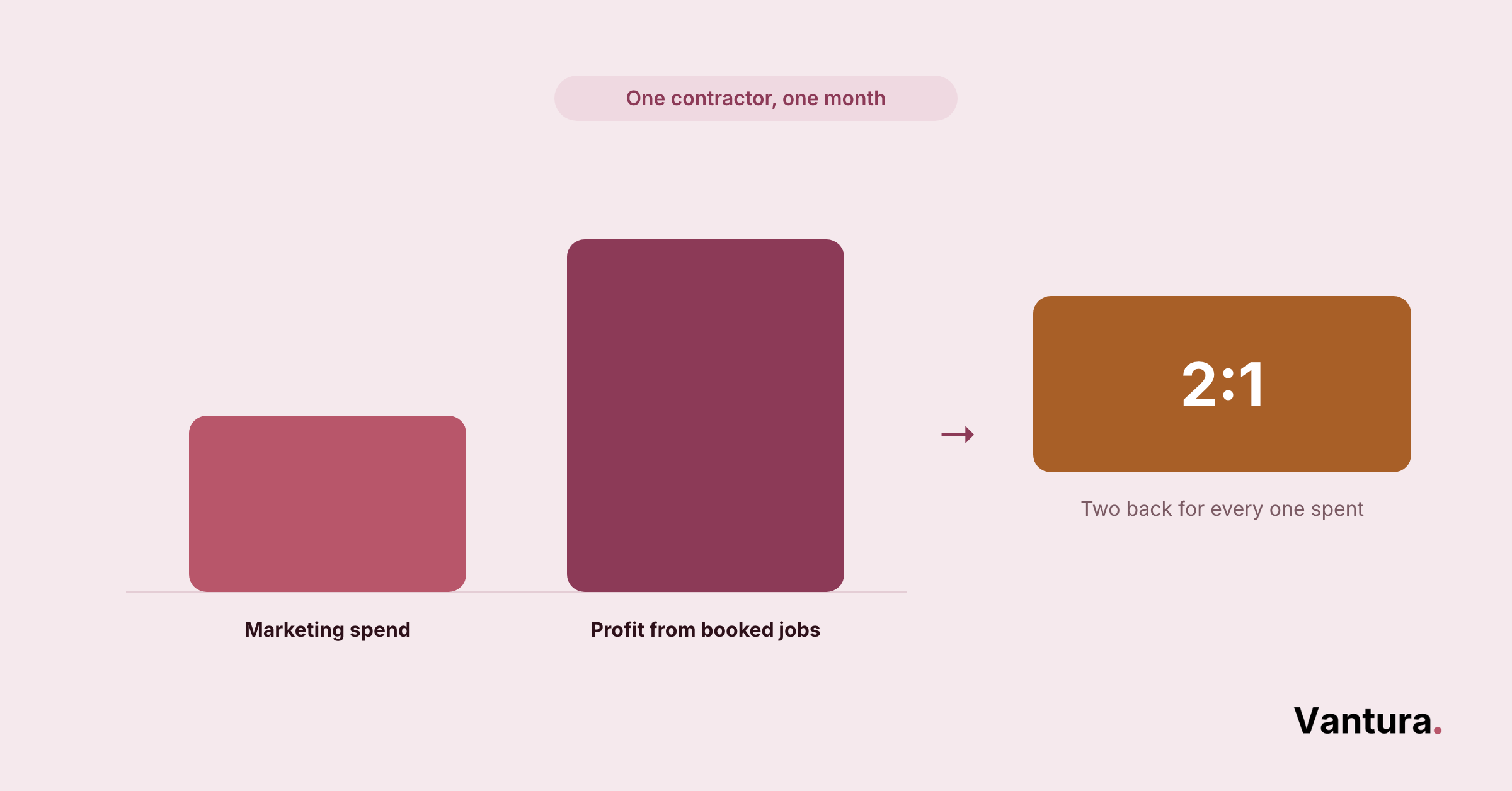
Construction digital marketing ROI is the profit your online marketing earns compared to what it costs, shown as a ratio or a percentage. It ties spend on search, ads, and content to the jobs those channels actually book.
Most contractors already sense which months felt busy. ROI turns that gut read into a number you can defend to a partner or a bank.
The math cares about profit, not vanity. A thousand website clicks mean nothing if none of them turn into a signed estimate.
Because construction jobs carry big tickets, the swings are wide. One kitchen remodel or one commercial fit-out can flip a whole channel from red to black on its own.
Bottom line: ROI is not traffic, rankings, or followers. It’s the gross profit from booked construction jobs set against the money you spent to win them, measured per channel so you can act on it.
How Do You Calculate Construction Digital Marketing ROI?
You calculate construction digital marketing ROI by subtracting marketing spend from the gross profit of the jobs it produced, then dividing by that spend. Track every lead to its source so the profit lands against the right channel.
The formula is simple. The tracking behind it is where most contractors slip.
A digital marketing audit is usually the fastest way to see whether your leads are even being traced back to a channel today. Without that trail, any ROI number is a guess.
- Total the spend. Add ad budgets, agency fees, software, and content costs for the period.
- Tag every lead source. Use call tracking, form fields, and UTM links so each inquiry names its channel.
- Match leads to jobs. Connect inquiries to closed work inside your CRM, not a spreadsheet from memory.
- Use gross profit. Pull the margin on those jobs, since revenue alone hides material and labor costs.
- Run the ratio. Subtract spend from profit, divide by spend, and read it as a percentage.
- Split by channel and window. Compare each channel over 30, 90, and 180 days to catch the slow payers.
Construction Digital Marketing ROI by Channel
Every channel earns its return differently. Search and local listings compound slowly, while paid ads spike fast and fade the moment you stop paying.
We build most contractor programs as one integrated digital marketing engine, because the channels feed each other. Still, each line deserves its own ROI read.
| Channel | How ROI Usually Shows Up | What We Track First |
|---|---|---|
| Local SEO and Google Business Profile | Steady map-pack calls that build over months | Calls and direction requests |
| Organic SEO and content | Compounding leads that cost less over time | Ranked pages and assisted conversions |
| Google Ads and PPC | Fast leads at a higher cost per job | Cost per booked job, not per click |
| Paid social | Cheaper awareness, slower to close | Lead quality and follow-up speed |
| Email and nurture | High return on an existing warm list | Revenue per send and reply rate |
Construction SEO ROI Calculation and Benchmarks
SEO returns look weak early and strong later. The first few months pay for foundation work, then the same pages keep pulling leads with no extra spend.
Across our construction campaigns, organic usually posts the lowest cost per lead once a site has aged past the first two quarters. It rarely wins the sprint and almost always wins the year.
Construction PPC ROI and ROAS Explained
PPC ROI, often stated as ROAS, is the revenue a campaign earns divided by its ad spend. For contractors we flip it to cost per booked job, since a cheap click that never closes still loses money.
Paid search buys speed. When a builder needs pipeline this quarter, it beats waiting on rankings, though the cost per job runs higher.
It also pays to test beyond Google. Niche placements like Reddit ads management can reach planners and remodel researchers that search alone misses.
Construction Content Marketing ROI
Content ROI is real but slow to attribute. A project guide read months before a call still helped win the job, even if the last click was a branded search.
That lag is why so many teams undercount it. In our own tracking, a change order booked months later almost never traces back to the guide that started the conversation, even though that guide is what got the homeowner talking to us.
For contractors, the fix is proof content. Photo case studies, permit walkthroughs, and honest cost breakdowns pull in readers who already trust the work.
Construction Social Media Marketing ROI
Social ROI for construction rides on visuals more than clever copy. Before-and-after galleries and jobsite reels do the selling that a text post cannot.
The return usually shows up as cheaper awareness and warmer inbound, not instant sales. Platforms like Pinterest ads management fit remodelers well, since buyers save design ideas long before they hire.
Construction Email Marketing ROI and Revenue per Send
Email keeps returning long after the first job closes. A past-client list costs almost nothing to reach, so its revenue per send stays high.
Revenue per send is total revenue divided by emails delivered. It’s the same yardstick ecommerce digital marketing teams live by, and it works just as well for repeat and referral work in construction.
Worth knowing: No single channel wins on its own. In our work the jobs that close almost always touch three or four channels first, so judging any one in isolation quietly undercounts the rest.
Do Contractors See Short-Term or Long-Term Digital Marketing ROI?
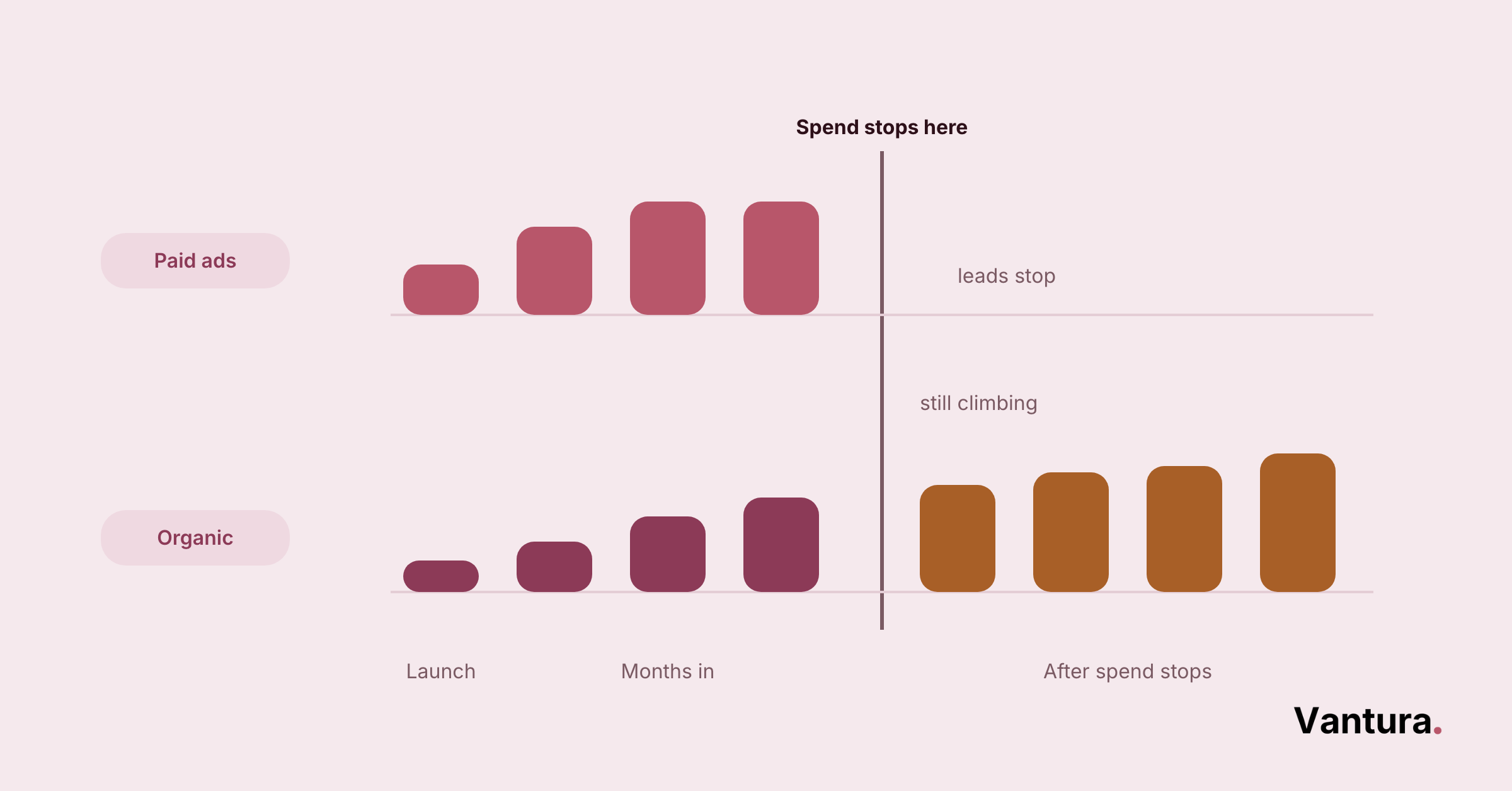
Contractors see both, on different clocks. Paid channels can return within weeks, while SEO, content, and reputation often take two to three quarters before the ROI turns clearly positive.
The mistake is judging a slow channel on a fast timeline. We’ve watched builders kill promising SEO in month three, right before it would have paid.
Two Clocks Run at Once
Think of your budget as two engines. One buys immediate leads, the other builds an asset that keeps producing.
- Returns in days to weeks
- Stops the moment spend stops
- Best for slow seasons and new service areas
- Returns over two to three quarters
- Keeps producing after the work is done
- Best for lowering cost per lead long term
Most healthy construction programs run both engines at once. Paid keeps the phone ringing this month while organic quietly lowers next year’s cost per lead.
Longer buying cycles, common in B2B digital marketing, make that patience pay off even more. The bigger the project, the more touches it takes to close.
Why Is Construction Digital Marketing ROI So Hard to Measure?
Construction ROI is hard to measure because the buying journey is long, offline, and shared across channels. A lead might find you on Google, read reviews, ask a neighbor, then call weeks later.
Long gaps between the first click and the signed contract break most tracking setups, and the original source is often lost by the time the deal closes. Only 34% of marketers still track campaigns with a single tool, according to Nielsen, while 62% now use multiple measurement tools across channels, and construction firms without that same cross-channel view lose the trail even sooner.
Phone calls make it harder still. A huge share of contractor leads come in by phone, and those calls vanish from reporting unless you use call tracking.
Before you trust any ROI figure, we run it past three quick checks.
- Source: is every lead tagged to a channel?
- Profit: are you counting margin, not just revenue?
- Window: does the timeframe match the sales cycle?
When tracking is the real problem, a fresh set of hands helps. Handing the plumbing to a partner through digital marketing outsourcing often surfaces leaks an in-house team stopped noticing.
Reality check: Perfect attribution does not exist in construction. Aim for a clear, consistent method you trust more than the guesswork you had before, and sharpen it each quarter.
How Do Attribution Models Shape Construction Marketing ROI?
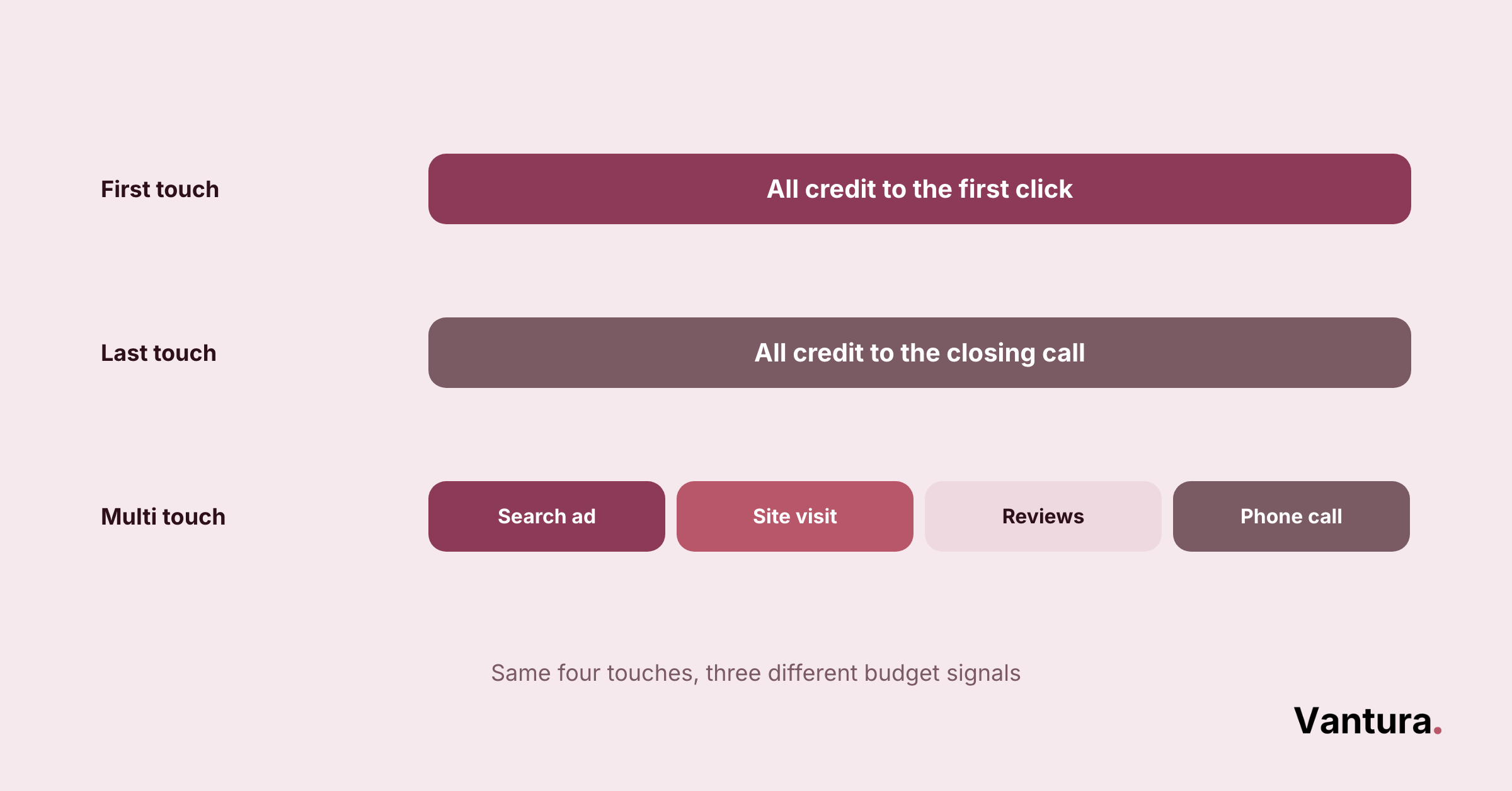
Attribution models decide which channel gets credit for a job, so they can make the same campaign look great or useless. First-touch rewards discovery, last-touch rewards closing, and multi-touch splits the credit across both.
Pick one model and stick with it. Switching models mid-year is the fastest way to start comparing numbers that don’t match.
For long construction cycles, a multi-touch view usually reflects reality best. It credits the blog post, the ad, and the review that all pushed one buyer forward.
Grounding the model in a documented digital marketing strategy keeps it consistent as you scale. Consistency, not perfection, is what makes ROI trends worth trusting.
Incrementality Testing for Construction Marketing ROI
Incrementality testing asks a sharper question. It measures the jobs you would not have won without a channel, not just the ones that happened to touch it.
The simplest version is a holdout. Pause a channel in one region, keep it running in another, and watch what the lead flow actually does.
Offline-to-Online ROI Tracking
Most construction sales still close offline, on a call or at a kitchen table. That break between click and contract is where ROI tracking usually dies.
Bridge it with call tracking numbers, simple CRM tagging, and a habit of asking every caller how they found you. Those three habits recover more attribution than any expensive tool.
Keep in mind: If a caller can’t tell you how they found you, your intake just failed. One added question at booking rebuilds more attribution than any new dashboard.
Construction Digital Marketing ROI and Customer Lifetime Value
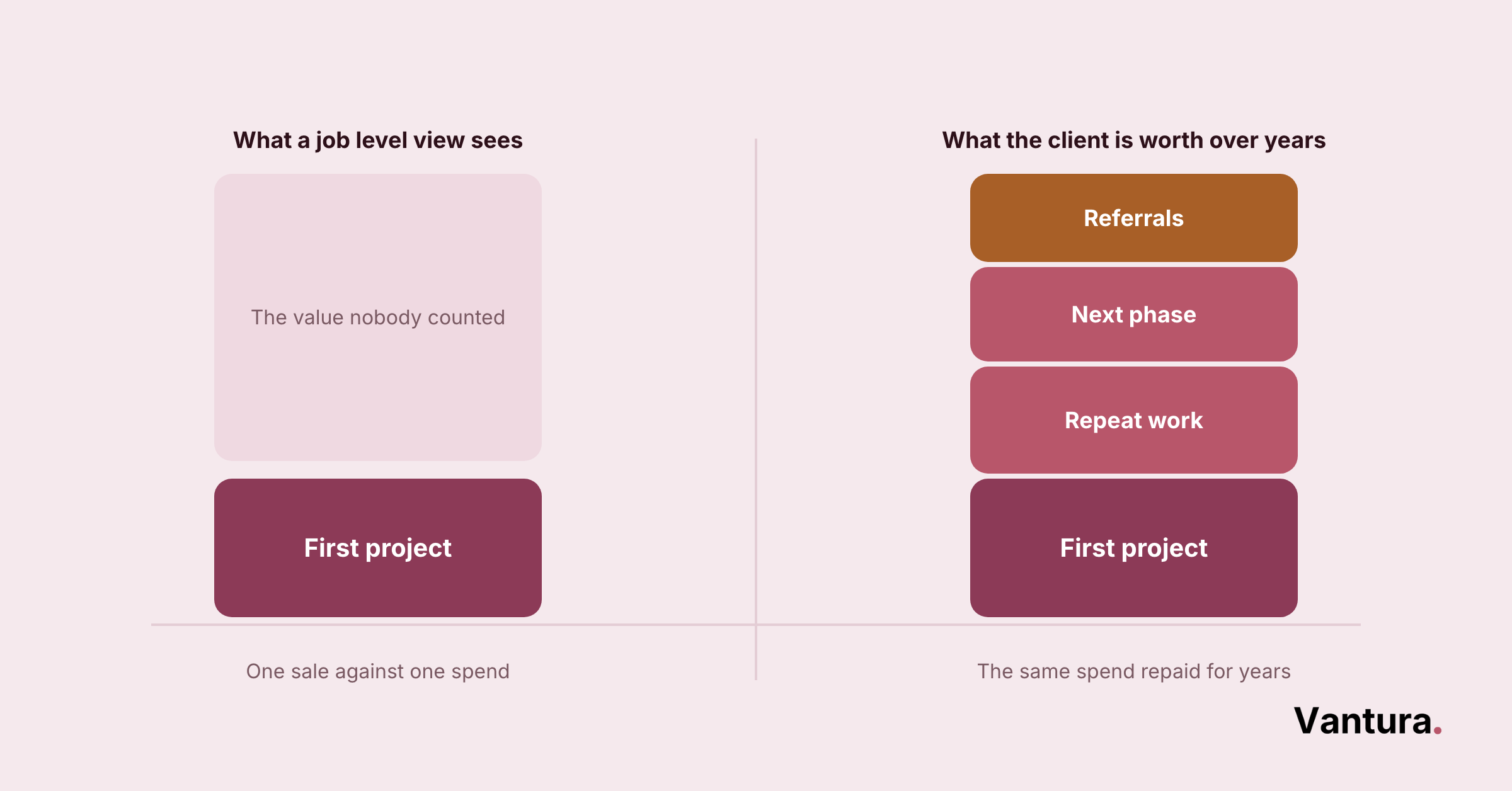
ROI on a single job undersells good marketing. A first project often leads to a change order, a referral, and the next phase, so the true return stacks over years.
Customer lifetime value is the total profit a client brings across every job and referral. When you plug that into ROI, channels that looked expensive at first often turn into the best performers.
This is common in long-cycle trades. Like other industrial digital marketing work, one construction relationship can span years, so the acquisition cost spreads thin over time.
We’ve seen a single commercial client justify a full year of ad spend after two follow-on projects. Judging that channel on the first job alone would have killed it early.
Construction Digital Marketing ROI Benchmarks by Vertical
Benchmarks vary widely across construction segments. A high-volume remodeler and a heavy-civil contractor should never expect the same cost per lead or close rate.
The ranges below come from our own field data, not published averages. Smaller crews usually sit at the low end, where small business digital marketing tactics like tight local targeting hold costs down.
| Construction Segment | Typical Blended Cost per Lead | What Moves the Number |
|---|---|---|
| Residential remodeling | $90 to $140 | Review volume and photo proof |
| New home building | $130 to $190 | Long cycles and financing steps |
| Commercial construction | $200 to $300 | Bid relationships and referrals |
| Specialty trades | $70 to $110 | Local search and speed to call |
| Heavy and civil | $250 to $360 | Long procurement and few buyers |
How Do You Set Construction Digital Marketing ROI Targets Before Launch?
You set construction digital marketing ROI targets before launch by working backward from a profit goal, not a traffic goal. Start with the gross profit you need this quarter, then reverse it into the leads, close rate, and spend each channel must hit.
Benchmarks like the ones above give you a starting range. Your own close rate and average job size then turn that range into a number specific to your crew.
- Profit goal: the gross profit this budget needs to return
- Lead math: leads required at your current close rate
- Spend ceiling: the cost per lead that still hits the profit goal
- Check-in point: the date you’ll compare actuals against the target
A target set before launch also protects a new channel from a premature verdict. Agree on the number in advance, and a slow first month reads as on track instead of failing.
How Can You Improve Construction Digital Marketing ROI?
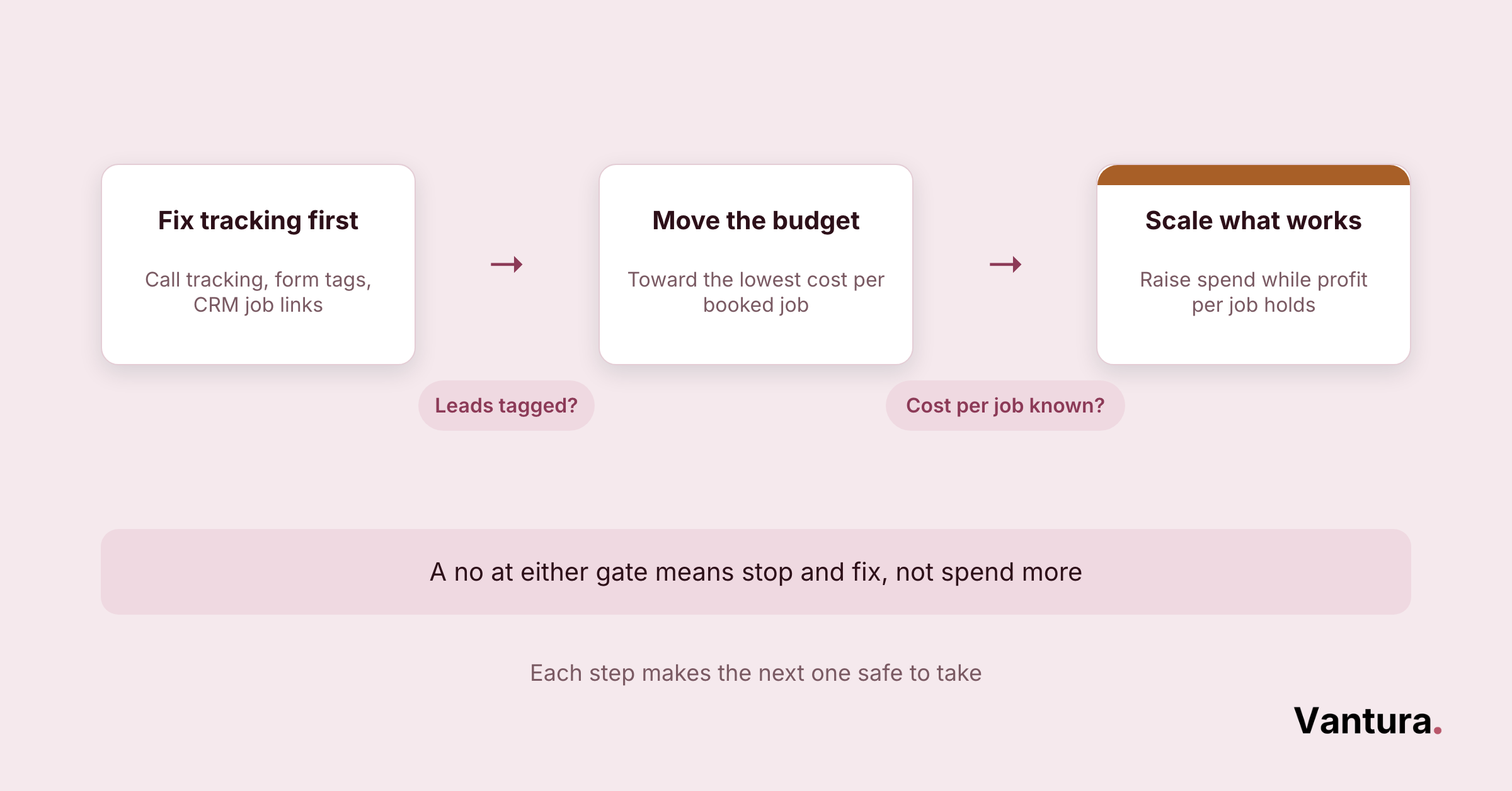
You improve construction digital marketing ROI by fixing tracking first, then shifting budget to the channels that book profitable jobs. Small gains in close rate and lead quality usually beat chasing more raw traffic.
Bigger firms have more levers to pull. Scaled enterprise digital marketing can test several channels at once, while a small crew wins faster by doubling down on the one that already works.
A Simple Order of Operations
Order matters when you improve ROI. Do these in sequence, not all at once.
Tighten Tracking
Fix attribution before you touch the budget. You can’t scale what you can’t measure, and most contractors find their leaks right here.
Reallocate Budget
Move spend toward the channels with the best cost per booked job. Starve the ones that only produce clicks.
Raise Close Rate
Faster follow-up lifts ROI with no new spend. The leads almost always stall at the quote stage, so calling back within the hour changes everything.
Quick win: Speed to lead is the cheapest ROI boost in construction. Answering new inquiries within an hour, every time, routinely lifts booked jobs with zero extra ad spend.
What Tools Track Construction Digital Marketing ROI?
The core stack is small. You need analytics, call tracking, and a CRM that connects leads to closed jobs, which together trace a caller from first click to signed contract.
A workable setup for most contractors looks like this.
- Analytics: Google Analytics 4 for traffic and conversions
- Call tracking: CallRail to tag inbound phone leads
- CRM: Jobber, Buildertrend, or HubSpot to link leads to jobs
- Ads: Google Ads and Meta reporting for paid spend
The tool matters less than the discipline. A cheap CRM used every day beats a powerful one nobody updates, whatever the size of the crew.
How Do You Report Construction Marketing ROI to Leadership?
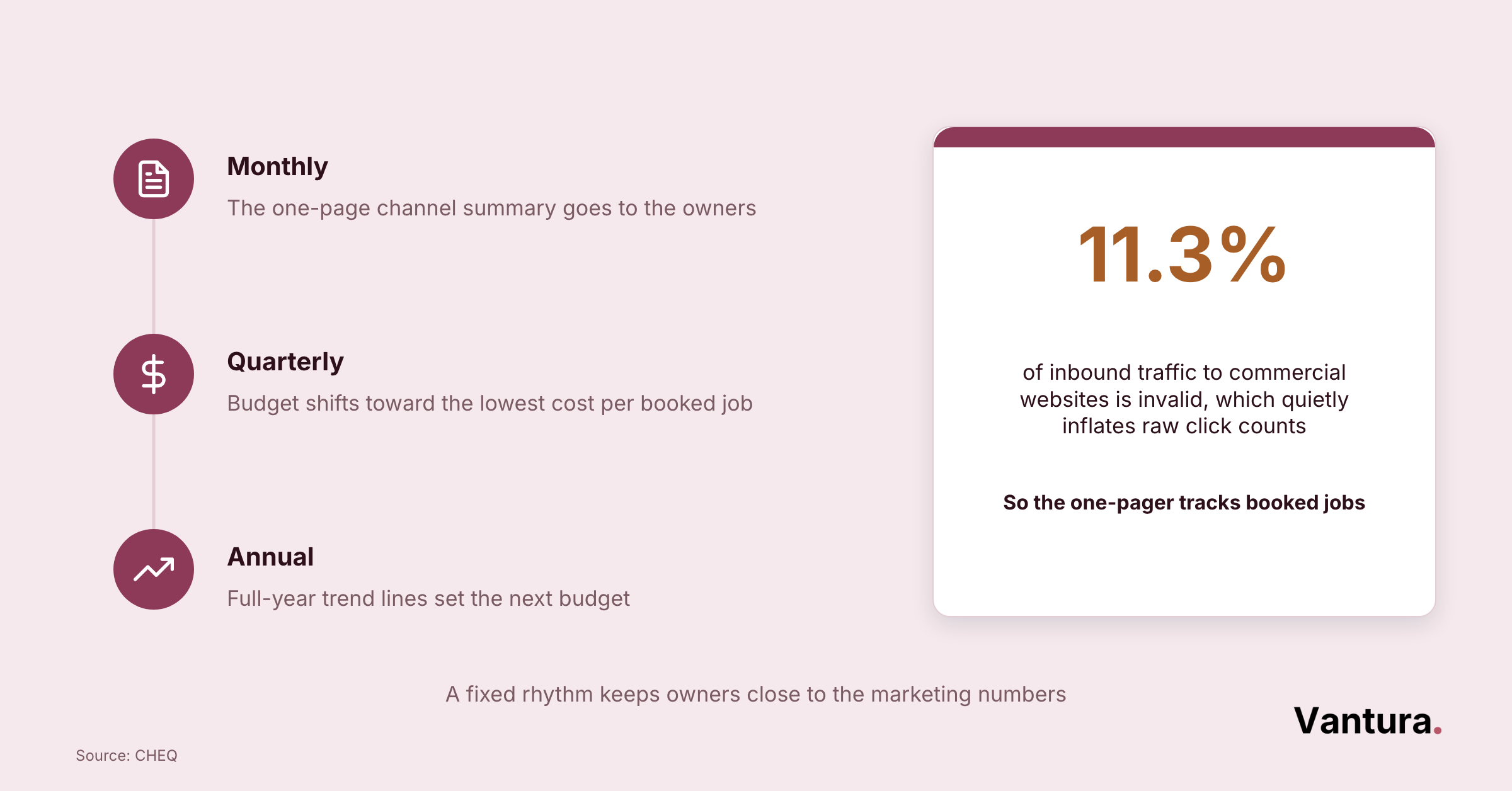
Report construction marketing ROI in the numbers leadership already thinks in, meaning booked jobs, gross profit, and cost per job by channel. Lead with revenue, not clicks or impressions.
Owners want to know what to fund next quarter. A one-page summary of spend, leads, closed jobs, and profit per channel answers that faster than a fifty-tab export.
Keep the cadence steady and the format boring. We report the same way for a real estate digital marketing developer, because high-ticket, project-based work rewards trend lines over monthly noise.
Disclaimer: This article is for general informational purposes only and does not constitute professional, financial, or legal advice. Marketing results vary by market, budget, and execution, and no specific outcome is guaranteed. Vantura Marketing accepts no liability for decisions made based on this content.