Construction Link Building: Strategies That Work (2026)

Construction link building is the work of earning backlinks from other sites so your construction company shows up higher in search. It matters most for contractors chasing local bids and commercial work, where a handful of strong links often beats dozens of weak ones. Get it right and your site becomes the name search engines trust for building work in your area.
Why Contractors Trust Our Team
Our 28 specialists bring more than 190 combined years across search, content, and outreach. We’ve shipped over 180 campaigns and run 750-plus A/B tests, so the advice here comes from proof, not guesswork.
Need Help Earning Construction Links?
If outreach keeps stalling, get in touch and we’ll map a plan that fits your crew and your market. Our industrial digital marketing team can take link building off your plate while you stay on the job.
What Is Construction Link Building?
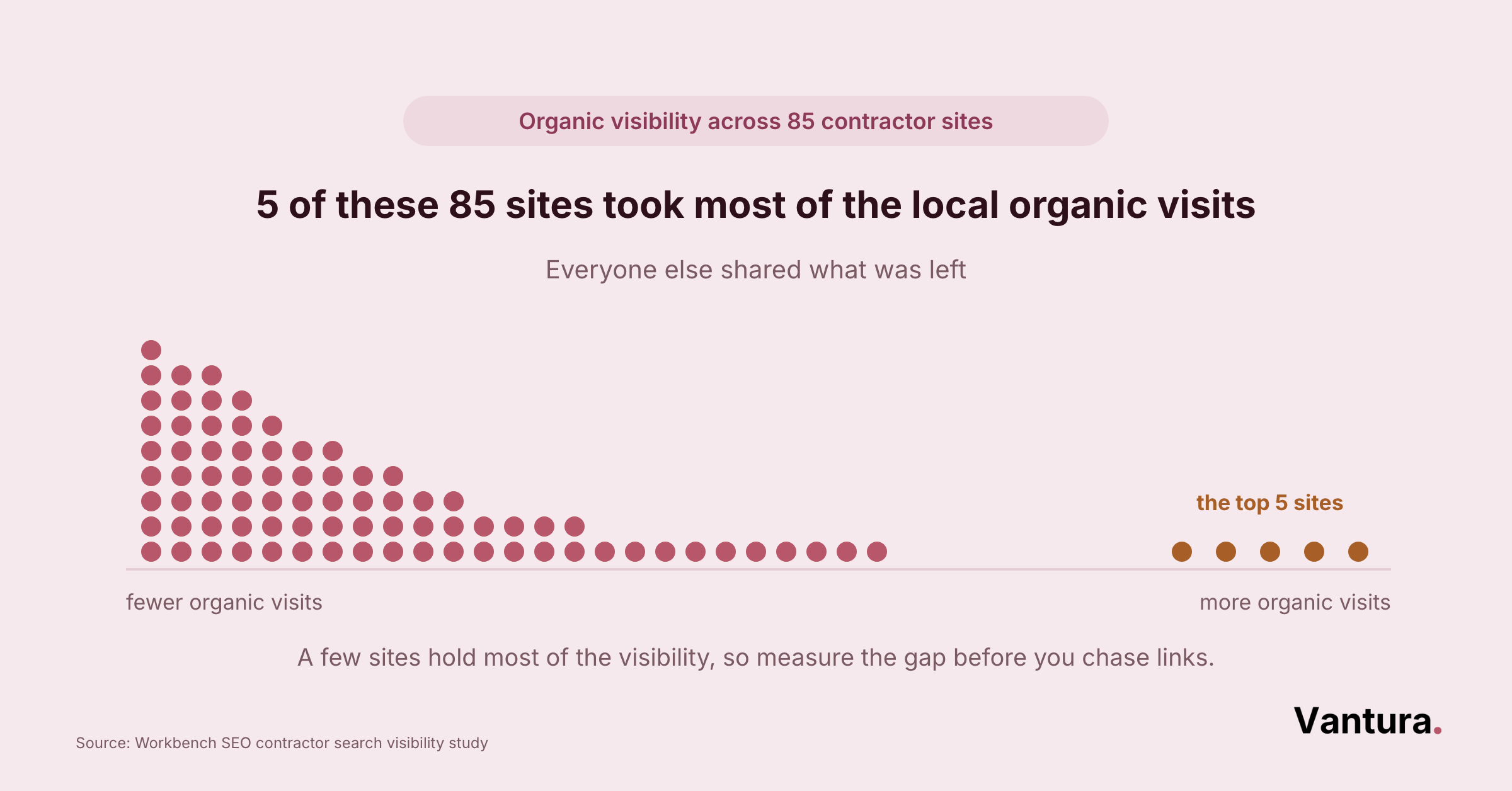
Construction link building is the process of getting other websites to link back to yours, which tells search engines your pages are worth ranking. Those links act like votes from suppliers, trade bodies, local news, and industry blogs.
It covers the full picture, not just one trick. That means earning links with useful content, pitching the press, fixing dead links, and building real relationships across your market.
The work never really stops. New pages, new projects, and new partners all open fresh chances to earn links, so treat it as an ongoing habit rather than a one-time push.
A healthy construction link profile usually blends:
- Local links from your city or region
- Trade and supplier links
- Editorial links from news and blogs
- Links to project pages and case studies
What counts: One link from a respected trade association or regional paper can move the needle more than twenty forum links nobody reads. Focus on relevance and trust first, volume second.
Why Do Backlinks Matter for Construction SEO?
Backlinks matter because they’re still one of the strongest signals Google uses to rank construction sites. When respected sites point to yours, you climb for the searches that bring bids and calls.
Competition online keeps rising too. In our own campaigns, we’ve watched more construction and trade clients move budget into digital every year, so the race for authority is only getting tighter.
For most builders, this is a B2B game with long buying cycles. Strong links shorten that path by making your firm easy to find when a project manager starts researching, which is where solid B2B marketing earns its keep.
Backlinks help construction sites by:
- Lifting rankings for local and service keywords
- Sending referral traffic from partner sites
- Building trust before the first call
- Supporting your Google Business Profile
What Types of Backlinks Should Construction Sites Target?
Not all links carry the same weight. The best construction backlinks come from sites your buyers and peers already trust.
| Link type | Where it comes from | Why it helps construction sites |
|---|---|---|
| Local citation | City directories, chambers of commerce | Boosts local pack and map rankings |
| Trade and supplier | Manufacturers, distributors, associations | Signals real industry ties |
| Editorial | News sites, trade magazines, blogs | Passes strong authority |
| Project and review | Client sites, review platforms, portfolios | Builds trust with buyers |
Chase a mix, not one type. A profile built only on directory links looks thin, while a few editorial links with no local presence can miss nearby jobs.
Rule of thumb: If a link would still be worth having when search engines didn’t exist, because it sends real buyers or partners your way, it’s the kind worth chasing.
How Do You Earn Construction Backlinks With Content?
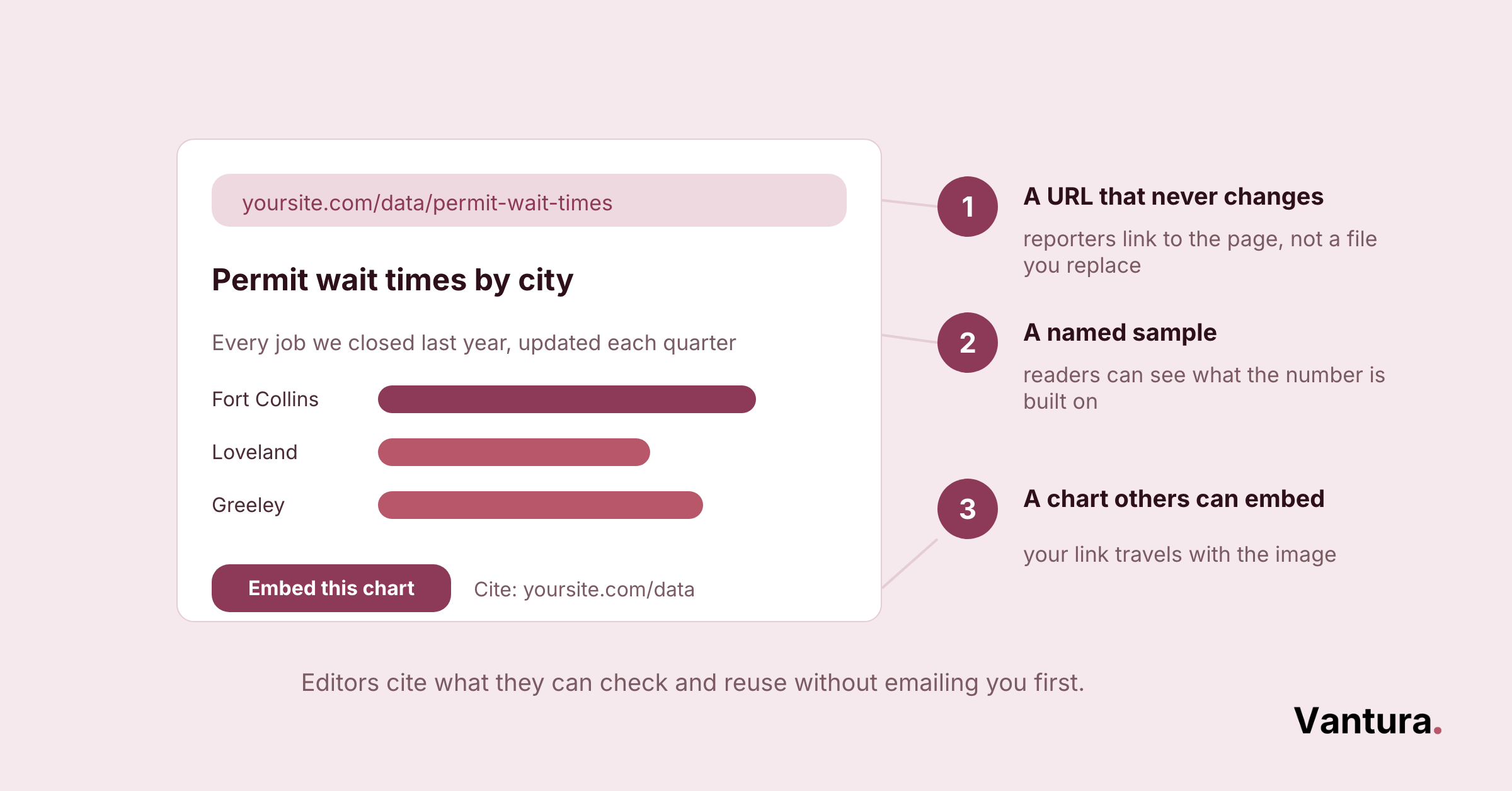
You earn construction backlinks with content by publishing things other sites want to reference. Useful data, tools, and guides pull links far better than a plain services page.
A Four-Step Content Approach
Step 1: Build linkable assets
Cost guides, permit checklists, and local code breakdowns give bloggers and reporters something to cite. These pages age well and keep earning links for a long time.
Step 2: Add original data
Share numbers from your own jobs, like average timelines or material cost swings. In our experience, a single well-sourced stat page attracts more links than ten ordinary blog posts.
Step 3: Make it easy to reuse
Add charts, clear headers, and an embed code where it fits. The easier you make it to reuse, the more links you land.
Content like this feeds every channel, which is why we fold it into integrated marketing plans.
Step 4: Promote what you publish
Great content still needs a push. Email it to partners and reporters who cover your region.
Which Link Building Tactics Work Best for Construction?
There’s no single best tactic. The winners combine a few approaches that fit how construction buyers and partners behave.
Six Tactics Worth Running
Guest Posting and Contributor Outreach
Writing for trade blogs and regional business sites puts your name in front of the right readers and earns a link back. Editors say yes far more often when you pitch a specific topic you know well, like site safety or bidding.
Digital PR and Media Links
Digital PR turns company news into coverage, so a big project win or a local sponsorship can earn a mention with a link. It’s worth the extra effort.
A survey by Reporter Outreach found that 34% of SEO professionals rank digital PR the top link-building tactic. That’s nearly twice the rate for guest posts, the next best-performing tactic.
Reporters move fast, so keep a short, quotable summary and a photo ready to send.
Broken Link Building
Broken link building finds dead links on other sites and offers your page as the fix. A friendly heads-up plus your working link is an easy win for both sides.
Resource Pages and Directories
Many associations, suppliers, and city sites keep lists of local builders, and getting added is often as simple as asking. Skip the spammy, pay-to-list directories that add nothing.
Local Links From Your Community
Local links are gold for contractors, whether you sponsor a youth team, join the chamber, or host a site tour for a trade school. These ties earn links and send real neighbors your way, the same instinct behind good real estate marketing.
Partnerships and Supplier Links
Your suppliers, subs, and partners already have websites, so ask to be listed as a preferred contractor and offer the same back. Roofers, electricians, and plumbers make natural partners, much like coordinated roofing marketing helps related trades.
Field note: On one regional builder account, three community sponsorships earned more durable links in a quarter than months of cold guest-post pitching. Local ties start slow and are hard to beat.
How Do You Judge Construction Backlink Quality?
Judge a construction backlink by trust, relevance, and placement, not by raw numbers. A link from a respected trade site beats a hundred from random blogs.
Signals That Separate Good From Bad
- Comes from a relevant, high-authority site
- Sits inside real content, not a footer
- Uses natural anchor text
- Sends real referral clicks
- Piles up from low-value directories
- Repeats the same site over and over
- Hides in link farms or paid networks
- Looks busy but moves nothing
When a profile feels off, a proper marketing audit sorts the helpful links from the ones dragging you down. Cleaning house often lifts rankings before you build a single new link.
Construction Link Building Tools and Software
You don’t need a huge stack to build links well. A few solid tools cover research, outreach, and tracking for most construction firms.
| Tool type | What it shows you | Best used for |
|---|---|---|
| Backlink checker | Who links to you and your rivals | Finding gaps and new targets |
| Outreach manager | Contacts, emails, follow-ups | Running campaigns without chaos |
| Rank tracker | Keyword positions over time | Proving links move rankings |
| Site crawler | Broken and internal links | Cleanup and internal linking |
Pick tools your team will open. A cheap tracker used weekly beats an expensive suite nobody logs into.
How to Run a Construction Competitor Backlink Analysis
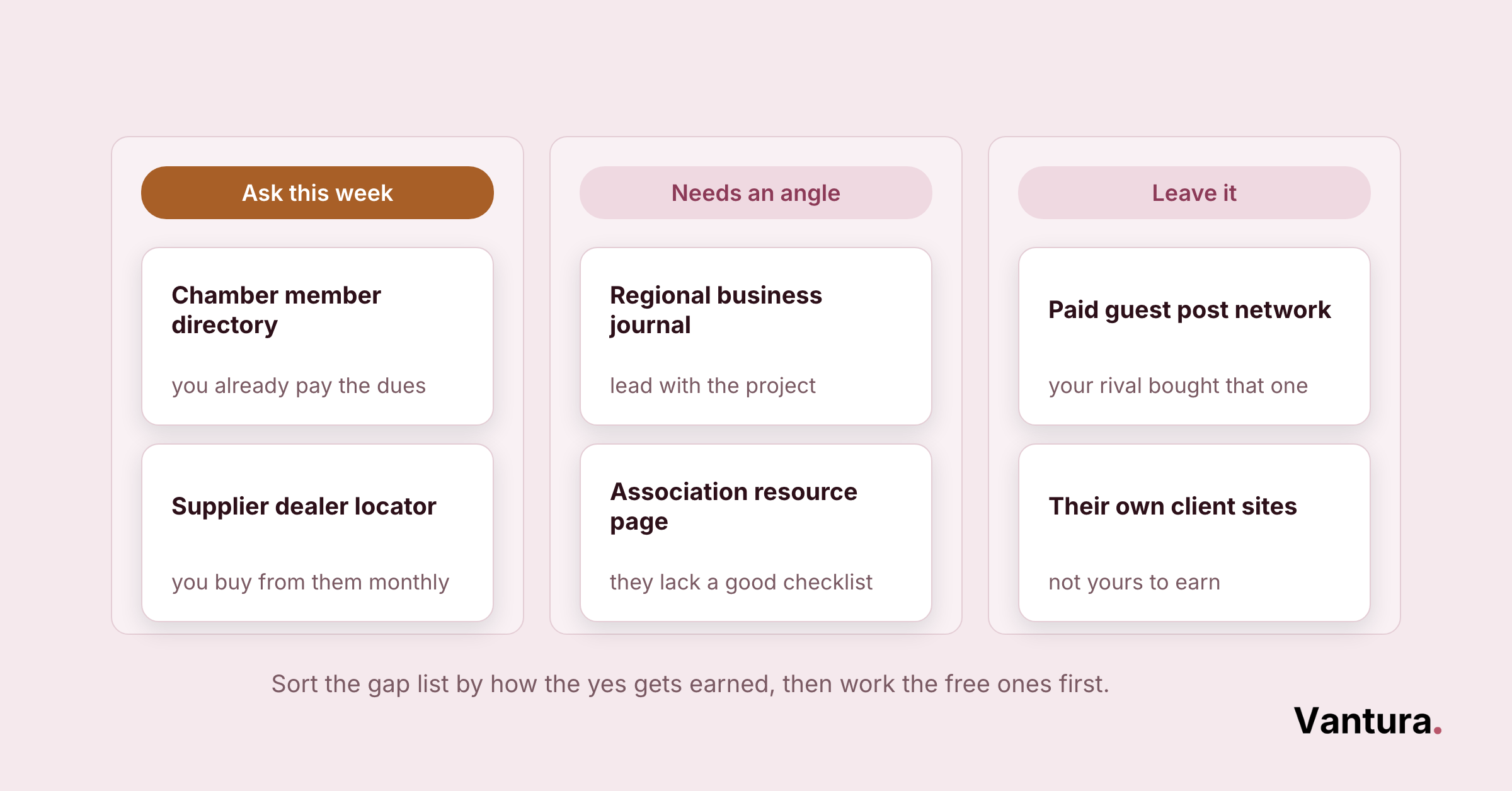
Run a competitor backlink analysis by pulling the links your top-ranking rivals have and spotting the ones you can earn too. It’s the fastest way to find strong targets without guessing.
The Four-Step Process
1. List your real rivals
Search your main service and city terms, then note who ranks. Those are your link competitors, even if they aren’t your bidding rivals.
2. Pull their backlinks
Drop each domain into a backlink checker and export the referring sites. Look for directories, associations, and blogs that link to several of them.
3. Find the gaps
Links that point to rivals but not to you are your shortlist. Start with the easiest and most relevant.
4. Turn it into a plan
Group targets by tactic and set a weekly pace you can keep. If the list feels overwhelming, our marketing consulting team can help you prioritize.
Construction Link Building Outreach Strategies
Outreach is where most link building lives or dies. The message, timing, and follow-up matter more than the tool you send it with.
Four Outreach Tactics
Tactic #1: Personalize the first line
Name the exact page or project you’re referencing. Generic blasts get deleted.
Tactic #2: Lead with their win
Show what the link does for them, not just for you. A useful resource or a fixed dead link is an easy yes.
Tactic #3: Follow up twice
Most replies come after a nudge. Across our campaigns, we’ve seen reply rates land around 4 to 6 percent, and a short second email often lifts that.
Tactic #4: Track everything
Log every send, reply, and win so you can repeat what works. Agencies that run this at scale, including white-label marketing partners, live inside a simple tracker.
Link Building for New Construction Websites
A brand-new construction site has no authority yet, so start with links you can get. Local and relationship links come first, big editorial wins later.
Quick early wins include:
- Chamber and association listings
- Supplier and partner pages
- Local sponsorships
- Your own profile and social links
Keep expectations realistic in the early months. Steady, honest link building suits most small business marketing budgets far better than chasing one viral hit.
Which Link Building Tactics Should Construction Firms Avoid?
Some shortcuts do real damage. Google is good at spotting bought and fake links, and a penalty can wipe out months of ranking.
| Risky tactic | Why it backfires | Do this instead |
|---|---|---|
| Buying links | Breaks Google’s rules and risks a penalty | Earn editorial and local links |
| Spammy directories | Low trust, zero traffic | Pick relevant, moderated lists |
| Exact-match anchors | Looks manipulative | Use natural, varied wording |
| Private link networks | Easy to detect and punish | Build real partner relationships |
Watch for: If an agency promises a set number of links each month at a suspiciously low price, ask where they come from. Cheap links are usually the kind that get you flagged.
What Does a Construction Internal Linking Strategy Look Like?
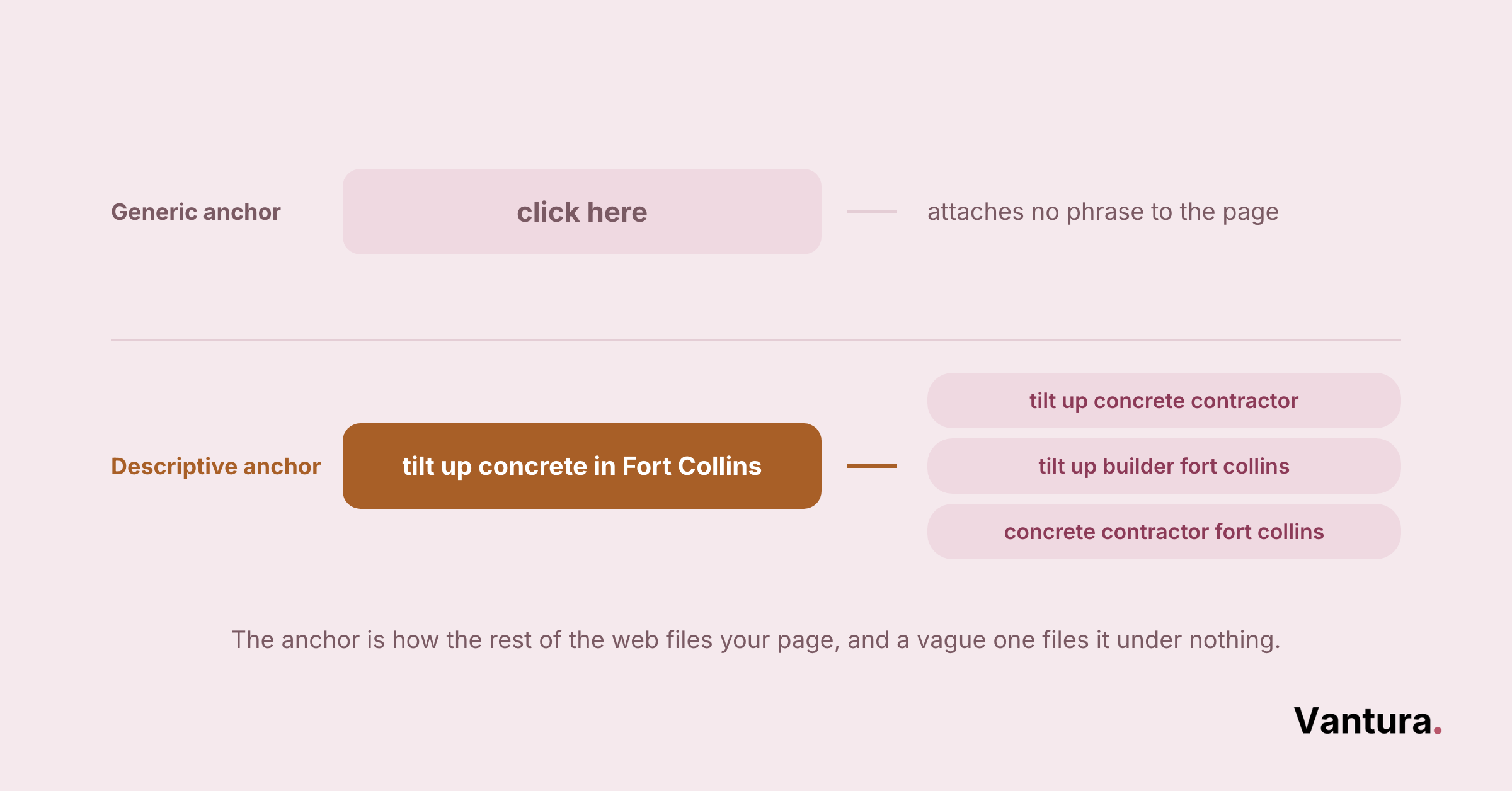
Internal linking connects your own pages so search engines and buyers can move through your site with ease. It spreads authority from strong pages to the ones you want to rank.
Point links from blog posts to your service and project pages using clear, descriptive wording. This helps Google understand which pages matter most.
- Link new posts to core service pages
- Send authority to project case studies
- Fix orphan pages with no links in
- Keep anchor text natural
Internal links are cheap and fully in your control, which makes them an easy part of any digital marketing strategy. Get them right before you spend on outside links.
How Do You Measure Construction Link Building Success?
Measure link building success by tracking referring domains, rankings, and the leads those links help create. Raw link counts alone tell you little.
- New referring domains per quarter
- Movement on target keywords
- Referral traffic from links
- Leads and calls tied to ranking pages
Give it time before you judge. Across our construction projects, we usually see referring domains climb 15 to 22 percent in the first two quarters of steady outreach, with rankings following a beat later.
If tracking keeps slipping, that’s often the sign to hand it off. Many firms outsource marketing reporting so the numbers get looked at every week, not once a year.
Construction Link Building and Domain Authority
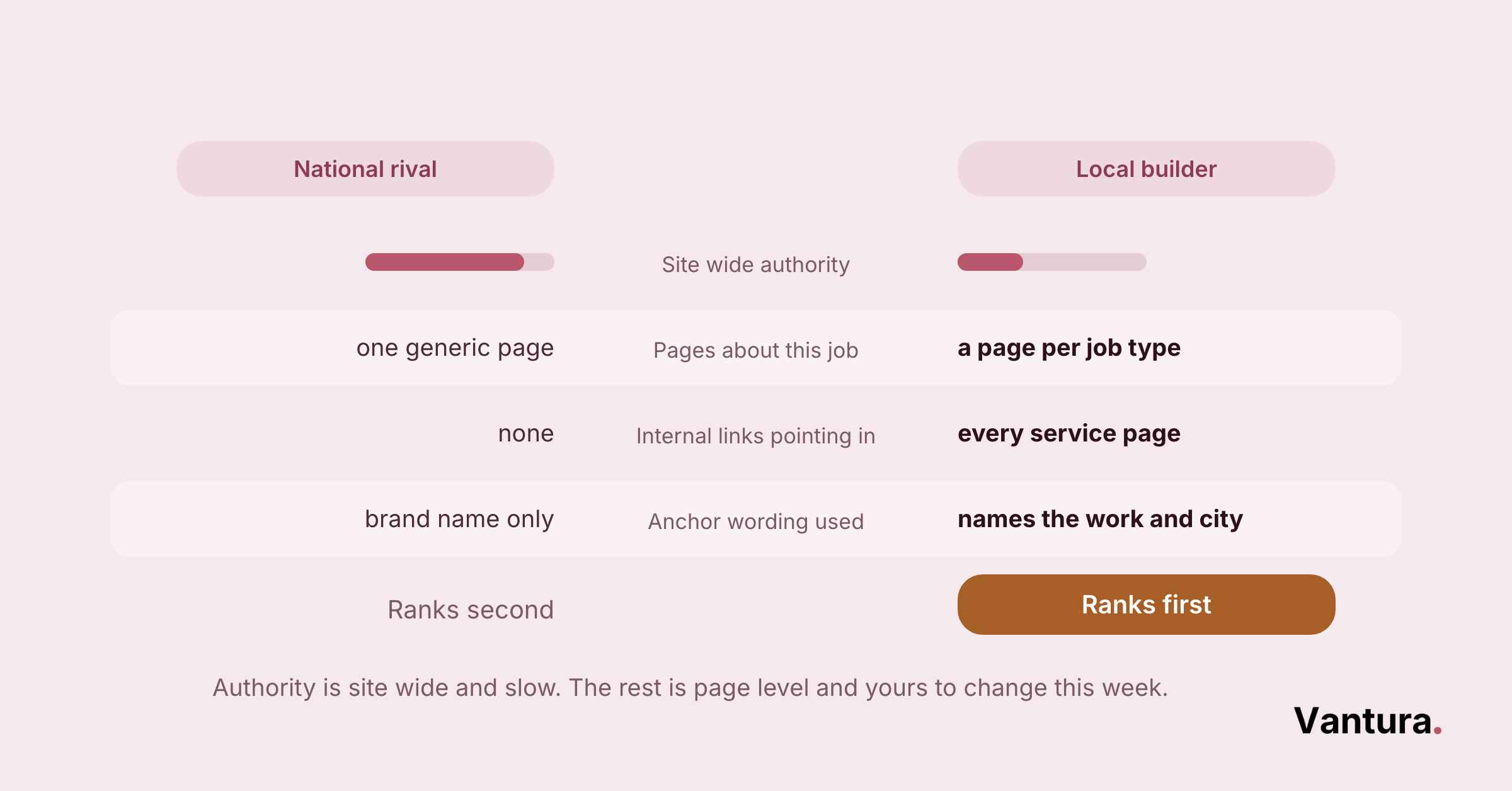
Domain authority is a third-party score that estimates how well a site might rank. It rises as you earn quality links, but it’s a guide, not a goal.
Chase rankings and leads, not the score itself. A page can outrank a higher-authority rival by being more relevant and better linked internally.
Larger contractors bidding on national work feel authority most, since they compete with established players. That’s where deeper enterprise marketing support tends to pay off.
Bottom line: Treat domain authority as a rough temperature check. Steady, relevant links lift it over time, and the leads show up whether the score moves this month or not.
Disclaimer: This article is for general information only and does not constitute professional marketing advice. Results depend on your market, competition, and execution, and no specific ranking or traffic outcome is guaranteed. Confirm current platform guidelines before acting on any tactic here.