Construction Keyword Research: Tools & Best Practices

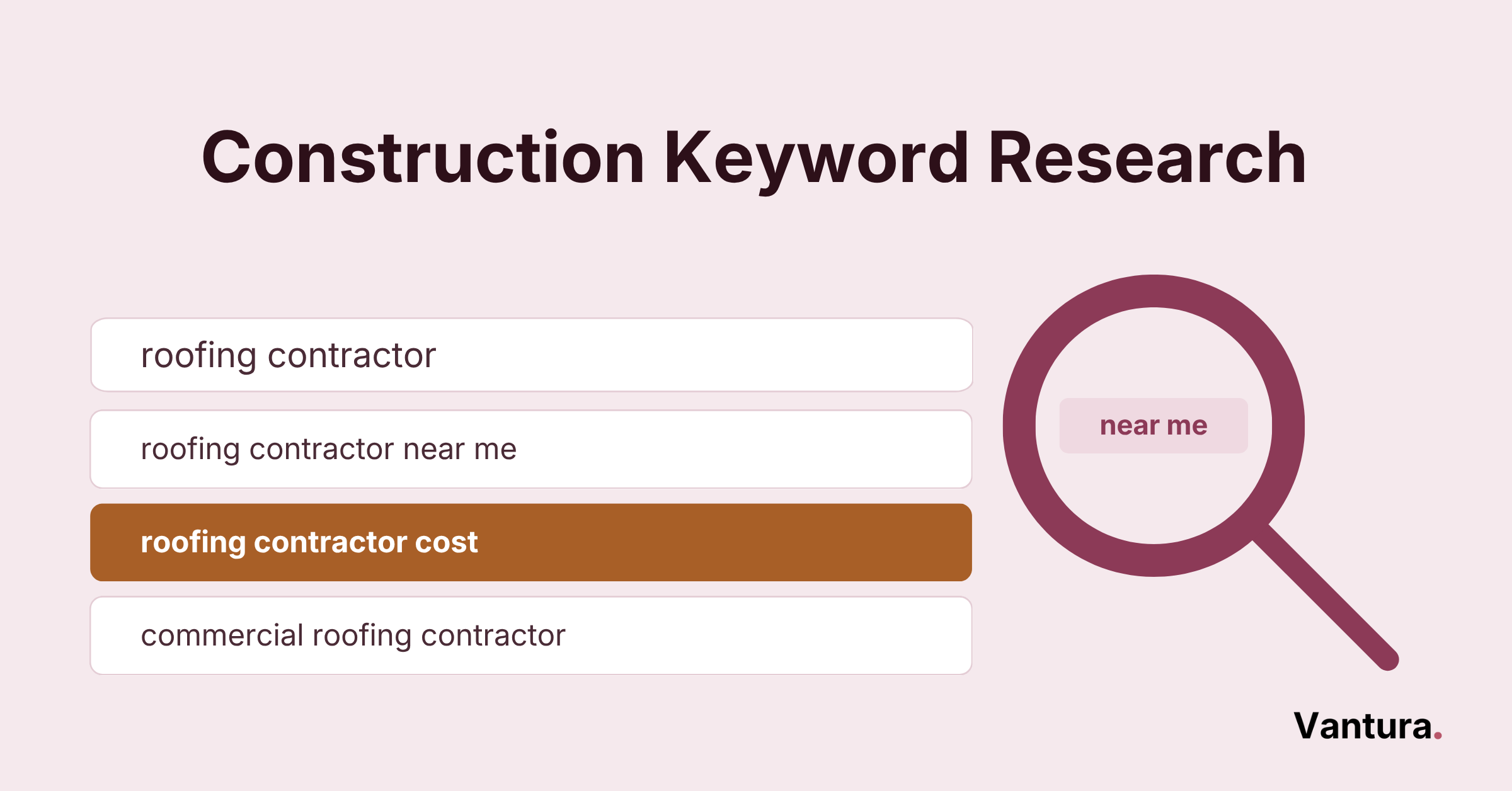
Construction keyword research finds the phrases contractors and property owners type when searching for construction work, then matches them to your site’s pages. It weighs what people search, why they search it, and how hard each term is to rank for. Done well, it points your marketing budget at the searches that actually bring in qualified jobs instead of idle clicks.
Why Trust Our Keyword Research Guidance:
Our team of 28 specialists has run keyword research across 14 industries, backed by 190+ years of hands-on marketing experience.
Need Help Choosing Construction Keywords:
You do not have to sort this alone, our construction marketing consultants can build your keyword map for you.
This guide walks through the whole process, from first seed terms to long-term tracking. We will keep it practical, with construction examples the whole way.
What Is Construction Keyword Research?
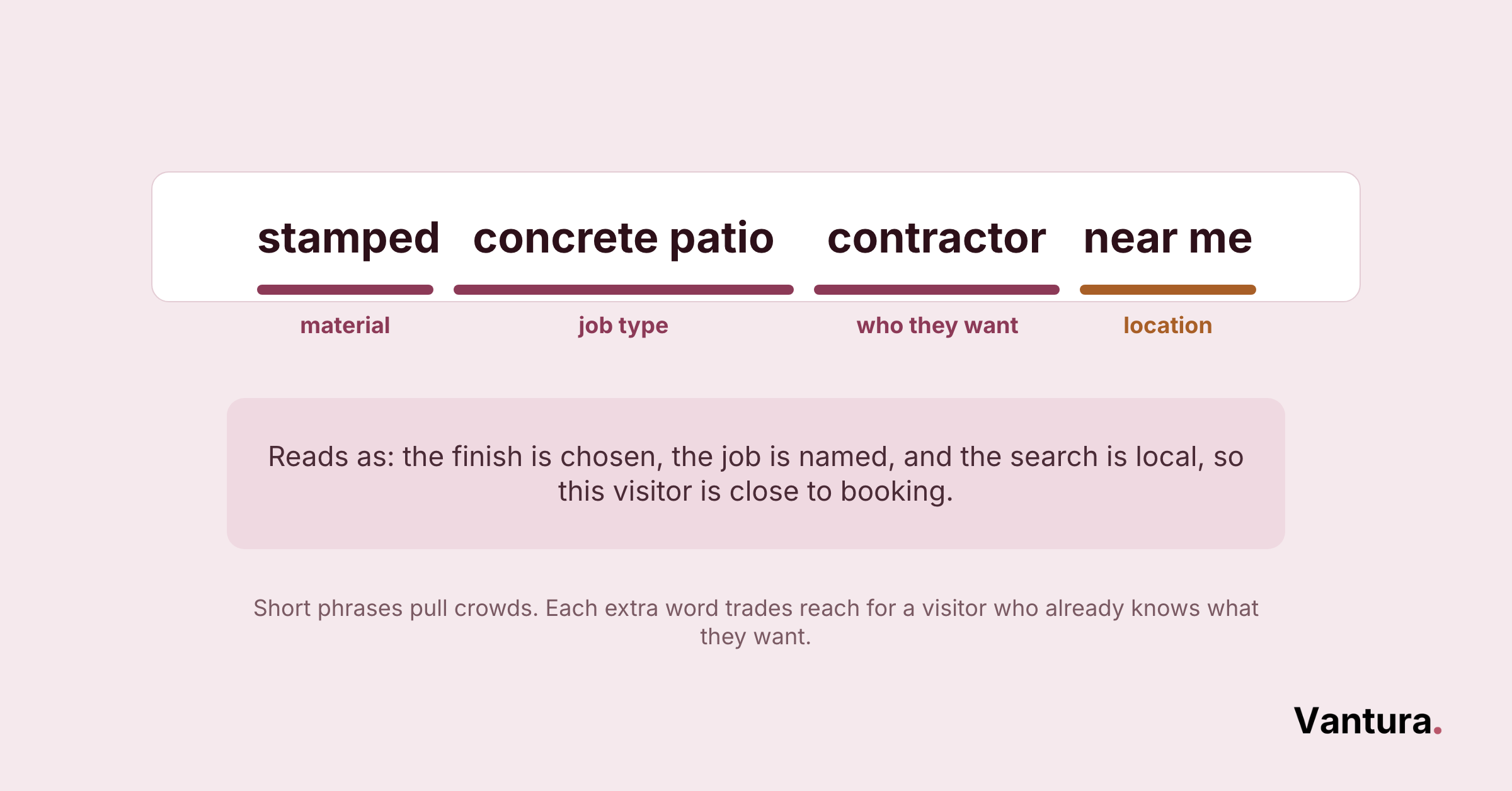
Construction keyword research is finding and sorting the search terms your future customers use, then matching them to the right pages on your website. It looks at what people type, why they type it, and how tough each phrase is to win.
A keyword can be a short phrase like “metal roofing” or a full question like “how long does a home addition take”. Both matter, but they pull in very different kinds of visitors, so you treat them differently.
The goal is not a giant list. It is a short, ranked set of terms you can build pages around and turn into leads.
- The phrase a searcher uses
- The reason behind the search
- How many people search it
- How hard it is to rank
Quick definition: A keyword is any phrase someone types into a search engine. In construction that ranges from “commercial concrete contractor near me” to “how much does a steel building cost”. Research is simply the job of finding those phrases and deciding which ones are worth chasing.
Why Does Keyword Research Matter for Construction Companies?
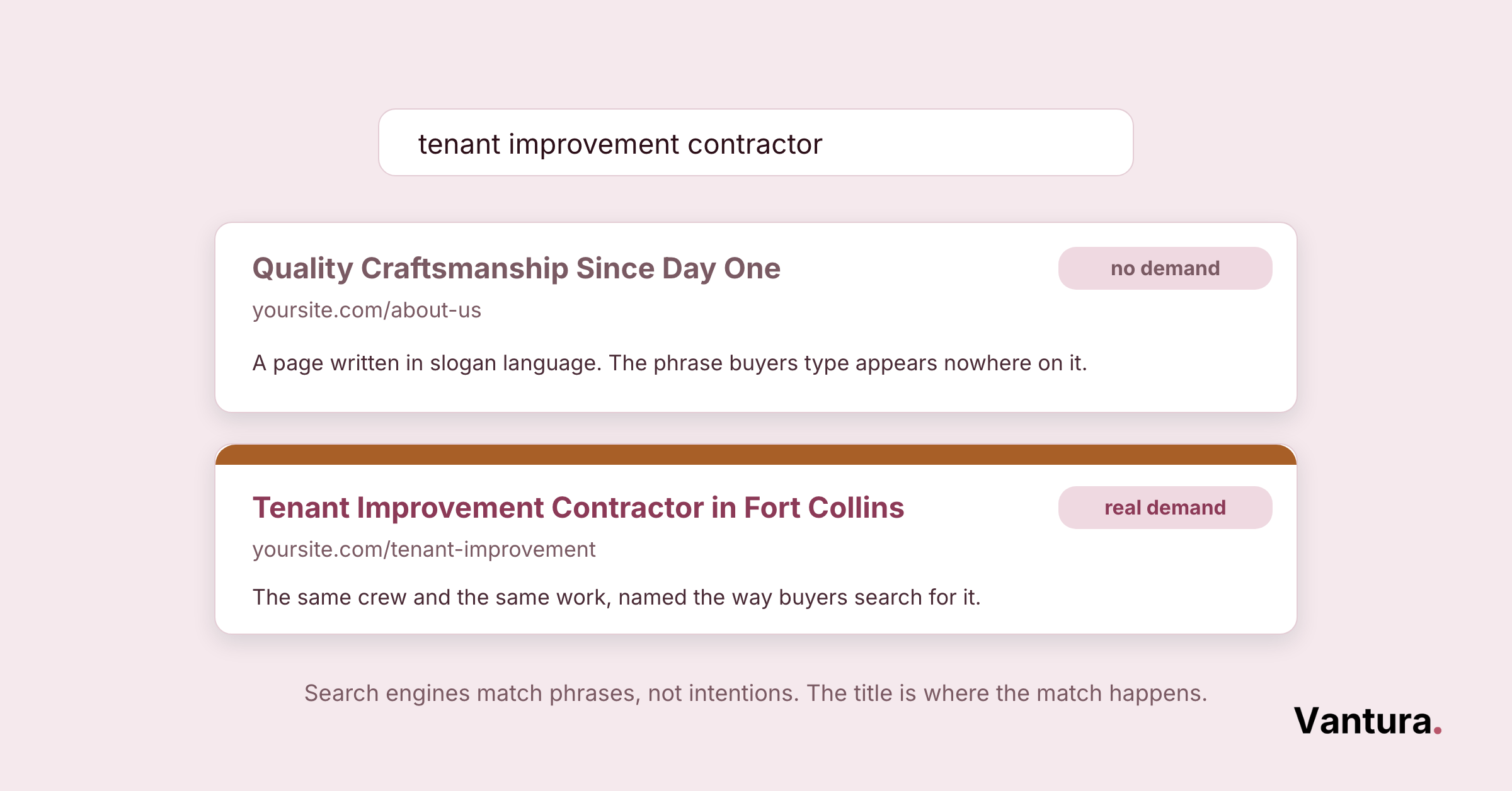
Keyword research matters because it decides who finds you. Construction is a high-value, local business, so a handful of the right rankings can fill your schedule while wrong terms bring no real work.
Buyers now start with a search long before they call. In our experience running construction accounts, most buyers have already searched three or four contractors before they pick up the phone.
A growing share of that early research now runs through AI tools, not just a search bar. Semrush found that 50% of consumers have made a purchase after using AI tools during research, across every category and price point, which means the phrases a buyer types into an AI assistant belong in your keyword research just as much as the ones typed into Google.
The firm that ranks for those searches gets the first shot at the job. If your pages do not match how buyers phrase their needs, competitors take those clicks.
The same research also sharpens paid ads, so you are not paying for terms that never convert.
Reason 1: It sends budget to real demand
Guesswork spreads money thin. Solid keyword research points you to the terms with steady demand, so you can build pages for jobs people search for, like “tenant improvement contractor” or “pole barn builder”.
Reason 2: It matches your services to searches
Every service you offer has a phrase attached to it. Good research lines up your concrete, framing, or remodel pages with the words buyers use, which is a core move behind any solid construction digital marketing strategy.
Reason 3: It compounds over time
A page that ranks keeps pulling in leads month after month. Unlike an ad that stops the day you pause it, keyword-driven content keeps working while you are on the job site.
How Do You Do Construction Keyword Research Step by Step?
You do construction keyword research in six plain steps, moving from how your customers talk to a ranked map of terms and pages. Each step feeds the next, so you never end up with a random list you cannot use.
Building Your Construction Seed Keyword List
Seed keywords are the plain, obvious terms you start from. For a construction firm they usually come straight off your services list and the jobs you quote most.
Pull them from more than one place so you do not miss angles. Your invoices and quotes are a goldmine, since they show the exact work people pay for.
A real estate marketing list starts the same way, from property types.
- Service names like “excavation” or “roof replacement”
- Job types like “kitchen remodel” or “warehouse build”
- Materials like “poured concrete” or “standing seam”
- Common client questions from your inbox
Finding Long-Tail Construction Keywords
Long-tail keywords are longer, more specific phrases with lower search counts and much clearer intent. “Contractor” is broad and brutal to rank for, but “licensed basement waterproofing contractor” is a job you can win.
These phrases are where most construction leads live. They are easier to rank, and the person searching usually knows what they need, so they convert at a higher rate.
How Do You Match Construction Keywords to Search Intent?
You match keywords to intent by asking what the searcher wants to do next, then building the page that answers it. The same word can hide three very different needs, so intent decides the page type before design ever starts.
Get this wrong and even a top ranking flops. A buyer ready to hire who lands on a long history article will bounce, which is a lesson we borrow from sharp B2B marketing teams.
| Search intent | Example construction search | Page to send them to |
|---|---|---|
| Ready to hire | commercial roofing contractor near me | Local service page with a quote form |
| Comparing options | metal vs asphalt shingle roof | Comparison or buying guide |
| Just researching | how long does a roof last | Blog post that builds trust |
Field note: Search intent beats raw volume almost every time. A term searched 90 times a month by ready-to-hire buyers is worth more than one searched 9,000 times by students writing a paper. Always ask what the searcher wants before you chase the number.
Construction Keyword Difficulty and Competition Analysis
Difficulty tells you how hard it is to reach page one for a term. It is shaped by how strong the current top pages are and how many firms already fight for that phrase.
Most tools give a difficulty score, but do not treat it as gospel. Pair it with a quick look at who ranks now, the same way a competitive marketing audit checks the field before you commit.
The bar is often lower than contractors expect. Even so, in our experience monitoring client rankings, AI summaries are now showing up above the organic results on a growing share of construction searches, which adds competition beyond what the difficulty score alone shows.
Construction Competitor Keyword Gap Analysis
A gap analysis shows the terms your rivals rank for and you do not. It is the fastest way to find demand you are simply missing out on.
Run a few local competitors through a keyword tool and export their terms. Firms in nearby trades, like a manufacturing marketing setup, often reveal phrases you can reuse with a construction twist.
- Terms competitors rank for that you skip
- Pages of theirs that pull the most traffic
- Easy phrases nobody local has claimed yet
How Do You Group Construction Keywords Into Clusters?
You group keywords by putting phrases that mean the same thing onto one page instead of many. “Basement finishing”, “finished basement contractor”, and “basement remodel” all want the same page, so they form one cluster.
Clustering stops your own pages from competing with each other. It also makes each page stronger, since one focused page beats three thin ones, a pattern that holds true even in roofing marketing.
| Cluster topic | Grouped phrases | Page it becomes |
|---|---|---|
| Concrete driveways | concrete driveway, driveway paving, driveway contractor | One driveway service page |
| Home additions | room addition, home addition cost, addition builder | One additions service page |
Best Construction Keyword Research Tools Compared
The best tool is the one your team will use every week. Most construction firms do fine with Google’s free data plus one paid tool, rather than a shelf full of subscriptions.
We stay independent here, so no vendor holds a stake in what we suggest. We point clients to whatever fits, from big names to niche, trade-specific platforms.
That neutral stance matters for a solo builder just as it does in small business marketing.
| Tool type | Best for | What it shows you |
|---|---|---|
| Google Keyword Planner | Starting out on a budget | Volume ranges and related terms |
| Google Search Console | Sites already getting traffic | Terms you already rank for |
| Paid research suites | Growing firms and agencies | Difficulty, gaps, and competitor data |
| Niche trade tools | Local and industry focus | Region and sector-specific phrases |
Rule of thumb: You rarely need every paid tool at once. Start with Google’s free data, add one paid tool when you outgrow it, and switch only when a clear gap shows up. Most construction sites get plenty of mileage from a single solid tool.
How Do Construction Keywords Map to the Buyer Journey?
Construction keywords map to the buyer journey by matching each stage, from first curiosity to ready to sign. Early searches are broad and full of questions, while late ones name a service, a place, and a clear intent to hire.
| Journey stage | What they type | Content that fits |
|---|---|---|
| Awareness | signs you need a new roof | Helpful blog post |
| Consideration | metal roof cost per square foot | Cost guide or comparison |
| Decision | roofing contractor in [city] | Local service page |
Keywords for Construction Service and Product Pages
Service pages target decision-stage terms that name the work and often a place. These are your money pages, so give each core service its own page and its own keyword.
Keep the phrasing close to how buyers search. “Commercial electrician” plus a city works far better than a clever tagline, a rule that carries over to HVAC marketing and other trades.
Keywords for Construction Blog Content
Blog content targets the question terms buyers use before they are ready to hire. Cost, timeline, and how-to searches are perfect here, since they build trust while people are still deciding.
These posts also feed your service pages. A reader who trusts your advice on “permit timelines” is warm by the time they hit your quote form.
How Do You Do Local Keyword Research for Construction?
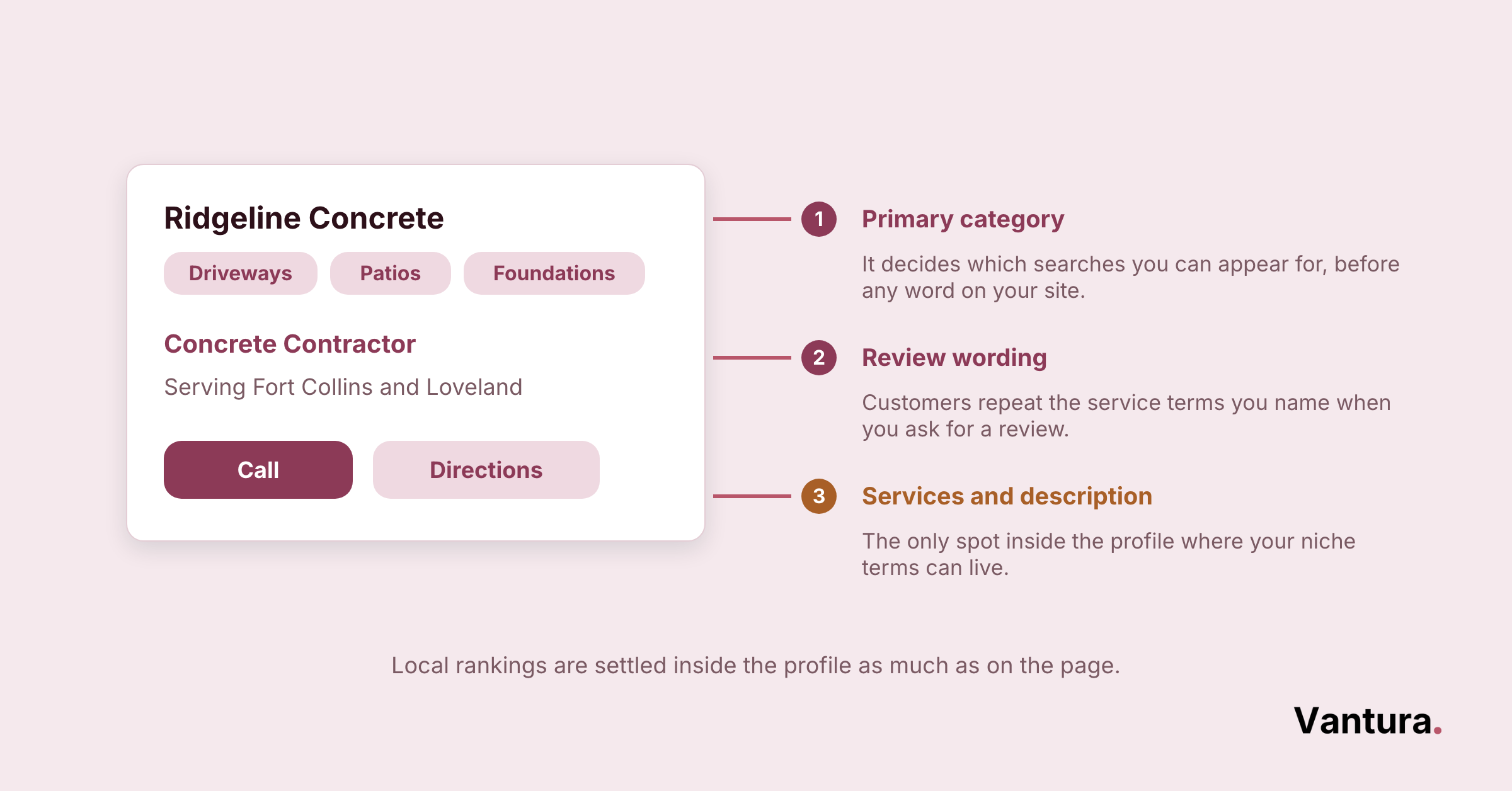
You do local keyword research by adding places and “near me” language to your core service terms. Construction is bought locally, so a city or neighborhood in the phrase usually signals a buyer who is close to hiring.
Where Local Construction Searches Come From
Map searches, voice queries, and mobile browsing drive most local demand. Claiming and filling out your Google Business Profile is step one, since it feeds the map results people tap first.
Build a page for each area you serve, not one thin list of towns. That approach lifts firms across the trades, from plumbing marketing down to electrical and HVAC crews working the same neighborhoods.
- Service plus city terms
- Neighborhood and county names
- “Near me” style phrases
- Local landmarks buyers know
Worth knowing: Local searches often carry the strongest buying signal in construction. When someone adds a city or “near me” to a query, they usually want a contractor now, not information. Those pages deserve your sharpest keyword work and your fastest reply.
Search Volume vs Intent for Construction Keywords
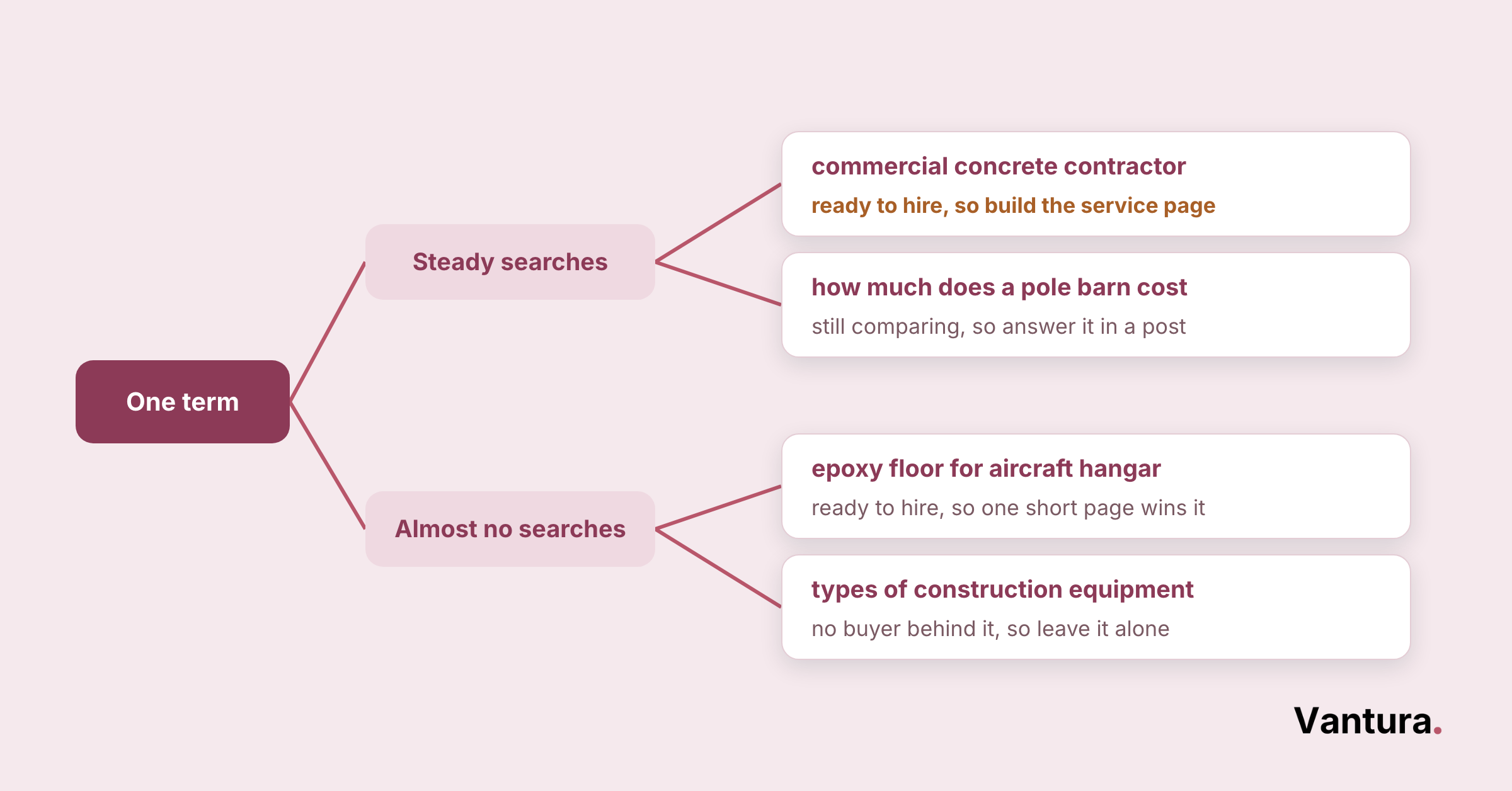
Volume and intent pull in different directions, and construction firms win by weighing both. A big number looks great in a report, but a smaller term full of buyers pays the bills.
Reading a Keyword Two Ways
Every term deserves a quick look through two lenses before it earns a page. One lens counts the crowd, the other reads the mood.
- Shows how many people search
- Great for planning content reach
- Can be misleading on its own
- Shows what the searcher wants
- Great for spotting ready buyers
- Usually the better guide to revenue
How Do You Prioritize Construction Keywords?
You prioritize keywords by ranking them on value, intent, and how winnable they are, then working from the top down. This keeps your team focused on terms that can move the schedule this quarter.
Score each term simply and be honest about difficulty. Tie the plan back to your broader marketing strategy so keyword work is not a side project.
Chase low-difficulty local and long-tail terms first. They rank faster and bring in booked jobs while your bigger targets are still warming up.
Keep a few high-value, tough terms on a slow burn. Build authority toward them with blog content so they pay off down the road.
Zero-Volume Construction Keywords Worth Targeting
Some valuable terms show almost no volume in the tools, yet still bring in work. Very specific phrases like “epoxy floor for aircraft hangar” get few searches, but the person searching is often a serious buyer.
Do not delete a term just because its number reads zero. If it matches a real service and a real buyer, a short page for it can quietly win jobs your rivals ignore.
Keep in mind: Not every keyword needs its own page. Ten near-identical phrases usually belong on one strong page, grouped as a cluster. Splitting them across thin pages makes them compete with each other and drags all of them down.
What Construction Keywords Work for Voice Search?
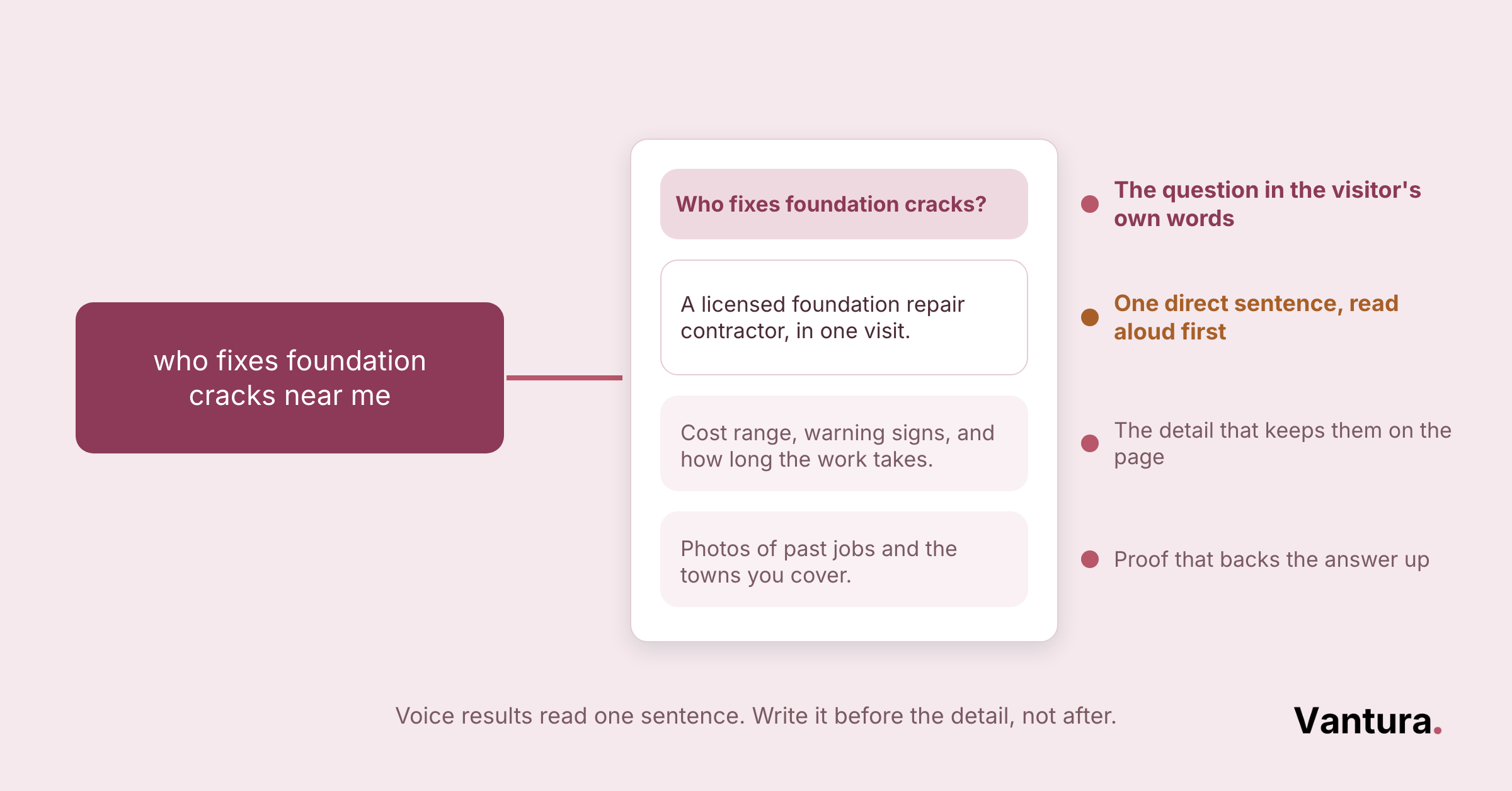
Voice search keywords are longer, spoken-style questions people ask on a phone or speaker. Someone on a job site is more likely to say “who fixes foundation cracks near me” than to type three clipped words.
Target natural questions and full sentences to catch this traffic. Answering them plainly on your pages also helps you show up in the quick answers search engines read aloud.
Homeowners are asking the same kind of question to AI assistants now, something we see picking up across our own client accounts month over month. Writing for how people actually speak, rather than how they type, covers both surfaces at once.
- Question phrases starting with who, how, or what
- Full, conversational wording
- Clear, direct answers near the top of the page
How Often Should You Refresh Your Construction Keyword Strategy?
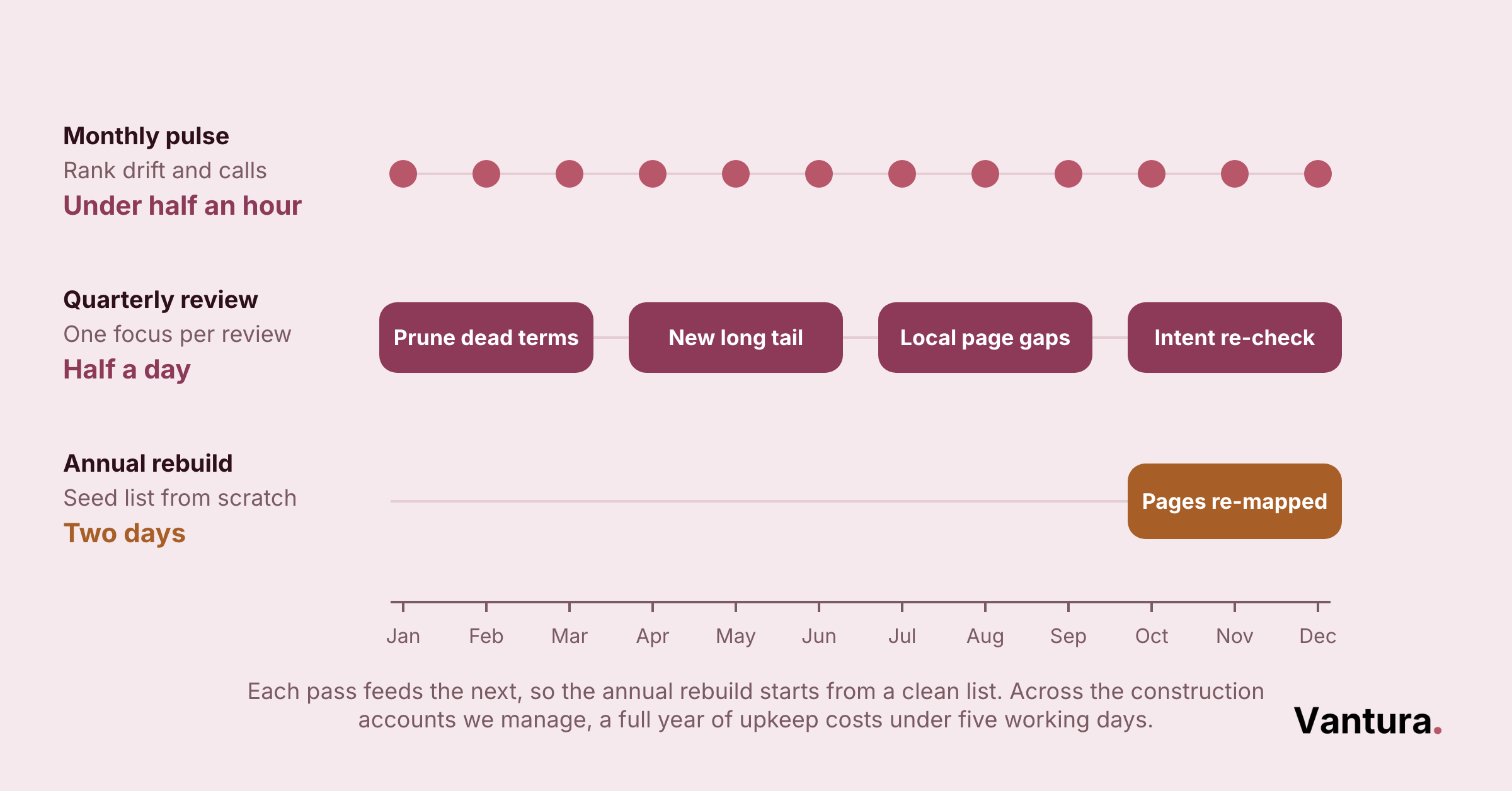
You should refresh your construction keyword strategy at least once a quarter, with a bigger review each year. Search habits shift, new materials raise new questions, and competitors keep moving, so a stale list slowly leaks leads.
If your team is stretched thin on the tools and the field work, it is fair to outsource construction digital marketing for the ongoing work. The point is that the review happens on schedule, not who runs it.
Tracking Construction Keyword Rankings Over Time
Tracking rankings tells you whether the work is paying off. Watch your priority terms, your local pages, and any phrase you have just built a page around.
Do not chase daily wiggles, since rankings bounce for all sorts of reasons. Look at the monthly trend and pair it with the leads and calls those pages bring in.
Bottom line: Keyword research is never truly finished. Search habits move, new codes and materials create new questions, and rivals shift their focus. A short quarterly review keeps your list current without turning it into a second full-time job.
Disclaimer: This article is for general informational purposes only and does not constitute professional marketing, legal, or business advice. Search rankings and results vary by market and are not guaranteed. Vantura Marketing is not liable for decisions made based on this content.