Construction Email Marketing: Strategy & Best Practices

Construction email marketing is the practice of using permission-based emails to win new clients and stay close to past ones for a building or contracting business. It works because most construction projects have long decision cycles, so a steady presence in the inbox keeps you first in line when a prospect is finally ready to sign. Done well, it turns a quiet list of addresses into one of your cheapest, most dependable sources of booked work.
Why contractors rely on our email guidance:
Our team of 28 marketing specialists has shipped more than 180 campaigns and run over 750 A/B tests, a good share of them email. That testing habit is how we lift qualified leads by an average of 4.2x within 90 days.
Need a hand with your email program?
If planning, writing, and automating campaigns keeps sliding down the list, that is normal on a busy job site. Reach out and our integrated marketing team can fold email into the rest of your plan.
What Is Construction Email Marketing?
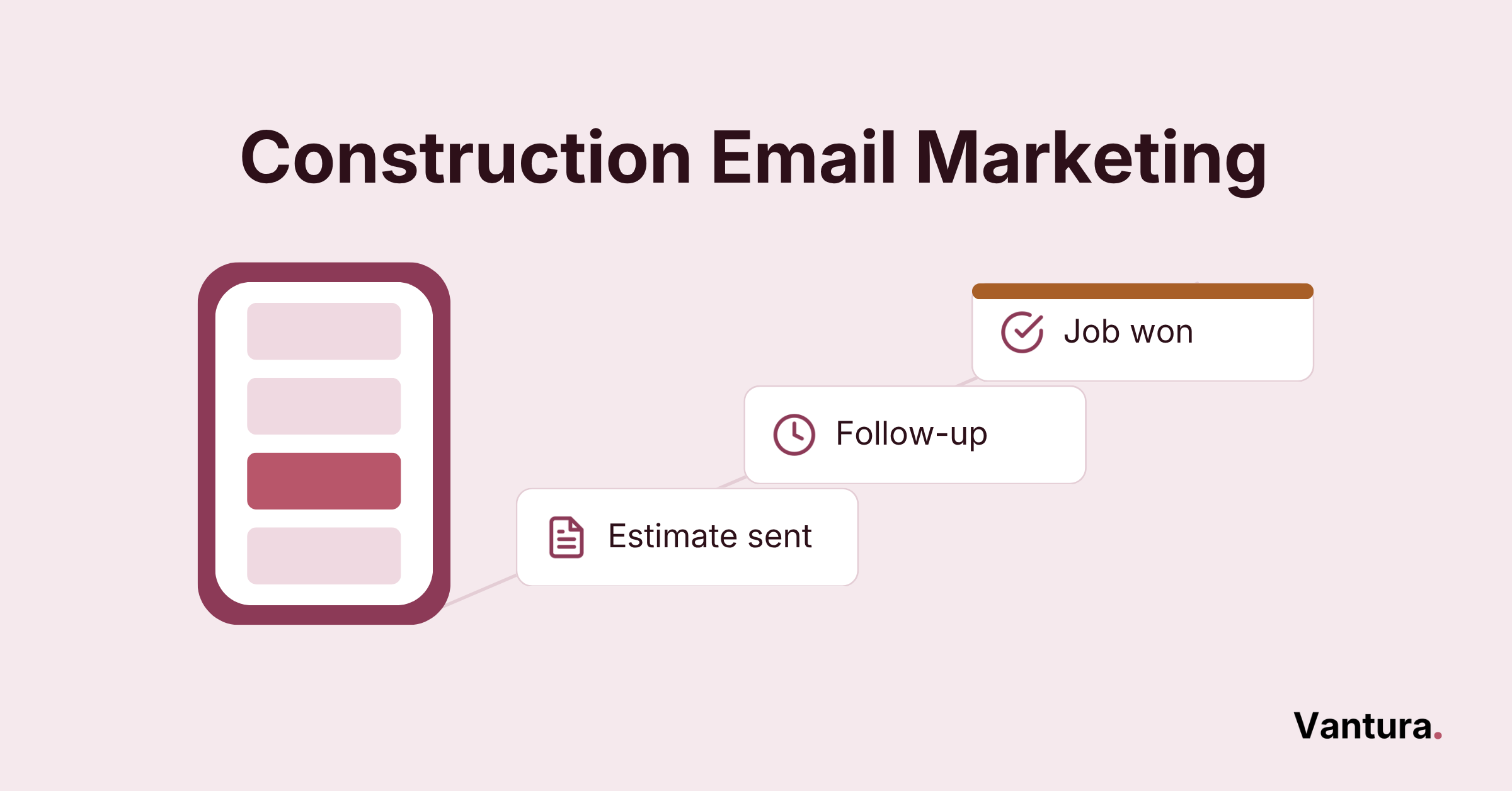
Construction email marketing means sending targeted, permission-based emails that move builders, homeowners, and developers from a first inquiry to a signed contract. It covers everything from a monthly newsletter to the automated note that lands the day after you send a quote.
For contractors, the appeal is simple. Most buyers are not ready the day they first find you, so email keeps you visible until the project becomes real.
The payoff is hard to argue with. Email marketing drives an average ROI of $36 for every $1 spent, higher than any other channel, according to Litmus.
It also plays well with everything else you do. Treat it as one channel inside a broader digital marketing strategy, not a tool that lives on its own.
Worth knowing: A contractor’s email list is one of the few marketing assets you truly own. Ad costs climb and social algorithms change, but the addresses in your list stay yours, which is why a healthy list quietly grows more valuable every year.
How Do You Build a Construction Email Marketing Strategy?
A construction email marketing strategy starts with one goal, one audience, and one clear offer, then grows from there. You decide who you are emailing, what you want them to do, and which emails move them from curious to booked.
Skip the guesswork and write the plan down. Even a one-page plan beats a clever campaign you cannot repeat next month.
Six steps carry most contractors from a blank page to a running program. Work through them in order the first time.
Growing and Organizing a Construction Email List
A big list is not the goal. A clean, well-sorted list of people who genuinely want to hear from a contractor is the thing that pays.
List-Building Techniques That Fill a Contractor’s List
List building works best when you ask at moments people already trust you. The estimate stage and project close are two of the strongest, because that is when goodwill is highest.
- Add a simple signup box on every service page of your site.
- Offer a genuinely useful download, like a remodel budgeting checklist.
- Collect emails at the estimate stage, always with permission.
- Ask past clients at project close, when they are happiest.
- Feed leads from trade shows and local events into the same list.
The same habits that fill a roofing company’s marketing list work for any trade. Consistency beats any single clever tactic here.
Segmenting and Targeting Your Construction Subscribers
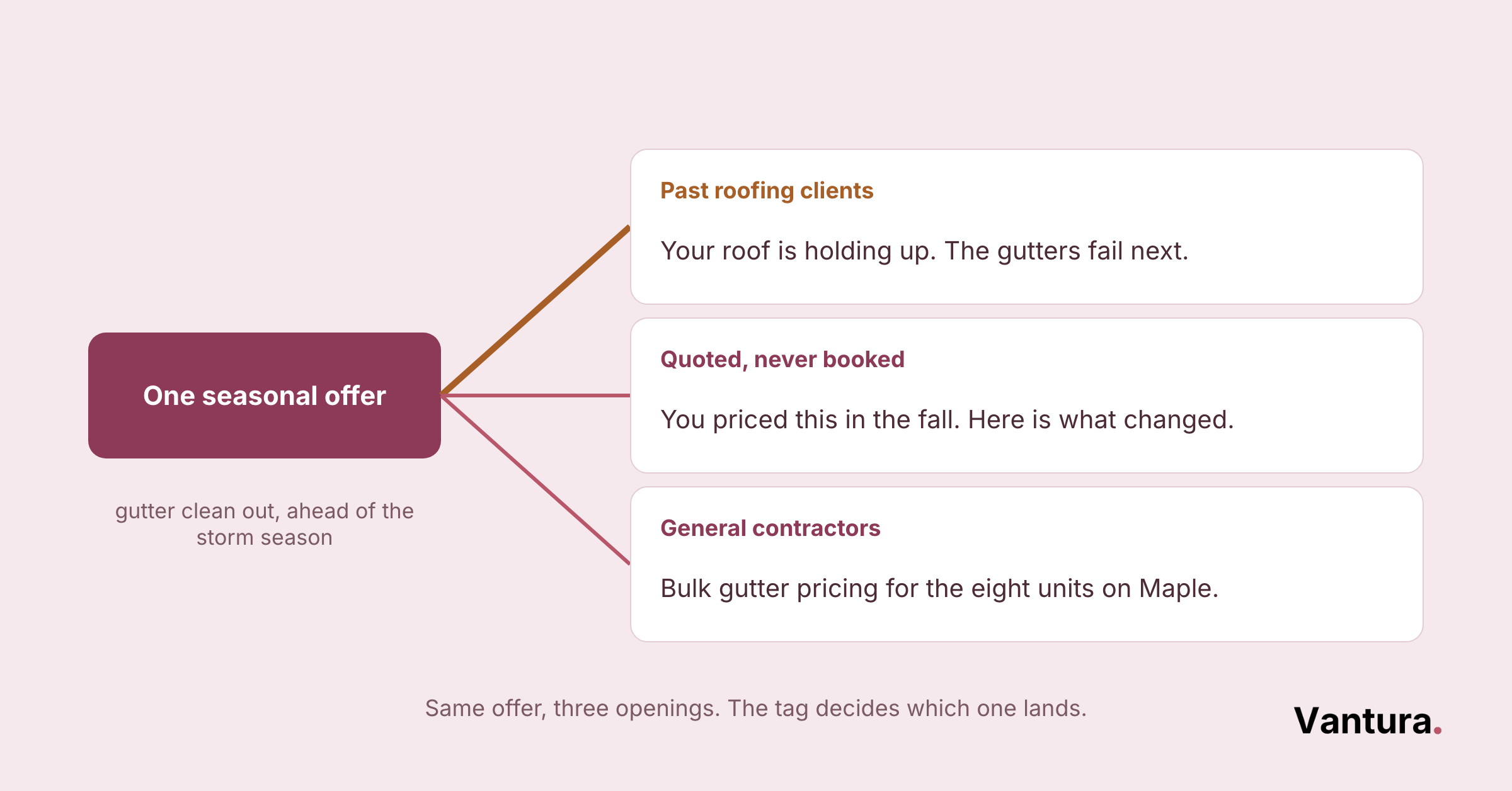
Segmenting means sorting your list so the right message reaches the right person. Sort by service, by project stage, and by location at a minimum.
A general contractor and a mechanical crew rarely want the same email, which is why segment-first thinking shapes strong HVAC marketing too. Send less, but send it to people who care.
Which Construction Emails Should You Send?
Send the emails that match where a buyer sits in the job cycle. That means nurture emails for slow leads, outreach for cold prospects, service updates for active jobs, and win-back notes for quiet contacts.
Nurturing Sequences and Drip Campaigns
A nurture sequence is a short set of emails that goes out on a schedule after someone joins your list. It keeps you useful while a prospect decides, instead of leaving one estimate to do all the work.
The Post-Estimate Follow-Up
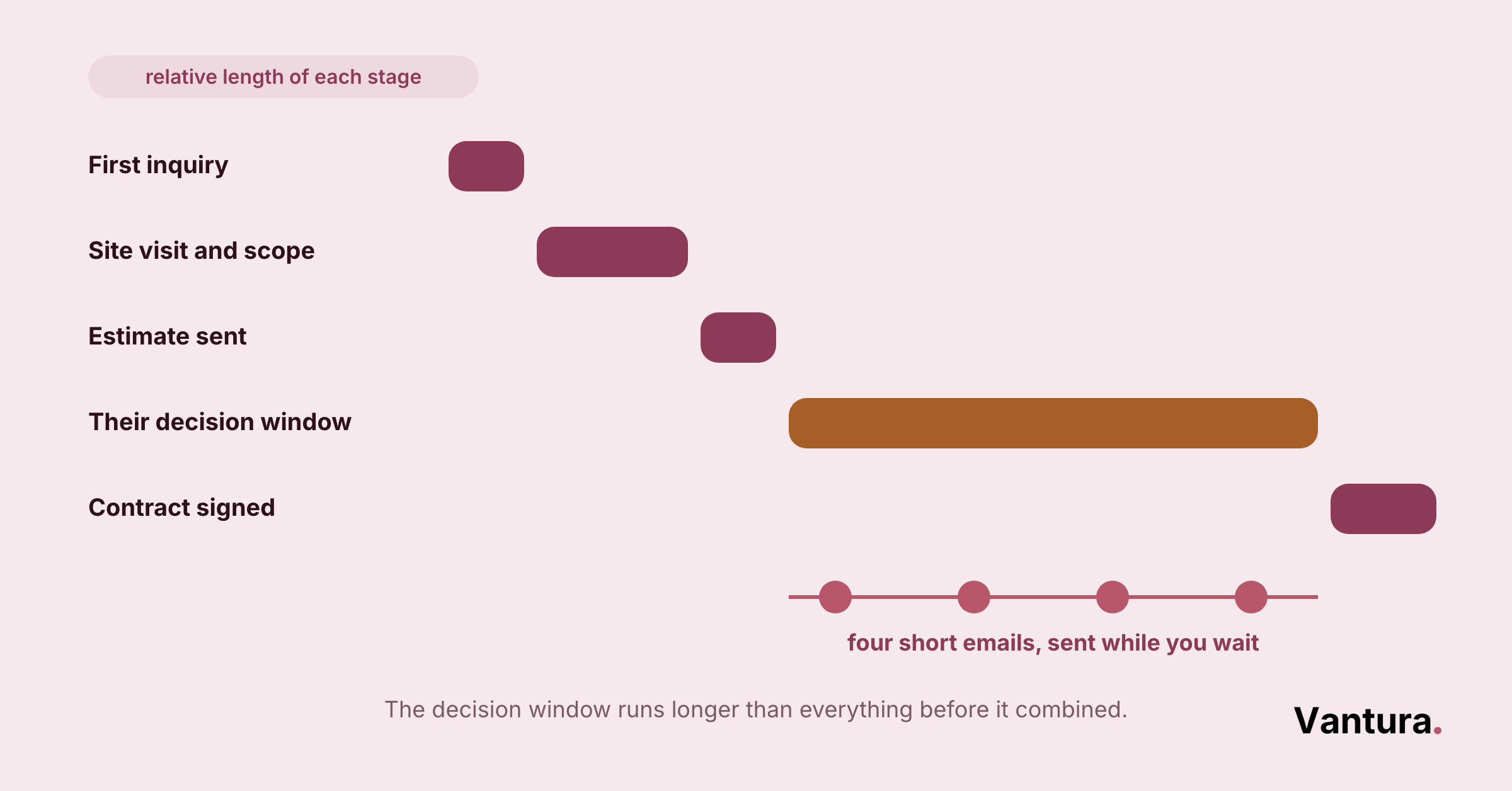
The leads almost always stall right at the quote stage, so this is where a drip earns its keep. Three or four spaced emails, answering the questions buyers ask most, quietly move fence-sitters forward.
Long buying cycles are normal in B2B marketing, and a patient drip keeps you first in line. Push too hard and people tune out, so space the sends.
Cold Email Outreach to Builders and Developers
Cold outreach targets developers and general contractors who do not know you yet. It only works when the note is short, specific to their project type, and easy to reply to.
Keep cold email fully compliant, since prospecting rules are stricter than most crews expect. If it keeps stalling, an outsourced marketing team can run the outreach for you.
Transactional and Promotional Emails
Both types belong in your program, but they do different jobs. One confirms and updates, the other sells.
- Estimate confirmations and appointment reminders.
- Project status updates during an active build.
- Invoices, receipts, and warranty details.
- Seasonal service offers and maintenance reminders.
- New service announcements and project showcases.
- Referral asks and review requests.
Transactional emails get opened far more often, so a light, useful line at the bottom can carry a soft promotion. Just keep the confirmation itself clean and honest.
Re-Engagement Campaigns for Quiet Subscribers
A re-engagement campaign wakes up contacts who have gone silent for months. One honest email, asking if they still want to hear from you, sorts the live leads from the dead weight.
Plumbing companies see this constantly, and a simple win-back note revives more of the list than most expect. Clear out the ones who never respond, since a smaller engaged list lands in more inboxes.
Quick gut check: If you only build one campaign this quarter, make it the post-estimate follow-up. It reaches people who already invited you to bid, which is the warmest audience a contractor ever gets, and it is the sequence we see recover the most stalled jobs.
How Do You Get Construction Emails Opened and Clicked?
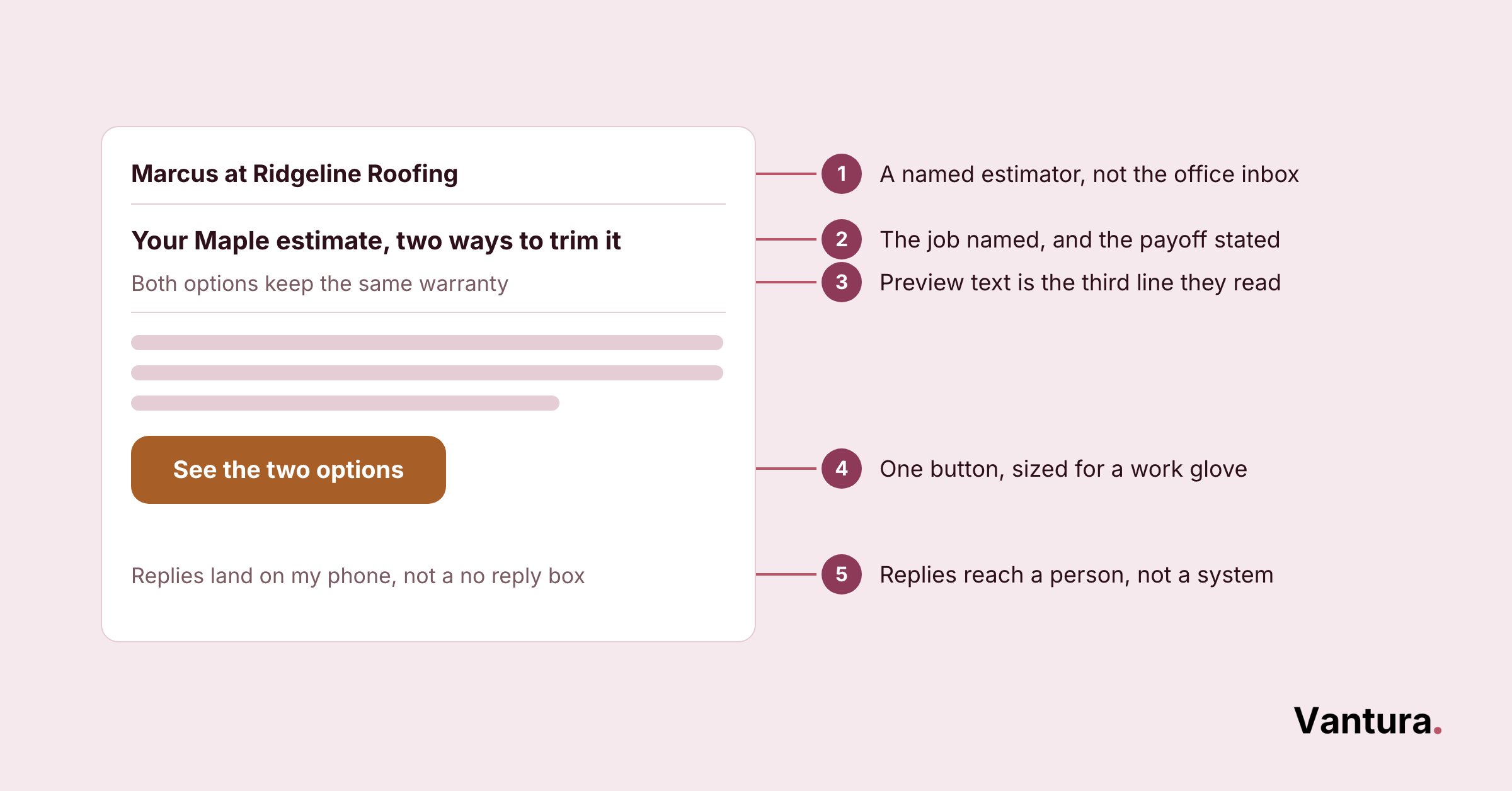
You earn opens with a recognizable sender name and a clear subject line, then earn clicks with one focused message and one obvious next step. Everything else is detail on top of those two moves.
Subject Lines That Earn the Open
The subject line decides whether the rest of your work gets seen. Keep it short, specific, and free of anything that smells like a sales blast.
- Be specific: “Your deck estimate, and two ways to save” beats “Following up.”
- Stay short: aim for a length that survives on a phone screen.
- Skip the hype: all caps and exclamation marks trip spam filters.
- Use the name: a first name in the preview text lifts opens.
Email Design and Layout for Contractors
Design should get out of the way of the message. A single column, real photos of your work, and plenty of white space read cleanly on any device.
Mobile First, Always
Most of your clients open email on a phone between site visits, so design for the small screen first. Big tap targets, short paragraphs, and one clear button beat a busy layout every time.
Personalization and Dynamic Content
Personalization goes past a first name. Show a roofer a roofing offer and a remodeler a kitchen guide, using the tags you set during segmentation.
Timely project updates matter as much in real estate marketing as they do on the job site. When an email clearly speaks to one person’s job, it stops feeling like a blast.
Automating Construction Email Marketing
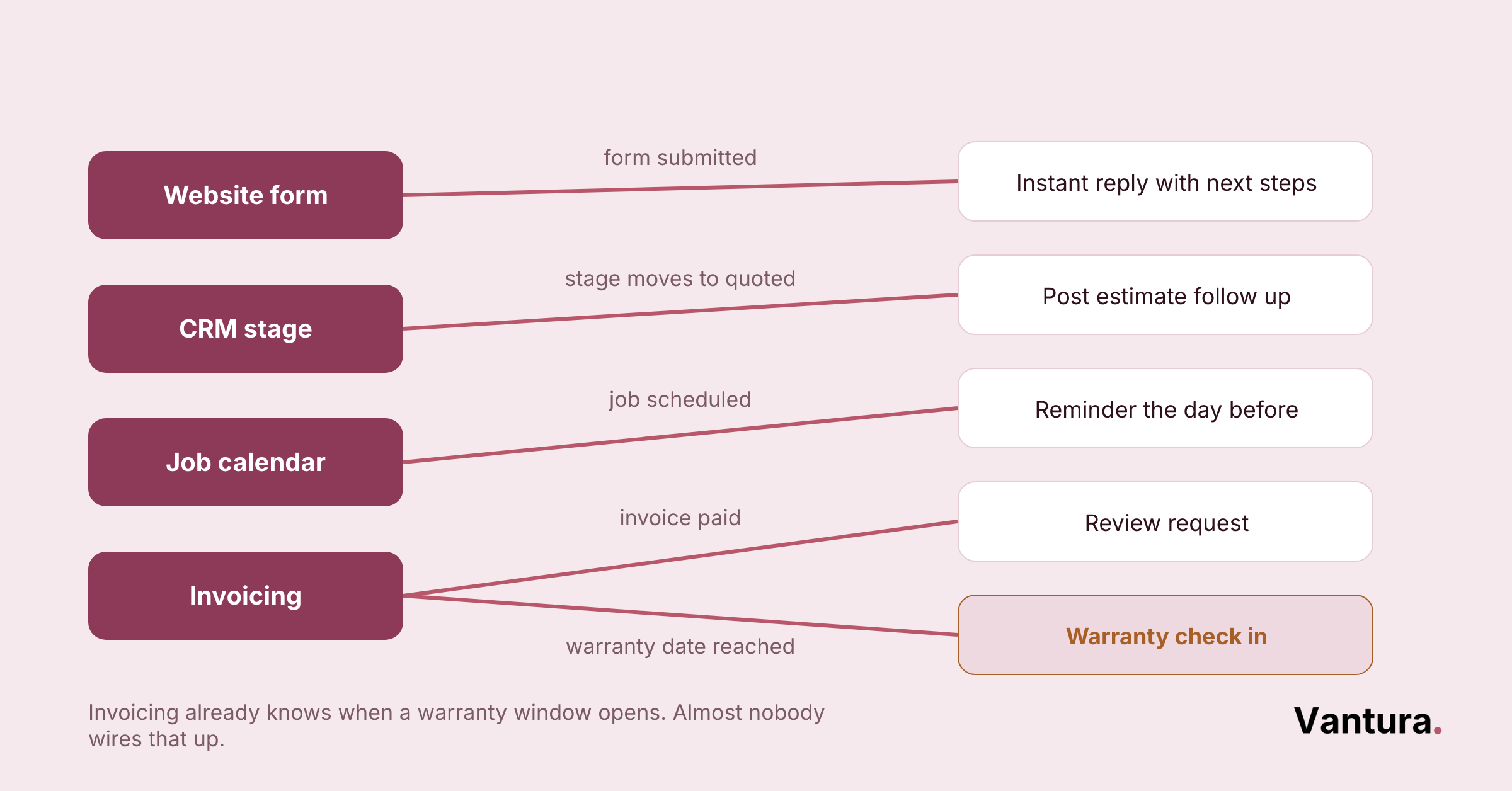
Automation lets the right email send itself the moment a trigger fires. Set it once, and the follow-ups keep going out while your crew stays on site.
Automation Workflows and Triggers
A trigger is any action that starts a sequence, like a form fill or a sent estimate. The workflow is the chain of emails that follows on a set schedule.
The Estimate-Sent Trigger
The moment you send a quote is the highest-intent point in the whole cycle, so wire a sequence to it. Automation is how small teams punch above their weight, the same edge good small business marketing gives a local contractor.
Connecting Email to Your CRM
Your email tool and your CRM should share one view of each contact. When a lead becomes a client, the emails they get should change on their own.
Before you connect anything, a quick marketing audit of your contact data saves hours later. Messy records are the reason most integrations misfire, and cleaning them first is unglamorous but worth the effort.
Which Metrics Show Construction Email Marketing Is Working?
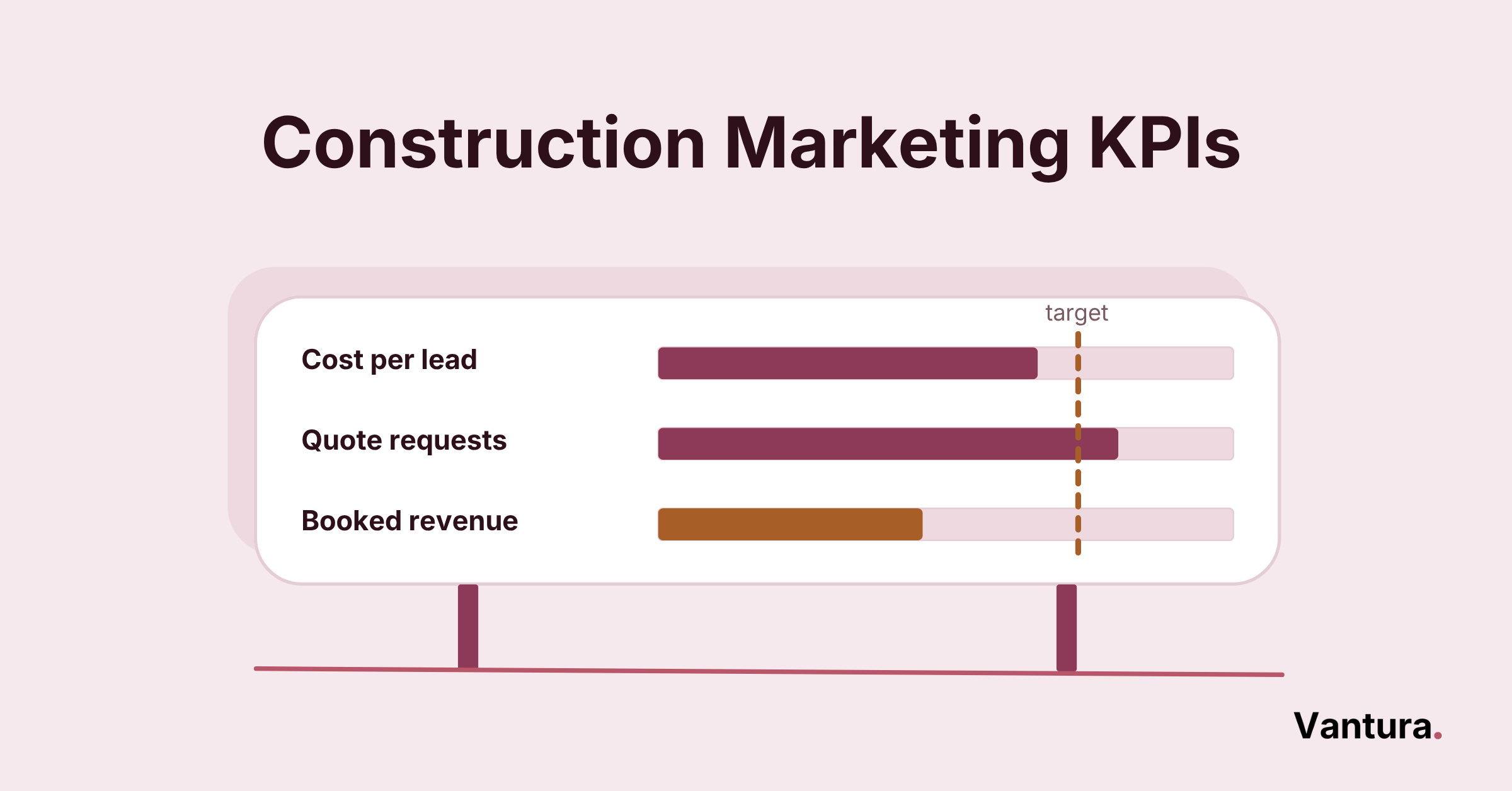
Open rate, click rate, and reply rate tell you the most, as long as you read them against your own history. Across our contractor campaigns, here are the ranges we aim for, though an electrical contractor and a large builder will land in different spots.
| Email metric | What it tells you | A healthy range we aim for |
|---|---|---|
| Open rate | Whether your sender name and subject line earned attention | Around 25 to 40 percent on a warm list |
| Click-through rate | Whether the content and offer pulled real action | Roughly 2 to 5 percent |
| Click-to-open rate | How compelling the email was once it was opened | About 10 to 15 percent |
| Bounce rate | How clean and current your list is | Under 2 percent |
| Unsubscribe rate | Whether your frequency or targeting is off | Below half a percent per send |
| Reply or quote-request rate | Real pipeline, not just clicks | Anything above 1 percent is a strong month |
How Do You Keep Construction Emails Out of the Spam Folder?
You stay out of spam by proving you are a legitimate sender and mailing only people who asked to hear from you. Authentication, list hygiene, and honest content do most of the work.
Deliverability and Spam Prevention
Deliverability is whether your email reaches the inbox, not whether you hit send. Set it up once and protect it every send after.
- Add SPF, DKIM, and DMARC authentication for your sending domain.
- Remove hard bounces and dead addresses after every send.
- Warm up a new sending address slowly, in small batches.
- Keep a healthy text-to-image balance and avoid spam-trigger words.
Compliance and Opt-In Rules
Compliance is not optional, and the rules are simpler than they look. Mail only people who opted in, tell them who you are, and make the unsubscribe link easy to find.
In the United States, CAN-SPAM sets the floor, and Canadian contacts fall under the stricter CASL. Honoring an unsubscribe within a few days is both the law and good practice.
How Do You Test and Improve Construction Email Campaigns?
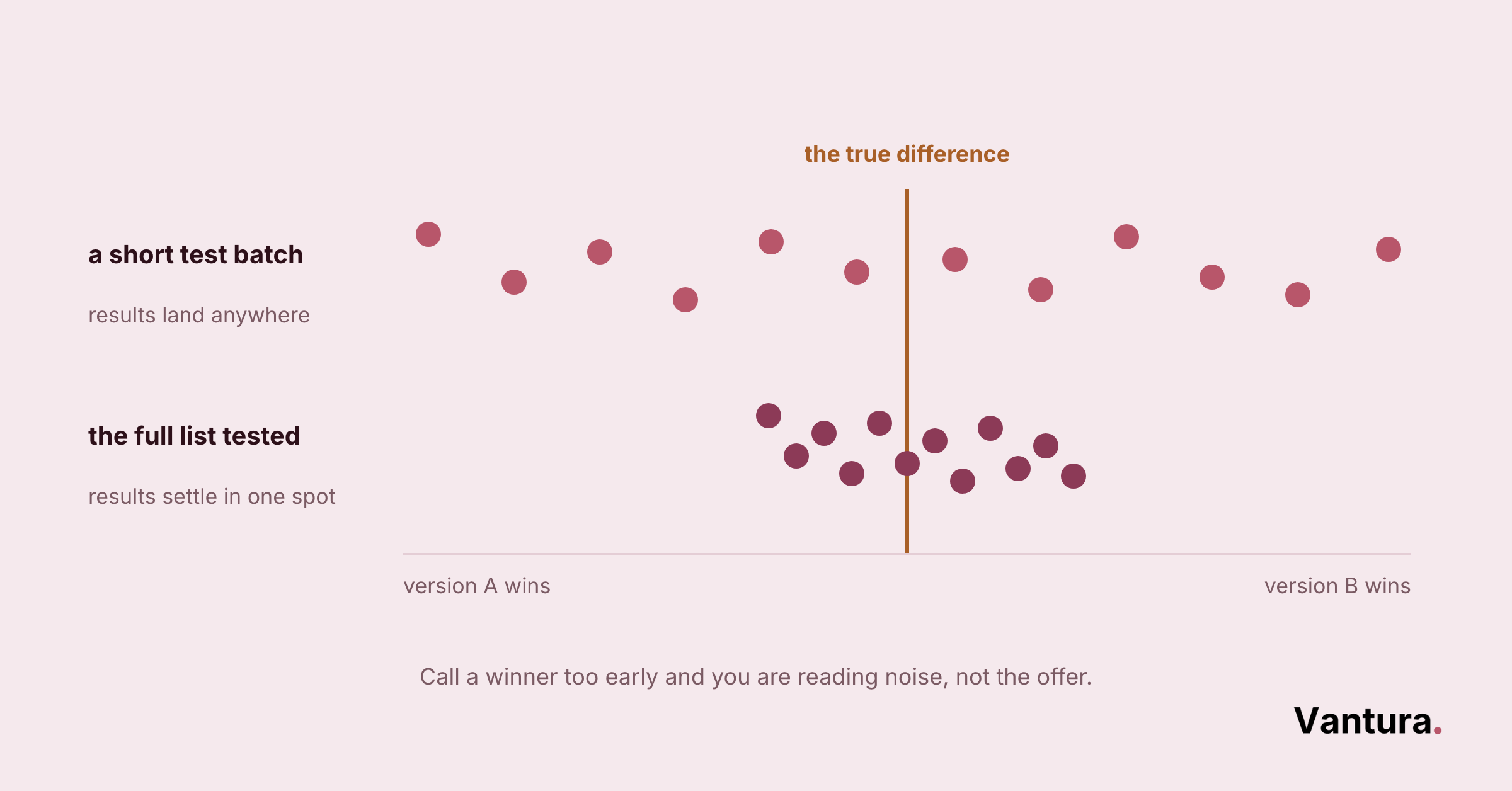
You improve by testing one thing at a time and keeping the winner. Change a subject line, a send time, or a single call to action, then compare the results on a real audience.
Across our own campaigns, the biggest lifts usually come from the subject line and the offer, not the colors. Test the subject line and offer first, since small design tweaks rarely move the numbers much.
When results plateau, a fresh set of eyes from marketing consulting often finds the fix faster than another round of guessing. Give each test enough sends to trust the outcome before you call it.
Which Construction Email Marketing Platform Should You Choose?
Choose the platform that fits how you already run jobs, not the one with the longest feature list. Industrial suppliers and product sellers lean toward different tools than pure service contractors, a split we also see in industrial marketing.
| Tool type | Where it fits | What to keep an eye on |
|---|---|---|
| All-in-one email tools, including Mailchimp, Constant Contact, and Brevo | Small crews sending newsletters and simple drips | CRM depth stays thin as you grow |
| Contractor CRMs with email built in, such as JobNimbus, Buildertrend, and Jobber | Teams that want email tied to jobs and estimates | Email design and testing tools are basic |
| Marketing platforms, including HubSpot and ActiveCampaign | Firms running nurture, lead scoring, and automation | Pricing climbs as your contact count grows |
| Commerce-leaning tools, such as Klaviyo | Suppliers and product sellers in the trades | Often more than a service-only contractor needs |
What Is the ROI of Construction Email Marketing?
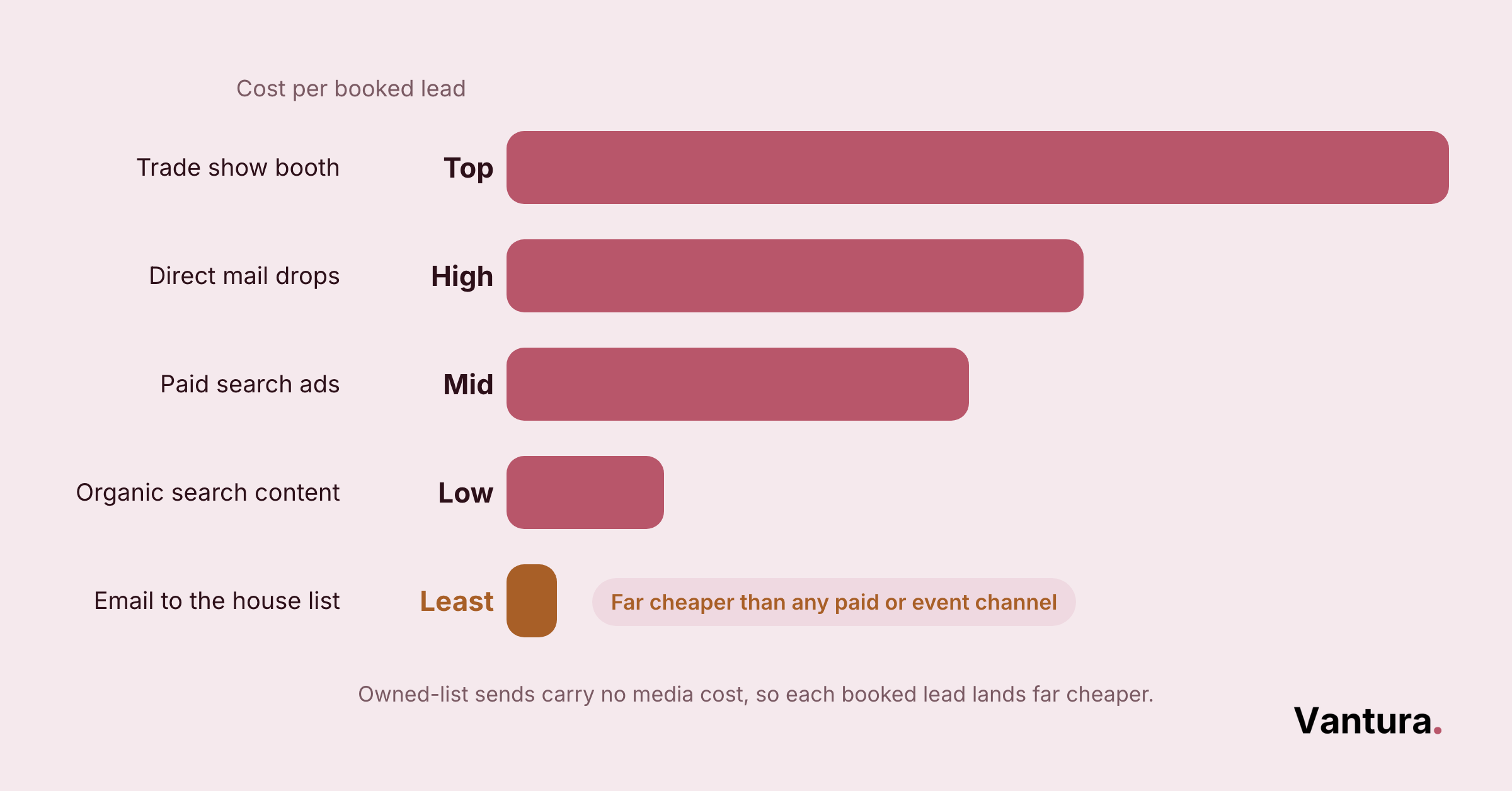
The ROI of construction email marketing is strong because the audience is warm and the cost per send is tiny. Across the industry, average revenue per email recipient sits around $2.05, according to HubSpot.
For a contractor, the real return shows up in rebooked clients and quotes that finally close. In our experience, a list starts paying for itself within a few sends once the follow-up automations are live.
Attribution takes a little setup, so tag your links and ask new clients how they found you. Once you connect a booked job back to an email, the case for the channel makes itself.
From the field: The contractors who win with email are rarely the ones sending the most. They are the ones who reply fast when an email sparks a question, since a quick, human answer is what turns a curious reader into a signed job.
Common Construction Email Marketing Mistakes to Avoid
Most email programs stall for a handful of avoidable reasons. Fix these before you chase anything fancier.
One last thing: Pick one habit from this guide and run it for a full quarter before adding another. A single, well-tended follow-up sequence beats five half-built campaigns you never have time to check.
Disclaimer: This article is for general informational purposes only and does not constitute legal, financial, or professional marketing advice. Email regulations and platform features vary by region and change over time, so verify current rules and results for your own business before acting. Vantura Marketing makes no guarantee of specific outcomes and accepts no liability for decisions made based on this content.