Construction Marketing Attribution: Models & Tools (2026)

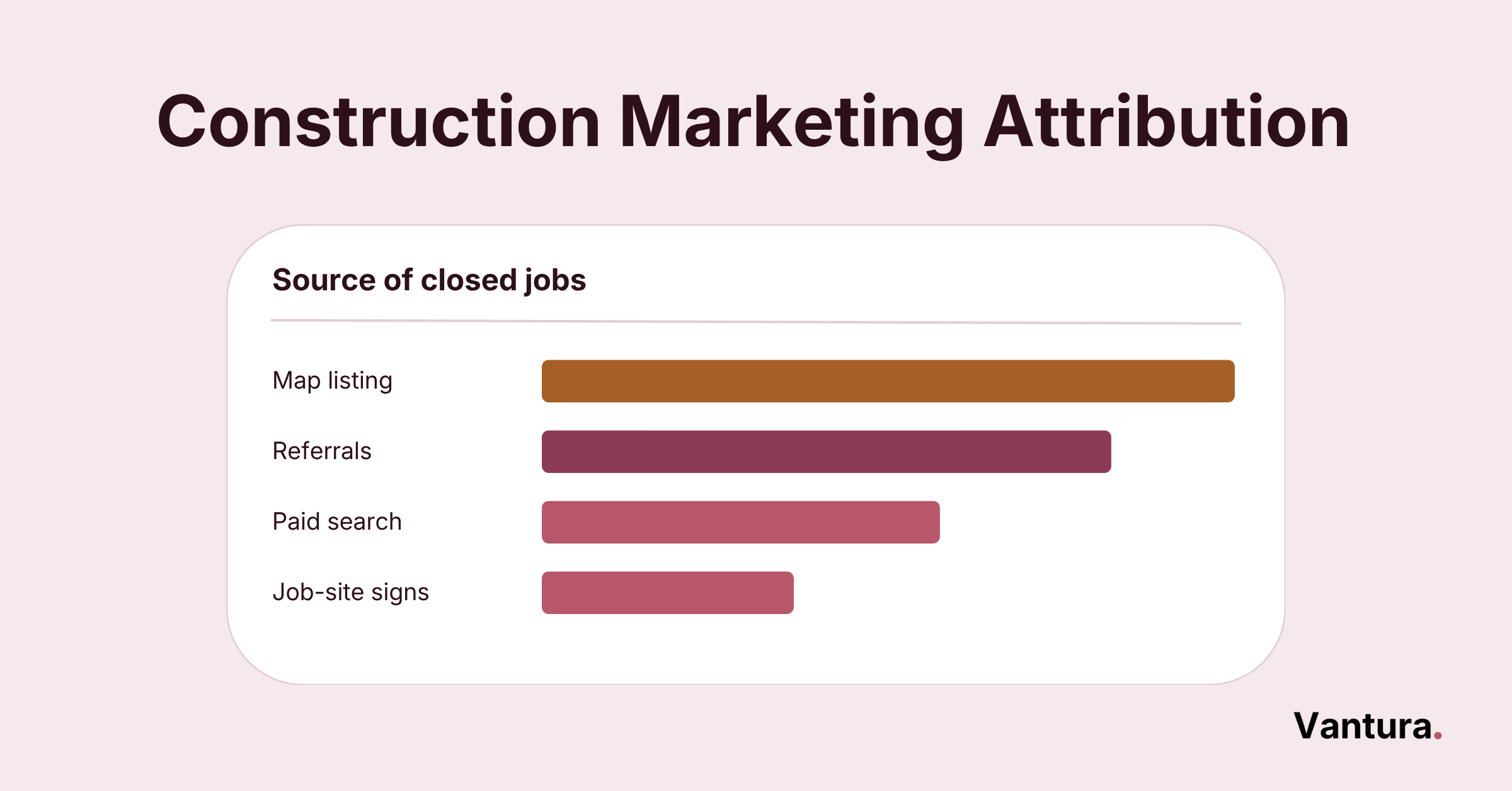
Construction marketing attribution is the practice of crediting each marketing touchpoint for its part in winning a job, from the first website visit to the signed contract. It connects every ad, page, and email to the projects they helped land. Get it right and you stop guessing where your best construction leads actually come from.
Why Trust Our Construction Attribution Guidance:
We’ve spent 190+ combined years measuring campaigns across 14 industries and run 750+ A/B tests to learn what really moves pipeline. That’s why contractors lean on us to separate the channels that build revenue from the ones that only look busy.
Need Help Reading Your Numbers:
If you’re not sure which channels win construction work, reach out and we’ll build you a construction marketing strategy anchored to real jobs, not vanity clicks. Get in touch whenever you’re ready to see the full picture.
What Is Construction Marketing Attribution?
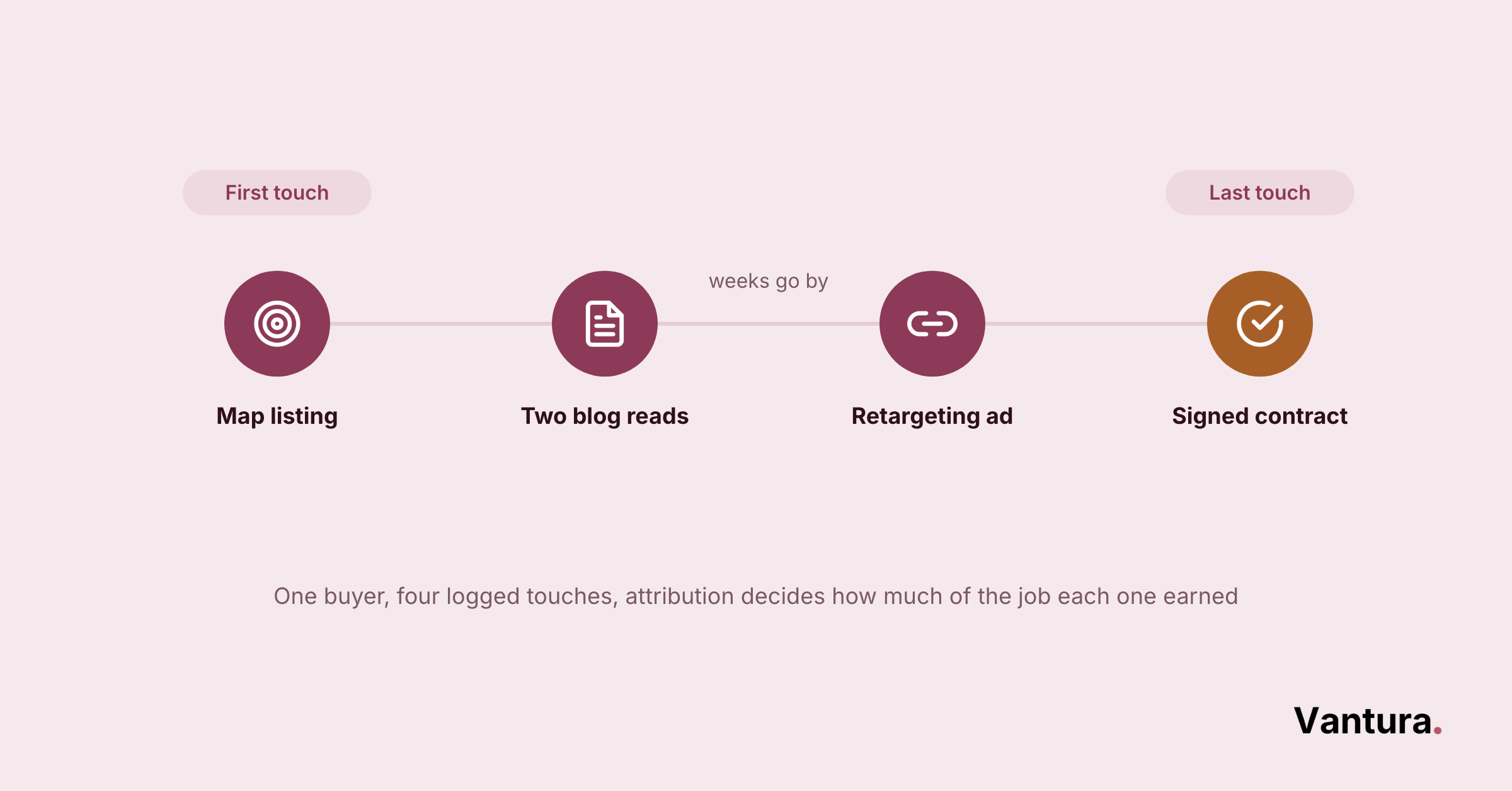
Construction marketing attribution is the way you credit each marketing touchpoint for its part in winning a job. Think of it as a paper trail that runs from the first click to the day a client signs.
For a contractor, that trail is messy. A homeowner might find you on a map listing, read two blog posts, then call three weeks later after seeing a retargeting ad.
Attribution sorts that tangle into something you can act on. It tells you which channels start relationships and which ones close them, so your budget follows the work.
Worth knowing: Attribution is not the same as analytics. Analytics counts what happened, while attribution decides which touch deserves credit for the sale.
Why Does Attribution Matter for Construction Marketers?
Attribution matters because construction deals are big, slow, and rarely won by a single click. Without it, you end up cutting the channels that quietly feed your pipeline and pouring money into the ones that grab the last click.
Most industrial and trade firms run lean marketing teams, so every dollar has to earn its place. Clear attribution turns a scattered spend into focused industrial marketing campaigns that track back to real projects.
It also settles arguments. When sales says the leads are weak and marketing says sales drops the ball, attribution data shows where deals really stall.
First-Touch vs Last-Touch: Which Single-Touch Model Fits?
The two simplest models sit at opposite ends of the journey. One rewards the touch that started everything, the other rewards the touch that sealed it.
First-touch attribution hands all the credit to the very first thing a lead did, like the blog post that pulled them in from a Google search. It’s the view to watch when your real problem is filling the top of the funnel with new construction leads.
Last-touch gives every bit of credit to the final step before the form fill or call, often a branded search or a direct visit. It flatters your bottom-funnel channels and quietly buries the early touches that built trust.
Most contractors pick one as a default view, then sanity-check it against the other. Leaning on just one hides half the story.
How Do Multi-Touch Attribution Models Work for Construction?
Multi-touch attribution spreads the credit across every touch in the journey instead of handing it all to one. That gives a fairer read on a construction sale that took months and a dozen interactions.
Common Multi-Touch Models
You don’t need a data science team to use these. Each one just weights the touches a little differently.
| Model | How it splits credit | Best for |
|---|---|---|
| Linear | Equal credit to every touch | Long jobs with many steps |
| Time-decay | More credit to touches near the sale | Fast-moving bids and quotes |
| Position-based | Most credit to the first and last touch | Balancing new leads and closes |
Bigger B2B marketing programs often start with position-based, since it credits both the ad that found the buyer and the proposal that won them. Smaller crews usually do fine with linear until the data justifies more.
Keep in mind: A model isn’t right or wrong, it’s a lens. Run two views of the same data and the truth usually sits somewhere between them.
Linear vs Time-Decay: Which Model Fits Best?
Linear and time-decay are the two multi-touch models contractors reach for first, and they read the same data very differently. Linear spreads credit evenly across every touch, so a single early blog visit counts as much as the phone call that closed the deal.
Time-decay tilts that credit toward the touches closest to the sale, which suits a fast-moving bid more than a slow-building relationship. Pick linear when you want a clean read on the whole journey, and switch to time-decay once you’re optimizing the final push toward a signed contract.
What Is Data-Driven Attribution in Google Analytics?
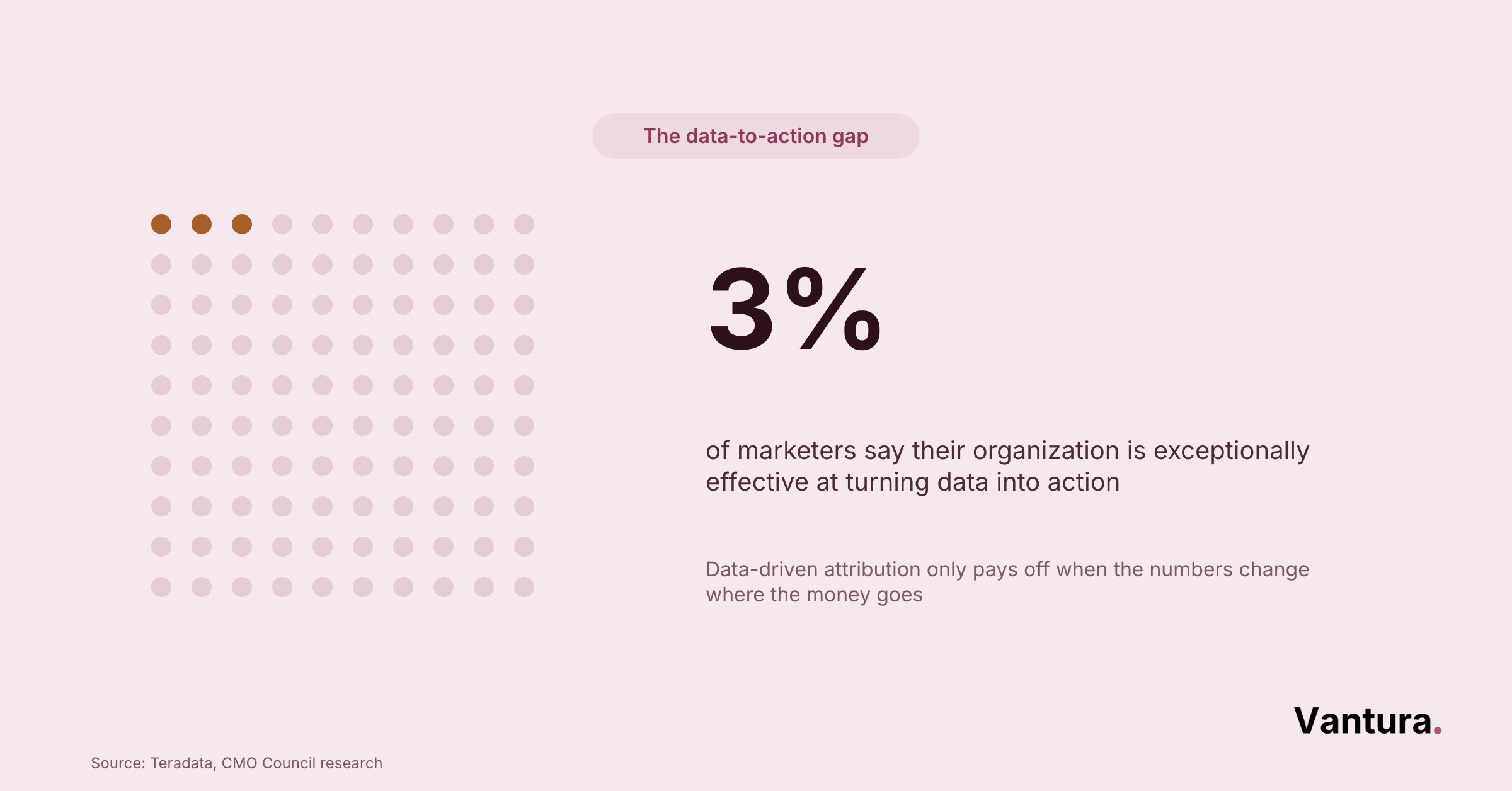
Data-driven attribution lets Google Analytics use machine learning to assign credit based on your actual conversion patterns. Instead of a fixed rule, it learns which touches tend to move construction buyers toward a call.
That kind of blind spot is common without it. 47% of marketing agencies cannot attribute conversions across multi-session customer journeys, according to AgencyAnalytics, the kind of long, research-heavy path common before a construction client ever requests a quote.
For contractors, the takeaway is simple. Let the data weight your touches once you have enough conversions to trust it, and use a rule-based model until then.
How to Set Up Construction Attribution Tracking
Setting up attribution tracking is mostly plumbing work you do once. Get the wiring right and every report after that gets easier to trust.
The Four Setup Steps
Work through these in order, since each one builds on the last. None of them takes more than an afternoon.
Step #1: Tag Every Campaign
Add tracking tags to every link you control, from email buttons to paid ads. Consistent tags are what let one dashboard tell paid from organic.
Step #2: Track Calls, Not Just Forms
Construction buyers call. Use call tracking numbers so a phone lead ties back to the ad or page that drove it.
Step #3: Connect Your CRM
Push leads into your CRM with their source attached, then match closed jobs back to that source. This is where integrated marketing efforts start paying off, because sales and marketing finally read the same record.
Step #4: Pick One Model and Stick With It
Choose a single attribution model for your main report so the numbers stay comparable month to month. Switching models mid-quarter makes every trend look like a change when it isn’t.
Why Is Cross-Channel Attribution So Hard in Construction?
Cross-channel attribution is hard because construction journeys jump between devices, offline chats, and long gaps. A lead might click a phone ad, visit on a laptop weeks later, then sign after an in-person site walk.
The more channels you run, the messier the stitch-together gets. Larger enterprise marketing teams hit this first, but even a two-person crew feels it once they add a second ad account.
The fix isn’t more tools. It’s a shared definition of a lead and a source, applied the same way everywhere.
Field note: Across our construction accounts, the biggest attribution wins come from tracking phone calls, not from fancier models. Calls are where most trade leads hide.
Attributing Organic, Paid, and Email Touchpoints
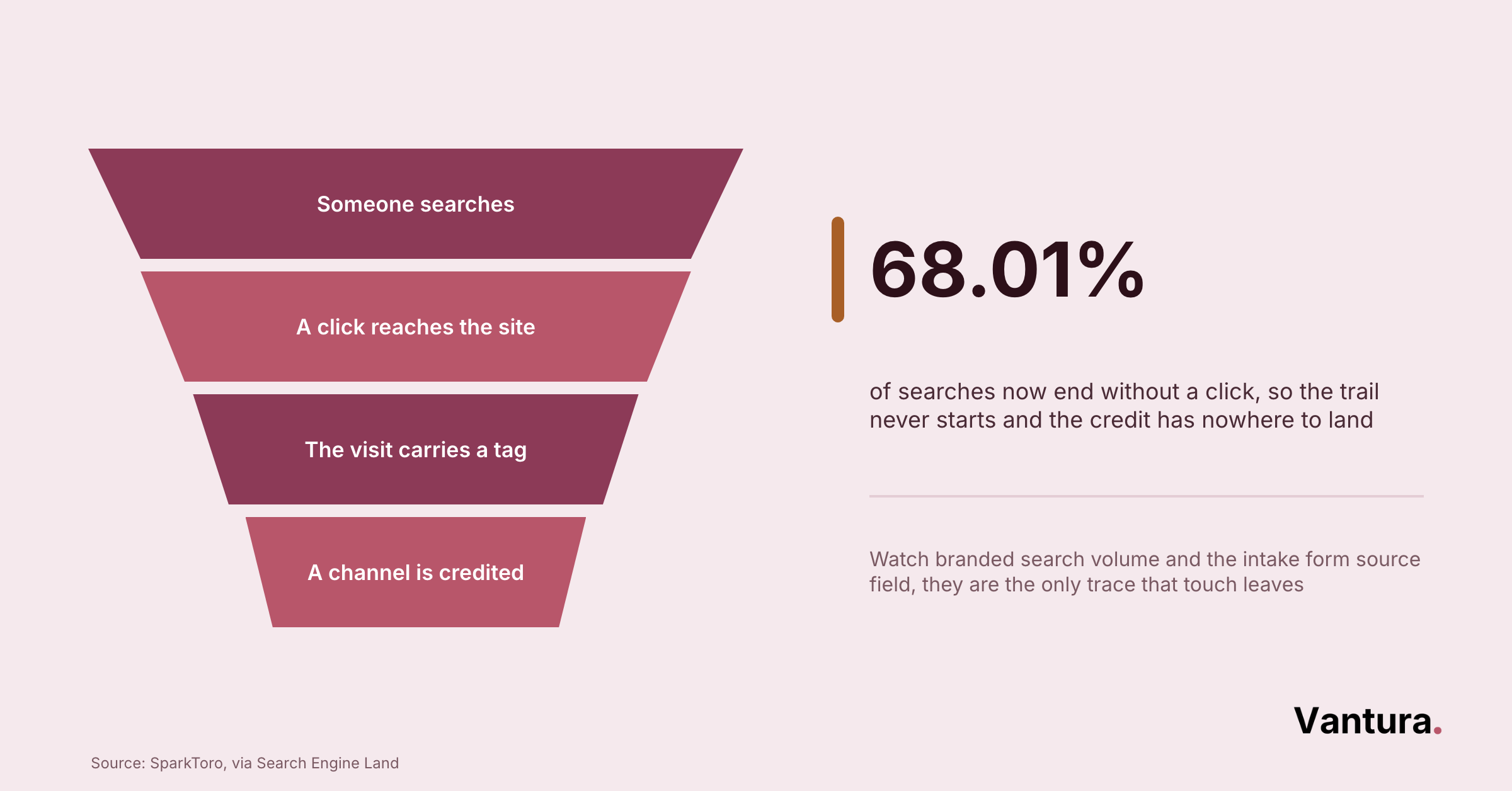
Different channels leave different footprints, so each one needs its own attribution habit. Treat them the same and you’ll misread all three.
Organic Search and Content
Organic touches are easy to undercount because they often start the journey, not end it. A regular digital marketing audit catches the blog posts and map listings quietly feeding your pipeline.
Give organic first-touch credit in at least one report. Otherwise SEO always looks weaker than it really is.
Paid Search and Social
Paid channels are the easiest to track and the easiest to over-credit. Their conversion tags fire fast, so last-touch models make them look like the hero.
Balance that with a multi-touch view. Paid often assists far more construction deals than it closes on its own.
Email Touchpoints
Email rarely wins the first or the final touch, but it keeps slow deals warm. Tag every send so nurtured leads still show up in the trail.
How Do You Attribute Offline Events and Phone Calls?
Plenty of construction deals still turn on offline moments, like a trade show handshake or a job-site walk. Those touches stay invisible unless you make a point of capturing them.
Capturing the Untracked Touches
The trick is to give every offline moment a digital home. Split your capture habits into two simple buckets so nothing slips.
- Call tracking numbers on ads and landing pages
- Tagged links inside QR codes on flyers and signs
- A short “how did you hear about us” field on forms
- Log referrals and site visits in your CRM
- Ask closers to record the real first touch
- Match trade show lists against closed jobs
Feed both streams into the same record so an offline lead and an online one sit side by side. Half-tracked events are how contractors underrate word of mouth.
Which Tools Handle Construction Marketing Attribution?
The right attribution tool depends on your size and how many channels you run. You can go from a free setup to a fuller analytics stack without much drama.
We stay independent, so no vendor holds a stake in what we suggest. Options range from Google Analytics and HubSpot to niche, trade-focused tools, including CallRail for phone leads and construction CRMs like JobNimbus.
| Tool type | What it tracks | Fit for |
|---|---|---|
| Analytics suite | On-site paths and conversions | Every contractor |
| Call tracking | Phone leads by source | Trade and home-service firms |
| CRM with source fields | Leads through to closed jobs | Teams tracking revenue |
If the stack feels like too much, marketing consulting support can set it up so you own the data without managing it by hand. The goal is a setup your crew checks without being reminded.
Bottom line: Start with the free analytics you already have before buying anything. Most contractors outgrow guesswork long before they outgrow Google Analytics.
What Are Attribution Windows and Lookback Periods?
An attribution window is how far back you count touches before a sale. A lookback period sets that boundary, like crediting everything in the three months before a signed contract.
Construction needs longer windows than most industries. A short window that suits ecommerce will miss the early research a homeowner did last season.
Match the window to your real sales cycle. Property and real estate marketing teams run into the same thing, since their buyers also weigh a decision for months.
Marketing Mix Modeling vs Attribution: When to Use Each
Marketing mix modeling and attribution answer different questions. Attribution tracks individual journeys, while mix modeling looks at spend and results at a high level to spot broad patterns.
Small contractors rarely need mix modeling. It earns its keep on big budgets spread across many markets, where privacy gaps make touch-level tracking patchy.
For most crews, touch-level attribution plus a simple spend review is plenty. That mix is what we fold into small business marketing plans before anything heavier.
How Does Attribution Shape Your Construction Marketing Budget?
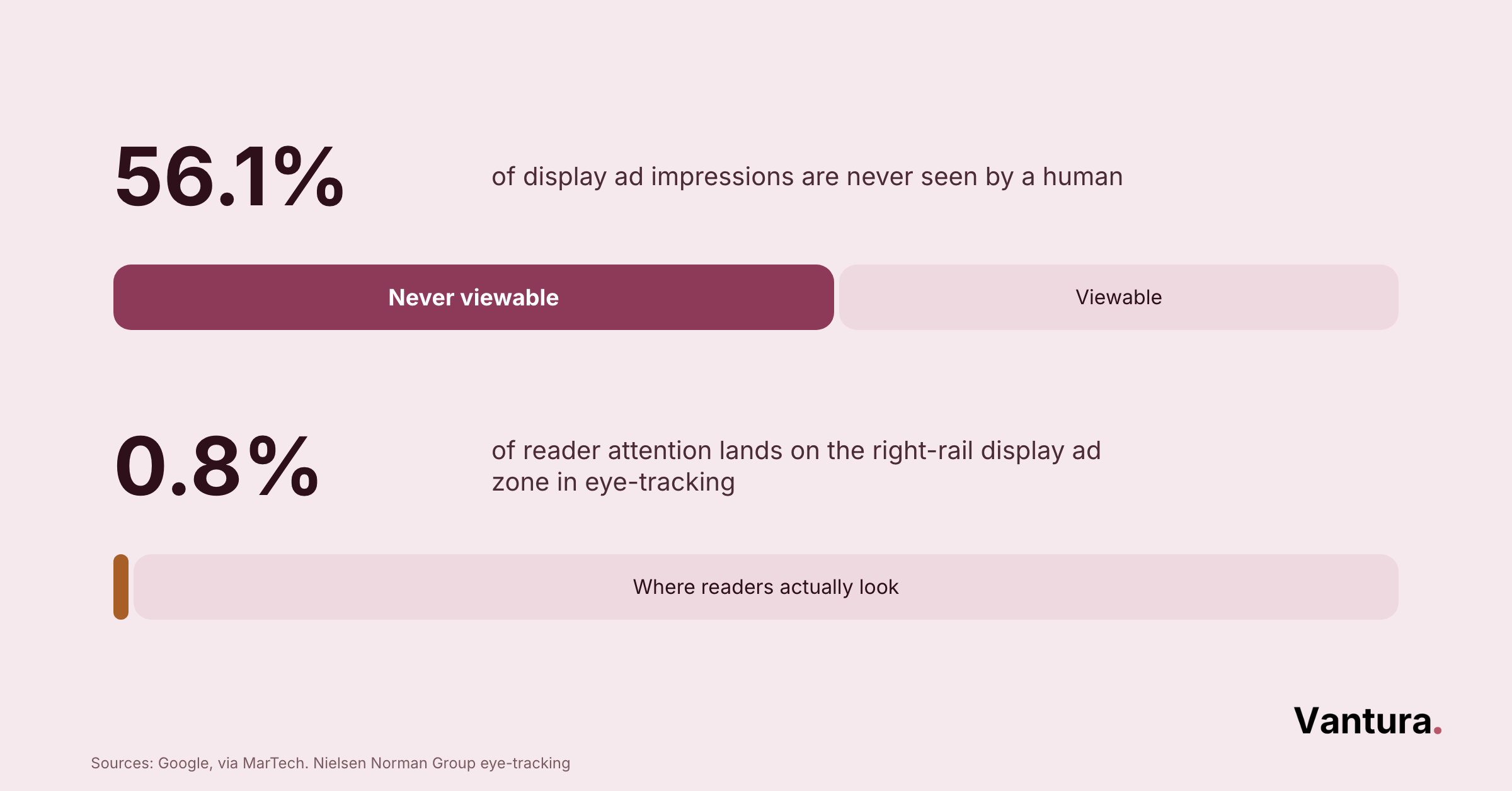
Attribution should decide your budget, not the other way around. Once you see which channels start and close jobs, you can move money toward what earns and away from what stalls.
Reallocating Spend With Confidence
The pattern repeats across the trades. Roofing marketing programs often find that map listings and reviews out-earn broad display ads, so the budget shifts once the data is clear.
Review the split every quarter, not every week. Attribution needs enough time to catch the slow deals construction is known for.
How Are Privacy Changes Affecting Construction Attribution?
Privacy changes are shrinking the data attribution relies on. Cookie limits and opt-outs mean some touches simply go unseen, so models lean harder on estimation to fill the gaps.
This hits every local advertiser. HVAC marketing campaigns that once tracked every click now work with blurrier data, and the honest move is to plan for it.
Lean on first-party data you own, like form fills and call logs. That data survives the privacy shift when third-party tracking doesn’t.
Watch out: If a report still claims perfect tracking, be skeptical. Some touches are simply unseen now, and pretending otherwise leads to bad budget calls.
How Should You Report Construction Attribution Data?
Good attribution reporting turns raw touches into a story a busy owner can read in a minute. Skip the vanity charts and show what drives jobs.
Keep the Dashboard Simple
One clear view beats ten tabs nobody opens. We build the same lean dashboards into plumbing marketing work, so the crew checks it instead of ignoring it.
Show cost per job, the source of closed work, and the assist channels behind them. Three honest numbers beat a wall of metrics.
Common Construction Marketing Attribution Mistakes
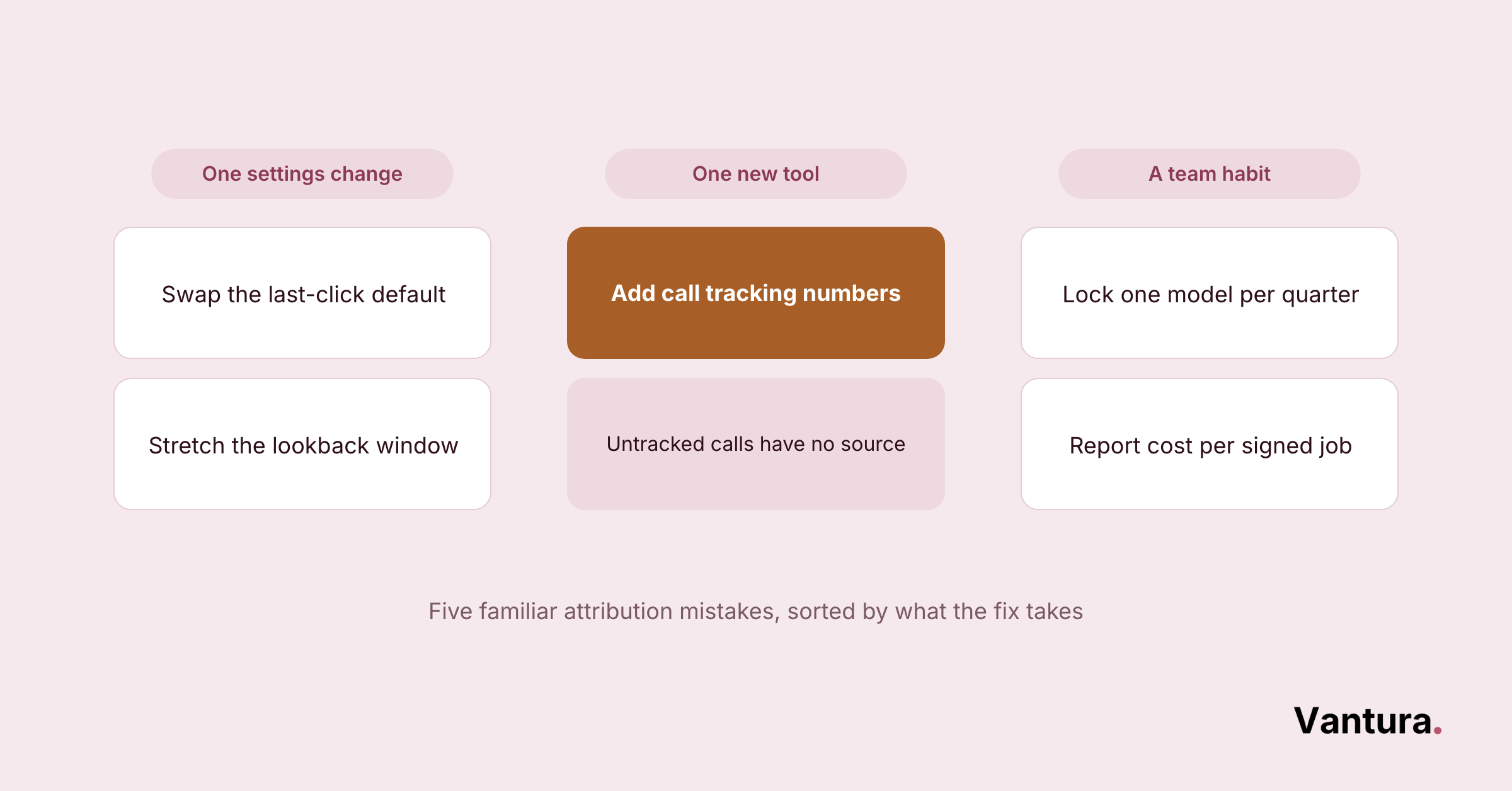
A few mistakes show up on almost every construction account we audit. Most are easy to fix once you can name them.
Fix these in order and your reports start matching what your crew sees in the field. That alignment is the whole point of attribution.
Disclaimer: This article is for general information only and does not constitute professional marketing, legal, or financial advice. Vantura Marketing makes no guarantees about specific results, and outcomes vary by market and effort.