Construction Digital Marketing Cost: Full Pricing Guide

Construction digital marketing usually costs contractors between roughly fifteen hundred and ten thousand dollars a month, based on your channels and market. Smaller local builders usually sit near the low end, while regional firms chasing steady leads land higher. The right number really comes down to your goals, your service area, and whether you handle the work in-house or bring in help.
Why builders trust our numbers:
Our team of 28 specialists has run more than 180 campaigns across 14 industries, so these ranges come from real budgets, not guesswork. We have watched what moves the needle for contractors and what quietly drains a budget. That mix of scale and hands-on work is why the figures here hold up.
Need help pricing your plan?
Our construction marketing consulting team can map your spend to real goals. Get in touch and we will walk you through the numbers.
How Much Does Construction Digital Marketing Cost?
Most construction firms spend about two thousand to eight thousand dollars a month, driven by your channels, market, and growth targets. A single local builder can start much lower, while a firm covering several metros pays more.
The spend usually splits across search, paid ads, content, and a website that actually converts. Very few contractors need all of it at full strength on day one.
We usually tell new clients to pick two or three channels, fund them properly, and add more once the leads start showing up. Spreading a small budget across everything is the fastest way to see nothing work.
Quick answer: There is no flat price for construction marketing. Think of it as a monthly budget you shape around a few goals, not a fixed invoice. A small remodeler and a regional design-build firm can both run smart programs, they just work with very different numbers.
What Drives Construction Digital Marketing Costs Up or Down?
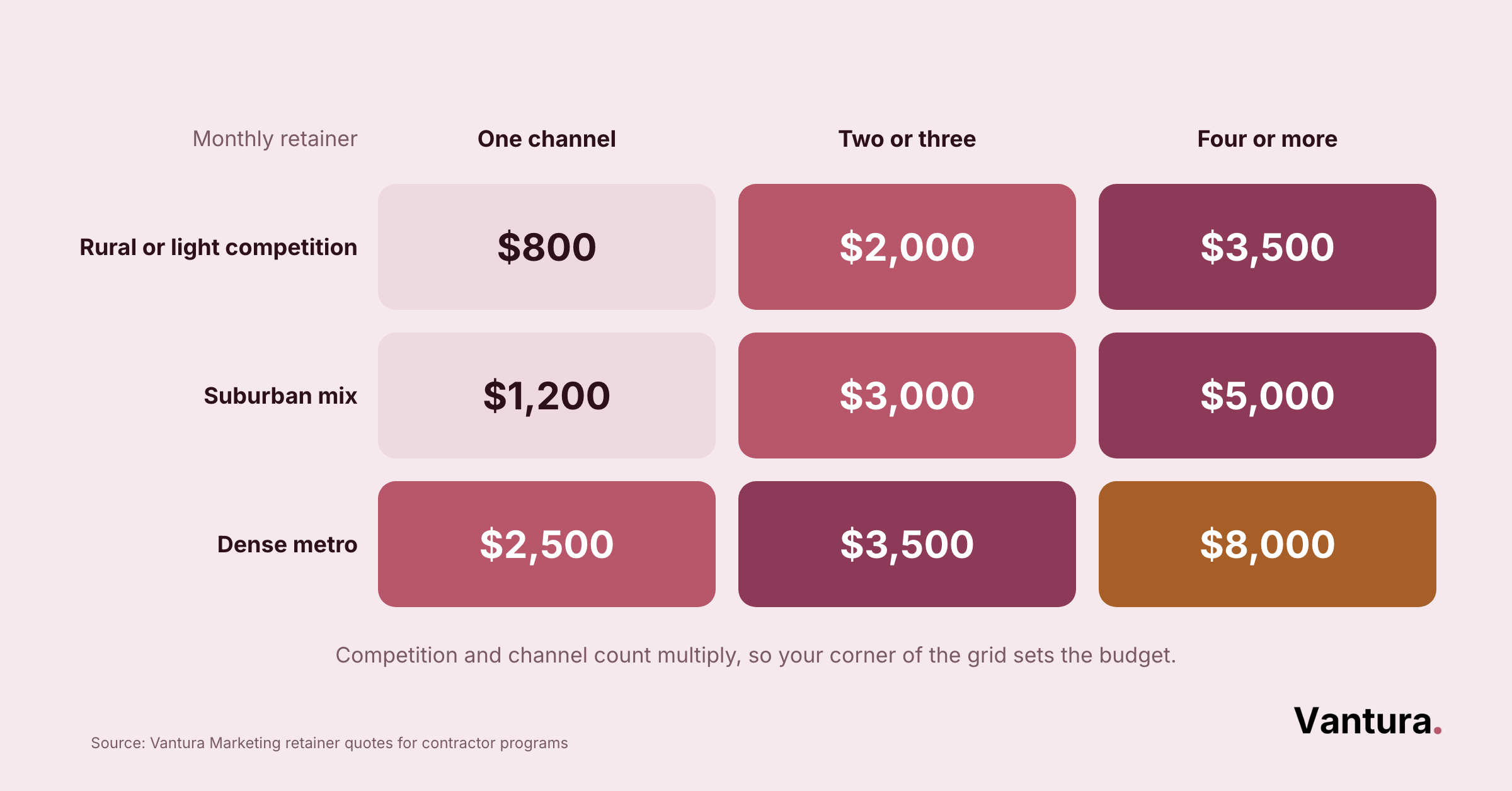
Your construction marketing cost moves with a handful of factors, mainly market competition, channel count, and desired speed of results. Push any of those harder and the number climbs.
A marketing audit early on saves money, because it shows you what is already working before you pour cash into something new. Skipping that step is how contractors end up paying for effort they did not need.
- Your service area and how many rivals bid the same jobs
- The number of channels you run at the same time
- How much you hand off versus do yourself
- Your website’s starting condition and load speed
- How aggressive your monthly lead targets are
What Do the Main Construction Digital Marketing Channels Cost?
Each construction marketing channel carries its own price tag, from a few hundred dollars for email to several thousand for competitive paid search. Here is how the typical monthly ranges stack up before we dig into each one.
| Channel | Typical monthly range | What pushes the price up |
|---|---|---|
| SEO | $800 to $3,500 | Tough local competition and a thin site to start |
| Google Ads and PPC | $1,000 to $5,000 plus ad spend | Expensive clicks and lots of service keywords |
| Social media | $700 to $2,500 | More platforms and paid boosting |
| Content and blog writing | $500 to $2,500 | Volume, technical topics, and photography |
| Email marketing | $300 to $1,200 | List size and how many sequences you run |
| Website design (one-time) | $3,000 to $15,000 | Custom features, many pages, and integrations |
Construction SEO Cost and Pricing Ranges
SEO for a construction company usually runs eight hundred to thirty-five hundred dollars a month, with local firms paying less than region-wide firms. The price mostly reflects how much content and cleanup your site needs to rank.
What Sets the Monthly Rate
Local firms with a clean, established site sit near the bottom of the range, while multi-market builders competing on broad keywords push toward the top. The scope of the fix, not the size of the company alone, is what really moves the number.
Why the Timeline Matters
The work rarely shows up fast, so we treat it as a six to twelve month build, not a quick fix. Time and again, the firms that stay patient here end up with the cheapest leads of any channel.
Construction PPC and Google Ads Cost
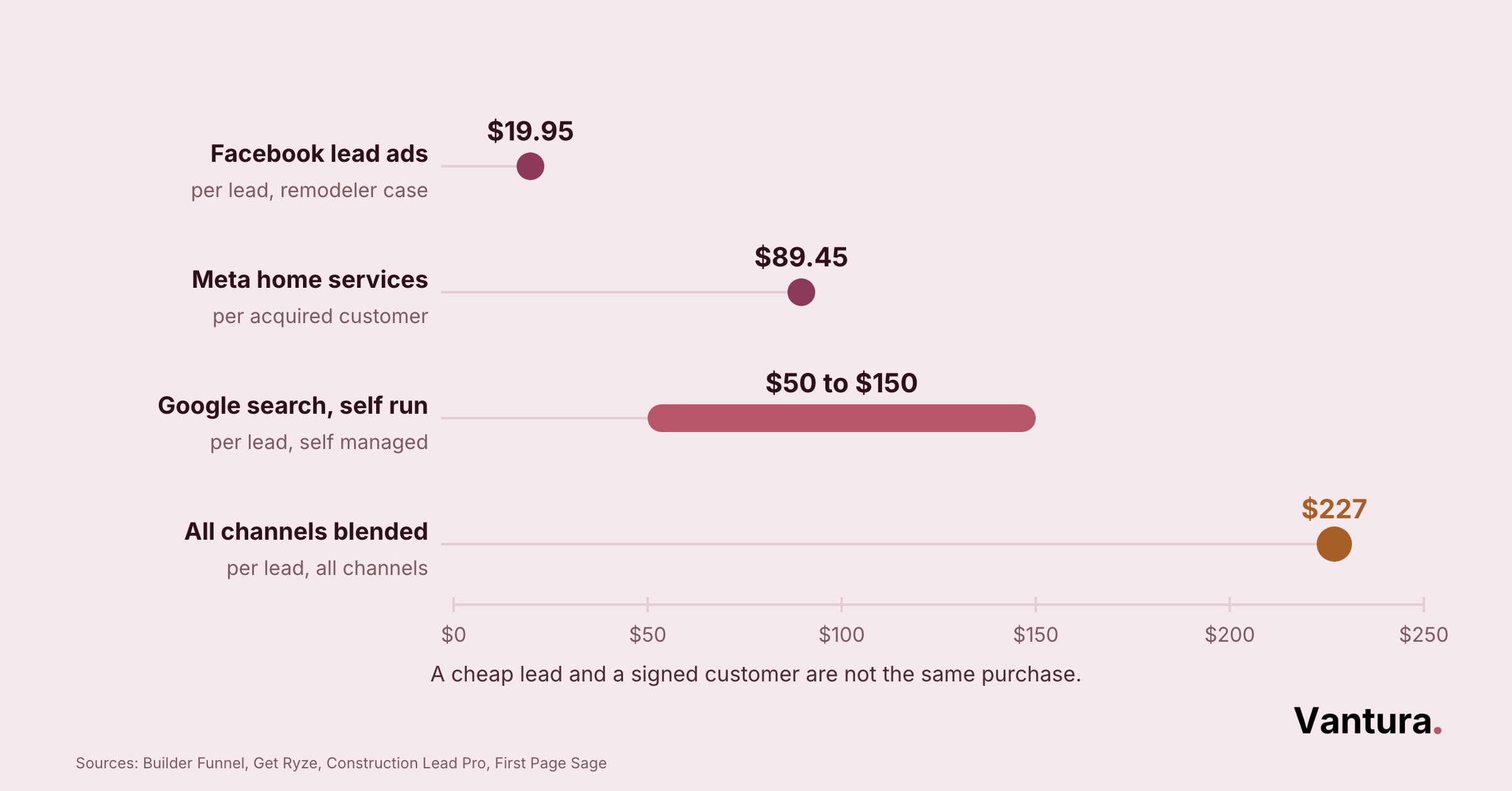
Paid search is where construction budgets get tested fastest, since you pay for every click whether it converts or not. According to LocaliQ, the average cost per lead for construction and contractor search ads is $165.67, the highest of any home services category tracked.
Why the Conversion Rate Matters
That same data shows a 2.61 percent conversion rate, the lowest in the group, so every click has to be aimed carefully. Trades with pricey clicks, like roofing contractors, feel this the most.
Construction Social Media Cost by Platform
Social media management for a contractor usually runs seven hundred to twenty-five hundred dollars a month, rising with each platform you add. Project photos and short jobsite clips do a lot of the heavy lifting here.
Facebook and Instagram tend to earn the first dollars because that is where homeowners scroll. Firms serving other businesses, like HVAC companies working with property managers, often lean on LinkedIn instead.
Construction Content and Blog Writing Cost
Content and blog writing usually costs five hundred to twenty-five hundred dollars a month, based on volume and how technical the topics get. A single detailed guide about permits or material choices takes real time to write well.
Good content pulls double duty, feeding both search rankings and your email list. That is why we count it as an investment, not an expense.
Construction Email Marketing Cost
Email is the cheapest channel here, often three hundred to twelve hundred dollars a month once you add the platform fee and a writer. The price climbs with list size and the number of automated sequences.
For contractors, the follow-up sequence after a quote is where email pays for itself. The leads almost always stall at the quote stage, and a steady nudge brings a chunk of them back.
Construction Website Design and Development Cost
A construction website usually costs three thousand to fifteen thousand dollars once, with custom features and page count driving the higher end. Think of it as the foundation every other channel points to.
Where the Higher End Comes From
Custom quote calculators, project galleries, and integrations with your lead software all add build time. A simple five-page site sits well under the top of the range, while a firm with multiple divisions pushes past it.
Why It Raises Every Other Cost
A slow or dated site quietly raises the cost of everything else, because paid clicks and SEO traffic land somewhere that does not convert. That hurts firms with high-value projects most, like real estate developers whose leads are worth thousands each.
How Are Construction Digital Marketing Services Priced?
Construction marketing services are usually priced four ways, and the model matters as much as the sticker number. The right one depends on how steady your work is and how much you want to hand off.
Most contractors settle on a monthly retainer once they see steady lead flow, since it keeps the work consistent. Others prefer to outsource the whole program under one predictable fee.
| Pricing model | How you pay | Best fit | What to watch for |
|---|---|---|---|
| Monthly retainer | Flat fee each month | Ongoing, multi-channel programs | Make sure deliverables are written down |
| Project-based | One price per deliverable | A website or a single campaign | Support usually ends at handoff |
| Hourly | Rate times hours used | Small, one-off tasks | Costs can drift without a cap |
| Performance-based | Fee tied to leads or sales | Firms with clear tracking already | Cheap leads can still be low quality |
Should You Hire a Freelancer or a Construction Marketing Agency?
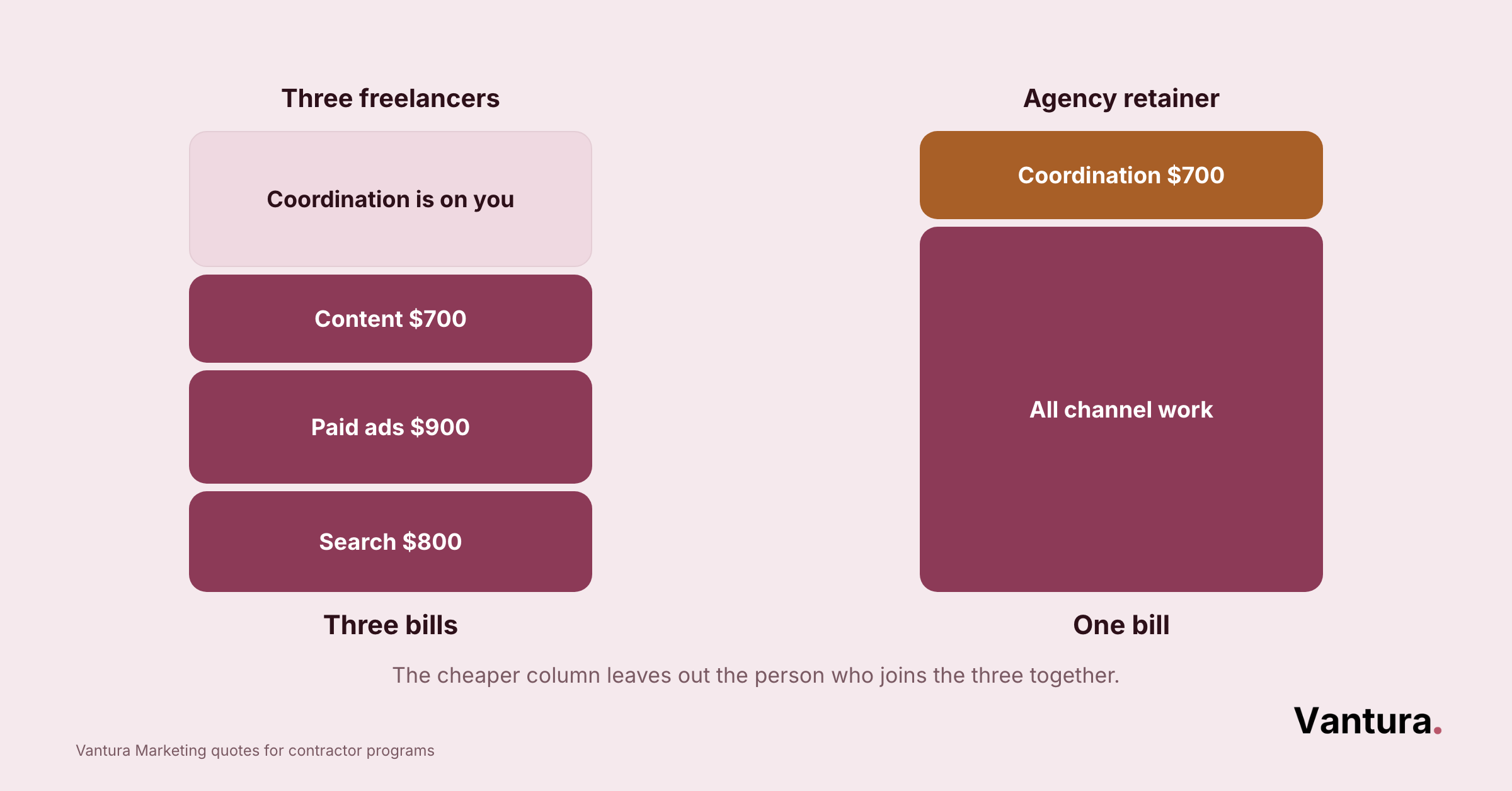
Hire a freelancer when you need one skill done well and cheaply, and hire an agency when you need several channels pulling together. The gap in cost is real, and so is the gap in what you get back.
For smaller construction firms, a single freelancer often covers the first year fine. The trouble starts when you outgrow one person and nobody owns the full picture.
Two Common Setups, Side by Side
- Lower monthly cost, often one skill
- Fast to start, easy to end
- Limited when you scale channels
- Risk of gaps if they get busy
- Higher cost, many skills in one place
- Coverage across search, ads, and content
- Reporting and strategy built in
- Better fit once you outgrow one person
There is also a middle path worth knowing about. Some contractors keep an in-house marketer for daily posts and lean on white-label partners for the technical work, which blends low overhead with real depth.
What Share of Revenue Should Construction Firms Spend on Marketing?
Most construction firms spend five to ten percent of revenue on marketing, leaning higher when chasing growth and lower once the pipeline is full. Newer firms fighting for a name often push past that band on purpose.
The percentage shifts with your margins and your average job size. A firm built on B2B construction sales with six-figure contracts can justify more per lead than a residential handyman.
Rule of thumb: Set the budget from what a job is worth, not from a flat percentage alone. If one won project pays for three months of marketing, you have room to invest, and the percentage sorts itself out.
Hidden Construction Digital Marketing Costs to Plan For
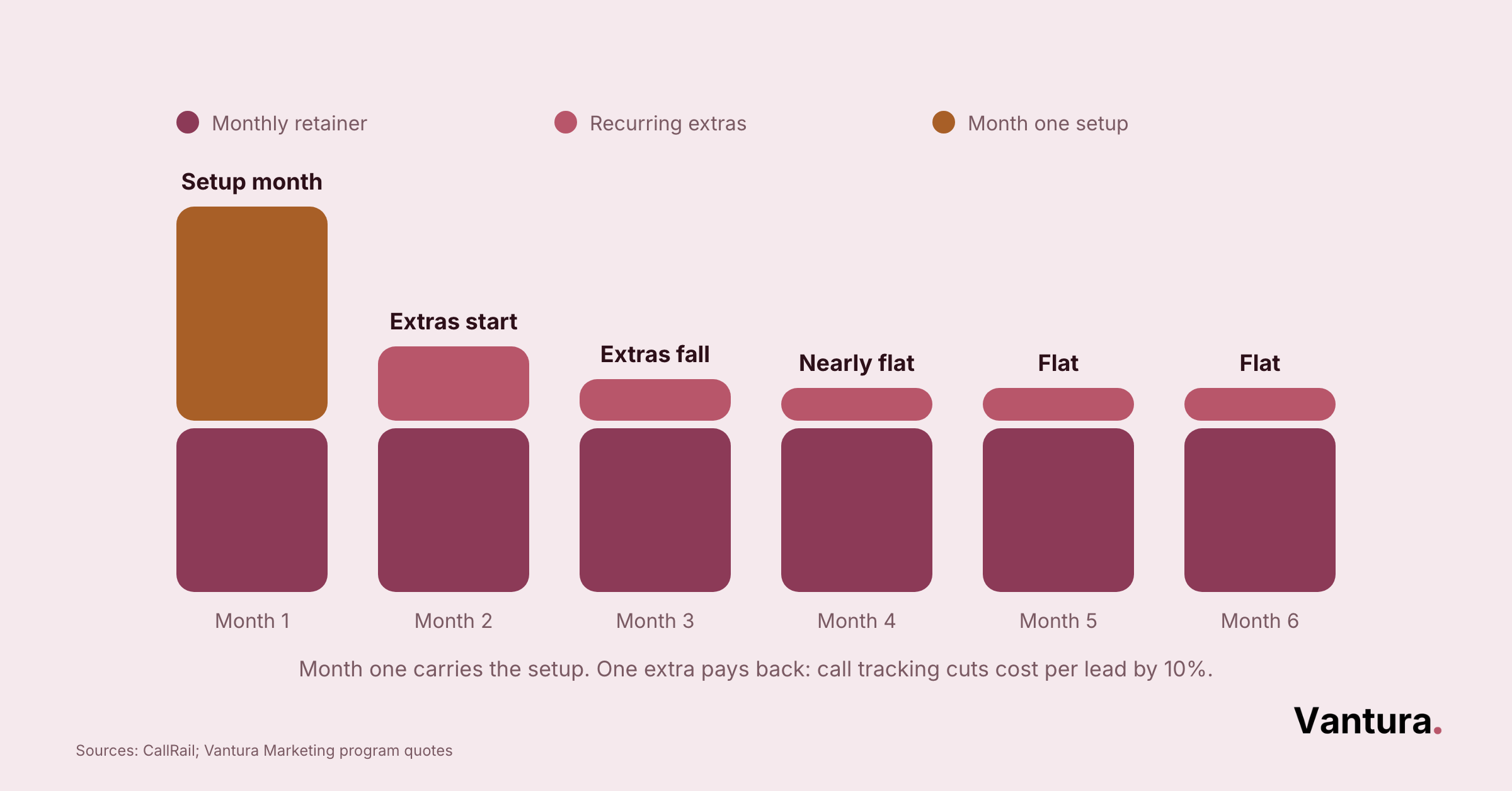
The line item on the proposal is rarely the whole cost. A few extras show up later, and they catch contractors off guard more than the headline fee ever does.
- Software and tool subscriptions
- Photography and video at the jobsite
- Ad spend on top of management fees
- Landing pages built for each campaign
- Call tracking and lead software
Ad spend is the big one people forget. A management fee keeps the campaign running, but the clicks themselves cost extra, and on paid search that number can dwarf the fee.
How Do You Forecast and Budget Construction Digital Marketing Costs?
You forecast a construction marketing budget by starting from a revenue goal and working backward to the leads and spend it takes to hit it. That keeps the number tied to results instead of guesswork.
We run this same sequence for an integrated program and a single channel alike. The steps do not change, only the size of the numbers does.
- Set a revenue goal for the next twelve months.
- Work out how many jobs that revenue takes.
- Estimate the leads you need to close those jobs.
- Price the channels that can deliver those leads.
- Decide monthly versus annual, since paying yearly often shaves the rate.
- Hold back a small buffer for testing and slow months.
Monthly billing keeps you flexible, while an annual commitment usually earns a discount and steadier work. Most contractors start monthly and switch to annual once they trust the results.
Construction Digital Marketing Cost by Company Size
Company size shapes the budget more than almost anything else. A solo builder and a multi-branch firm are not solving the same problem, so their spend looks nothing alike.
| Company size | Rough monthly spend | Where the money usually goes | A realistic first goal |
|---|---|---|---|
| Solo or small local builder | $1,000 to $3,000 | Local SEO and a solid website | A steady trickle of nearby leads |
| Growing regional contractor | $3,000 to $8,000 | Paid search plus content and email | Predictable pipeline across a region |
| Large or enterprise firm | $8,000 and up | Full multi-channel program | Market share and brand recognition |
The jump from the middle tier to the top is less about doing new things and more about doing them at scale. For large construction firms, the cost of coordination and reporting starts to rival the cost of the ads themselves.
How Does Marketing Cost Compare to Customer Acquisition Cost?
Your marketing cost only makes sense next to what a customer is worth to you. Divide total spend by the jobs you won, and you get the real number that should guide every budget call.
Across all industries, WordStream puts the Google Ads click at $5.42 with a 6.64 percent search click-through rate, a rough baseline for cost per lead. Contractors with big-ticket jobs, like industrial contractors, can absorb a high acquisition cost because one signed job pays for many clicks.
What ROI Should You Expect From Construction Digital Marketing?
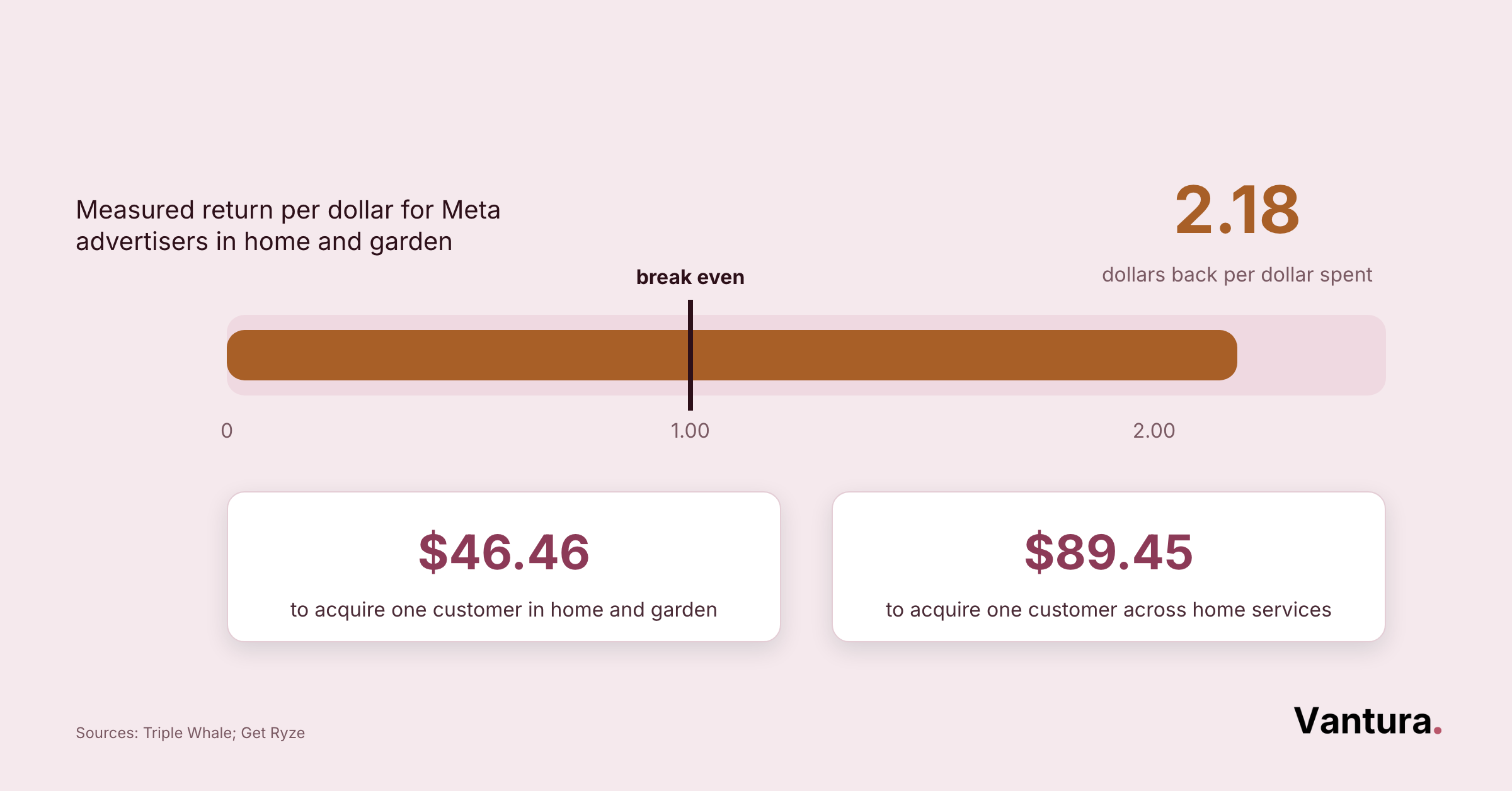
Return matters more than raw cost, and a healthy construction program should earn back well more than it spends over time. The catch is that the payoff builds slowly, so the first few months rarely tell the real story.
Across our construction accounts, a program with a few months of data tends to bring back roughly three to four dollars per dollar spent. Newer campaigns run leaner while they learn, so we rarely promise big returns in the first quarter.
Keep in mind: ROI is not steady from month one. Paid ads can turn a profit early, while SEO and content often take two or three quarters to pay off, then keep paying long after.
How to Reduce Construction Digital Marketing Cost
You reduce construction marketing cost by cutting waste, not by cutting channels that work. The goal is a leaner budget that still fills the pipeline, and that usually means focus.
- Kill any channel that has not produced a lead in ninety days.
- Tighten your service area so ad money stays where you already win jobs.
- Reuse jobsite photos and clips across every platform.
- Let SEO and email carry more of the load as they mature.
Niche trades save the most by getting specific, since a focused campaign wastes fewer clicks. We have watched electrical contractors cut their cost per lead sharply just by narrowing their keywords to the jobs they want.
Because we are independent, no software vendor holds a stake in our advice. We can point you to the tool that fits, whether that is a big name or a niche pick built for contractors.
How Do You Negotiate Construction Digital Marketing Rates?
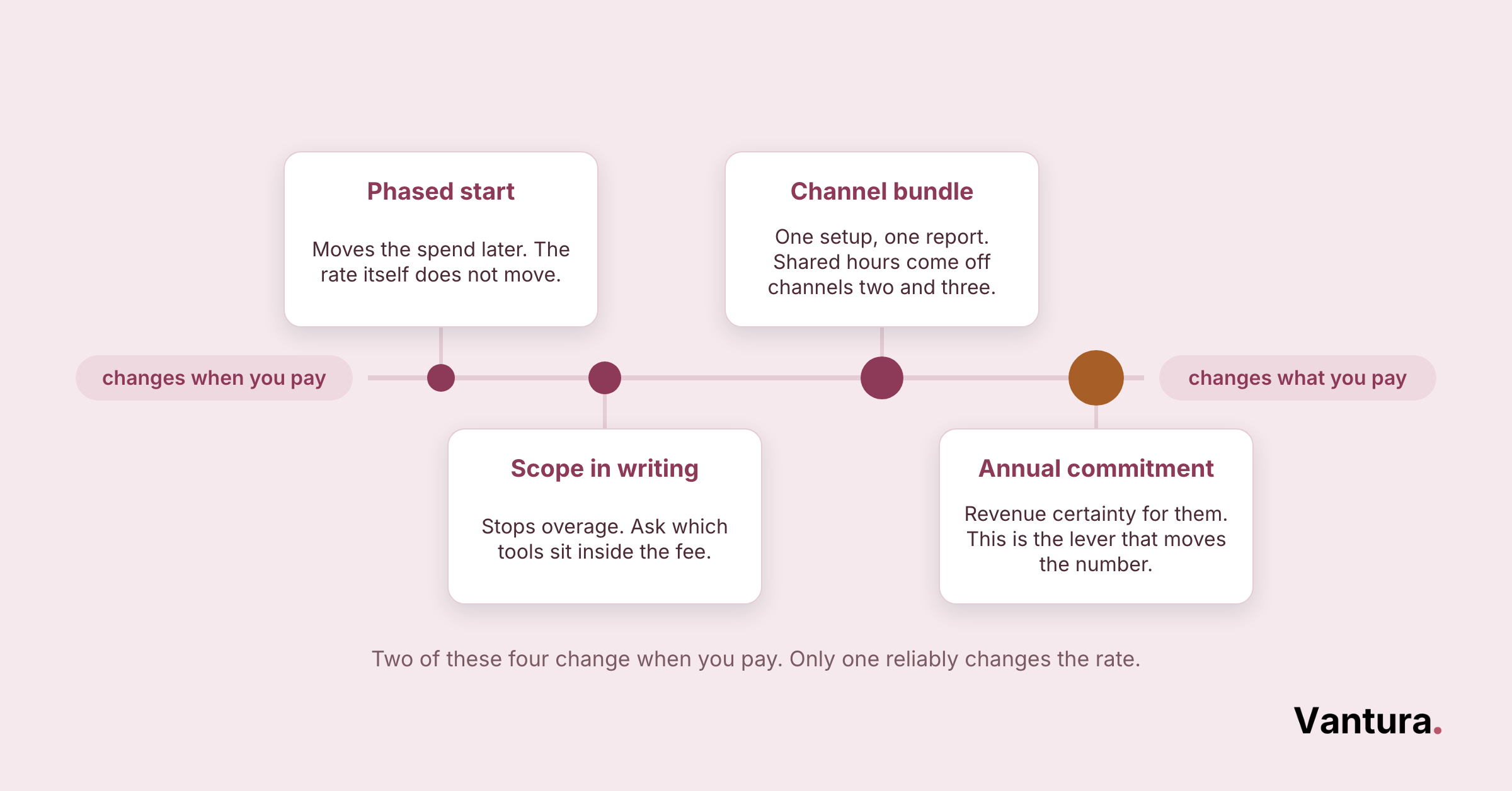
[place image for S5 here, showing the four rate-negotiation levers side by side, annual commitment through channel bundling to a phased start and scope clarity]
You negotiate construction marketing rates by trading commitment for a better price, not by haggling line by line. Agencies value steady, longer work, and they will usually move on rate to get it.
- Ask about an annual rate instead of monthly
- Bundle channels rather than buying them one by one
- Start with a smaller package, then grow it
- Ask exactly what the fee does and does not cover
One more thing: The cheapest quote rarely wins. A slightly higher rate with clear reporting beats a bargain fee that leaves you guessing where the money went.
Disclaimer: This content is for general information only and is not professional marketing, legal, or financial advice. Your own numbers will depend on your market, budget, and how well the plan gets executed, so treat every figure above as a working estimate, not a promise.