12+ Taboola Ads Best Practices From Top Users (2026)

Taboola Ads best practices come down to tight creative specs, clean conversion tracking, and enough budget patience to let the auction settle. They matter most for advertisers buying native placements at scale, where one truncated headline quietly costs you clicks all month. Get those three right and the rest of your Taboola campaign setup mostly looks after itself.
Why trust us on Taboola Ads
Our 28 specialists have delivered 180+ campaigns and run 750+ A/B tests across 14 industries. Most of what follows comes from budgets we managed ourselves, not from a vendor deck.
Need a hand with Taboola Ads?
If your account needs hands rather than another checklist, our Taboola Ads management team can take the daily work. Get in touch and we’ll look at what your campaigns are doing first.
What Does a Taboola Ads Best Practice Mean in Practice?
A Taboola Ads best practice is any habit or setting that keeps campaigns inside platform limits while feeding the bidding model clean conversion data. Most of them are unglamorous, and most of them get skipped.
Taboola places ads on publisher sites next to editorial content rather than in a social feed. That single difference explains most of the advice below, and we cover it first in a Taboola Ads consulting session with our team.
- Specs before ideas: every headline, thumbnail, and video sits inside the published limits.
- One count per conversion: the same purchase never lands in your report twice.
- Slow hands on bids: each change gets days to settle before the next one.
- A named owner: one person opens the account on the same day each week.
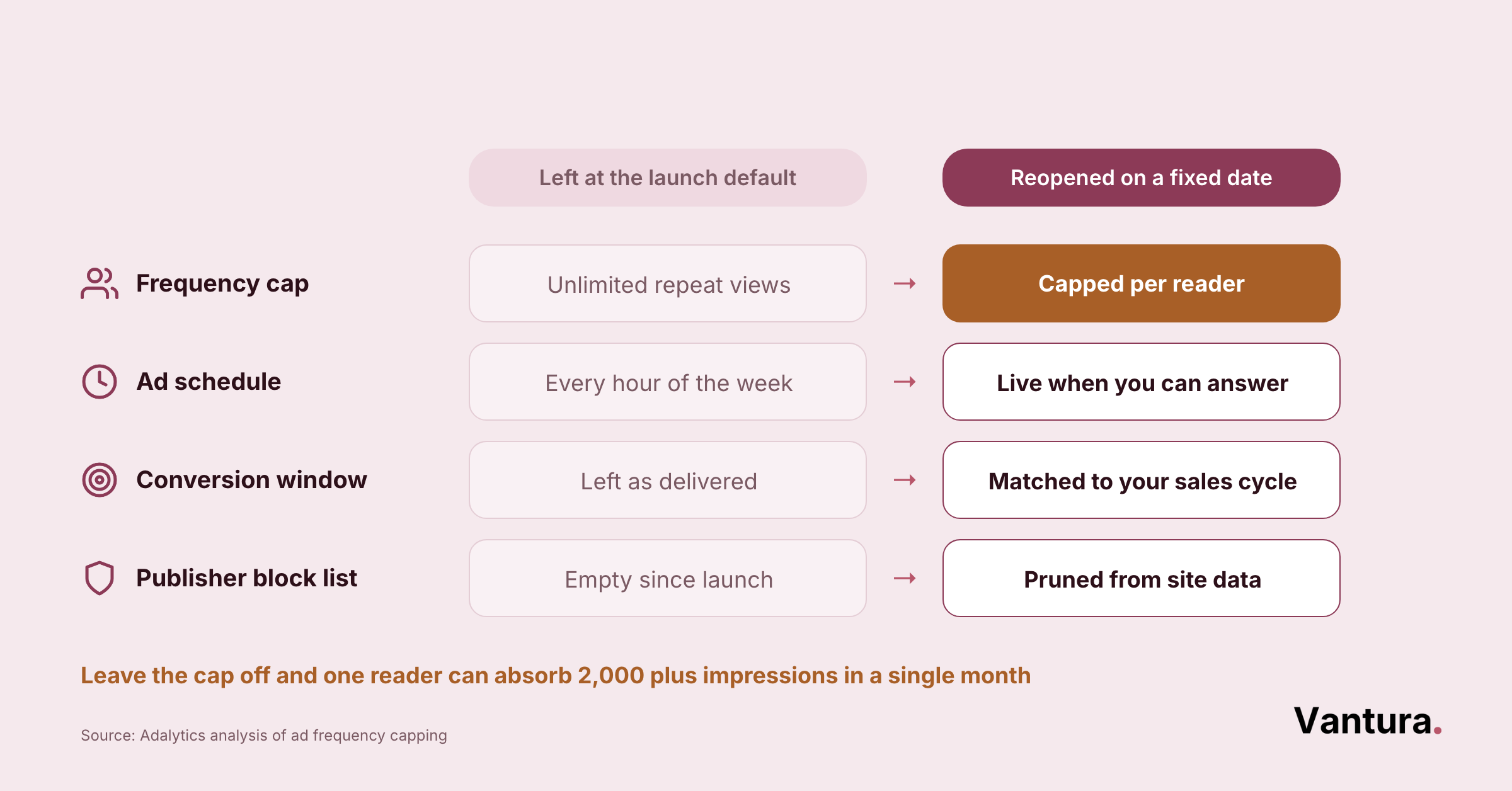
None of that is hard. The accounts that quietly burn money are almost always the ones still running on launch day defaults that nobody has revisited since.
Worth knowing: Taboola’s model learns from the conversions you feed it, so a tracking gap does more damage than a mediocre headline ever will. If you only have time for one fix this quarter, sort out measurement before you touch a single bid.
How Should You Run Taboola Ads in Your First Week?
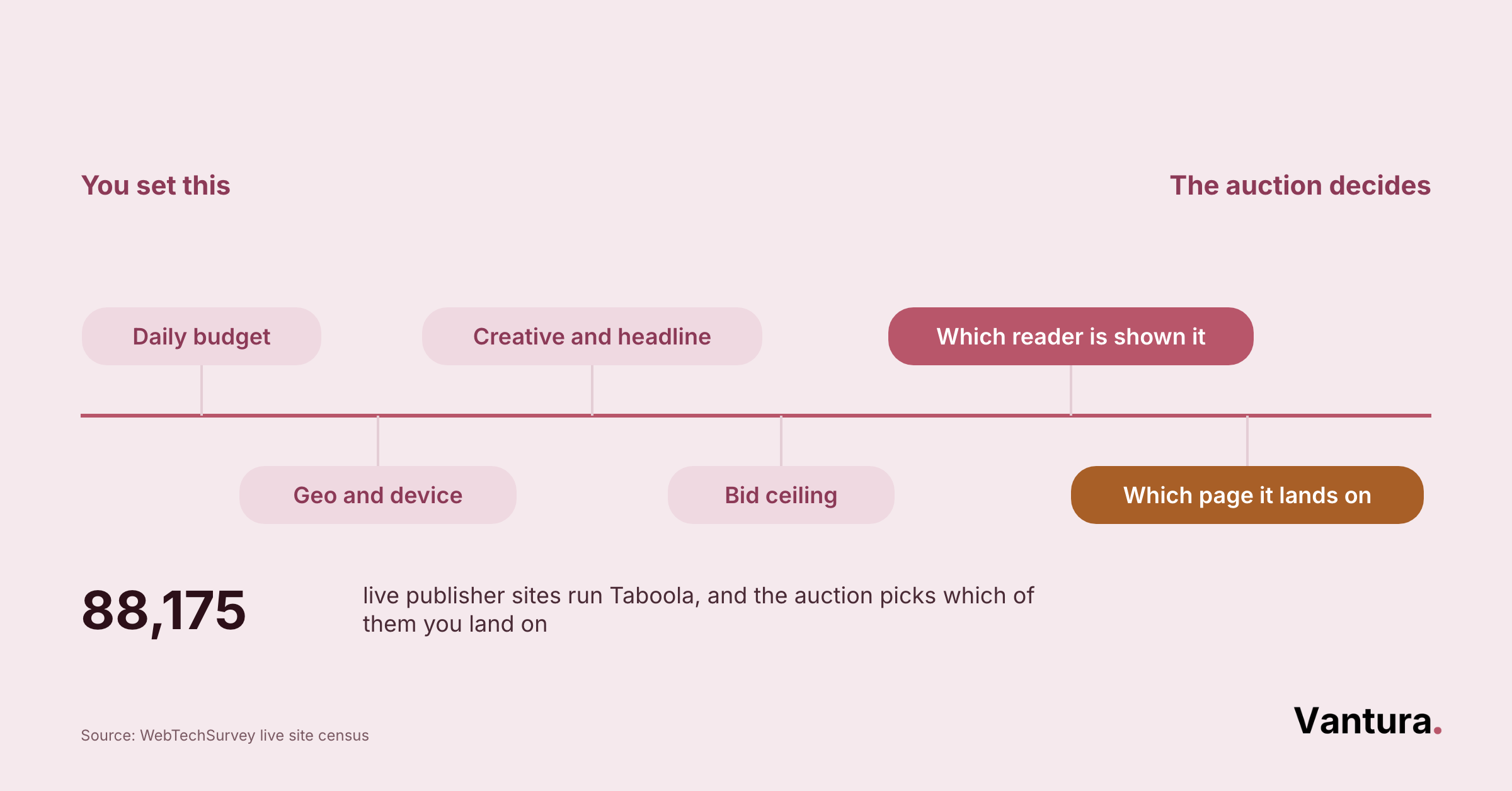
Spend the first week proving the plumbing works instead of chasing performance. Fund the account, confirm conversions are firing, get two or three creative angles live, then leave the bids alone.
Sign up runs through a self service wizard, and the platform asks for your marketing data, budget, and target audience before a campaign can go live. None of the basic setup needs a developer, which is why an in house marketer can get there without a Taboola Ads agency.
Everything on this list is reversible, and every item on it has cost one of our clients real money when it was skipped. Work through it before the first campaign goes live.
- Tracking: fire a test conversion and watch it appear in the platform.
- Geography: check the country and region list matches where you can sell.
- Billing: pick the method that matches how tightly you need to cap spend.
- Landing page: load it on a phone, since most native traffic arrives there.
The temptation in week one is to react to the first day of data. Across our accounts, day one numbers have almost no relationship to where a campaign lands by day ten.
So the routine is boring on purpose. Watch delivery, watch that conversions are recording, and note which headlines are getting impressions at all.
First week rule: write down the one number you are trying to move before you launch, then judge nothing else for seven days. In our experience the accounts that stay calm through week one need far less rebuilding in month two.
What Conversion Data Hygiene Do Taboola Ads Campaigns Need?
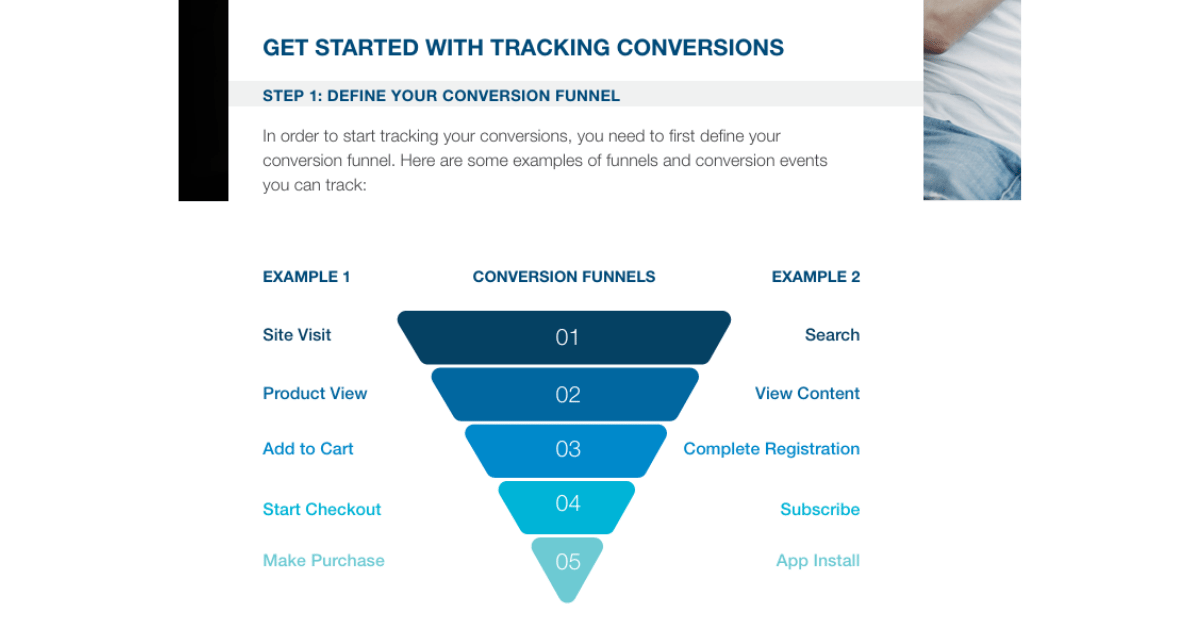
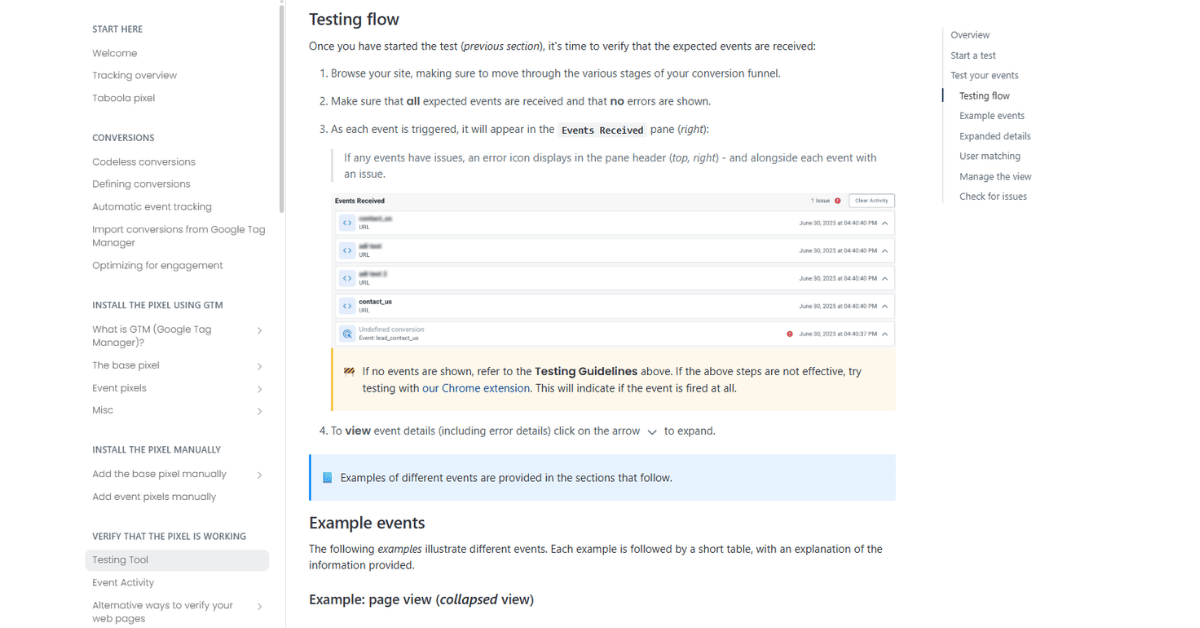
Clean Taboola Ads data means one conversion, counted once, from a source you trust. The platform supports a client side pixel and server to server tracking, and its own documentation recommends running both methods together for complete data.
That sounds like overkill until you lose a week of purchases to a cookie banner change. Running both gives you a second copy of the truth when the first one breaks.
Where the counting usually goes wrong
Duplication is the more common failure. Across the accounts we audit, roughly two in five show the same conversion recorded twice, usually from a plugin and tag container both firing.
- Name conversion events the same way you name them in your other ad platforms.
- Decide which single system is the source of truth for revenue.
- Test the pixel again after every website release, not once a quarter.
- Keep UTM tags consistent so your analytics and the platform tell the same story.
Stores feel this hardest, because a broken purchase event hides revenue rather than leads. It is the first thing our ecommerce digital marketing team checks before touching anything else in an account.
Keep in mind: a double counted conversion does not just flatter your report, it teaches the bidding model to buy more of the wrong traffic. The cost of that compounds every day the campaign keeps running.
How Do You Get Your Team to Check Taboola Ads Regularly?
Give one person the account, one recurring slot in the calendar, and one report they are expected to explain. Shared ownership of an ad account reliably becomes nobody’s ownership.
We learned this the slow way on a client where three people had logins and all three assumed someone else was watching spend. Nothing was wrong for five weeks, then something was, and it ran for nine days before anyone noticed.
Teams without the internal hours for this are usually better off handing the cadence to someone else. That is a large part of what digital marketing outsourcing buys you, a person whose calendar already has the slot in it.
A review rhythm that survives a busy quarter
The rhythm matters more than the length of the meeting. Two short cadences cover almost everything a native account needs.
- Spend against plan
- Conversions recording as expected
- Creative that has clearly stopped working
- Cost per result against your target
- Site and placement performance
- Who still has access, and who should not
Taboola Ads Account Access and User Role Best Practices
Ad accounts collect logins over time and almost nobody prunes them. Someone from an old agency, a contractor from a launch two years back, a freelancer nobody remembers hiring.
Review the list on a fixed date rather than when something goes wrong. A quarterly pass takes ten minutes and removes an entire category of risk.
- Keep the billing contact separate from the person running campaigns.
- Remove agency access on the day a contract ends, not the month after.
- Know your official support routes, which are the support email, the in platform live chat, and your account manager.
- Never accept help from a phone number you found on a third party complaints site.
Agencies reselling native buying have a sharper version of this problem, since client accounts multiply faster than offboarding checklists do. We run a fixed access review on every account we manage, because stale logins pile up fast when nobody is watching.
Small habit, big payoff: put the access review on the same recurring calendar invite as your monthly reporting. Anything that depends on someone remembering to do it eventually stops happening.
What Bidding and Budget Rules Work Best in Taboola Ads?
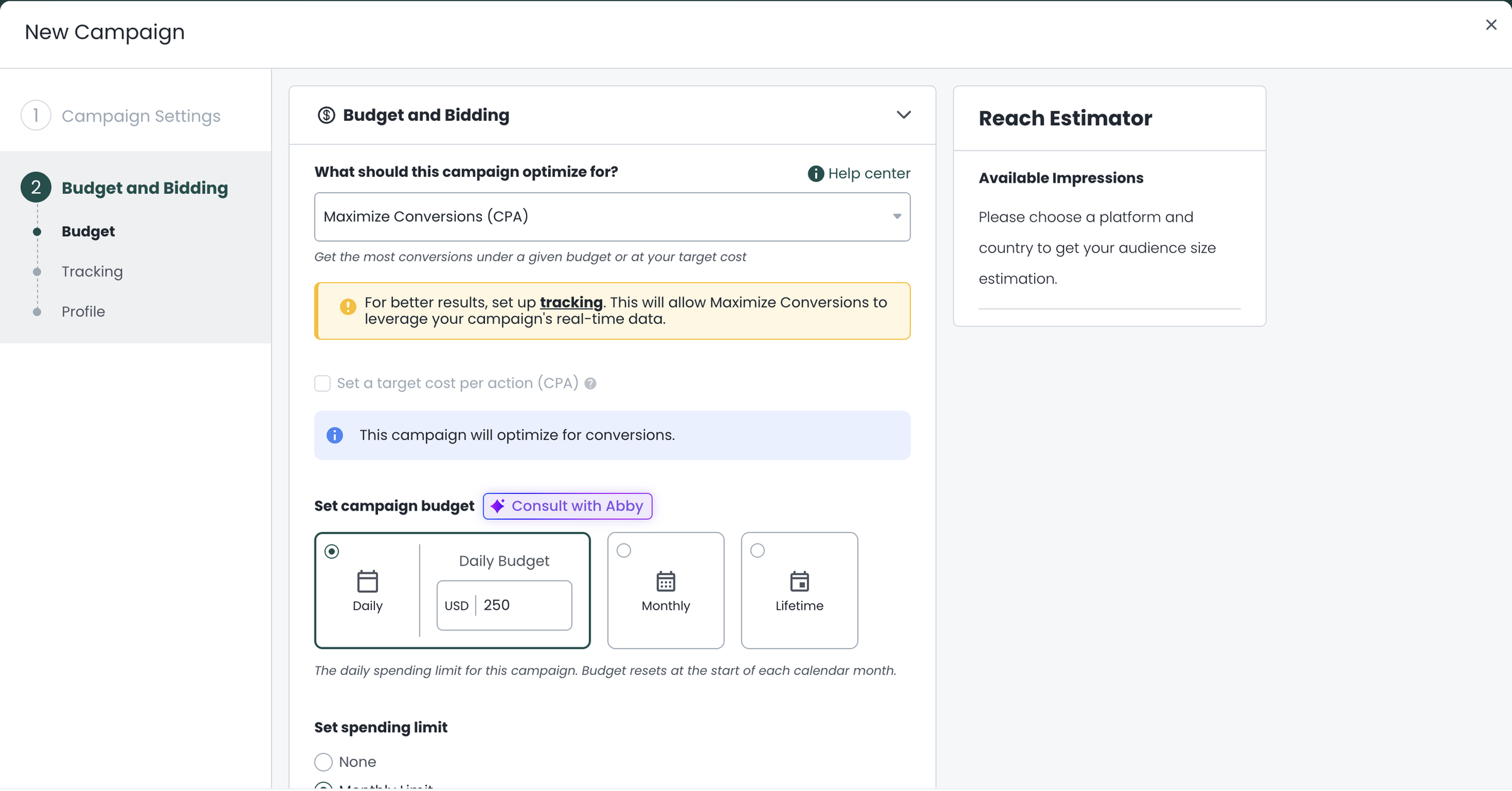
Start manual until you have conversion volume, then hand pricing to the platform once the data is honest. Taboola bills on cost per click or cost per thousand impressions, and your bid is what you pay for each click or view.
The strategy you pick matters less than whether the conversion feed underneath it is clean. Automated bidding with broken tracking is just a faster way to spend the month.
| Bid strategy | Who sets the price | Use it when |
|---|---|---|
| Manual CPC | You do, bid by bid | New account, few conversions, still learning what a click is worth |
| Smart Bid | The platform adjusts around your base bid | Steady conversion volume and a cost target you trust |
| Max Conversions | The platform, inside your budget | Volume matters more than a strict cost per result |
| Target CPA | The platform, against your cost goal | You know your acceptable cost per acquisition and can defend it |
Change one thing at a time
On budget, the rule we hold to is one meaningful change at a time. Change a bid, a budget, and an audience on the same afternoon and you will never know which one moved the number.
Longer sales cycles need extra patience here. When we run native for a B2B digital marketing client, the lag between click and closed deal makes weekly bid tinkering close to useless.
How Should You Build Taboola Ads Reports and Dashboards?
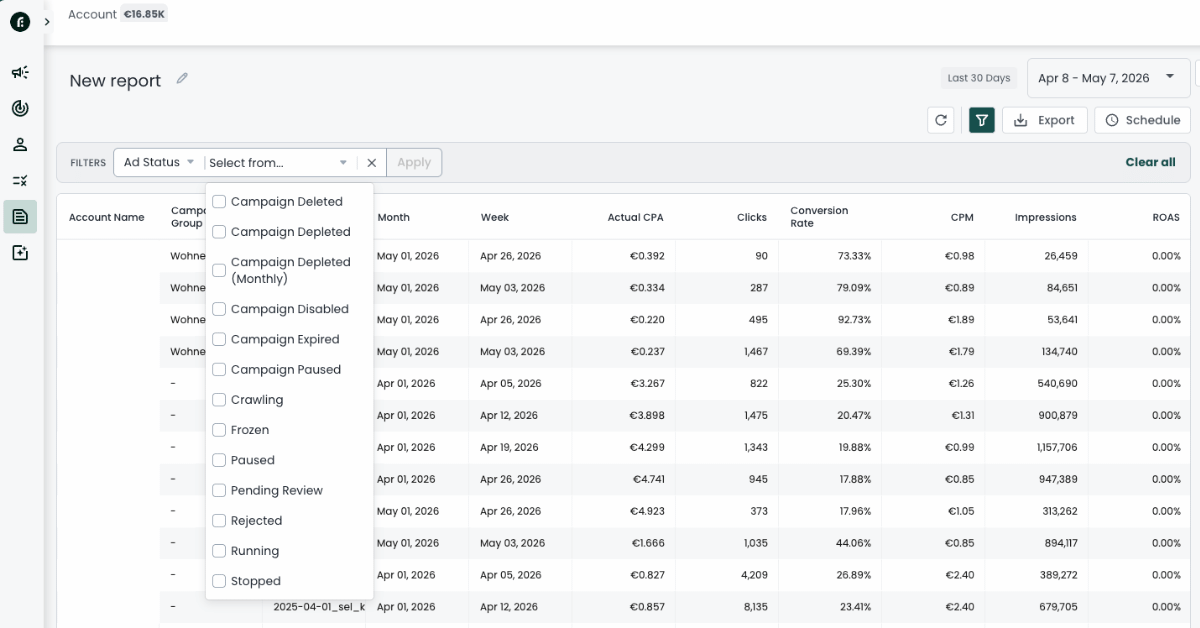
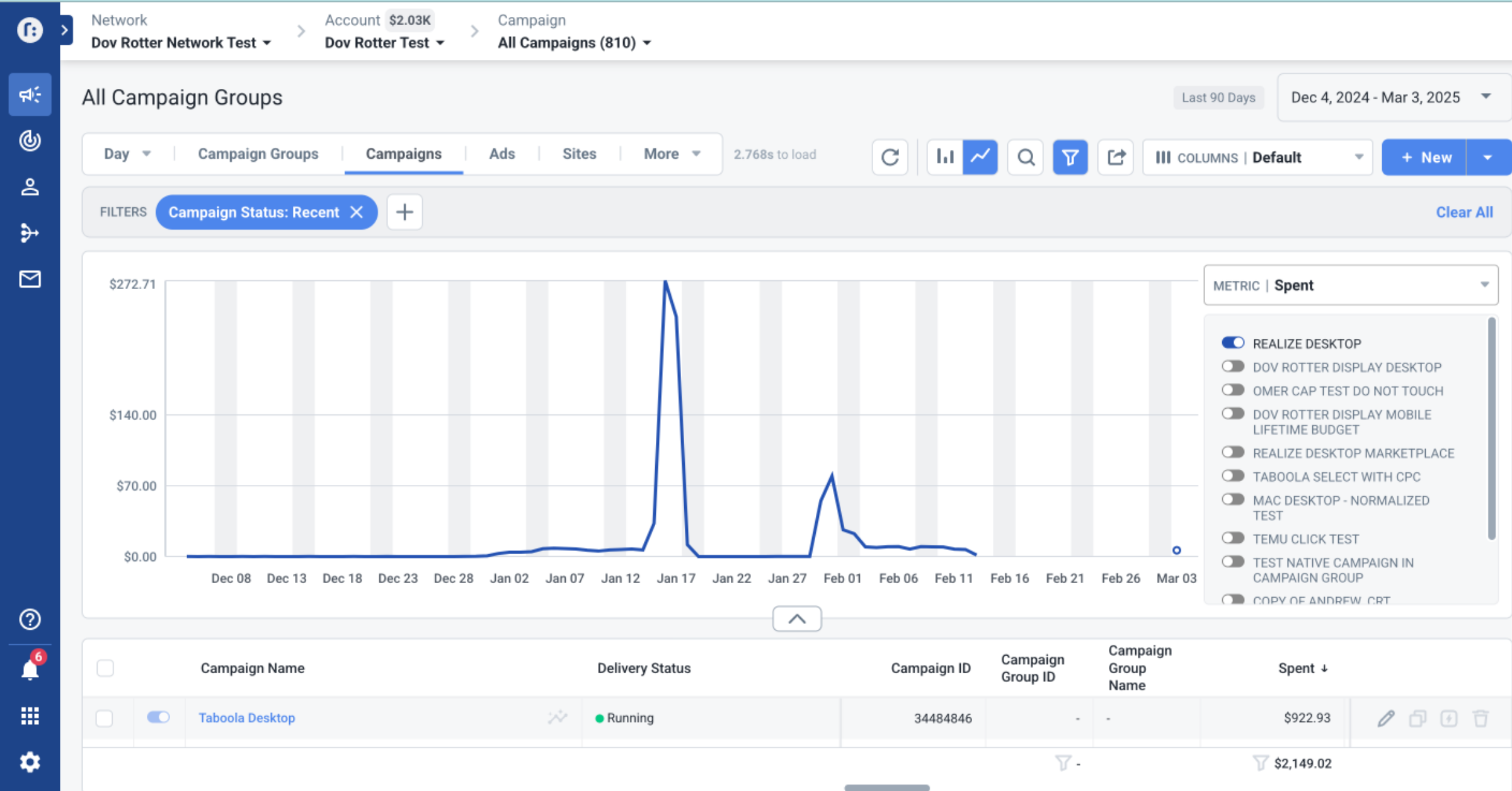
Build one report that answers what you spent, what it produced, and which sites and creatives did the work. Everything else is decoration you will stop opening by month two.
The most useful native reporting view is by publisher site, because performance across a network is rarely even. A handful of sites usually carry the account, and a longer tail quietly drains it.
Native numbers also need a home next to your other channels, or someone senior will judge them in isolation. Pulling native, search, and social into one integrated digital marketing report stops a discovery channel being measured like a demand capture one.
Three views worth keeping
Keep them separate rather than cramming everything onto one screen. Each answers a different question, and each has a different audience inside the business.
- Delivery view: spend, impressions, and pacing against plan.
- Outcome view: conversions and cost per result by campaign.
- Creative view: click rate and conversion rate by headline and thumbnail.
How Do You Roll Out Taboola Ads Without Blowing the Budget?
Ramp spend in stages and pick a billing method that caps your exposure while you learn. Taboola offers automatic card billing, monthly invoicing against an approved credit limit, and prepayment, where you fund the account first and cannot overspend.
Prepayment is the underrated option for a first quarter. It turns a nervous finance conversation into a fixed number, and it removes the worst case entirely.
Smaller advertisers feel every misstep here, which is why we ramp slower on a small business digital marketing budget than a national one. The learning costs the same either way, but the tolerance for it does not.
How fast should you increase spend?
Taboola’s own billing documentation does not publish a minimum daily budget, and figures circulating on forums are third party guesses, not platform rules. From our own accounts, daily budgets below roughly 40 to 60 dollars take a long time to produce readable data.
- Weeks one and two: prove tracking, keep spend small and steady.
- Weeks three and four: hold budget, rotate creative, learn which angle wins.
- Weeks five and six: increase in steps of roughly a third, never doubling.
How Do You Keep Taboola Ads Integrations Stable?
Pick the lightest integration that gives you accurate conversions, then leave it alone. Taboola offers codeless integrations for Shopify, WooCommerce, WordPress, and Google Tag Manager, plus mobile attribution through partners including AppsFlyer and Adjust.
Most breakages we see are not the integration failing on its own. Something else changed, a theme update, a consent tool, a developer tidying tags, and nobody tested it afterwards.
| Integration | Setup type | Best suited to |
|---|---|---|
| Shopify app | Codeless install | Stores that want purchase tracking working the same day |
| WooCommerce or WordPress plugin | Codeless install | Content sites and stores already running on WordPress |
| Google Tag Manager | Tag container | Teams with a tag manager and a change process |
| AppsFlyer or Adjust | Attribution partner link | App installs and in app events |
| Server to server postback or bulk API | Developer work | Offline sales, call tracking, and CRM stage conversions |
Subscription businesses have the most to lose from a silent break, since a trial signup event feeds every downstream decision. Our SaaS digital marketing checklist puts a tracking test inside the release process rather than in a monthly review.
Pro tip: add one line to your website release checklist that says fire a test conversion and confirm it lands. It is the cheapest insurance in paid media, and almost nobody does it.
Taboola Ads Security and Policy Compliance Best Practices
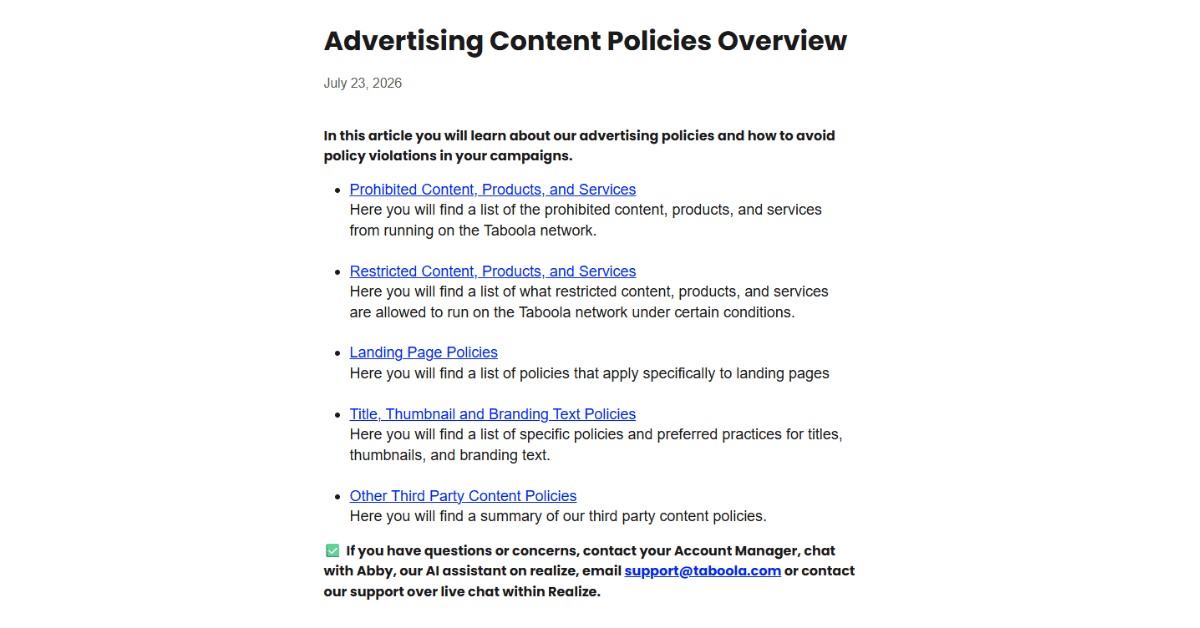
Two things sit under this heading, and teams usually think about only one. There is account security, and there is ad policy, and the second stops more campaigns than the first.
Native networks apply editorial standards because your ad appears beside news content. Claims that would pass on a social feed get rejected here, and regulated categories carry extra conditions.
What gets accounts into trouble
- Landing pages that promise something the ad did not.
- Before and after imagery in health adjacent categories.
- Income or outcome claims with nothing behind them.
- Geo settings left wide open, which can spend into markets you cannot serve.
Regulated advertisers should assume review rather than hope for it. We build an extra approval step into every healthcare digital marketing campaign, and it has saved more launches than it has delayed.
How Do You Manage the Change When Taboola Ads Joins Your Mix?
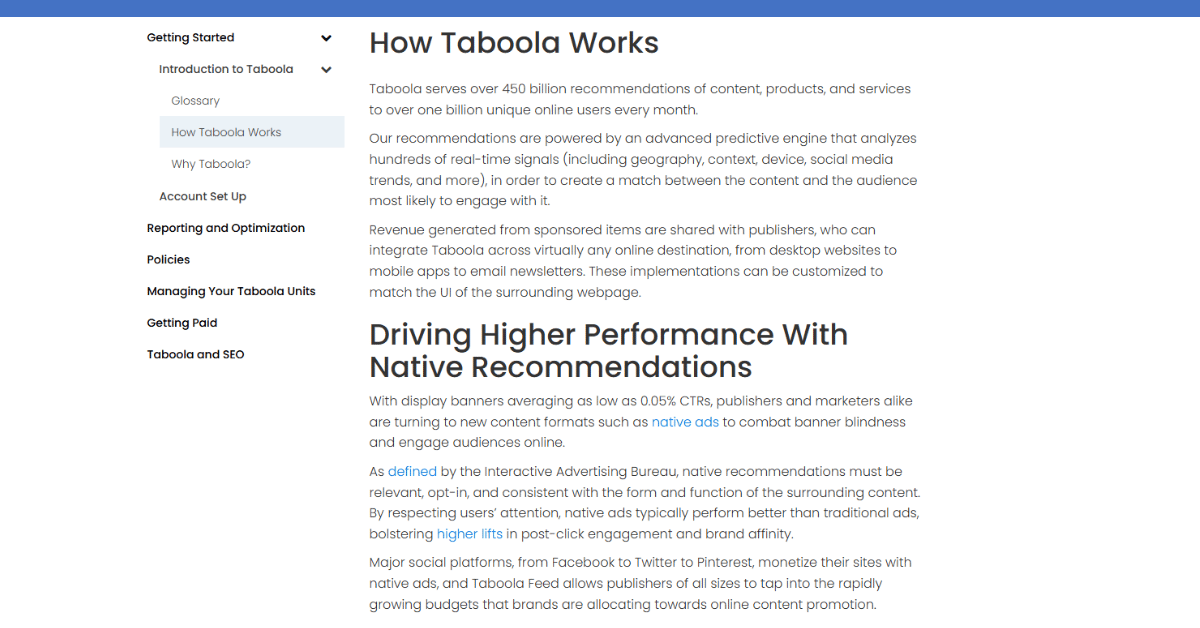
Set expectations with the people reading the report before the first click lands. Native traffic behaves like discovery, so judging it against branded search in week two is how good channels get killed early.
We used to launch native quietly and let the numbers speak. After watching two accounts get shut down by a nervous finance review, we now brief stakeholders first and launch second.
When a whole channel mix is shifting at once, the conversation is bigger than one platform. That planning sits closer to digital marketing consulting than to campaign work, and the two are worth keeping separate.
Move 1: agree what a good outcome looks like
Write the target cost per result down, with the date you will judge it. A number agreed in advance is much harder to argue with later than one produced after the fact.
Move 2: say out loud what will look bad at first
Assisted conversions, longer paths, and a lower click rate than search are all normal here. Naming them in advance turns them into context rather than alarms.
Move 3: pick the moment you would stop
An exit condition removes the emotion from month two. Something like a fixed spend level with no qualified leads is honest, testable, and stops the argument before it starts.
How Should You Test Taboola Ads Creative Before You Scale?
Test angles first, then variations of the winner, then format. Taboola publishes exact limits for titles, thumbnails, and video, and staying inside them keeps an ad from getting cut short.
Titles cap at 60 characters, and the platform’s own creative guidance puts the sweet spot at 34 to 45. Front load the point, because different publisher layouts truncate at different lengths.
The same routine carries between visual networks, which helps if you run more than one. Our testing plan follows an identical shape on other native and social platforms, and only the specs change.
| Creative element | Recommended | Hard limit |
|---|---|---|
| Title | 34 to 45 characters | 60 characters |
| Description | 180 to 200 characters | 250 characters |
| Thumbnail | 1200 by 674 pixels, 16:9 | 400 by 350 pixels minimum, 5MB file |
| Branding text | Short brand name | 30 characters |
| Motion ad | Up to 15 seconds, 16:9 | 50MB, or 5MB for a GIF |
| Video | 6 to 30 seconds | 90 seconds, 50MB |
Round one: three angles, not thirty variations
Run three different promises rather than three rewrites of the same sentence. Small wording tests need volume that most accounts do not have in week one.
Round two: rebuild around the angle that survived
Once one promise pulls ahead, write four or five headlines inside it and swap thumbnails underneath. This is where the character sweet spot earns its keep.
Round three: change the format, not the message
Take the winning message into motion or video and see whether it holds. In our accounts creative fatigue usually shows up somewhere around week three, so a queued format change buys you another cycle.
Common Taboola Ads Mistakes, and How to Avoid Each
These five account for most of the wasted spend we inherit. None of them are exotic, and that is the point.
Consumer brands hit the creative ones hardest, because the promise is doing all the work in a crowded column of headlines. That is where a B2C digital marketing team earns its money, in the angle rather than the settings.
How Do You Run a Taboola Ads Health Check?
Work through a fixed list on a fixed schedule so the account never drifts far. Ours takes under an hour and catches the things that quietly cost the most.
If nobody internally owns that hour, an outside pass works too. A structured digital marketing audit covers the same ground, with the advantage that the person doing it did not build the account.
| What to check | What good looks like | How often |
|---|---|---|
| Pixel and server side events | One conversion, counted once | Monthly |
| Creative age | Nothing running untouched past about six weeks | Weekly |
| Title length | Inside 60 characters, most sitting near 40 | Every launch |
| Geo and device settings | Matching the markets you can serve | Monthly |
| Account access | Only people still working on the account | Quarterly |
| Billing method | Matching how tightly you need to cap spend | Quarterly |
Signs Your Taboola Ads Setup Needs a Cleanup
Accounts rarely fail loudly. They drift, and the signs are easy to read once you know what you are looking at.
- Nobody can say which campaign produced last month’s leads.
- The same three creatives have been live since launch.
- Your platform conversion count and your analytics number have quietly diverged.
- Spend is flat but cost per result has climbed for two months running.
- The weekly report goes out and nobody replies to it.
Two or more of those together usually means a rebuild is cheaper than another round of tweaks. Larger accounts feel it most, so our enterprise digital marketing teams schedule a structural review every couple of quarters.
Bottom line: almost every native account we take over is losing money to measurement and stale creative, not to bidding. Fix those two and the platform tends to do more of the work than people expect.
Taboola Ads Best Practices FAQ
Disclaimer: This article is for general information only and reflects our own experience running native advertising campaigns. Platform features, specifications, and pricing are set by the vendor and can change at any time, so verify details with the provider before acting. Vantura Marketing accepts no liability for decisions made on the basis of this content.