Construction Inbound Marketing: Strategy & Tactics (2026)

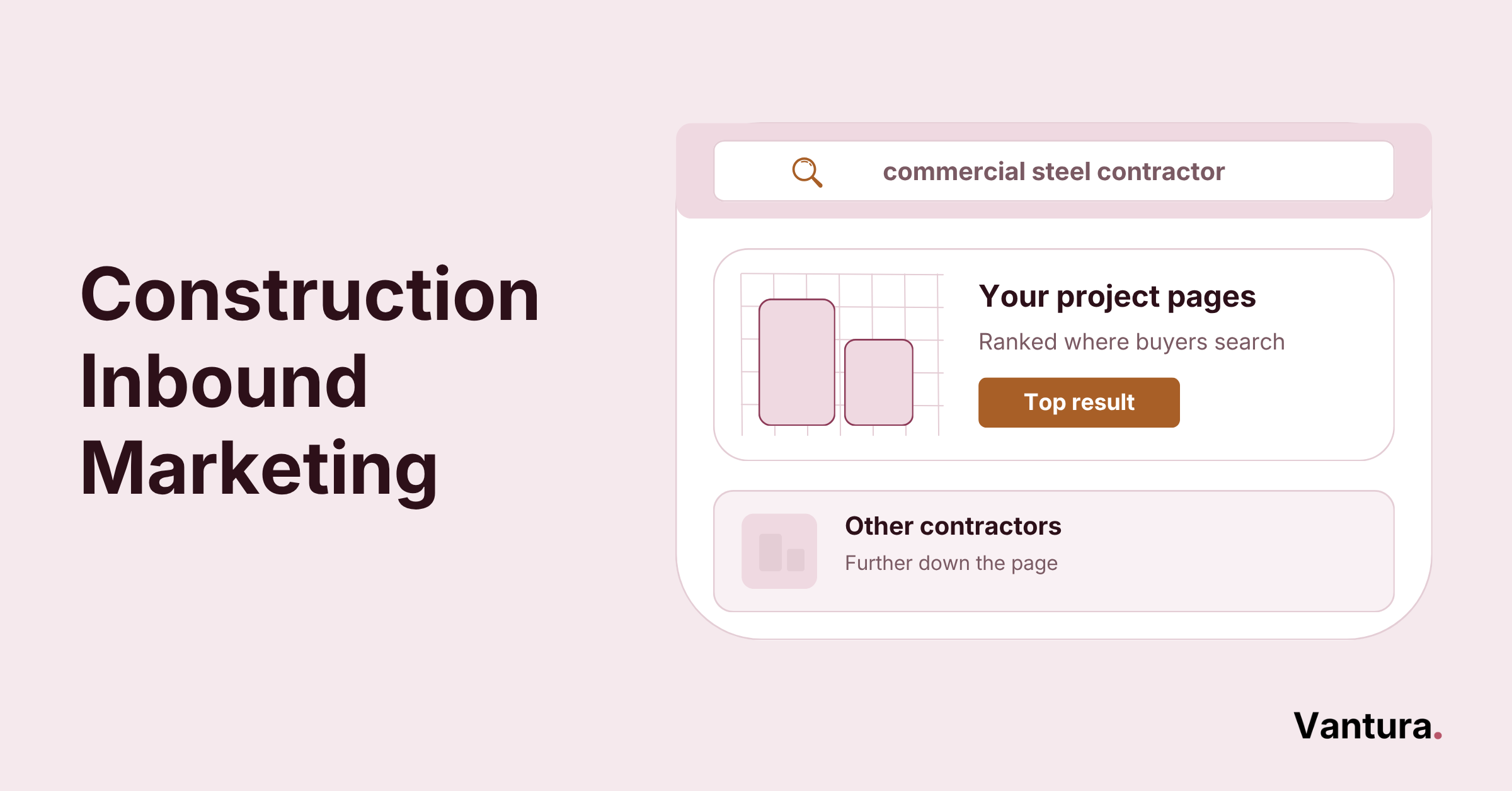
Construction inbound marketing is a strategy that earns contractor leads through helpful content, search visibility, and nurtured follow-up until they are ready to build. It suits construction firms with long sales cycles, where a single project can take months to close. Done well, it lowers your cost per lead and fills the pipeline without cold calling.
Why contractors trust our inbound guidance:
Vantura Marketing brings 190+ combined years of experience across 180+ campaigns, and construction is one of the 14 industries our team works in. On inbound builds, we average a 4.2x lift in qualified leads within 90 days.
Need help with construction inbound marketing?
If cold bidding has stopped filling the schedule, our B2B digital marketing services can turn your site into a steady lead source. Get in touch and we will map your first ninety days.
What Is Construction Inbound Marketing?
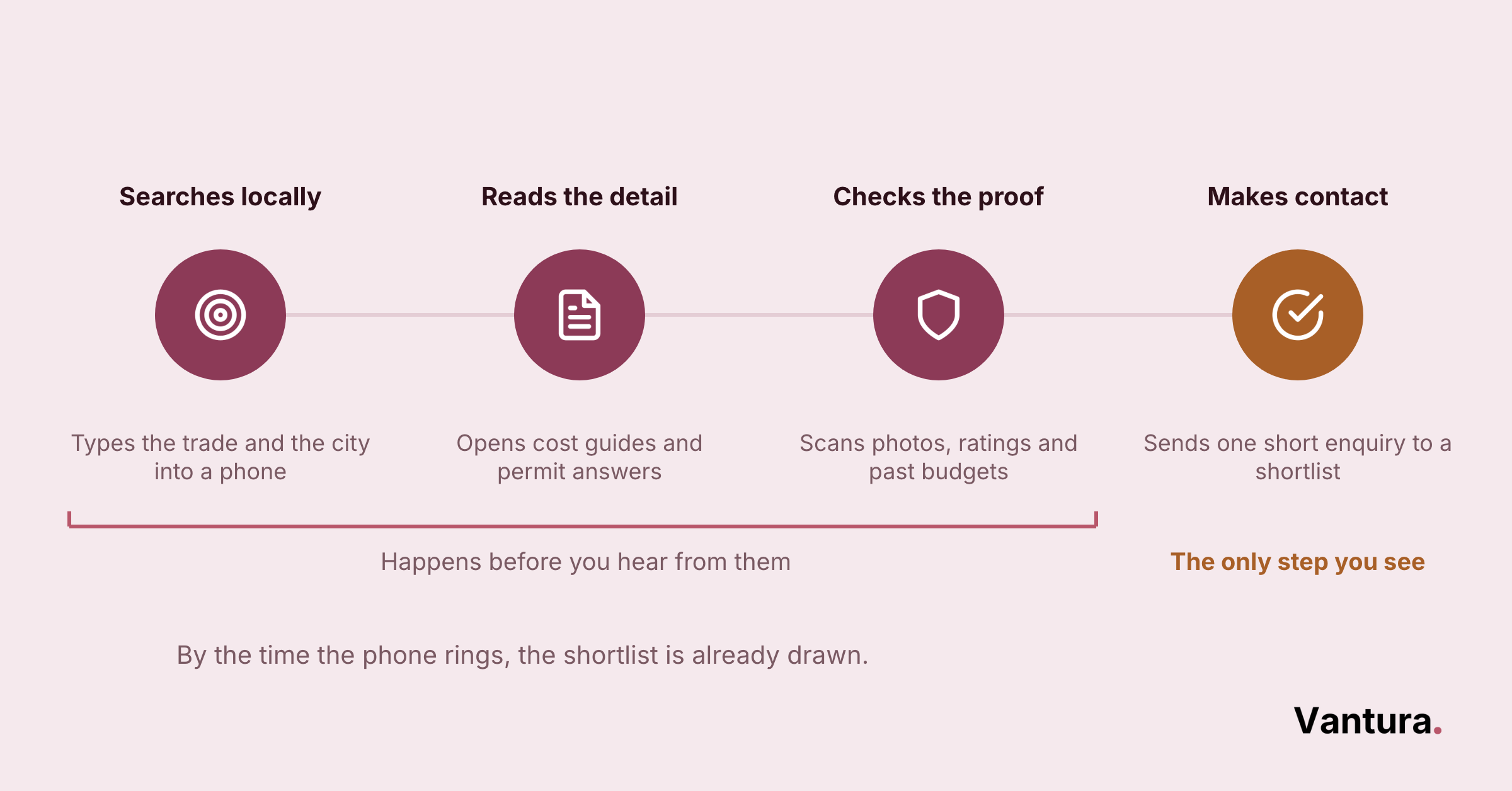
Construction inbound marketing is the practice of pulling in contractors, developers, and homeowners with useful content instead of chasing them with cold outreach. It covers SEO, blog and video content, email, and marketing automation, all aimed at people already searching for what you build.
The idea is simple. You answer the questions your buyers ask before a project, so your firm is the one they trust when they are ready to sign.
That trust compounds, which is why inbound works best as part of a documented digital marketing strategy rather than a string of one-off campaigns. The content you publish this quarter keeps generating leads long after an ad budget would have run dry.
The quality payoff also shows up in the data. Across the industry, 93.8% of marketers say their lead quality improved over the past year, which tracks with what better-targeted inbound content tends to do.
Worth knowing: Inbound is not a quick fix. Most construction firms we work with see the first real quote requests from organic content somewhere around month four to six. From there, growth tends to climb steadily as more pages rank and referrals start to build.
Inbound vs Outbound Marketing for Construction Firms
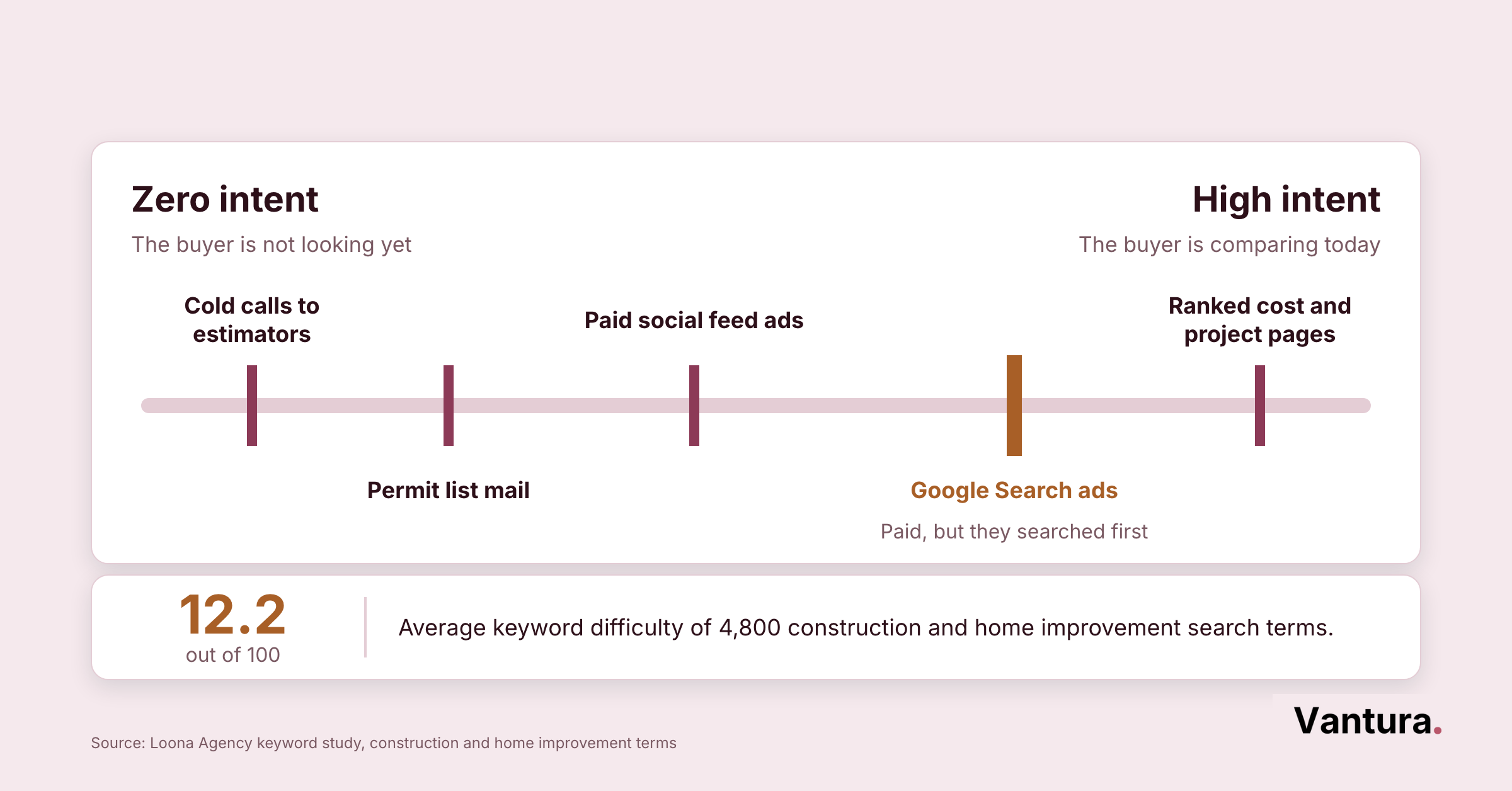
Both approaches still have a place on a construction marketing plan. The difference is who starts the conversation, and how much you pay each time it happens.
The strongest contractor pipelines we manage run an integrated digital marketing approach. Inbound carries the steady base load, and a little outbound fills the gaps.
That mix is more forgiving than betting everything on one channel.
- Buyers find you through search, referrals, and content
- Cost per lead drops as your pages age and rank
- Best for long project cycles and repeat clients
- You reach out first through calls, ads, and direct mail
- Faster to start, but you pay for every touch
- Useful for filling short-term gaps in the schedule
Most firms do not pick one and abandon the other. We usually start clients on outbound for cash flow, then shift budget toward inbound as the content starts carrying its weight.
How Does the Construction Inbound Marketing Methodology Work?
The construction inbound methodology moves buyers through four stages. You attract the right people with content, convert them into leads, close the bid with sales, then delight them into repeat work and referrals.
Each stage hands off to the next, so a gap anywhere leaks money. The trick is to build all four before you scale any one of them.
Mapping the Construction Inbound Funnel Stages
| Funnel stage | What the buyer is thinking | Best content | Metric to watch |
|---|---|---|---|
| Attract (top) | Who handles projects like mine? | Guides, project photos, local SEO pages | Organic traffic |
| Convert (middle) | Can this firm deliver as promised? | Case studies, spec sheets, estimate forms | Lead conversion rate |
| Close (bottom) | Is the bid and timeline right? | Proposals, follow-up email, testimonials | Quote-to-win rate |
| Delight (post) | Would I hire them again? | Onboarding, check-ins, referral asks | Repeat and referral rate |
Attract: SEO and Content That Pull Contractors In
Finding the Searches Your Buyers Already Run
Attraction starts with the searches your buyers already run. A general contractor looking for a steel fabricator types very specific queries, and ranking for those beats any billboard.
Building Topic Clusters Around Services and Locations
This is where construction overlaps with industrial marketing playbooks, since both sell complex, high-value work to a small, informed audience. We build topic clusters around services, materials, and locations so the site becomes the obvious answer.
Convert: Turning Site Visitors Into Qualified Leads
Traffic means nothing until it turns into a named lead with a real project. The fix is usually boring, not clever, and it starts with the forms and calls to action on your key pages.
When conversion stalls, a full marketing audit almost always finds the same culprits, slow pages, buried phone numbers, and forms that ask for too much. We strip those down to name, project type, and timeline, then let sales do the rest.
Close: Email and Automation That Win the Bid
Construction deals rarely close on the first visit. The buyer disappears to line up financing, permits, or a partner, and your job is to stay useful while they do.
Automated email keeps your firm in front of them with the next relevant answer, not a nagging sales push. We time these sequences to the real project clock, which for commercial work often runs several months.
Delight: Turning Clients Into Repeat Business and Referrals
The work does not end at the final invoice. Past clients and the people they know are the cheapest pipeline you will ever have.
Why Referrals Beat Cold Leads
On the accounts we run longest, roughly 2 in 5 new projects trace back to a past client or a referral they sent. A simple post-project check-in and a review request do most of that quietly.
From the field: Skipping the delight stage is the most common money left on the table. One commercial GC we advised had no follow-up system at all, and re-adding a basic referral ask lifted repeat inquiries within a couple of quarters.
Construction Inbound Content Types That Drive Traffic
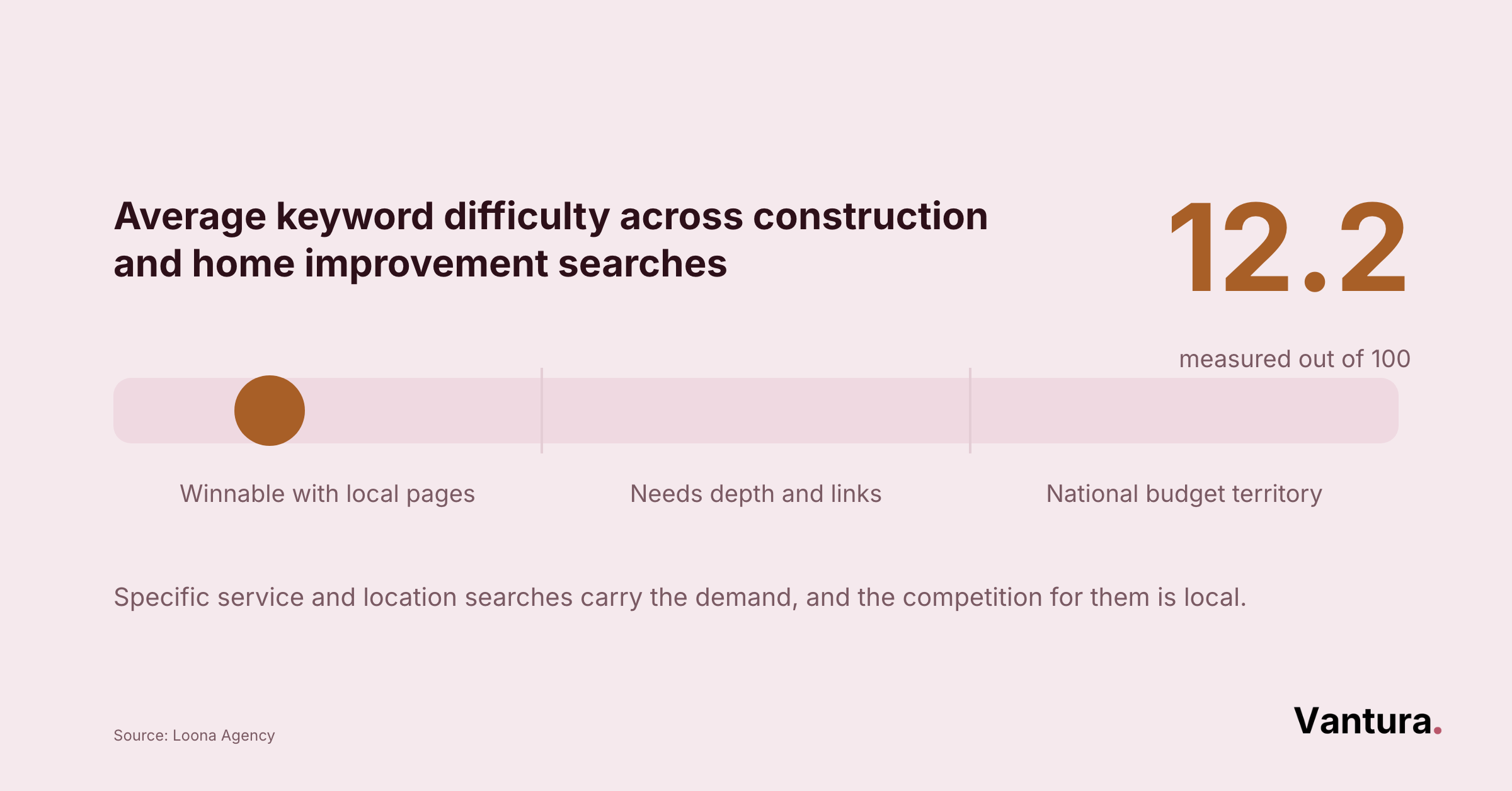
A few formats bring in most of the traffic for construction firms. The rest are optional extras you add once the basics are working.
The winners look a lot like what works in real estate marketing, visual, local, and proof-heavy. Buyers want to see the work and the people behind it before they call.
- Project galleries and before-and-after photo sets
- Local service pages for each trade and city you cover
- Case studies with budget, timeline, and outcome
- Short site walkthrough and equipment videos
- Practical guides like permit checklists and material comparisons
- Client review and testimonial pages
How Does Inbound Marketing Connect to Your Construction CRM and Automation?
Your CRM is where inbound leads turn into tracked projects. It records every enquiry, fires the right follow-up, and shows which content produced paying work.
Keeping Sales and Marketing on the Same Records
The classic construction failure is a lead form that emails an estimator who is out on site all day. By the time anyone replies, the buyer has three other quotes.
We fix this by piping every inbound lead straight into the CRM with an owner and a deadline attached. Teams that would rather not run this in-house often end up outsourcing the day-to-day to a partner who lives in the tool.
Automation Workflows That Fit a Construction Sales Cycle
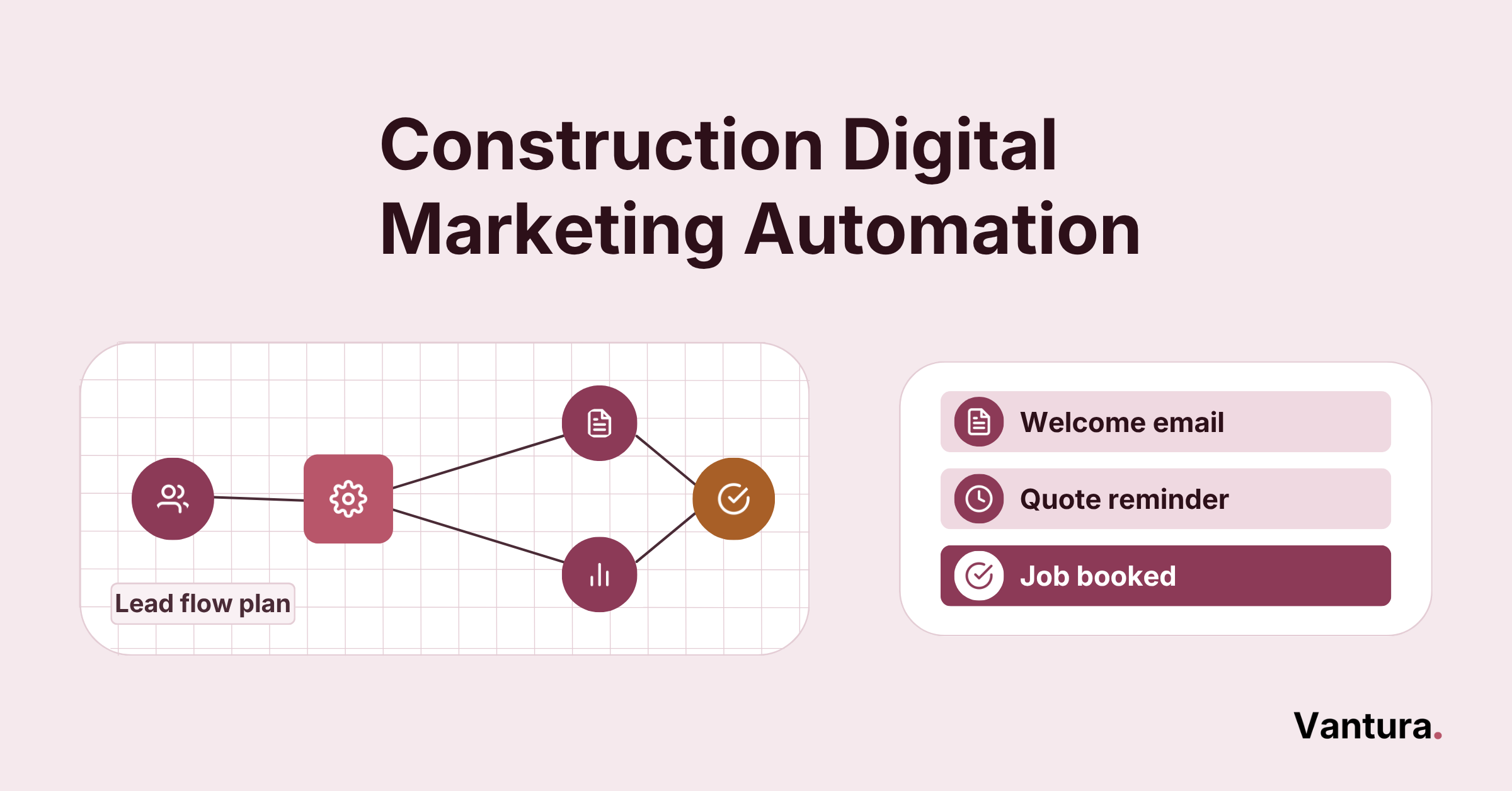
Good automation feels like a helpful project manager, not a robot. It sends the spec sheet after a form fill, reminds sales to call within the hour, and nudges a quiet lead a week later.
Trigger-Based Sequences to Set Up First
- New lead: instant confirmation plus an internal alert
- No reply in 48 hours: gentle follow-up with a case study
- Quote sent: reminder sequence tied to your decision window
- Project won: onboarding and review-request series
Which Metrics Show Construction Inbound Marketing Is Working?
The metrics that matter tie marketing to revenue, not vanity likes. Track organic traffic, cost per qualified lead, quote-to-win rate, and repeat business to see whether inbound is really working.
We review these monthly with clients, and a quick marketing consulting session usually turns the numbers into two or three clear actions. The goal is fewer metrics, watched closely, not a dashboard no one opens.
| KPI | What it tells you | Healthy direction |
|---|---|---|
| Organic traffic | Whether content is getting found | Steady climb over six or more months |
| Cost per qualified lead | How efficient inbound has become | Falling as pages rank |
| Lead-to-quote rate | If the leads are the right fit | Rising with better targeting |
| Quote-to-win rate | How well sales closes inbound leads | Higher than your outbound rate |
| Repeat and referral rate | Whether the delight stage works | A growing share of new projects |
Keep in mind: Inbound metrics move slowly at first, then all at once. Judging a construction content program at month three is like walking off a job at the foundation stage. The structure that pays off is not visible yet.
How Does Inbound Marketing Fit Construction’s Long Sales Cycles?
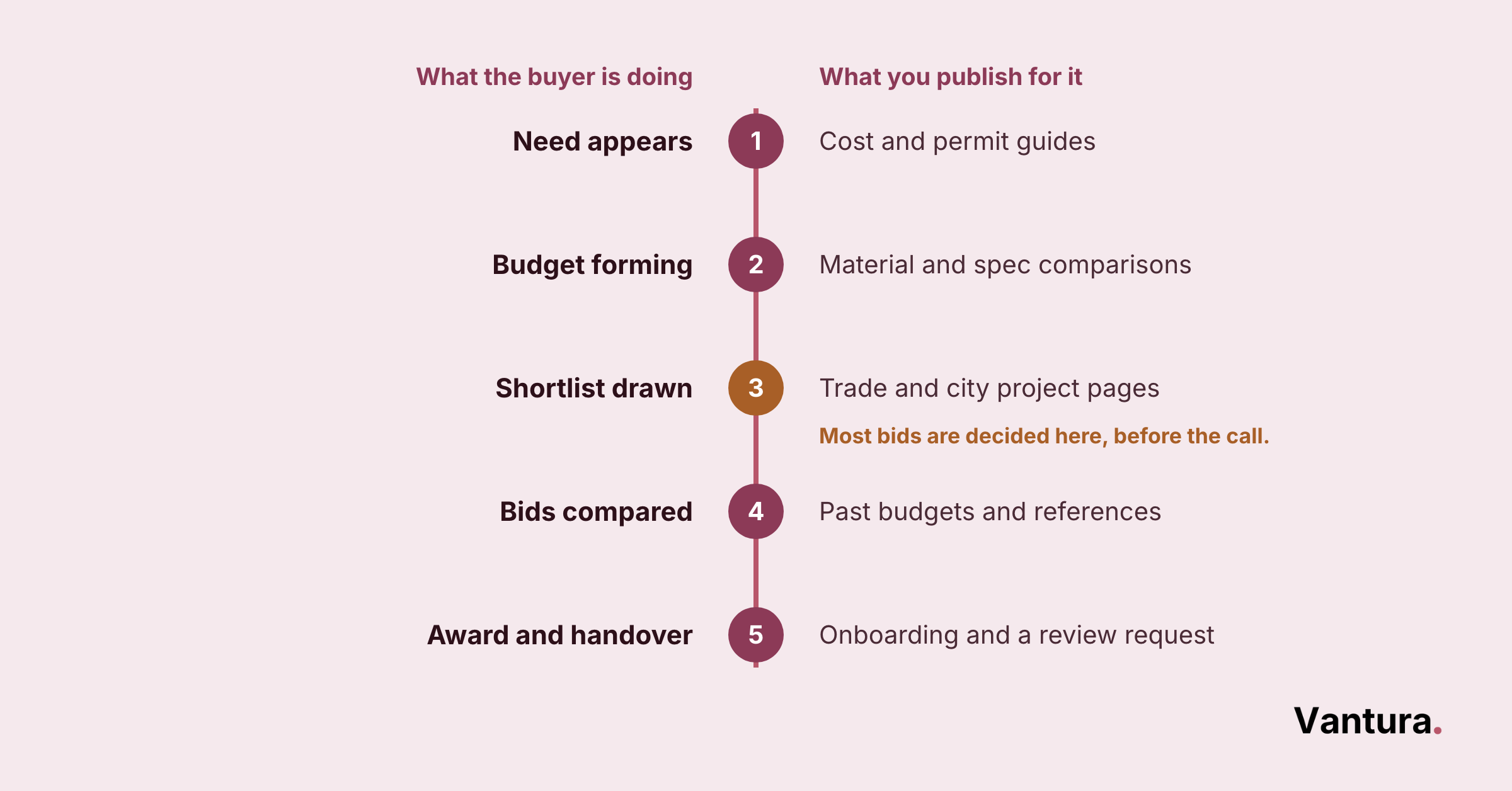
Long cycles are exactly where inbound pays off. Steady, helpful content keeps your firm top of mind far more cheaply than repeated sales calls.
Nurturing works, and the numbers back it up. Lead nurturing produces a 20% increase in sales opportunities compared with leads left alone. That matters when a construction deal can take the better part of a year to close.
The longest cycles we see sit with large commercial and public projects, the same territory enterprise digital marketing is built for. There, inbound content also arms the internal champion who has to sell your firm to a committee.
Inbound vs Account-Based Marketing for Construction
Account-based marketing flips inbound around. Instead of attracting many buyers, you pick a short list of dream accounts, the developers or GCs you most want to build for.
Then you tailor everything to them.
The two work together. Inbound builds the reputation that makes your account-based outreach land, since a targeted developer will look you up before replying.
How Much Does Construction Inbound Marketing Cost?
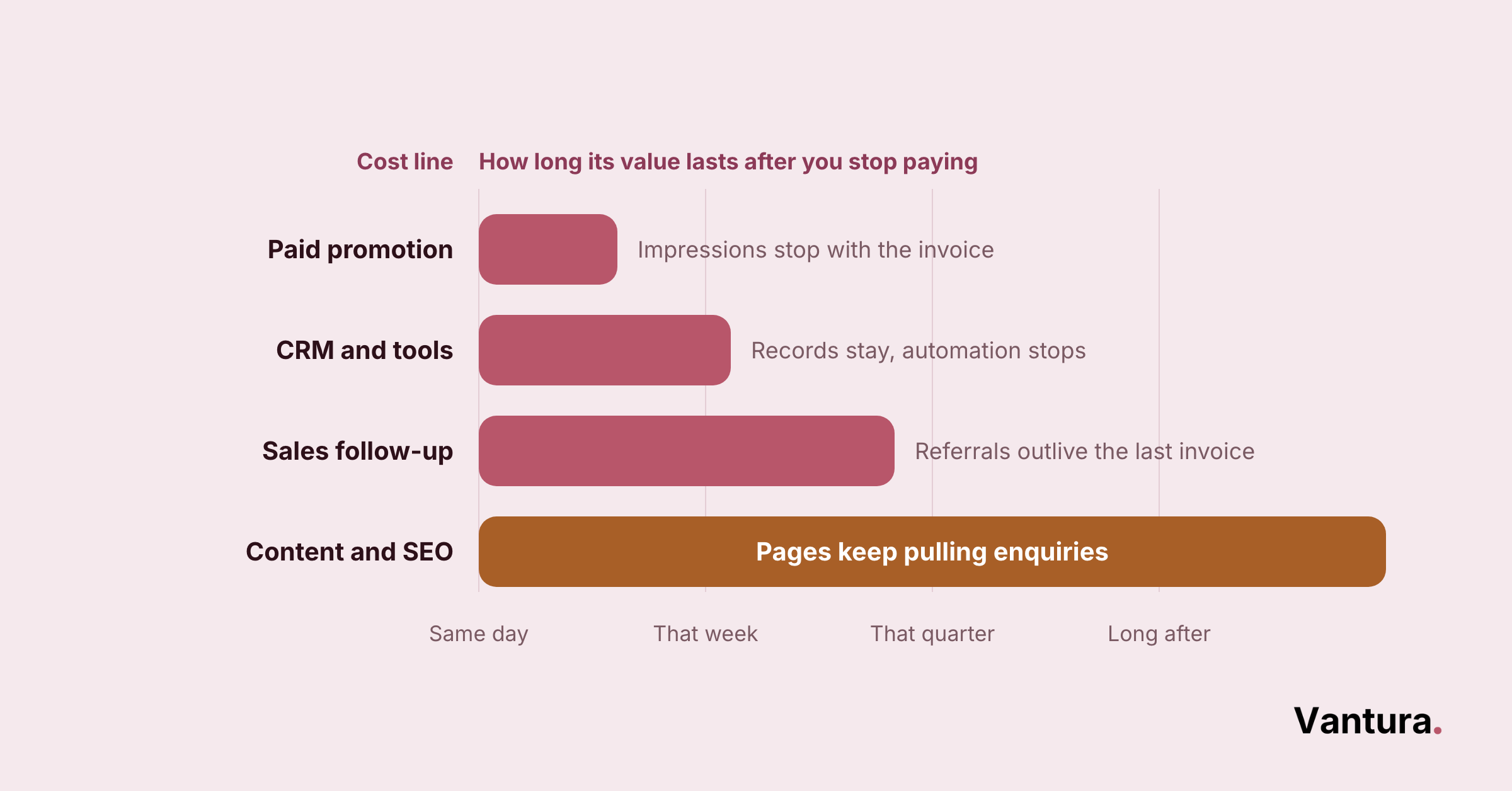
Construction inbound marketing usually costs less per lead than paid ads over time, but it asks for patience up front. Expect to invest in content, SEO, and a CRM for several months before the cost per lead drops below your outbound number.
Budgets vary with how much you already have in place. A small contractor testing inbound might spend a modest monthly amount on content and tools.
That is why our small business marketing plans start lean and scale with results.
Across the contractor accounts we run, the honest split is roughly 60 percent content and SEO, 25 percent tools. The rest goes to paid promotion to speed things along.
Those shares shift once the organic base is strong.
Budget reality: The cheapest inbound program is the one you actually stick with. We have watched firms spend big for two months, panic at the quiet, and quit right before the content would have started ranking.
What’s the ROI of Construction Inbound Marketing?
Done consistently, construction inbound marketing tends to pay back within the first year and then compounds. The early cost is real, but content that ranks keeps producing leads at almost no extra cost.
In our experience, cost per qualified lead on a mature inbound program lands about 30 to 40 percent below the same firm’s paid-ads cost. Payback usually shows up somewhere around month nine to twelve.
The compounding is the real prize. A page that ranks this year is still pulling in quote requests two years on, long after the work to make it was paid for.
Construction Inbound Marketing Tools and Platforms
You do not need a huge stack to run inbound well. A handful of tools covers the whole methodology, and most of them integrate with each other.
We stay independent, so we recommend what fits the firm, not what pays us. That runs from broad platforms like HubSpot down to niche construction systems such as Buildertrend.
It is the same stack we hand to manufacturing marketing teams selling complex, considered work.
| Tool type | Example platforms | What it handles |
|---|---|---|
| CRM | HubSpot, Buildertrend, Pipedrive | Lead records and follow-up |
| SEO and content | Google Search Console, Ahrefs, Surfer | Finding and ranking for buyer searches |
| Email and automation | Mailchimp, ActiveCampaign, HubSpot | Nurturing leads across long cycles |
| Analytics | Google Analytics, Looker Studio | Tying leads back to content |
| Scheduling and social | Buffer, Later | Publishing project photos and updates |
How Do You Transition a Construction Company From Outbound to Inbound?
You transition gradually, not overnight. Keep the outbound that pays the bills, and start building inbound content beside it.
Then slowly move budget across as organic leads prove they can carry the load.
This works for any trade, whether you handle roofing marketing on your own today or run a commercial GC leaving cold bidding behind. The steps are the same, only the timeline changes.
What Are the Most Common Construction Inbound Marketing Mistakes?
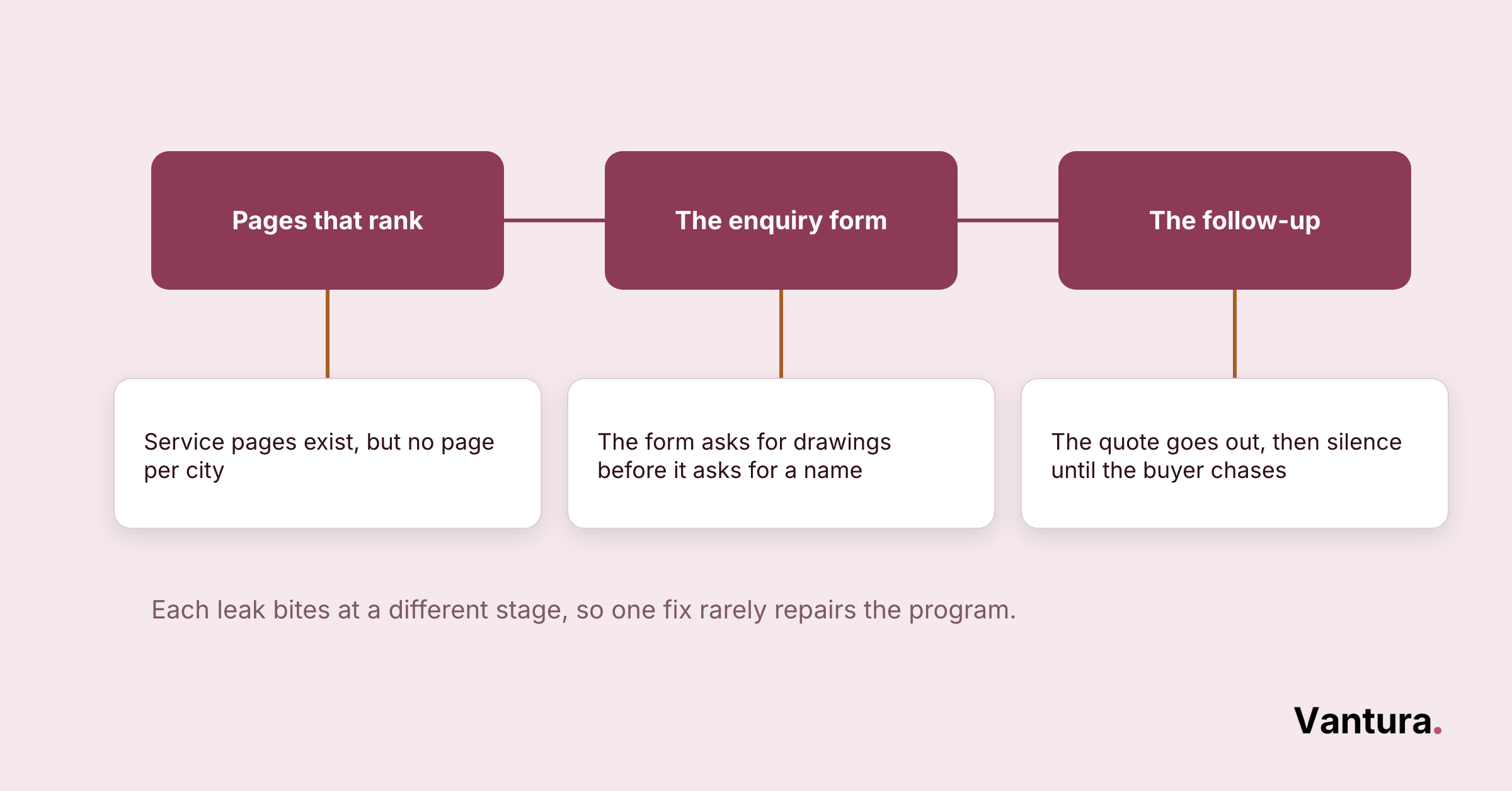
The most common mistakes come from treating inbound like a quick campaign instead of a system. Firms quit too early, ignore the CRM, chase vanity metrics, and let sales drop leads that content worked hard to earn.
- Quitting at month three, right before content ranks
- Publishing thin pages that answer nothing specific
- Letting inbound leads sit while estimators are on site
- Measuring traffic instead of quote requests and wins
- Copying a competitor’s blog without local or trade context
- Running inbound and outbound as two teams that never talk
Bottom line: Construction inbound marketing rewards patience and a system. Get the site, content, and CRM working together, and keep publishing through the quiet months. The pipeline you build will cost less and last longer than anything cold outreach can buy.
Disclaimer: This article is provided for general informational purposes only and does not constitute professional marketing, legal, or financial advice. Vantura Marketing makes no guarantee of specific results, as outcomes vary by market, budget, and execution.