Construction Google Ads: Strategy & Best Practices (2026)

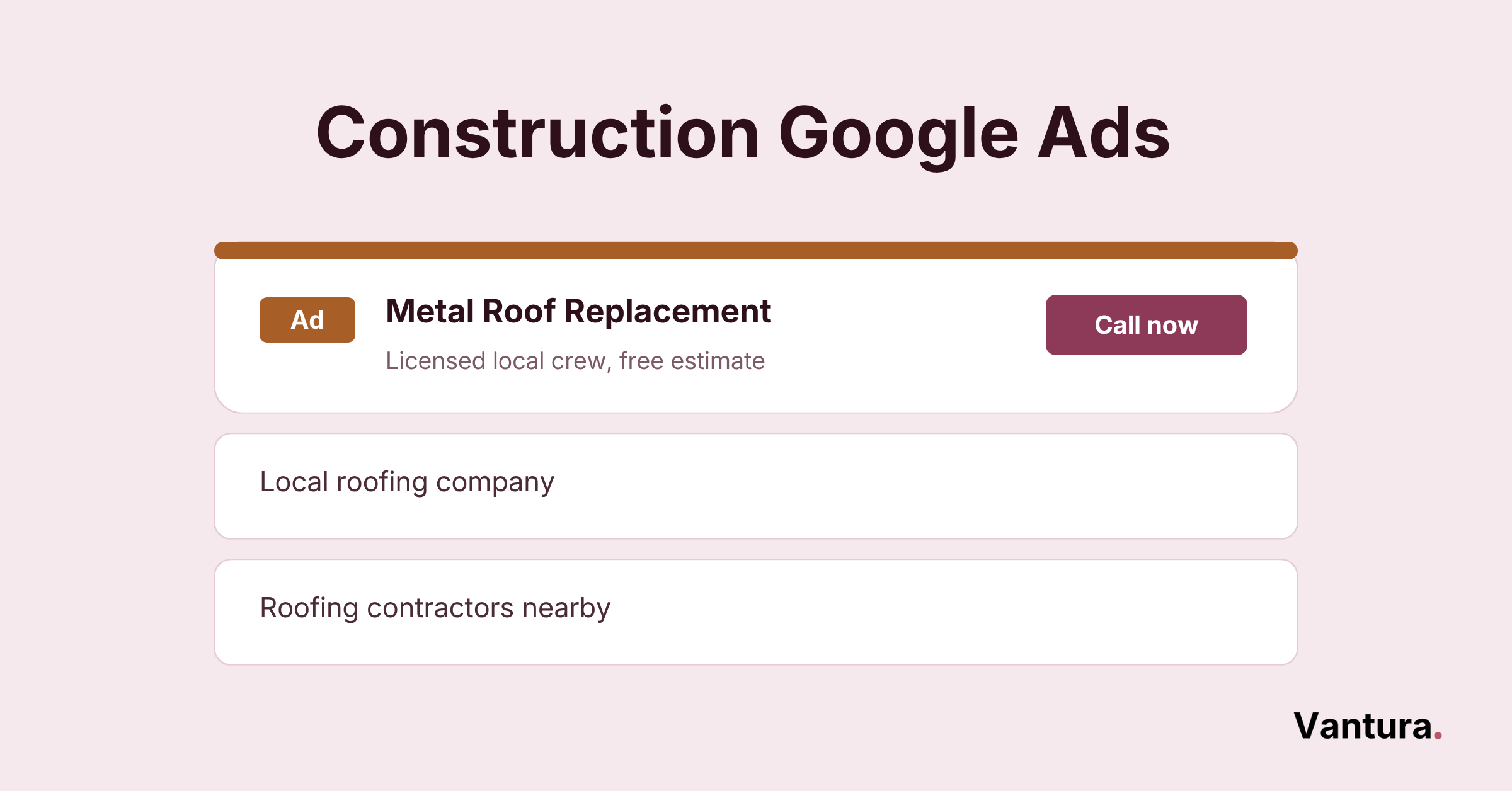
Construction Google Ads put your company in front of property owners and developers the moment they search for the work you do. A strong approach ties tight keyword targeting, local intent, and clean conversion tracking together so your budget follows real leads. The best practice underneath it is simple, bid where the searcher already wants to hire, then measure every call and form back to the click.
Why contractors trust our Google Ads work:
Our 28 specialists have run more than 180 campaigns across 14 industries, so we know what a construction click is worth. We’ve built and tested over 500 landing pages, the piece most Google Ads accounts get wrong. Paid search is core to what we do.
Need help with construction paid search?
We can audit your account, rebuild the structure, and take over the parts that keep leaking budget. Get in touch and we’ll map a plan around your service area and margins. Start with a clear construction marketing strategy and the ads follow.
What Are Construction Google Ads and How Do They Work?
Construction Google Ads are paid search placements that show your company near the top of Google when someone looks for building, remodeling, or contracting work. You pay only when a searcher clicks, and the aim is to turn that click into a booked estimate.
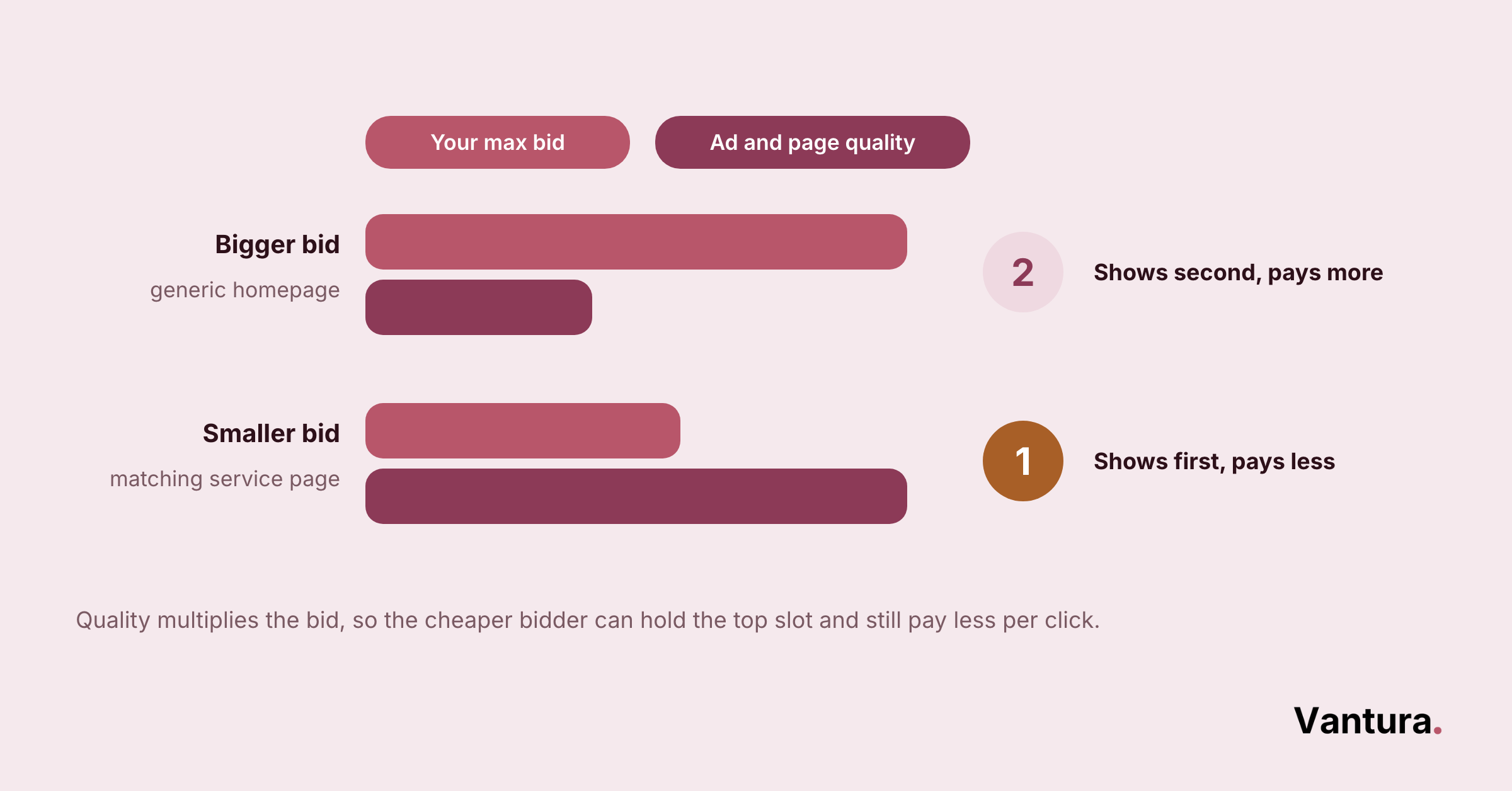
The whole thing runs as an auction. Each time a search happens, Google weighs your bid against your ad quality, then decides who shows and in what order.
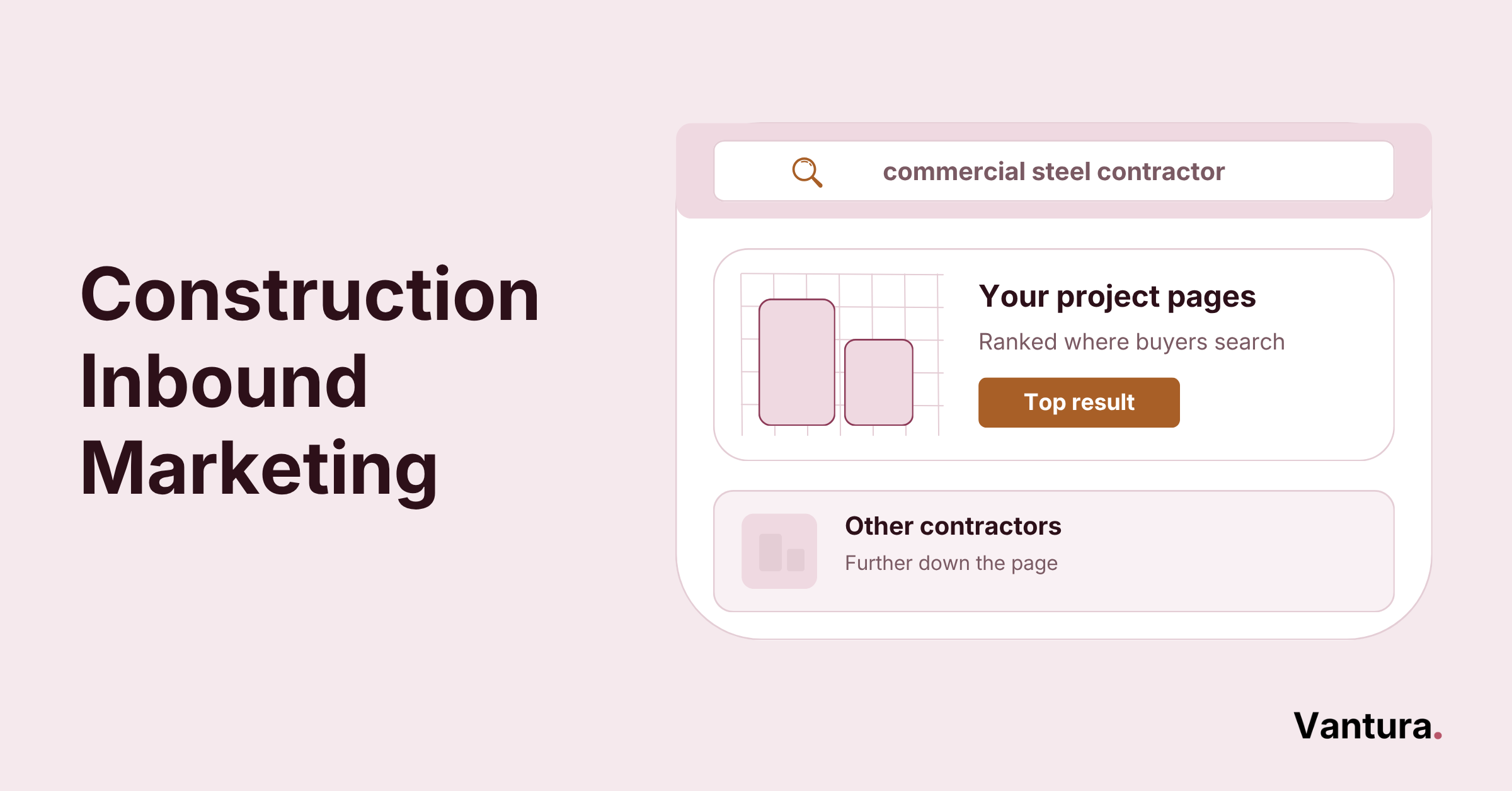
For contractors, this is intent at its purest. Someone typing metal roof replacement already wants the work done, which is why paid search built for roofing lead generation and similar trades converts so well.
Social ads interrupt people mid-scroll. Search ads answer a question that is already being asked, and that gap is why we reach for Google first on most construction accounts.
Worth knowing: One high-intent search, like a homeowner looking for emergency roof repair nearby, can be worth more than a hundred casual social impressions. Matching your ad to the exact job someone types beats chasing raw traffic every time.
How Do You Set Up a Construction Google Ads Account?
You set up construction Google Ads by defining what a lead is worth, building the account around your services, and tracking every call and form before you spend a dollar. Get that groundwork right and the campaigns almost run themselves.
Most accounts we inherit skipped one of these steps. Usually it’s tracking, which means the owner has been guessing about which jobs came from Google at all.
A Six-Step Google Ads Launch Sequence
Keep in mind: The account you launch with is never the account you keep. The structure that wins is the one you prune every week, cutting dead keywords and moving budget toward the services that book.
Which Google Ads Campaign Types Work Best for Construction?
Search campaigns work best for construction because they catch people actively looking to hire. Local, Performance Max, Display, and Video each have a role, but Search almost always earns the first dollar.
| Campaign type | What it does for a contractor | When to reach for it |
|---|---|---|
| Search | Text ads on high-intent job searches | Your workhorse for booked estimates |
| Local and Performance Max | Pushes your profile and map pin | You rely on nearby, drive-time jobs |
| Display | Banners across sites and apps | Staying visible after a site visit |
| Video on YouTube | Short clips before related videos | Explaining a larger, considered project |
| Demand Gen | Native ads inside feeds | Warming up buyers before they search |
Search vs Display for Construction Companies
Search ads meet people at the exact moment of need. They cost more per click, but the leads are ready to talk.
- Best for booked-now services like repairs and replacements
- Higher intent, higher close rate
- Easy to tie back to calls and forms
Display ads build memory, not immediate calls. They cost little per view and keep your name in front of people who already visited you.
- Best for longer projects and slow decisions
- Cheap reach, lower intent
- Strong as a retargeting layer, weak as a lead source
The honest split we land on for most crews is Search first, Display second. Display earns its keep only once Search is already booking work.
Where Performance Max and Shopping Fit
Performance Max
Performance Max spreads one budget across Search, Maps, YouTube, and Display using Google’s automation. We’ve watched it need a four to six week learning window before the leads settle, so patience matters here.
Shopping
Shopping ads are the odd one out for most contractors, since they sell products, not services. They only make sense if you also move physical goods, like a supplier arm, and the same logic applies to trades such as HVAC marketing that sometimes sell equipment.
How Should You Handle Construction Google Ads Keywords and Match Types?
Handle keywords by grouping them around one service at a time, then using match types to control how loose or tight the targeting runs. Exact match gives you control, broad match gives you reach, and phrase sits in between.
The trap is starting too broad without guardrails. We’ve seen broad match burn through a week’s budget on searches like how to shingle a roof yourself, which never turns into a job.
| Match type | Example for a roofer | Best used when |
|---|---|---|
| Broad | roof repair | You have strong negatives and want reach |
| Phrase | “metal roof installation” | You want the theme with some flexibility |
| Exact | [emergency roof repair] | You know the money term and want control |
Negative Keywords That Protect Your Budget
Negative keywords tell Google what to ignore, and they are the fastest way to stop wasted spend. A good starter list blocks job seekers, students, and bargain hunters who will never hire you.
- Jobs, careers, hiring, salary
- Free, cheap, DIY, how to
- Courses, training, license
- Wholesale and supply-only terms
Across our construction accounts, a proper negative sweep tends to cut wasted spend by roughly 20 to 30 percent in the first month. The same discipline pays off for trades like electrician marketing, where broad terms attract a lot of DIY searches.
Quick tip: Check your search terms report weekly and add negatives as new junk appears. It is a fifteen minute habit that quietly protects your whole budget month after month.
How Much Do Construction Google Ads Cost, and Which Bidding Strategy Fits?
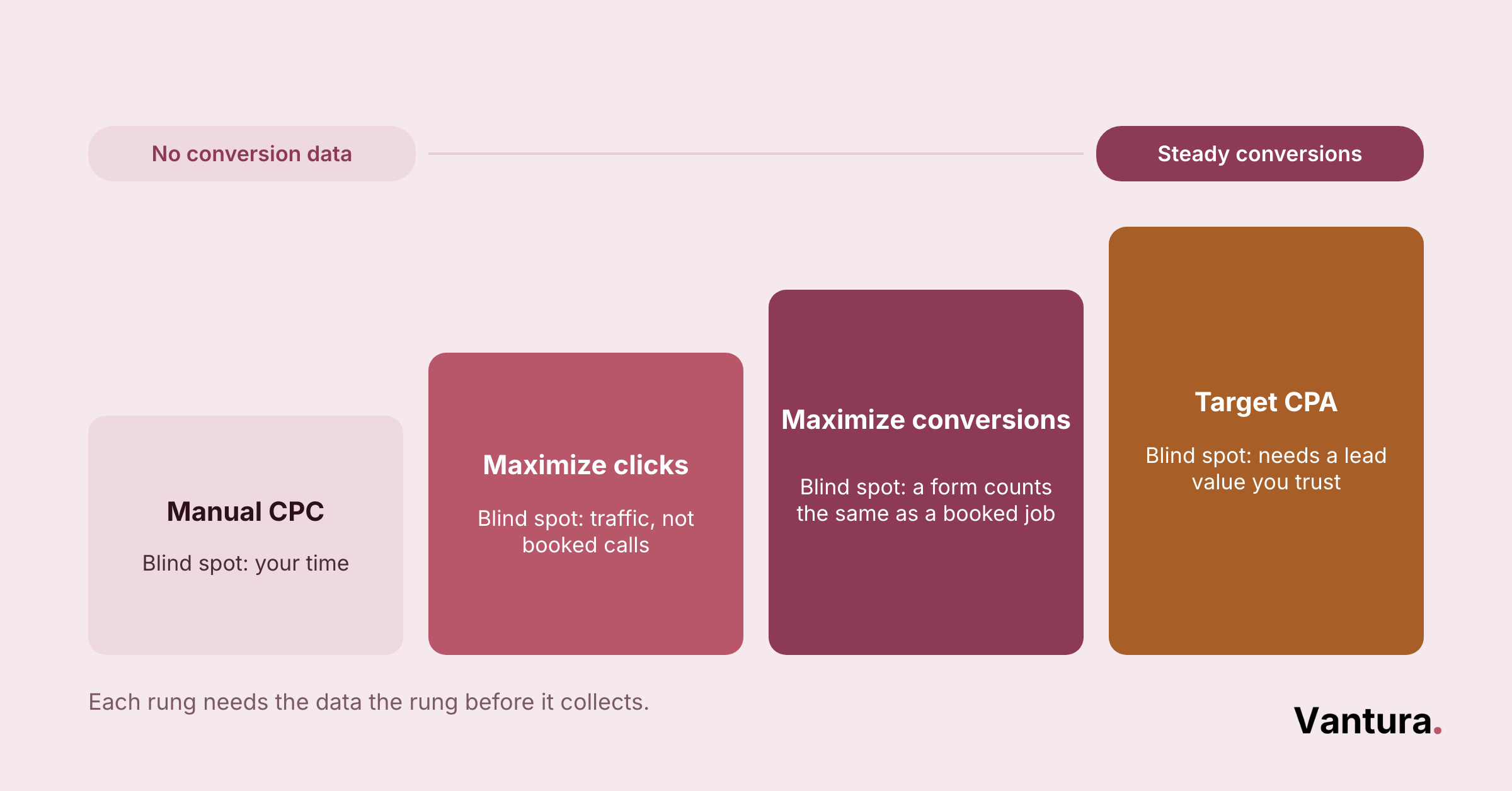
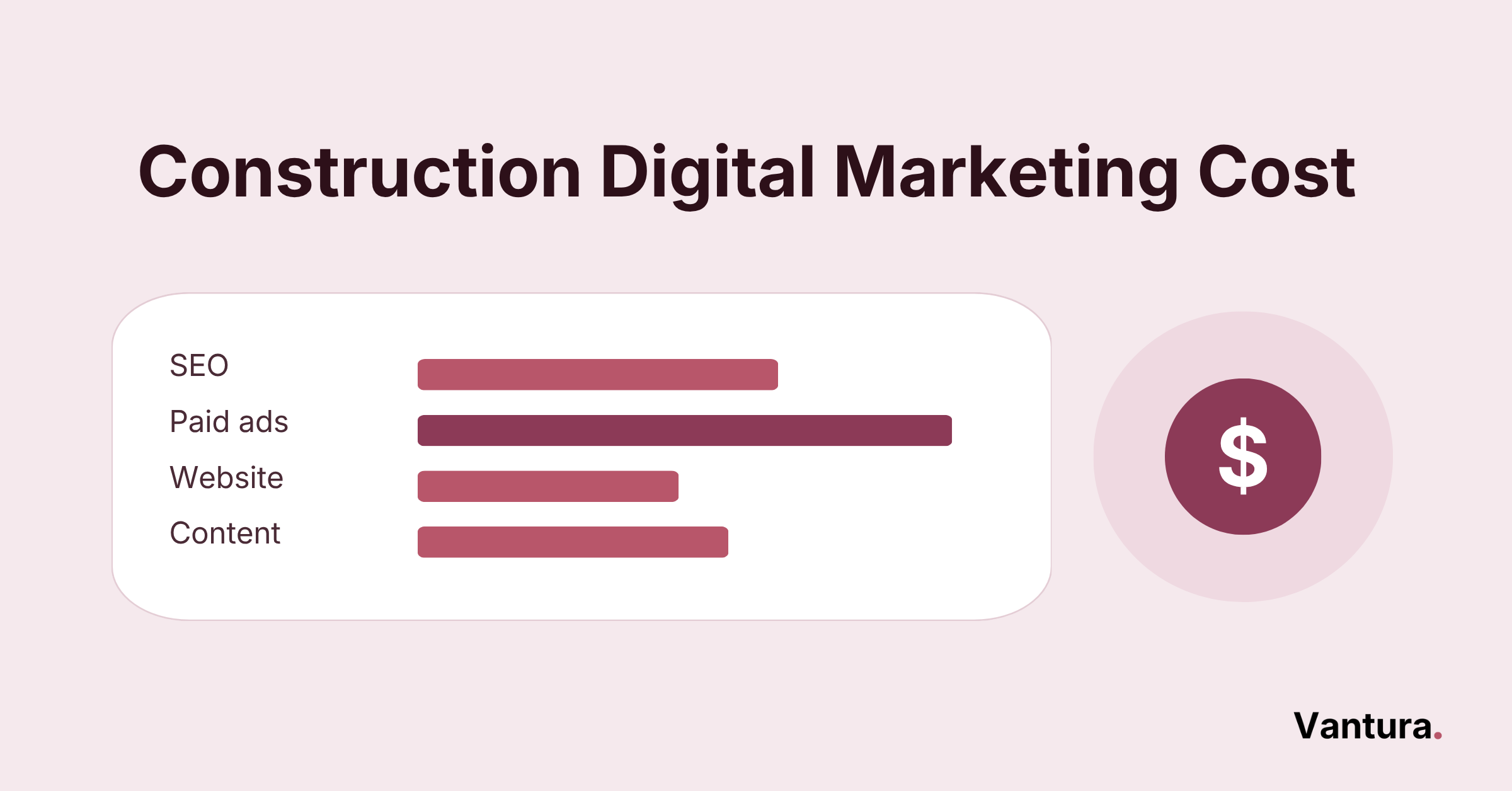
Construction Google Ads cost less per click than many industries, but leads still add up, so your bidding strategy has to match your goal. Start with manual or maximize clicks to gather data, then move to a conversion-based bid once tracking is solid.
Construction runs one of the lowest average costs per click of the fifteen industries Databox studied, near $2.16, and it converts those clicks into leads at the highest rate in the set, around 6.15 percent. That combination is rare, and it is why paid search rewards contractors who bid with discipline.
Across our own construction campaigns, search leads tend to land in the $95 to $140 cost-per-lead range once an account is tuned. Smaller crews can compete here too, which is a big reason paid search suits small business marketing budgets so well.
On bidding, we usually let a new campaign gather thirty or so conversions on manual bids before switching to Maximize Conversions or Target CPA. Hand automation the wheel too early and it optimizes toward noise.
Rule of thumb: Set your monthly budget from the value of one job, not from a round number. If a booked project is worth a few thousand dollars, a handful of qualified leads a month pays for the ads several times over.
Construction Google Ads Audience Targeting and Extensions
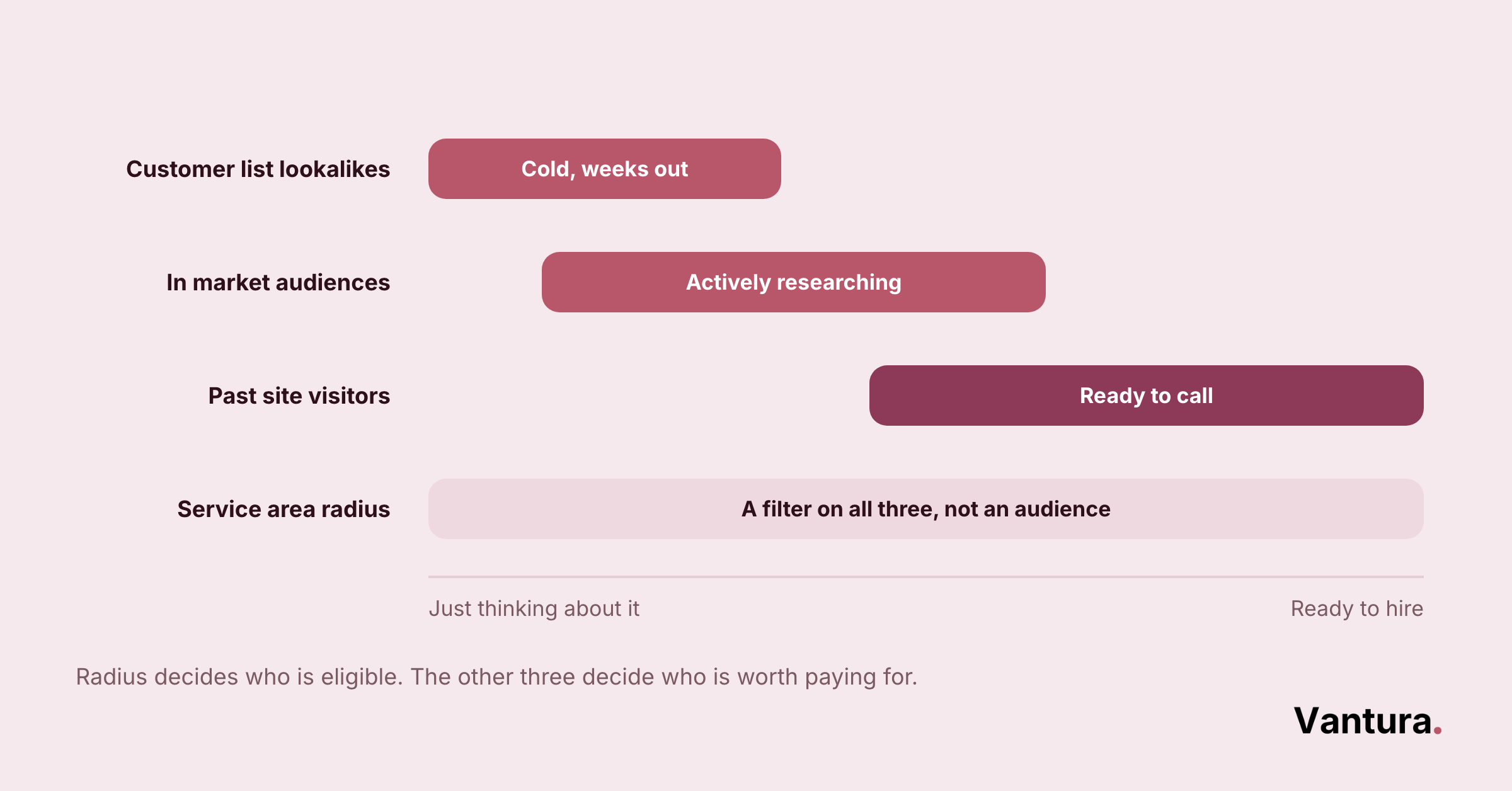
Audience targeting and ad assets are the layers that make a good campaign great. Targeting sharpens who sees your ad, while assets give that ad more room to sell.
Audience Signals Worth Using
- Radius targeting around your true service area
- In-market audiences for home improvement and construction
- Website visitors, for retargeting past estimates
- Customer lists, to find lookalike homeowners
Commercial work needs a different lens than residential. When we run ads for B2B construction marketing, the audience shifts toward facility managers and general contractors, not homeowners.
Extensions and Assets That Earn Clicks
- Call assets, so mobile users tap to dial
- Location assets, tying the ad to your address
- Sitelinks for each service you offer
- Image assets, for a faster visual pitch
- Lead-form assets, for capture without a landing page
Assets also matter for niche buyers with longer timelines. Ads aimed at real estate marketing and property developers often lean on sitelinks that show project galleries and past builds.
How Do You Improve Quality Score and Landing Page Relevance?
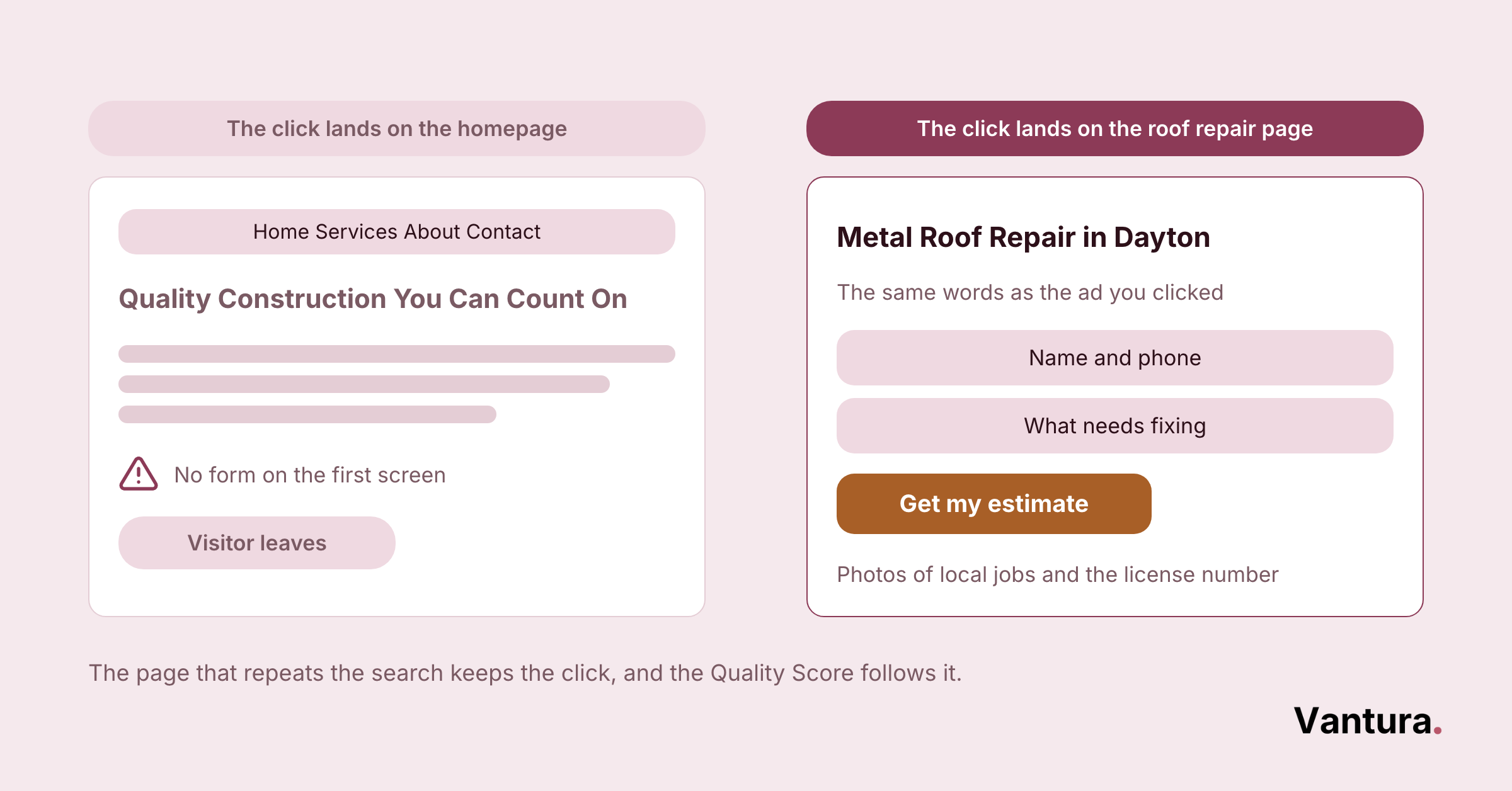
Improve Quality Score by matching the keyword, the ad, and the landing page so they all say the same thing. Google rewards that alignment with lower costs and better positions.
The most common leak we find is a great ad pointing at a weak page. Someone clicks a roof repair ad and lands on a generic homepage, then leaves.
Send each service ad to a page about that one service, with a clear headline, proof, and a form near the top. Blended cost per lead for construction sits around $227 across paid and organic, per First Page Sage, so a stronger page directly protects that number.
Speed and mobile design carry real weight too, since most contractor searches happen on a phone. If you want outside guidance here, our marketing consulting team reviews the full path from click to booked call.
Bottom line: Quality Score is not a vanity metric. A page that loads fast and answers the exact search lowers your cost per click and lifts your rank at the same time, which compounds across every campaign.
Construction Google Ads Reporting and Analytics
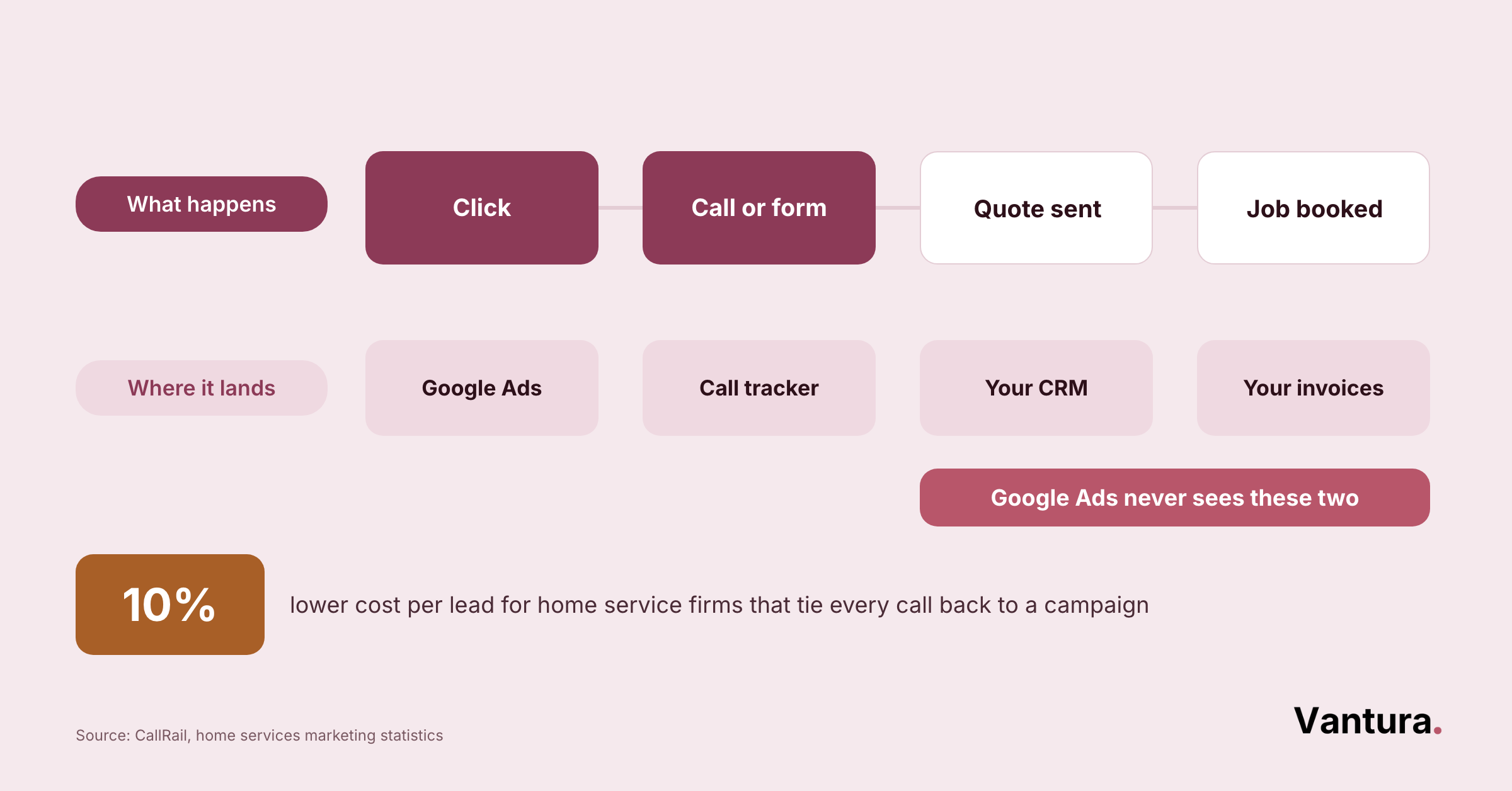
Reporting turns spend into decisions. Without it, you’re renting clicks and hoping, which is no way to run a trade business.
Focus on the numbers that map to booked jobs, not the ones that just look busy. Impressions feel nice, but cost per lead and close rate pay the bills.
- Cost per lead by service
- Conversion rate from click to call or form
- Search terms driving real inquiries
- Lead to booked-job rate from your own records
Paid search reads clearest when it sits beside your other channels rather than alone. Pulling ads, SEO, and calls into integrated marketing reporting shows which mix fills the calendar.
What Are the Most Common Construction Google Ads Mistakes?
The most common construction Google Ads mistakes trace back to loose setup and thin tracking. Fix these first and most accounts turn around inside a couple of months.
None of these are hard to fix, they just need someone watching the account closely. Plenty of owners would rather outsource your marketing than manage bids between site visits, and that is a fair trade of time for results.
One last thing: Google Ads rewards the contractor who keeps showing up in the account, not the one who sets it and forgets it. A weekly hour of pruning beats a big budget spent on autopilot.
Disclaimer: This article is for general informational purposes only and does not constitute marketing, financial, or legal advice. Advertising costs, platform features, and results vary by market and business, and no specific outcome is guaranteed. Vantura Marketing accepts no liability for actions taken based on this content. Verify current platform terms and consult a qualified professional before making decisions.