What Is Taboola Ads, How Does It Work, Who Needs It?

Taboola Ads is a native advertising platform that places your ads inside articles and content feeds on publisher websites, billed per click or per thousand impressions. It fits brands that want reach beyond search and social, mostly for content promotion and early demand. The advertiser side now runs under the name Realize, and the buying model behind it has not changed.
Why Trust Us on Taboola Ads
Our 28 specialists have delivered more than 180 campaigns across 14 industries, and we have run over 750 A/B tests on native creative. Native is a channel we buy weekly, not one we read about.
Need Help With Taboola Ads?
If you want a second opinion before spending, get in touch with our Taboola ads agency team. We will look at your creative, your tracking, and your publisher exclusions, then say plainly whether native fits.
Taboola Ads Explained in Plain English
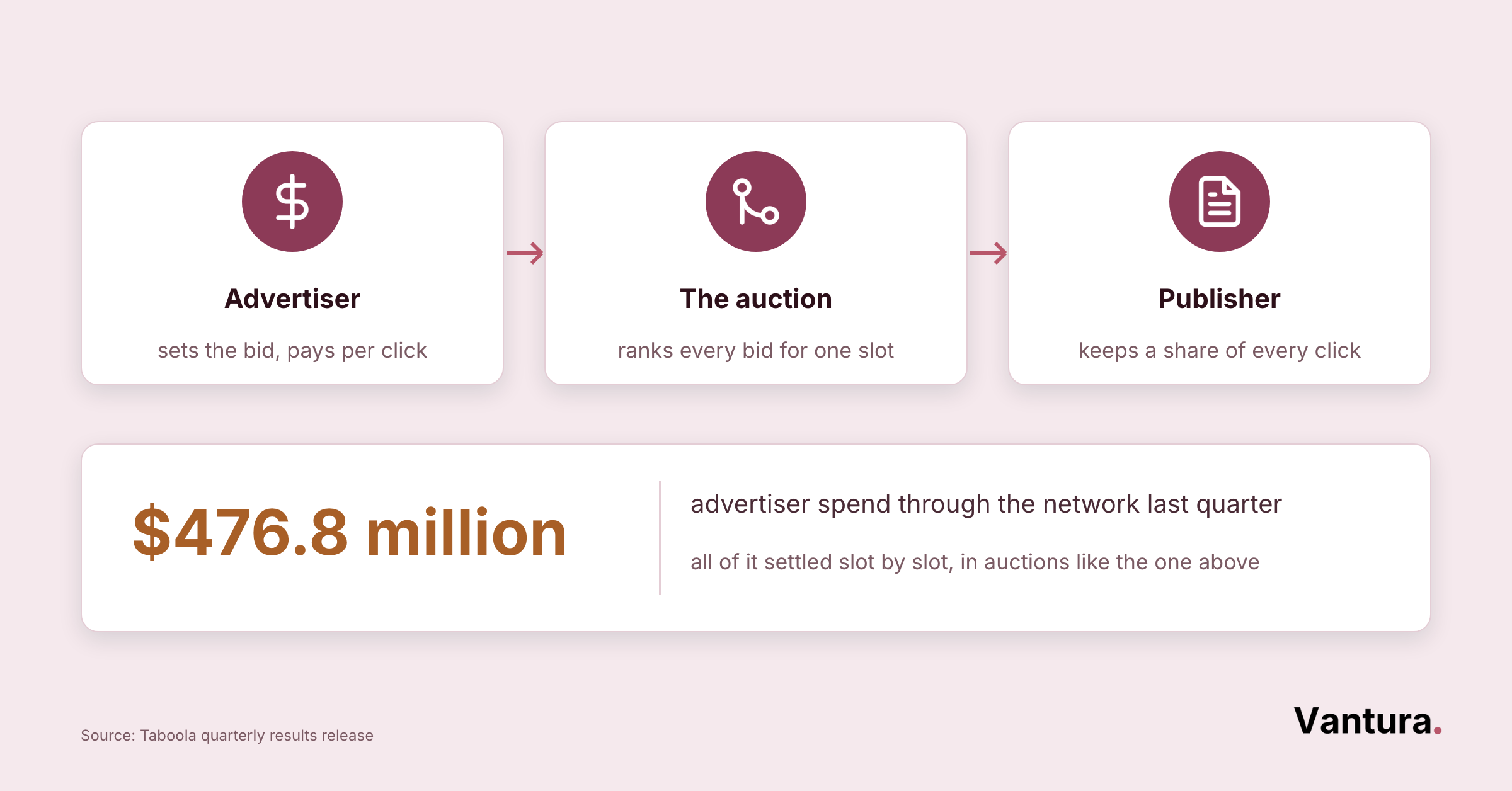
Picture the block of suggested stories under a news article you just finished. Taboola sells those slots, and Taboola Ads is the buying side of that marketplace.
You sign up, enter your budget and audience, and your ads go live. Nobody typed a query to find you, which is the whole point.
That scale runs both directions. Publishers testing Taboola Newsroom’s subscription tools saw a 30 percent average increase in subscribers, according to a Taboola press release.
The advertiser interface is now called Realize, so older guides still say Taboola Ads or Backstage. If you are still weighing native against other channels, line it up against other native ad platforms worth testing first.
Worth knowing: Taboola Ads and Realize are the same product under two names, so an older guide still points at the right buttons, just under different menus.
What Is Taboola Ads Used For?
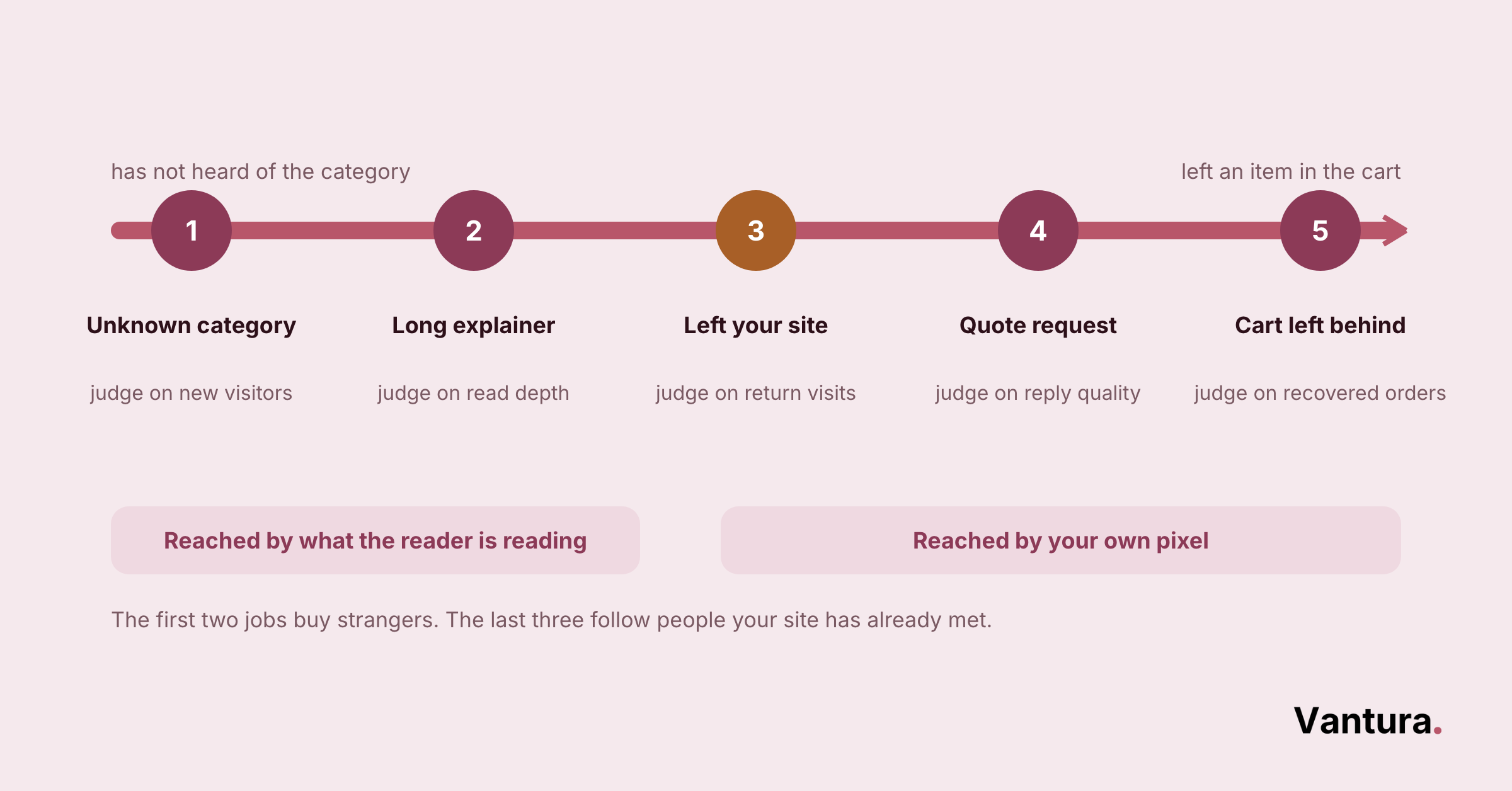
Taboola Ads is used to buy attention from people who are mid article, which suits products that nobody searches for by name. Across our projects it earns its place in five jobs, from cold awareness through to winning back a shopper who left a cart.
The five below are the ones we keep coming back to. Everything else tends to be a variation on one of them.
The pattern across all five is the same. Native buys attention early, and something else has to close the sale.
That is why we treat it as one lane inside a wider marketing plan rather than a standalone channel. Run it alone and the reporting will look worse than the business result.
Where we start: If you are testing native for the first time, pick one of these five jobs and fund it properly for a month. Splitting a small budget across all five teaches you nothing useful.
How Does Taboola Ads Work in Practice?
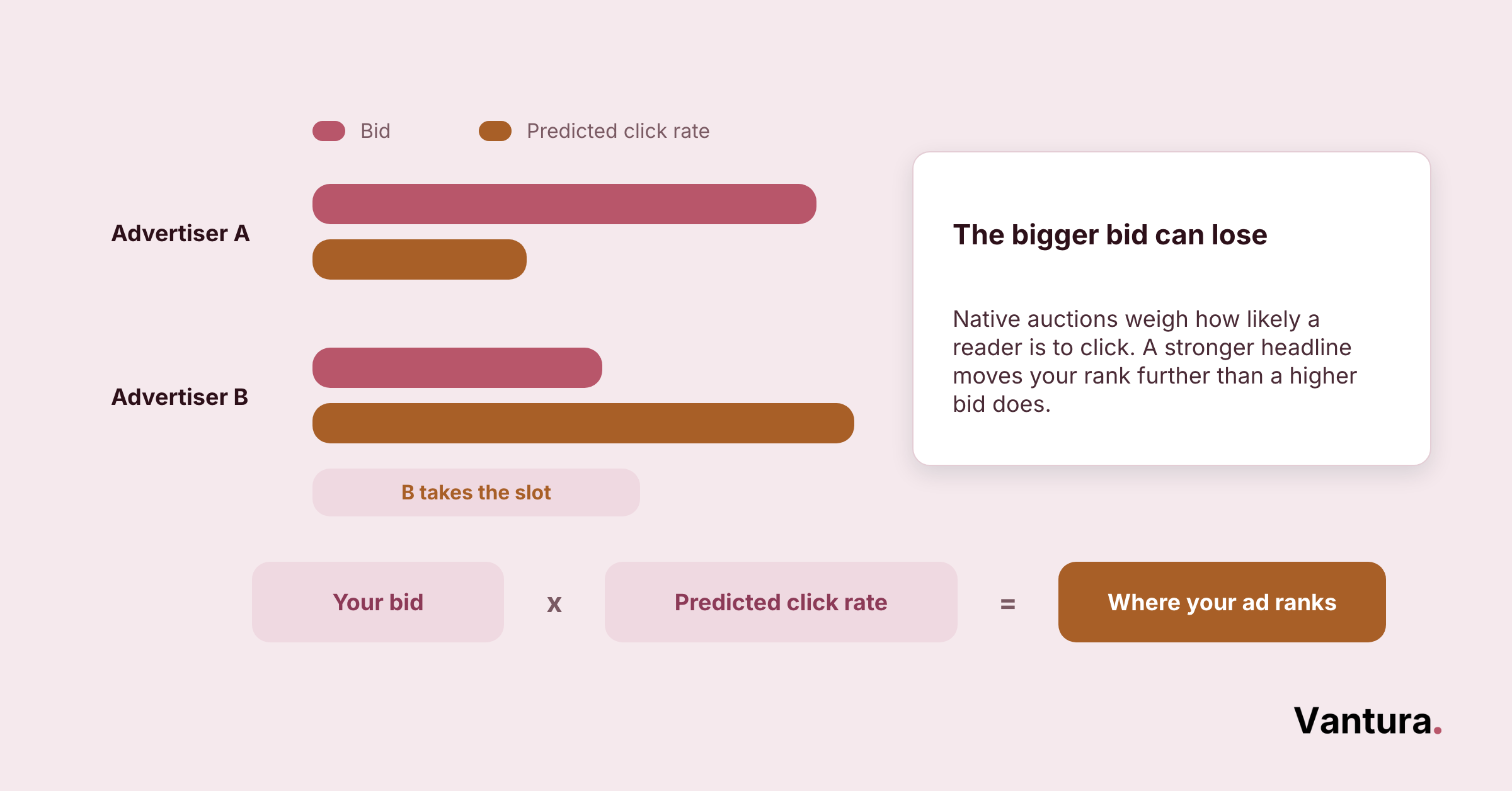
Taboola Ads works like an auction wrapped around a recommendation feed. You set a budget and a bid, and the pieces below are what you work with day to day.
Here is each part, and why it starts to matter once money is moving. None of them are optional for very long.
The Sign Up Wizard (where every campaign starts)
How it works: A self service wizard walks you through sign up. You enter your marketing details, your budget, and the audience you want to reach. The campaign is built from those answers.
Why it matters: There is no gatekeeper and no minimum contract to sign. That also means nobody checks your tracking before you start spending.
The Taboola Pixel (tracking and audience building)
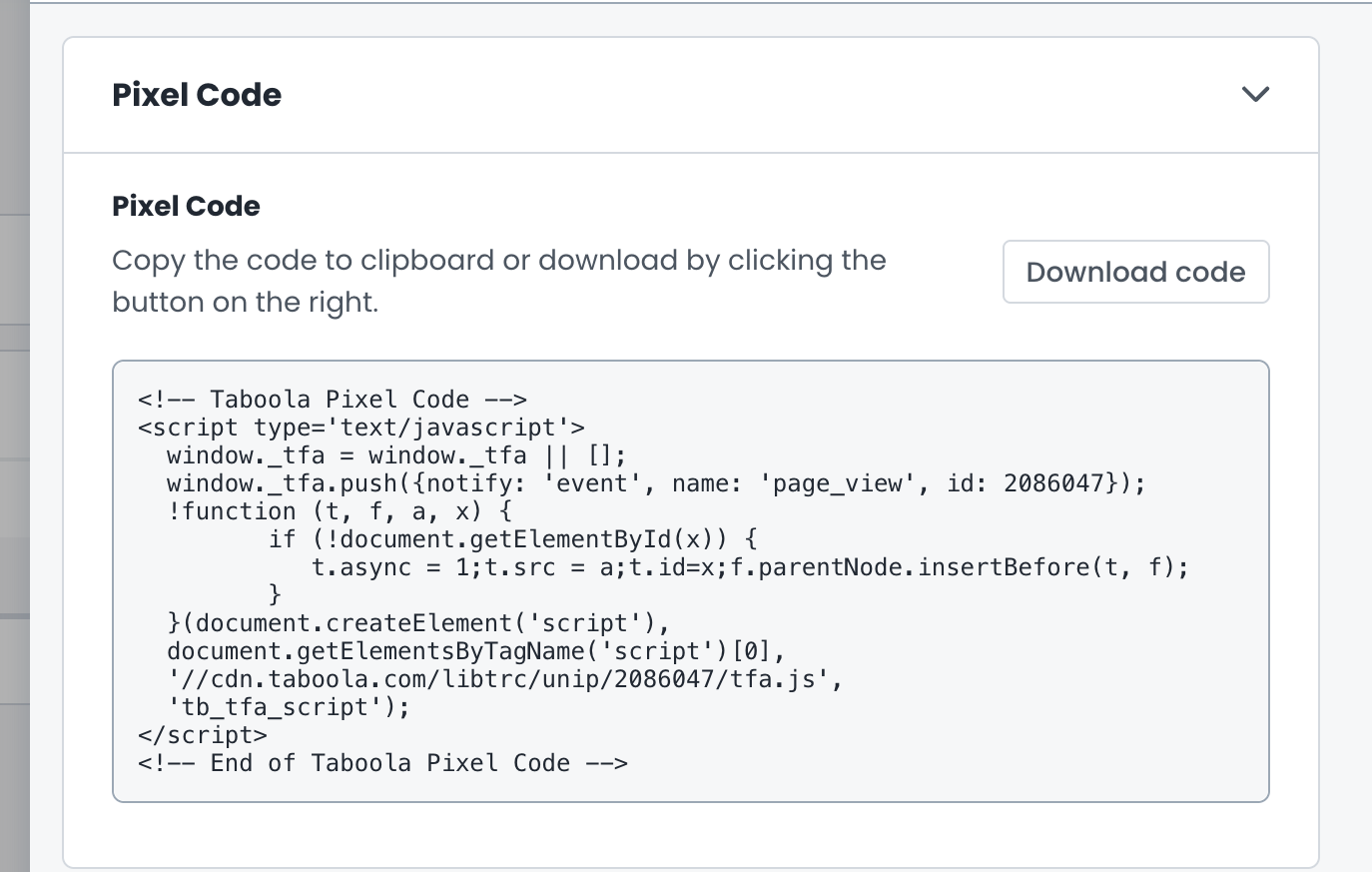
How it works: The pixel is the tracking mechanism behind conversions and audiences. Taboola describes it as GDPR and CCPA compliant, loading asynchronously with no manual coding required.
Why it matters: Weak tracking is the most common reason a native account looks like it failed. A quick check of your taboola ads integrations before launch catches most of it.
Gen AI Ad Maker (creative production at speed)
How it works: Taboola includes an AI powered ad maker for dynamic ad creation. It also offers its own creative design tools and several ad formats, and you supply the offer while it produces variations.
Why it matters: Headlines carry native campaigns further than images do. Anything that gets you from four headlines to twenty is worth using.
Performance Simulator (planning before you spend)
How it works: The simulator is a budget planning tool inside the ads interface. You model a spend level before committing to it.
Why it matters: It will not predict your results. It does stop the common mistake of setting a daily budget with no sense of what that budget buys.
Abby, the Gen AI Performance Expert (guided setup)
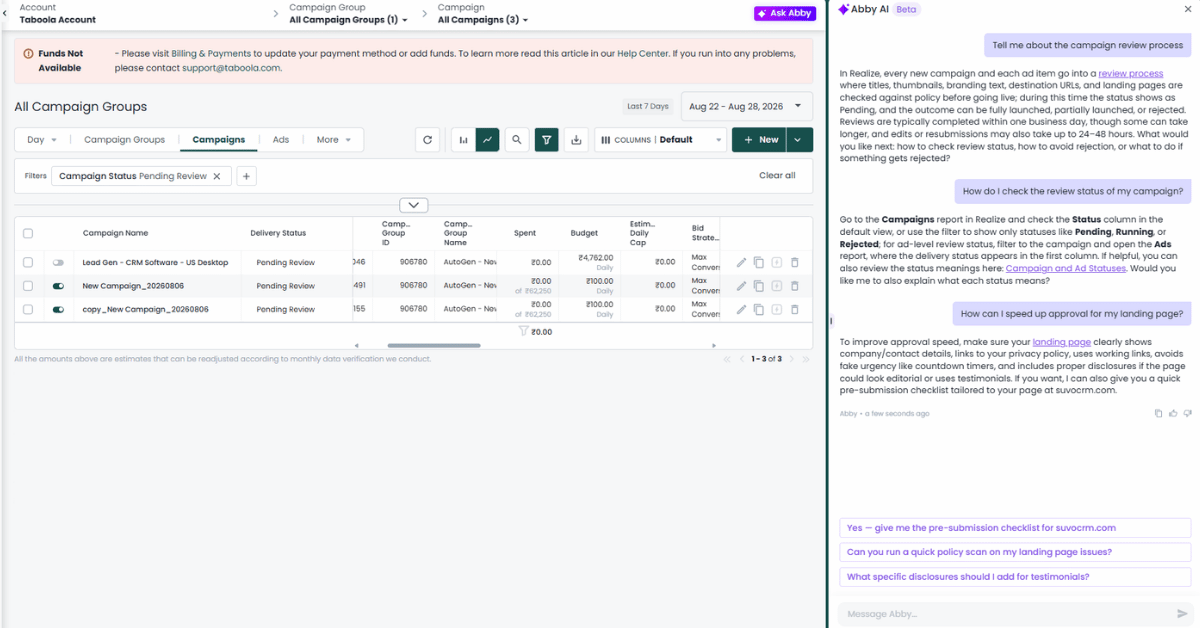
How it works: Abby is described as a Gen AI performance expert that guides setup and optimization. It sits inside the interface as a helper rather than a separate tool.
Why it matters: Guidance helps a first time buyer avoid obvious errors. It does not replace judgment about which publisher sites deserve your money. That judgment is where Taboola ads consulting usually earns its fee.
CPC and CPM Bidding (how you get charged)
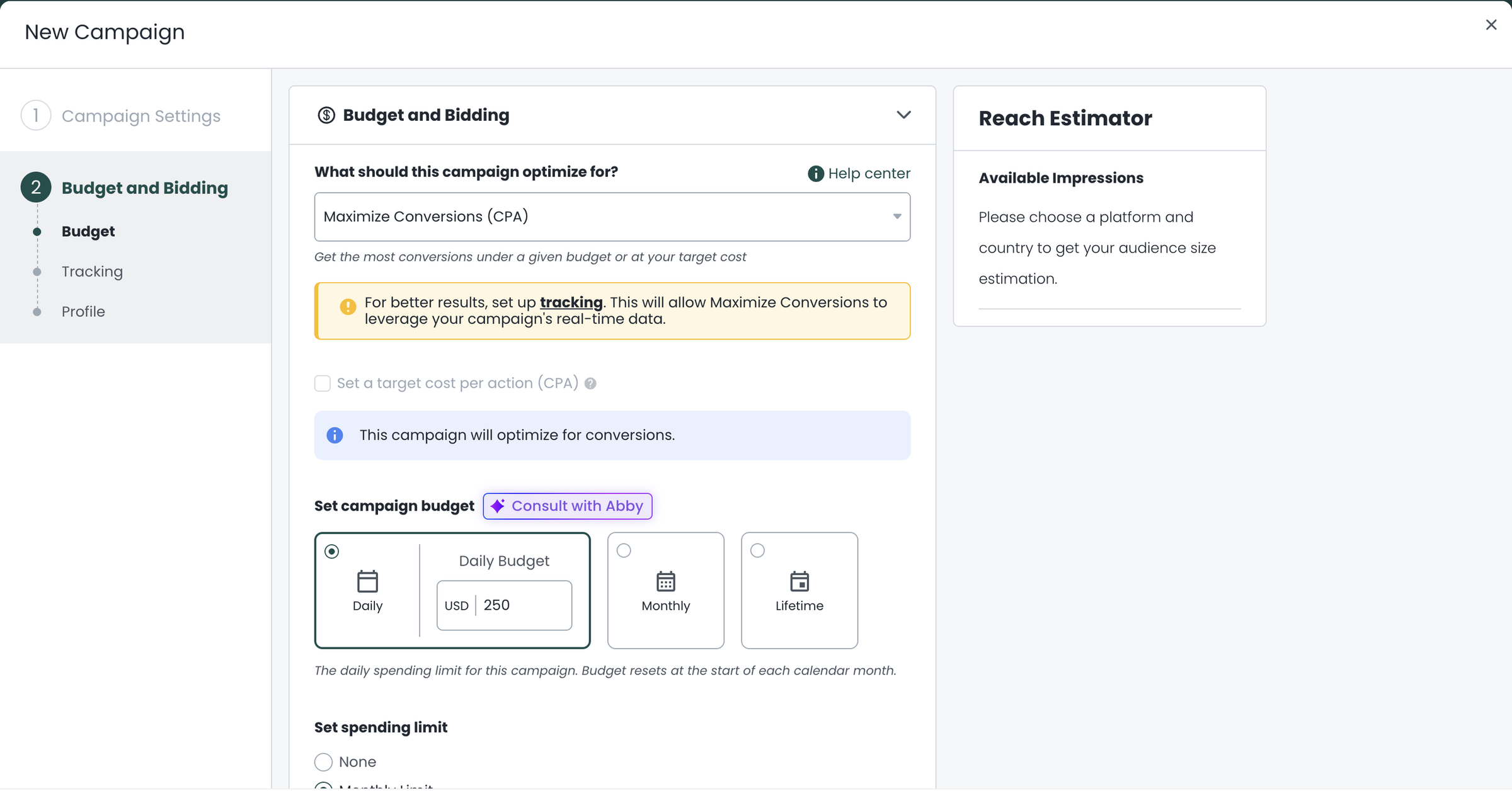
How it works: Taboola offers two pricing models. With CPC you are charged for every click on one of your ads. With CPM you are charged per thousand impressions instead.
Why it matters: CPC suits performance goals, since you pay only for the visit. CPM suits reach goals, and it punishes weak creative faster.
Automatic, Invoice, and Prepay Billing (how the account is funded)
How it works: Automatic billing uses a set increment, typically $100, which is what your campaigns can spend before you pay again. Monthly invoicing bills against an approved credit limit, and prepayment requires payment before campaigns run.
Why it matters: Automatic billing suits small tests, and invoicing suits anyone with a finance team. Prepayment is the option that catches people out mid campaign.
The Backstage API (reporting and automation)
How it works: Taboola offers a Backstage API for campaign management, reporting, and task automation. It needs an access token and an account ID. Credentials come from a Taboola account manager once you explain your use case.
Why it matters: Reporting endpoints cover campaign summaries, realtime summaries, top performing content, and a campaign history log. That last one settles arguments about who changed a bid, which matters once Taboola ads management involves more than one person.
Who Uses Taboola Ads, and Why?
Taboola Ads suits advertisers with something to explain and an audience that is not searching yet. That covers a wider range of businesses than most people expect.
Below are three profiles from our own client work, kept anonymous. Each one bought native for a different reason, and each one measured it differently.
Example #1: A direct to consumer supplement brand (ecommerce, around 40 staff)
They had strong social performance and rising costs on every channel they used. Native was the last route left that reached their buyers at a workable price.
We ran it the way we run most health and wellness native tests, with one campaign and one goal. Splitting the budget earlier would have taught us nothing.
What native did for their numbers
Native became the top of their funnel, and email closed the sale. Cost per first purchase stayed higher than social, and repeat purchase rates came in better.
Pattern we see: Native buyers who arrive from a long article tend to order larger baskets than social buyers. A higher acquisition cost can still work out if you measure the second order, not the first.
Example #2: A regional professional services firm (B2B, single state)
Their buyers compare quotes for weeks and rarely click a display ad. We used native to send readers to a plain explainer page, then on to a quote form.
It sat alongside search and email the same way we structure taboola ads for finance and professional firms. On its own, the numbers would have looked worse than the reality.
Where the budget really went
Two thirds of the first month went into publisher exclusions rather than bidding. That sounds wasteful, and it was the cheapest lesson of the engagement.
Keep in mind: On a lead generation account, the first month of native spend mostly buys a list of publisher sites you never want to appear on again. That list is the asset you keep afterwards.
Example #3: A software company selling to operations teams (Series B)
Their category is well known, so search was already crowded and expensive. Native gave them a cheaper way to put a point of view in front of the same people.
We treat this as standard practice now, the same debate clients raise when they compare Taboola against Outbrain. Buy the argument early, then let search collect the demand it creates.
How this changed their pipeline view
Demo requests from native looked poor under last click reporting. Once we added a first touch view, native was sitting in front of about a quarter of closed deals.
One caveat: Native almost never wins on last click reporting, so agree the attribution model before the first invoice arrives. Otherwise the channel gets cut on the wrong evidence.
Key Advantages and Disadvantages of Using Taboola Ads
Native is cheap to enter and expensive to master, which is an awkward combination for a small team. Both halves of that sentence deserve spelling out.
Where Taboola Ads Helps and Where It Hurts
The gain is reach at a price search cannot match, in front of people in a reading mood. The cost is control, because you hand a recommendation engine part of the buying decision.
There is also a commercial detail worth checking before you plan a test. Capterra’s product listing shows no free trial and no free version for Taboola. Its starting price shows as contact vendor for pricing.
The same listing carries a 4.5 out of 5 average across 68 verified reviews. So the tool is well liked by the people who stay with it.
- Reach on publisher sites where search ads cannot appear
- Lower entry cost per click than most search auctions
- Tracking that installs without developer time
- Creative testing that pays back fast, since headlines carry the campaign
- Useful for products with no existing search demand
- No free trial and no free version, so every test costs real budget
- Traffic quality swings widely between publisher sites
- Weak last click numbers, which invites reporting arguments
- Needs steady exclusion work every week to stay clean
- Published pricing stops short of minimum budgets and bids
If nobody on the team has an hour a week for exclusions, native will disappoint you. That is usually the same tipping point clients hit when weighing Taboola against AdRoll for retargeting, rather than another in house hire.
Taboola Ads Company Overview and Key Details
| Detail | What Taboola publishes | Why it matters to you |
|---|---|---|
| Advertiser interface | Realize, the current name for the older Taboola Ads and Backstage interface | Older guides and bookmarks point at names that no longer appear in the menus |
| Pricing model | CPC, charged per click, or CPM, charged per thousand impressions | You choose whether you are buying visits or reach |
| Billing methods | Automatic increments, typically $100, monthly invoicing against a credit limit, or prepayment | Cash flow planning changes with each option |
| Tracking | The Taboola Pixel, described as GDPR and CCPA compliant, loading asynchronously with no manual coding | Conversion tracking without developer time |
| Free trial or free plan | Neither is offered, and the listed starting price is contact vendor for pricing | A first test comes straight out of real budget |
| Developer access | Backstage API, with an access token and account ID issued through an account manager | Automation is possible, after an approval step |
The rename is the biggest source of confusion right now, since old taboola.com help links redirect to realize.com and the wording on those pages has moved with them.
Realize is positioned for advertisers moving off the older interface, with better navigation and consolidated reporting. The buying model underneath has not changed.
Taboola does not publish a minimum daily budget or a minimum bid, and points advertisers to an account manager instead. We keep the same reporting discipline here as when clients compare Taboola against Criteo, so channels stay comparable.
How to Get Started With Taboola Ads in 7 Steps
Getting a first campaign live takes an afternoon. Getting it to a point where the numbers mean something takes about a month.
The order below is the one we use in our own consulting work. Step two is the one people skip, and it is the one that ruins month one.
- Sign up through the self service wizard and enter your business, budget, and audience details
- Install the Taboola Pixel sitewide, then confirm it fires on a real test conversion
- Define one conversion that matters, then pick CPC or CPM and set the billing method that suits your cash flow
- Load at least eight headline and image pairs into every campaign
- Let it run for about two weeks before you judge anything
- Exclude weak publisher sites weekly, and raise bids on the ones that convert
- Move budget only once you have enough conversions to read the pattern
None of this is hard. It is just easy to leave half done, which is where most disappointing native accounts come from.
Before you scale: Do not raise the budget until one campaign has produced enough conversions to read properly. For us that is usually somewhere between 60 and 90, and below that you are reacting to noise.
Taboola Ads FAQ
Disclaimer: This article is for general information only. Product details, pricing, and platform features may change without notice. Figures drawn from our own client work describe past results rather than any guarantee. Vantura Marketing accepts no liability for decisions taken on the basis of this content.