Taboola Ads for Ecommerce in 2026: Is It Worth It?

Taboola ads for ecommerce are worth it when your margins can absorb a longer path to purchase. This native advertising channel places product content inside articles on news and publisher sites, so shoppers meet your store before they search for it. Treat it as a discovery channel with patient tracking, and the math works far more often than it fails.
Why Trust Our Taboola Ads Advice:
Our 28 specialists have delivered 180 campaigns, from launch through full scaling, across 14 industries. We’ve run and analyzed 750 A/B tests, so creative calls come from results rather than taste. Native buying sits inside that daily work.
Need Help With Taboola Ads?
If a test budget is sitting idle, get in touch and we’ll size it against your margins first. Our Taboola ads management work starts with your product feed and your tracking, never with a media plan.
What Do You Get With Taboola Ads for Ecommerce?
Taboola ads for ecommerce give you paid placements inside articles on news and publisher sites, sold by the click or by the thousand impressions. You also get native, display, carousel, vertical and motion formats, a tracking pixel, and AI tools that build creative and pick audiences.
The self-serve product now carries the name Realize, and that rename matters the moment you search for help docs. Older guides still say Taboola, and both names point at the same account.
- Ad formats: native, display, carousel, vertical and motion units.
- Buying models: cost per click, or cost per thousand impressions.
- Tracking: a site pixel that sends conversions back for optimization.
- Audience tools: Predictive Audiences, which models your own pixel data.
- Creative tools: GenAI AdMaker, which adapts assets you already own.
Most stores run this beside search and paid social rather than instead of them. If you already work with a Taboola ads agency, ask which of those five pieces they own and which ones sit with your developer.
Worth knowing: Realize and Taboola are one account under two names, so a help article filed under either one still applies. Check the address bar before you follow any setup steps. A fair number of third-party guides describe screens that have since moved or been renamed.
Is Taboola a Good Fit for Your Ecommerce Store?
Taboola fits ecommerce stores with healthy margins, a wide buyer profile, and patience for a multi visit path to purchase. It fits poorly when a product needs a long explanation, or when you need sales inside a two day window.
Where It Tends to Work
Broad consumer products do well here, because the reader is browsing rather than shopping. Home goods, supplements, hobby gear and gifting categories all read naturally next to an article.
Repeat purchase makes the math kinder too, since a first order that barely breaks even is fine when the second one lands. That is the same logic behind most ecommerce digital marketing help we build for stores with a subscription or refill motion.
Where It Tends to Struggle
Narrow, high consideration products struggle badly. We stopped recommending native for one client selling a $1,900 technical instrument after three months of clicks and almost no carts.
Thin margins are the other killer. If a sale leaves you $8 of gross profit, a single unproductive week eats the whole test.
Fit test: Work out your gross profit per order, then multiply it by your best guess at conversion rate. If that number sits below what a click realistically costs you, native discovery will not rescue it. Fix pricing or bundle size first, then come back to the channel.
Which Taboola Features Matter Most in Ecommerce?
Four features carry most of the weight for a store: Predictive Audiences, Maximize Conversions, SpendGuard and GenAI AdMaker. Each one leans on the same input, which is clean conversion data arriving from your pixel.
| Feature | What It Controls | The Job It Does for a Store |
|---|---|---|
| Predictive Audiences | Who sees the ad | Models your existing pixel data to find similar buyers |
| Maximize Conversions | Bid level, adjusted in real time | Chases a conversion goal inside the budget you set |
| SpendGuard | Site and creative exposure | Pulls back from placements that burn budget |
| GenAI AdMaker | Creative production | Reshapes assets you already own into ad variations |
Automated bidding is the one to hold back on. We leave manual cost per click running for the first ten days or so. An automated bid strategy with six conversions behind it guesses, and it guesses expensively.
SpendGuard also is not a substitute for your own blocklist. It trims the obvious waste. The odd placements that quietly drain a retail budget still need a human reading the site report each week, and that weekly read is a standing item in our Taboola ads consulting engagements.
How Much Does Taboola Cost for an Ecommerce Business?
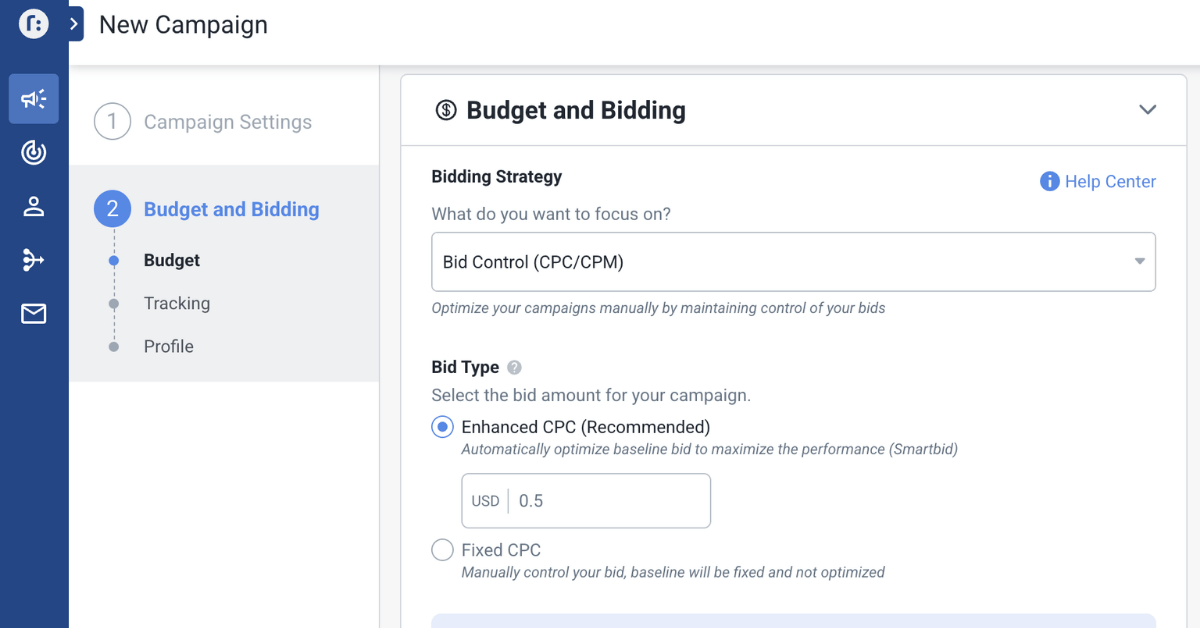
You pay per click or per thousand impressions, and no minimum spend appears on the official billing pages. Taboola’s own guidance is to set a daily campaign budget of 10 times your CPA goal, or at least $50. That gives the system enough conversions to learn from.
What You Pay For
Cost Per Click vs Cost Per Thousand Impressions
Cost per click suits stores chasing orders, since you only pay when someone lands on your site. Cost per thousand impressions suits a launch where reach matters more than the immediate cart.
Daily Spend Can Run Past Your Budget
One budget detail catches teams out. Daily spend can run up to double your stated daily budget on a given day. The campaign still stops at the cap you set overall.
How Billing Works
Three Payment Schedules
Three payment schedules exist. Automatic billing runs on a credit card in increments that typically start around $100. Monthly invoicing needs an account manager and a credit check, and prepayment means you wire funds before campaigns run.
Card Fees vs Fee-Free Payment
Card payments carry a processing fee of roughly 2 to 3.5 percent depending on region, while ACH, wire, SEPA and check carry none. On a six figure annual spend, that gap is worth a conversation. It is the kind of leak a digital marketing audit picks up in an afternoon.
Quick math: If your target cost per order is $40, the recommended daily budget is $400, not $50. Teams read the fifty dollar floor as the number to plan around and then wonder why nothing optimizes. The floor is a floor, and the ten times rule is the actual guidance.
Is Taboola Free or Discounted for Ecommerce Teams?
No. There’s no free plan and no published ecommerce, startup or nonprofit discount program, because you’re buying media rather than a software subscription.
The closest thing to a saving is how you pay. Moving off card payments removes that processing fee, and prepayment through wire transfer avoids it entirely.
Anyone promising you a coupon code for native ad spend is selling something else. Treat those offers the way you’d treat a discounted click anywhere, which is with suspicion.
Which Taboola Setup Fits Common Ecommerce Use Cases?
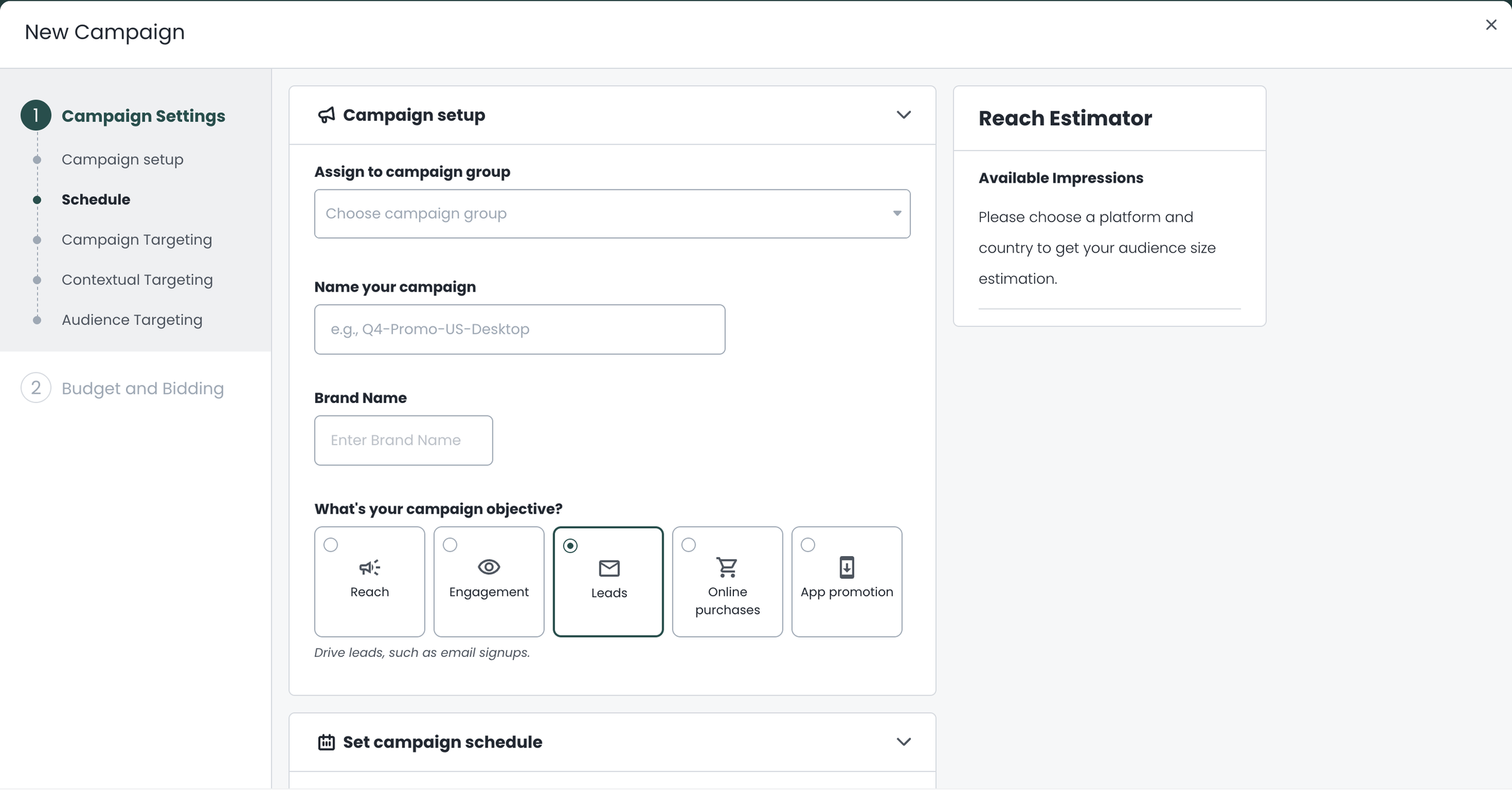
There are no named plan tiers to choose between, so the real decision is how you configure each campaign. Buying model, bid strategy and budget floor change quite a lot depending on what you want that campaign to do.
| Use Case | Buying Model | Bid Approach | Common Mistake |
|---|---|---|---|
| New customer prospecting | Cost per click | Manual first, automated once conversions build | Switching to automation in week one |
| Product launch reach | Cost per thousand impressions | Fixed, reviewed weekly | Judging it on same day orders |
| Category page traffic | Cost per click | Manual, with a tight site blocklist | Sending readers to one product page |
| Winback of past buyers | Cost per click | Automated toward a conversion goal | Sharing a budget with prospecting |
Keep prospecting and winback in separate campaigns with separate budgets. Mixed together, the cheaper winback conversions flatter the whole account and hide a prospecting problem for weeks. That is a pattern we see across B2C digital marketing accounts generally.
Prospecting reaches readers who’ve never seen your store. Hold the daily budget steady for at least two weeks, because the model needs conversion data before it settles anywhere useful.
Send that traffic to a category page or a guide rather than one product page. Cold readers rarely buy from an article click on the same day.
Retargeting works from pixel data on people who already browsed. Cost per click usually runs higher, and so does the return, so judge the two campaign types against separate targets.
Keep frequency modest here. A cart abandoner who meets the same unit twelve times in a week stops seeing it altogether.
How Do You Set Up Taboola for an Ecommerce Team?
Setup runs in one order, and skipping ahead costs you the first month of data. Get tracking right before a single ad goes live, because backfilling conversions is not possible.
- Open the account: pick your billing schedule before anything else.
- Install the pixel: on Shopify, use the official Taboola Pixel app.
- Verify events: place a real test order and confirm it arrives in Realize.
- Build creative: start with 12 to 16 image and headline pairs.
- Set the budget: use the 10 times CPA rule, not the floor.
- Schedule the review: book a weekly slot for the site report.
The Shopify path deserves a warning. Standard purchases track straight away. But post purchase upsell events need separate configuration, and any upsell app that bypasses native checkout needs extra work before those orders count.
WooCommerce stores have an integration route as well, though the documentation is thinner. Budget an extra day of developer time there, or hand the whole setup to whoever handles your digital marketing outsourcing.
Before the first dollar: Place one real order through your own checkout and watch it appear in reporting. We’ve inherited three accounts where upsell revenue never registered, which made every campaign look unprofitable for months. The test order costs you a refund and saves you a quarter.
Taboola vs Top Ecommerce Ad Channels
Native sits in a different part of the shopping day than search or social. Comparing raw cost per click across them tells you almost nothing, because the shopper’s state of mind is not the same.
| Channel | What the Shopper Is Doing | Where It Fits in a Store’s Mix |
|---|---|---|
| Taboola native | Reading an article, not shopping | Discovery and top of funnel volume |
| Search ads | Typing a product or problem | Capturing demand that already exists |
| Paid social | Scrolling a feed of people and brands | Discovery plus retargeting at scale |
| Shopping feeds | Comparing products and prices | Closing buyers near the decision |
The honest comparison is against other discovery channels rather than against search. A Pinterest ads agency would make a similar argument about intent sitting earlier in the journey. Both channels get judged on assisted revenue rather than last click.
We’re an independent agency, and no vendor holds a stake in our business, so the recommendation follows the store rather than a partnership. Sometimes that means a niche retail network beats all four of these for a specific category.
Which Ecommerce Companies Use Taboola Today?

Taboola names publisher partners rather than advertiser logos, so the honest answer is that no verified public list of ecommerce customers exists. What the company does publish is where the ads run, including sites like ABC News, USA Today and Business Insider.
That gap matters more than it looks. Any article listing famous stores that supposedly run native ads is usually working from guesswork, and we’d rather tell you that than repeat it.
From our own accounts, the pattern is consistent. Mid sized consumer brands with wide catalogs use it hardest. Very large retailers tend to buy the same inventory programmatically, through the desks that also handle their enterprise digital marketing.
Rules, Compliance, and Data Laws in Ecommerce Advertising
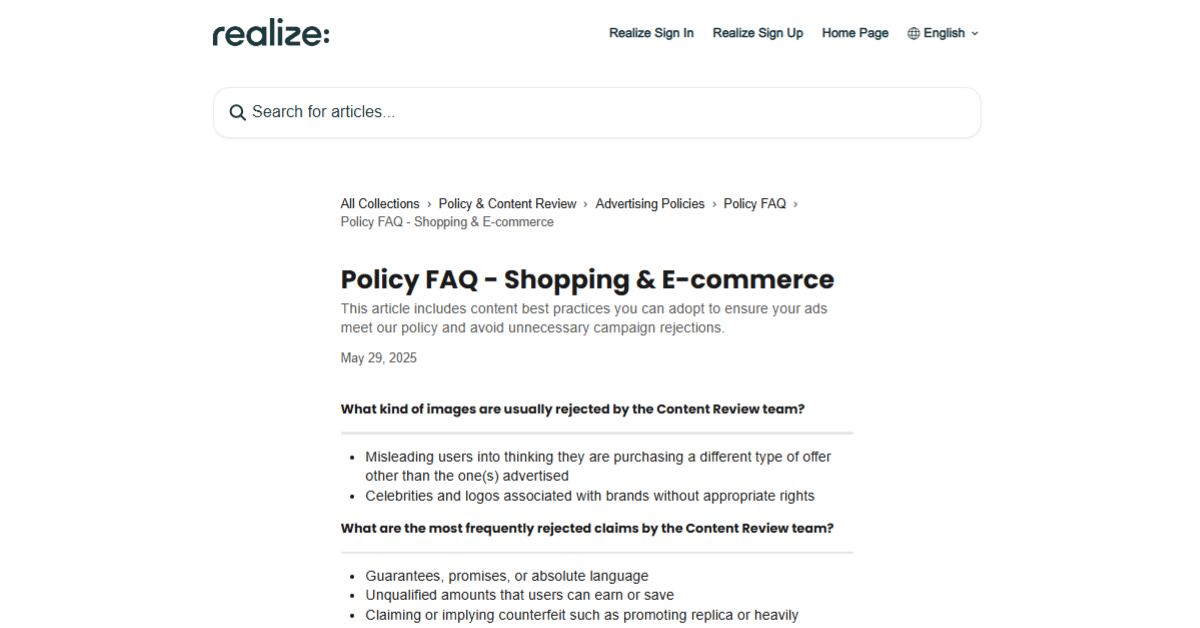
Two areas cause most of the trouble for stores running native ads. One is what your pixel collects, the other is what your ad promises.
Consent and Tracking Data
What the Pixel Collects
The Taboola pixel gathers on site behavior to build audiences and attribute sales, which places it squarely inside your consent banner. If a visitor declines tracking, that visit should not reach the ad account at all.
Handling EU and California Traffic
European and California traffic raise the stakes further. We treat consent mode as a launch requirement rather than a later fix. Our digital marketing consulting work usually starts by checking whether the banner and the pixel agree with each other.
Ad Claims and Pricing Accuracy
Editorial Context Raises the Bar
Native units sit inside editorial content, so they get read as editorial. A headline that stretches a claim reads far worse there than it would in a feed, and advertising standards bodies treat it that way too.
Match Ad Claims to Checkout
Keep discounts, shipping terms and subscription renewals stated the way your checkout states them. A price in the ad that differs from the price on the page is the complaint we see most often, and it is entirely avoidable.
What Are the Common Taboola Pitfalls in Ecommerce?
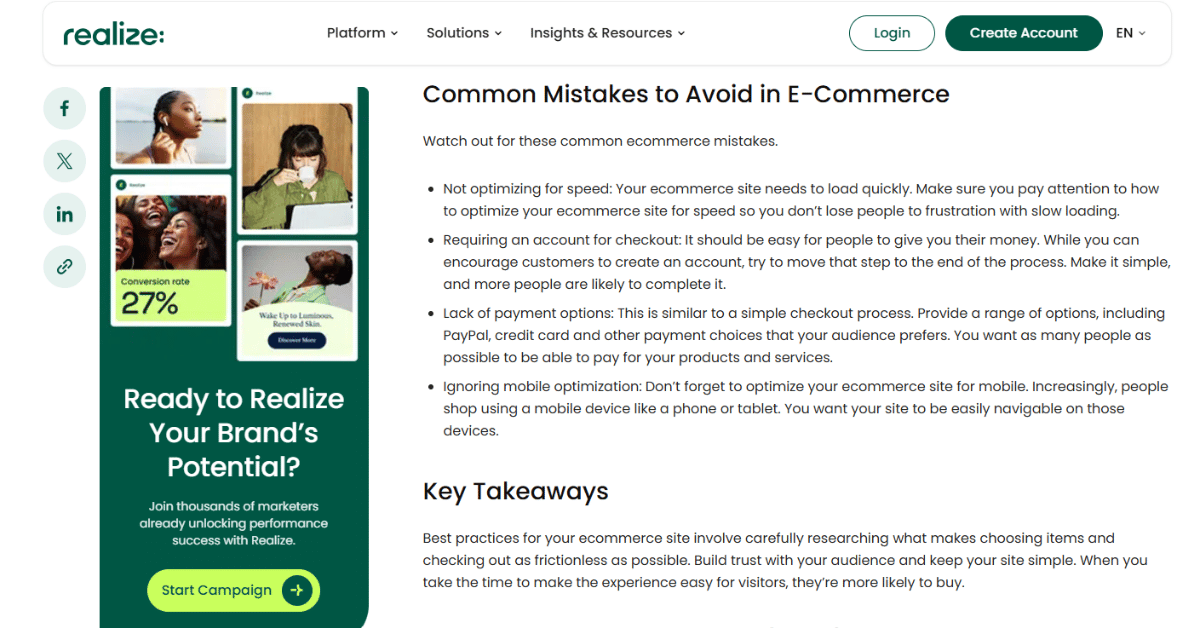
Most failed native tests fail for the same three reasons, and none of them are about the ad network itself. They’re about budget, patience and landing pages.
Pitfall #1: Testing on a Budget That Cannot Learn
A $20 daily budget against a $45 target order cost gathers roughly one conversion every other day. The bidding system has nothing to work with, so it never improves.
Fund It Properly or Skip It
Either fund the test properly or don’t run it. A starved test produces a confident wrong answer, which is worse than no answer at all.
Pitfall #2: Judging Native on Last Click
Readers click an article ad, browse, leave, and come back through search or email days later. Last click reporting hands that sale to search and shows native as a loss.
Set the Attribution Window Before Launch
Agree on the attribution window before launch, not after the first bad week. That single conversation has saved more native tests for us than any bidding change.
Pitfall #3: Sending Article Readers Straight to Checkout
Someone reading a news story is not ready for a product page with a buy button and nothing else. Conversion rates on that path sit far below what the same store gets from search traffic.
Land Readers on a Page That Continues the Story
Give them a page that continues the story instead. Buying guides, comparison pages and category pages with real editorial all hold this traffic much better.
Keep in mind: The playbook says test small and scale what works. After enough native campaigns, we do the opposite. We fund a short, properly sized test and kill it fast. A small budget stretched over months produces data too thin to act on, and a bill nobody can defend.
Which Taboola Add-Ons Do Ecommerce Stores Need?
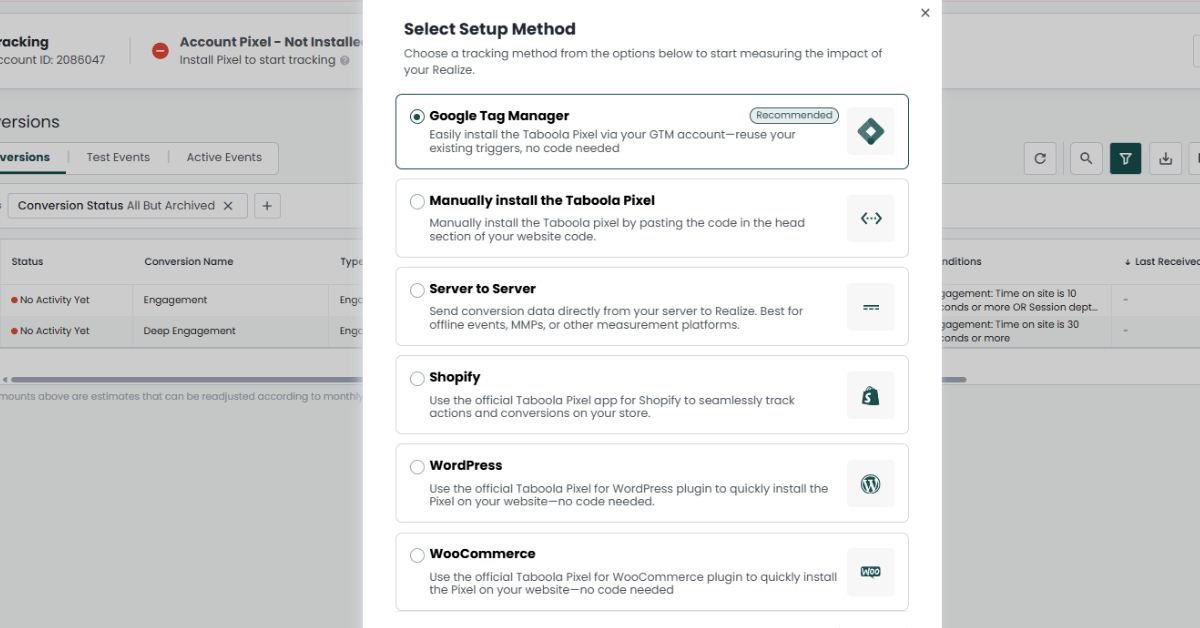
The useful add-ons are connectors rather than features you buy. Each one closes a gap between the ad account and a system you already run.
- Shopify app: the official pixel install, no custom code needed.
- Google Tag Manager: a route to line ad data up with analytics.
- Reporting API: pulls campaign data into whatever dashboard you use.
- WooCommerce path: available, though it needs more hands on setup.
Support runs through email, in platform chat, an AI assistant and an account manager for billing questions. There’s no published phone line, so plan around written support rather than a call.
Pull the reporting into the same dashboard as your other channels from day one. Native looks weak in isolation and reasonable in context, which is the whole argument for integrated digital marketing reporting.
Typical Taboola ROI Numbers in Ecommerce
Published benchmarks for this channel are thin and rarely match a specific catalog, so here’s what we see instead. These are our own account figures, not an industry average.
Across our ecommerce accounts, a first month cost per order on native sits roughly 20 to 30 percent above the same store’s search cost. It narrows from there, and the gap usually closes around week eight once the pixel has enough conversions.
Payback on a properly funded test tends to land between week six and week nine. Return on ad spend in month three clusters around 1.6 to 2.2 for stores whose average order value sits above roughly $70. It runs noticeably lower beneath that.
We also block about a third of the starting site list by the end of month one, which is normal rather than a warning sign. Where the numbers refuse to move, the problem is usually the offer, and that belongs in a broader digital marketing strategy conversation.
How we read this: Confidence here is uneven on purpose. We’re blunt about the first month premium, because we’ve watched it on many accounts. We’re much less certain about month six. Most stores change their offer or creative before we get a clean read that far out.
How Do You Onboard an Ecommerce Team on Taboola?
Onboarding takes about two weeks of part time effort for a small team. Split it by role rather than teaching everyone the whole interface, because most people only need one screen.
Your merchandiser needs the site and creative reports. Whoever owns the site needs the pixel and event setup, and finance needs the billing schedule and the card fee.
Then agree on one weekly rhythm and hold it. Fifteen minutes on placements, fifteen on creative, and no bid changes in between. That’s the same cadence we set up for small business digital marketing clients running their first paid channel.
One verbatim question comes up in nearly every kickoff. Somebody asks whether their intern can just run it, and the honest answer is yes for reporting and no for budget decisions.
How Is Taboola Changing for Ecommerce Buyers?
The direction is more automation and less manual control. The rename to Realize came alongside AI creative tooling, predictive audience building and automated safeguards on wasted spend.
For a store, that shifts where your effort goes. Creative volume and clean conversion data matter more each year, while manual bid tinkering matters less than it did.
It’s the same shift running through every ad network right now. Teams we work with on Snapchat ads management describe an identical change. The lever that still moves results is the feed and the offer behind it.
One to watch: As automation takes over bidding and placement, your competitive edge moves upstream to product data and creative. Stores with a tidy feed and a steady supply of fresh assets pull ahead. The ones treating creative as a quarterly project fall behind without ever seeing why.
Taboola Ads for Ecommerce FAQ
Disclaimer: This article is provided for general information only and does not constitute legal, financial, or professional advice. Product details, pricing, and features described here belong to their respective owners and may change without notice. Vantura Marketing accepts no liability for decisions made on the basis of this content.