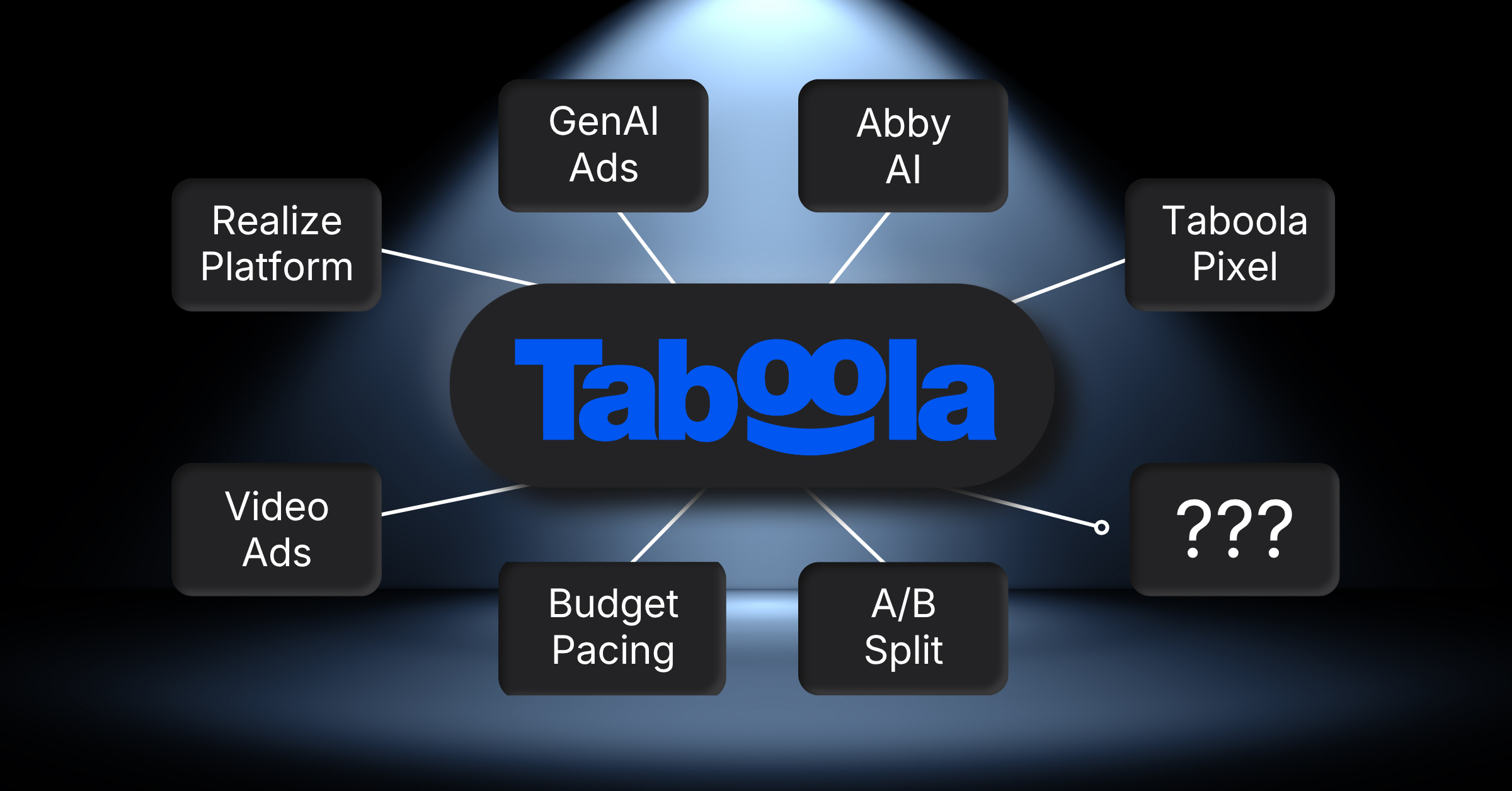
Taboola Ads vs AdRoll: Pricing, Features & Fit (2026)

Taboola Ads reaches new readers inside publisher articles, while AdRoll focuses on retargeting people who already know you. The right pick depends on your weak spot: discovery or conversion. Most performance teams run one as the demand engine and the other as the closer.
Why trust our Taboola Ads and AdRoll take:
Our 28 specialists have run 180 campaigns across 14 industries, native and retargeting included. More than 190 combined years of marketing work sit between them. We’ve also run 750 A/B tests, so our creative calls come from data.
Want help picking between the two?
Get in touch if you’d rather not learn this on your own budget. Our team handles Taboola Ads management alongside retargeting programs, and we’ll tell you plainly when neither platform fits.
Taboola Ads vs AdRoll at a Glance
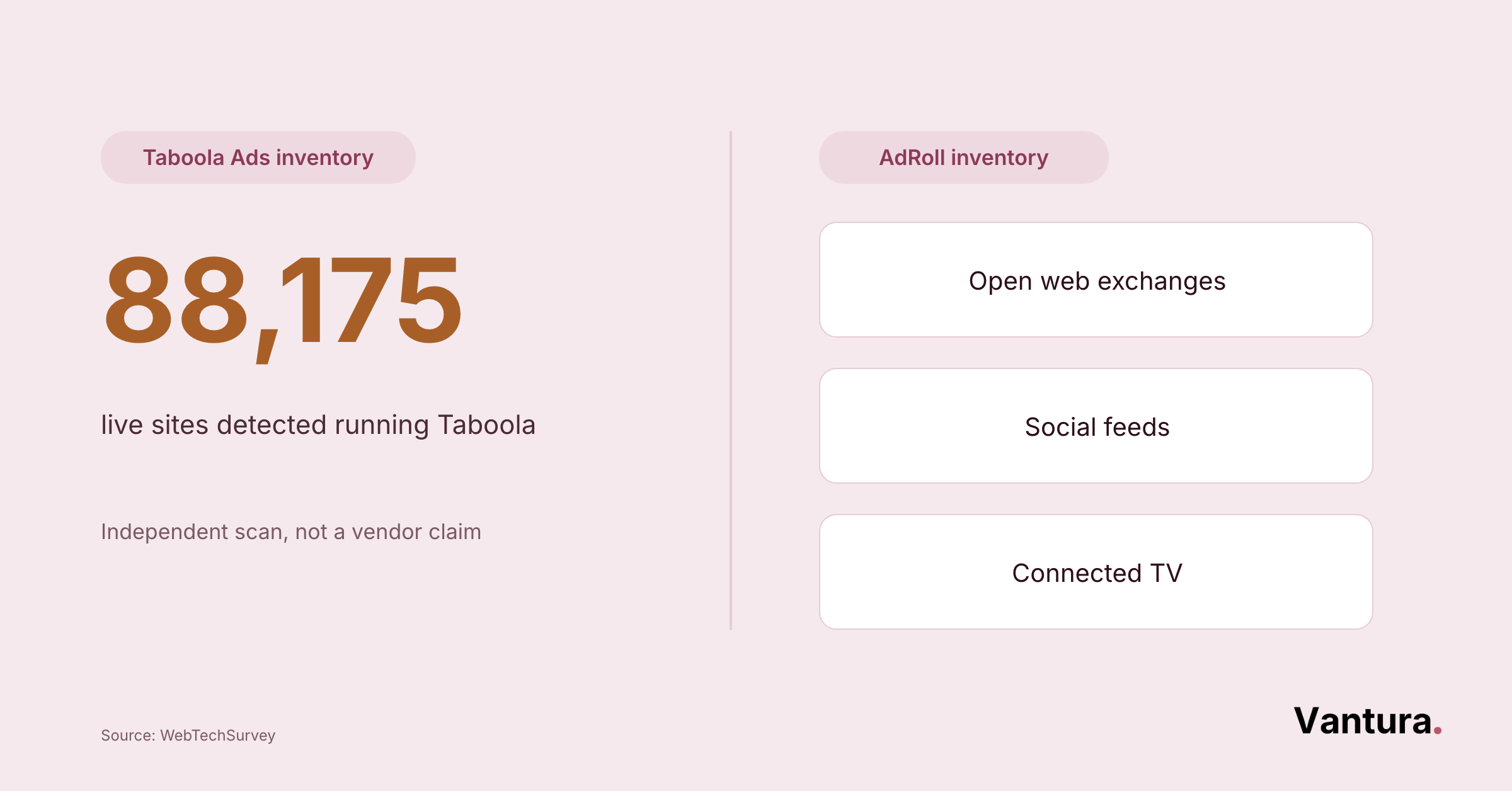
Both platforms buy attention outside search and social. But they aim at different moments. Taboola Ads places native units inside publisher articles, so it meets people who have never heard of you.
AdRoll starts from an audience you already have. It follows that audience across display, social, video, and connected TV. That split in intent shapes everything else, from creative to how fast you read results.
That gap sits inside a market that keeps expanding no matter which platform wins your budget. US native display ad spending is forecast to grow 13.1 percent this year, reaching $147.98 billion, so the platform you pick now compounds either way.
Short version: If nobody knows your brand yet, AdRoll’s retargeting pool is too small to do much, and Taboola Ads has the wider net. If you already get traffic that leaves without converting, AdRoll has the shorter path to revenue and the faster feedback loop.
Taboola Ads vs AdRoll Comparison
| What you’re comparing | Taboola Ads (Realize) | AdRoll |
|---|---|---|
| Main job | Native discovery on publisher sites | Cross-channel retargeting and prospecting |
| Ad channels | Native, display, video, carousel, vertical, app promotion | Connected TV, display, mobile, native, social, video, digital out of home |
| Inventory reach | Company claims 11,000+ premium publishers | Buys across web, social, and connected TV placements |
| Pricing model | Not published, sign-up or contact required | Dynamic CPM, no dollar figures published |
| Minimum spend | Not disclosed | None, per AdRoll’s own pricing page |
| Product lines | One performance platform, branded Realize | AdRoll Ads plus AdRoll ABM, formerly RollWorks |
| Free entry point | None published | Account-Based Retargeting starts free, media costs only |
| Service models | Self-serve, with account management referenced for agency clients | Self-serve, managed service, and an Advanced Package tier |
| Automation | Realize+ agentic optimization and Performance AI | AI-driven optimization and audience segmentation |
| Support | Help Center and a Marketing Partners program, no published SLAs | Help Center and managed-services guidance, no published SLAs |
Taboola Ads vs AdRoll: What’s Different?
The core difference is who you’re paying to reach. Taboola Ads pays to interrupt a stranger mid-article. AdRoll pays to reappear in front of someone who already visited and left.
- Audience source: Taboola Ads buys strangers, AdRoll buys your own visitors.
- Channel mix: publisher article feeds versus display, social, video, and connected TV.
- Ramp time: Taboola Ads needs volume to learn, AdRoll needs a pixel with traffic behind it.
That gap shows up hardest on Taboola Ads for ecommerce campaigns, where cart abandoners are worth far more per impression than cold readers. On a brand launch with no traffic history, the maths flips completely.
Worth knowing: The real split is not native versus display, since both platforms sell native units. It is whether the platform sources an audience for you, or re-reaches one you already sourced. That single question decides which one earns your first test budget.
Taboola Ads vs AdRoll: What’s Similar?
More than the marketing pages suggest. Both are performance platforms that bid automatically. Both push automated optimization hard, and neither publishes a rate card you can budget from before signing up.
- Pricing opacity: both hide real numbers behind a sign-up or a sales conversation.
- Automation first: both now steer bids and budgets with their own AI layer.
- Service tiers: both offer managed help on top of the self-serve product.
Both also reward first-party data far more than they used to. That’s why B2B advertising programs with clean CRM lists tend to outperform ones without. Neither platform publishes a support SLA you can hold them to.
Keep in mind: Because neither publishes pricing, the only honest way to compare cost is to run both for a set period against the same conversion event. Anyone quoting a firm CPC or CPM before that test is quoting a guess.
How Does Taboola Ads Work in Comparison to AdRoll?
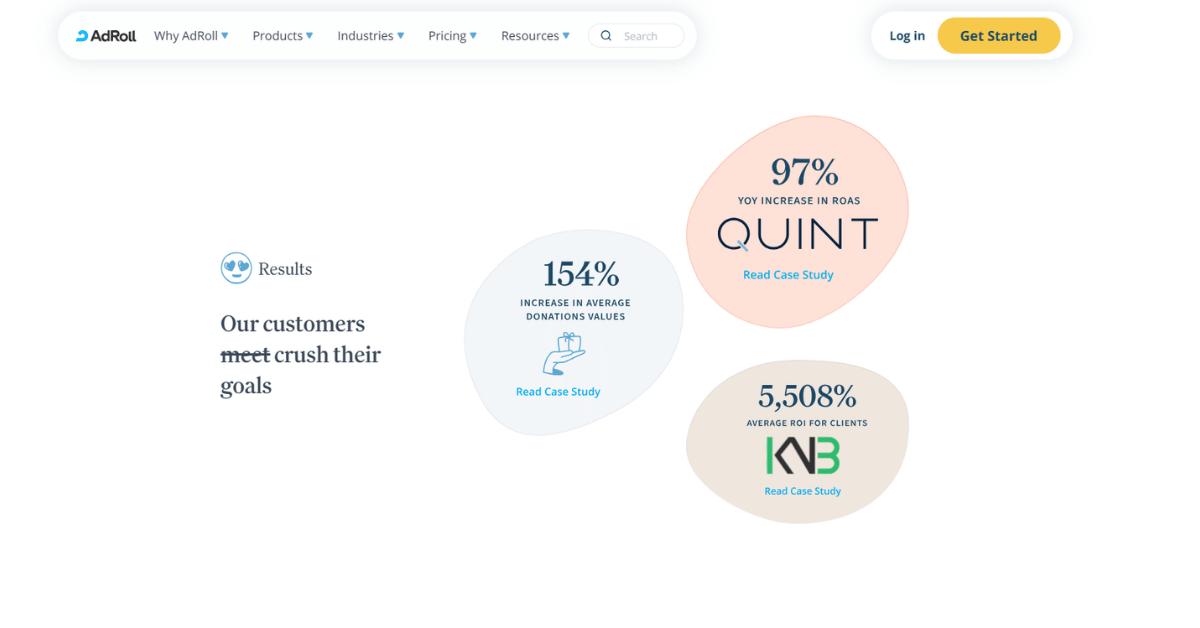
Taboola Ads places native units inside publisher articles, then lets an automated bidder chase conversions from cold traffic. AdRoll starts from your own audience data, then buys placements across several channels to bring those people back.
Where Each Platform Finds Your Audience
Audience sourcing is the fork in the road. One platform hunts for people. The other retrieves them.
That changes who shows up on the other side of a click. Cold native traffic is browsing, while retargeted traffic often arrives with a pricing page still open.
We stopped judging the two on click volume years ago for this reason. When clients ask us for Taboola Ads consulting, we first check whether their site gets enough traffic for a retargeting pool to exist.
Taboola Ads
Taboola Ads draws from a publisher network the company describes as more than 11,000 premium publishers, across mail, mobile, and editorial environments. The same pages carry vendor case-study figures, like a 69 percent lower cost per lead. Those come from selected accounts and are not benchmarks to plan a budget around.
- Reach: native units on publisher articles, plus mail and mobile placements
- Targeting: contextual signals combined with first-party data you upload
- Formats: native, display, video, carousel, vertical, and app promotion
- Intent level: mostly cold readers at the discovery stage
AdRoll
AdRoll starts from a pixel on your site and builds segments from what visitors did there. Its account-based side, formerly RollWorks, extends the same idea to named target accounts, not just individual browsers.
- Reach: display, social, video, connected TV, and digital out of home
- Targeting: site visitors, uploaded customer lists, and buyer-intent segments
- Formats: standard display, social, video, and connected TV creative
- Intent level: warm by default, with cold prospecting layered on top
How Each One Handles Optimization
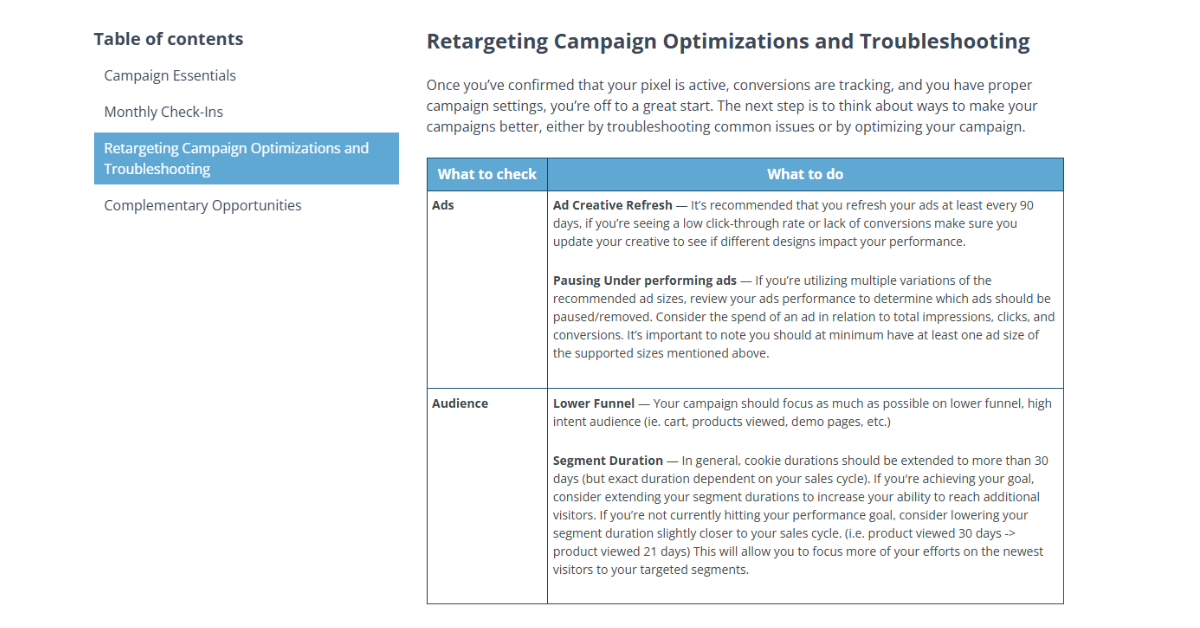
Both lean on automation now, but they automate different decisions. Taboola Ads is mostly deciding which publisher slot is worth winning, and at what bid.
AdRoll is mostly deciding who to show an ad to next, and on which channel. That sounds like a small difference, until you try to fix a campaign that isn’t working.
Taboola Ads
Optimization runs through what the company calls Performance AI, for real-time bid and budget moves. An agentic layer branded Realize+ adjusts campaigns without you touching them.
- Main lever: bid and budget automation across publisher inventory
- Data input: contextual and predictive modelling plus your first-party data
- Manual control: publisher-level and creative-level decisions stay with you
- What it needs: enough conversion volume for the model to find a pattern
AdRoll
AdRoll’s optimization sits closer to the audience layer. It decides segment priority and channel mix, rather than fighting for a specific article slot. Most of the tuning happens through its cross-channel attribution feature.
- Main lever: segment priority and channel allocation
- Data input: site behavior, customer lists, and buyer-intent signals
- Manual control: segment rules and frequency stay adjustable
- What it needs: a pixel that has been collecting for long enough to matter
What Reporting Looks Like Day to Day
Both give you real-time campaign reporting, so neither leaves you blind. The difference is what the numbers can tell you once you have them.
Native discovery reporting is noisy early, because cold traffic converts slowly and unevenly. Retargeting reporting flatters itself, because some of those people were coming back anyway.
We’ve had clients cut a native campaign in week two that was on track to work by week six. We’ve also seen a retargeting campaign kept alive for a year that was mostly claiming credit for organic returns. A look at the account’s Taboola Ads integrations usually finds one or the other within a day.
Taboola Ads
Reporting is built around campaign and publisher performance in real time. The useful work is spotting which sites and creatives carry the account.
- Strongest view: which publisher placements convert
- Weakest view: what happened after the click, off platform
- Reading time: expect several weeks before the data settles
AdRoll
AdRoll’s reporting leans on cross-channel attribution. That’s offered as an add-on for the self-serve plan, not bundled by default.
- Strongest view: how channels stack up against each other
- Weakest view: separating real incremental sales from returning buyers
- Reading time: directional within days, trustworthy after a full sales cycle
How Does Taboola Ads Pricing Compare to AdRoll Pricing?
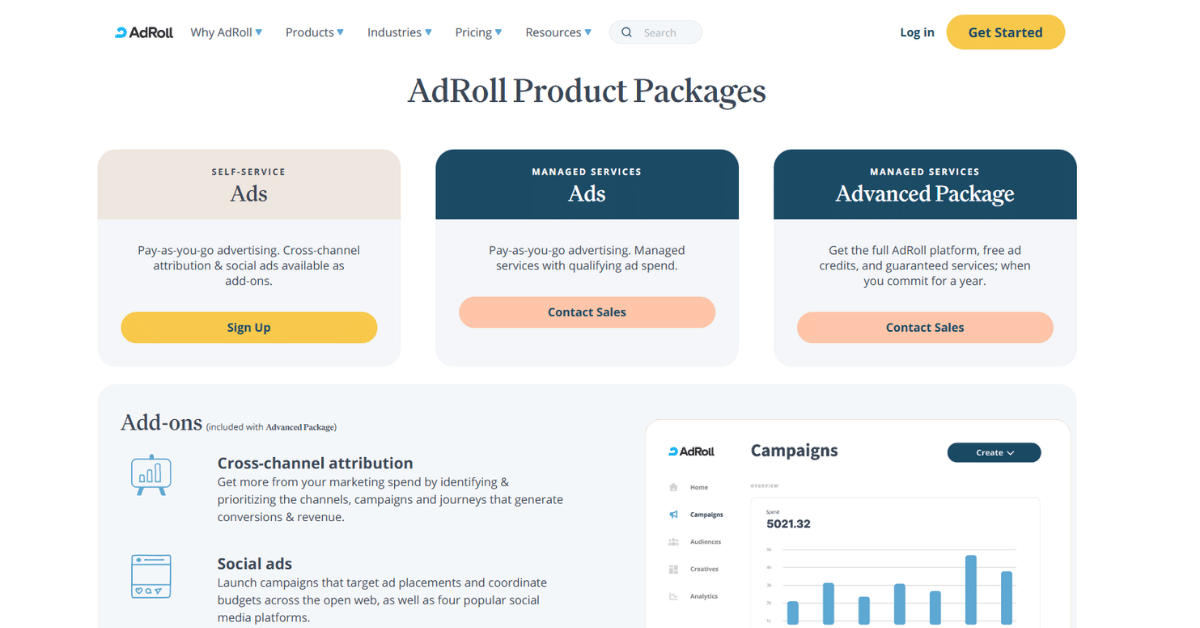
Neither company publishes a rate card. Taboola Ads keeps pricing behind a sign-up or a sales conversation. AdRoll bills on a dynamic CPM with no dollar figures on the page, though it does state that AdRoll has no minimum spend.
That opacity is normal in this corner of paid media. It’s also why quoted “typical” costs on comparison blogs are unreliable. Any Taboola Ads agency worth hiring will tell you the real number comes from your own test, not a published tier.
Taboola Ads pricing, what the native platform publishes
- Rate card: none published on the advertiser or Realize pages
- Entry route: sign up or contact the company to get numbers
- Minimum spend: not disclosed on any official page
- Service tier: account management referenced for agency clients
- Free option: no free plan or published trial
AdRoll pricing, from pay as you go to annual commitment
- Model: dynamic CPM, priced per thousand impressions
- Minimum spend: none, stated outright on the pricing page
- Self-serve: pay as you go, with attribution and social ads as add-ons
- Managed service: available, plus an Advanced Package on an annual commitment
- Free entry: Account-Based Retargeting starts free, you pay only for media
Budget reality check
The no-minimum line makes AdRoll look cheaper to start, and for a first test it usually is. But a dynamic CPM on a tiny retargeting pool burns through impressions on the same few hundred people fast. So the ceiling arrives quickly too.
Native spend behaves the opposite way. It stays expensive per conversion until the model learns, then it improves. We see this most often with small business ad budgets. The first month of native looks like a failure, and the third month pays for the first two.
Budget reality: Across our own client accounts, native platforms need roughly three times the runway of retargeting before cost per acquisition means anything. Budget for the learning period upfront, or the campaign gets killed on week-two data that was never going to look good.
Who Is Taboola Ads Best For?
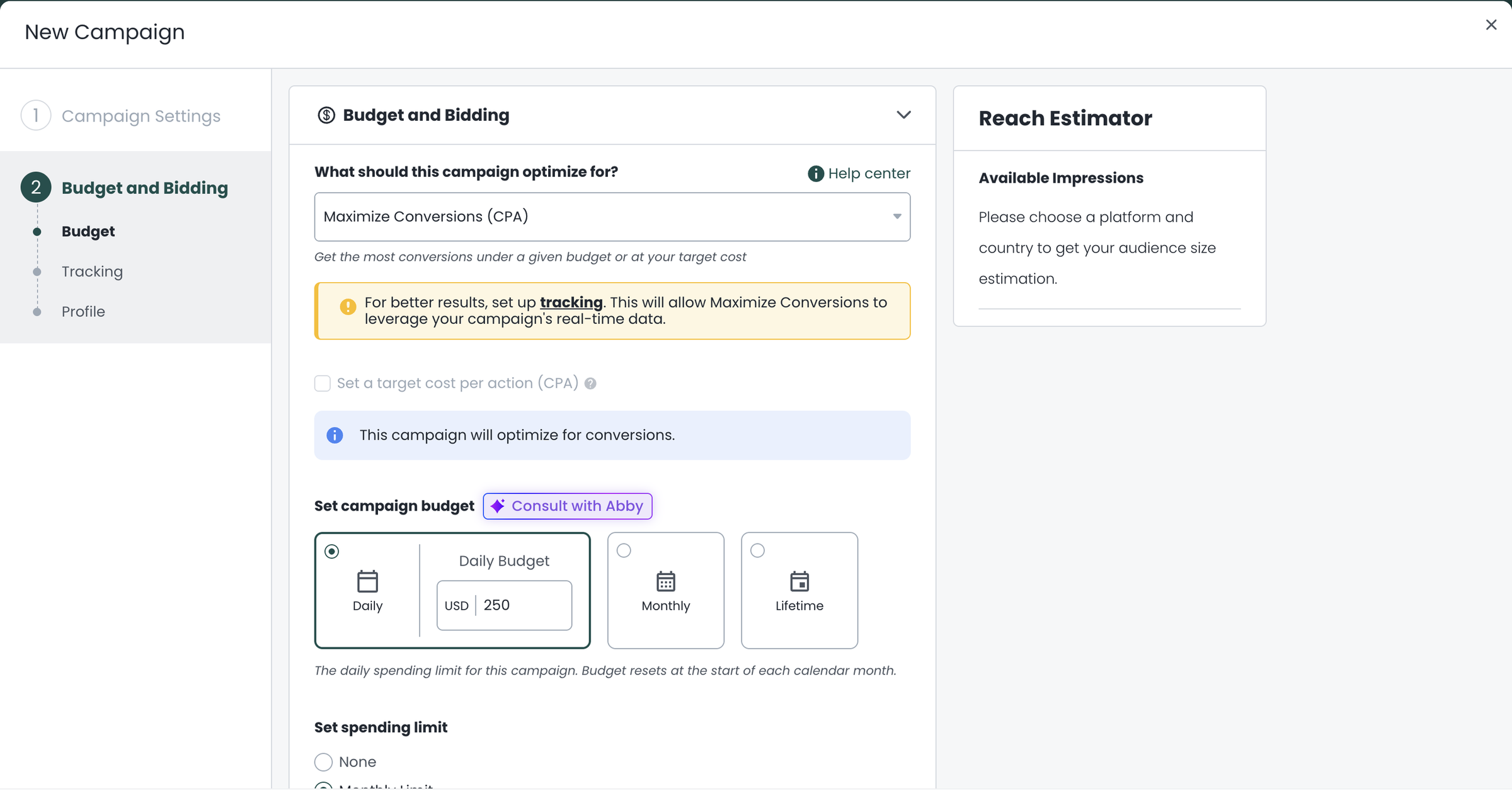
Taboola Ads suits advertisers who need new people, not better follow-up. If your funnel converts fine once someone arrives, and the problem is that too few arrive, native discovery is the right tool.
It also rewards anyone with a real content asset, because native units send people to a page, not a checkout. Companies with a strong guide, comparison, or case study behind the click get far more from it. Companies pointing cold readers straight at a product listing get far less. Teams selling to SaaS buyers often learn this the hard way, after a month of expensive bounces.
Taboola Ads fit check
- Low brand awareness, decent conversion rate
- Content worth clicking, not just a product page
- Budget that survives a learning period
- Broad consumer or mid-market audience
- Agency support available for publisher tuning
- Tiny niche audience of a few thousand buyers
- Test budget you need to judge in two weeks
- No landing page beyond a pricing table
- Regulated categories with heavy creative limits
- Teams that need published pricing before committing
Who Is AdRoll Best For?
AdRoll suits advertisers whose traffic is fine and whose conversion is not. When people find you, look, and leave, the fastest revenue sits in bringing a share of them back.
The account-based side widens that to named companies, not just anonymous visitors, which matters if you sell to a short list of accounts. Larger advertisers also use the connected TV and out of home channels to keep one message running everywhere. That consistency matters more to enterprise marketing teams than to smaller ones.
AdRoll fit check
- Steady site traffic that leaves without buying
- Ecommerce carts or long consideration cycles
- A target account list you want covered
- Small starting budget with no minimum
- Need for one message across several channels
- Brand new site with almost no visitors
- Growth plan that depends on net new reach
- No appetite for add-on fees on attribution
- Audiences that block trackers heavily
- One-time purchases with no repeat value
Does Taboola Ads Have Better Features Than AdRoll?
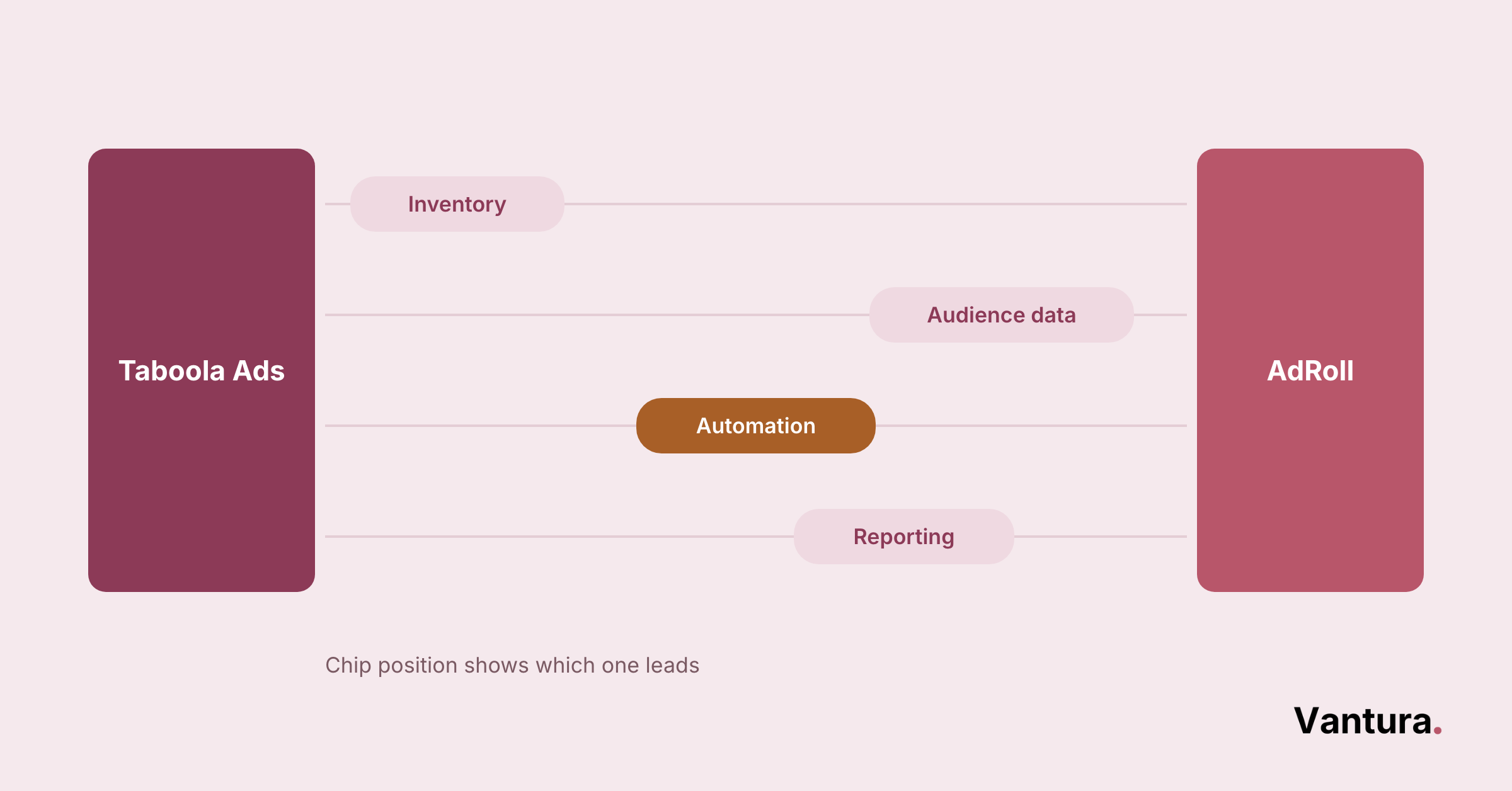
Not better, differently aimed. Each platform’s strongest feature is the one the other barely competes on, which is why feature checklists mislead people here.
Where Taboola Ads leads
Inventory is the clear win. The publisher network gives you placement inside editorial pages that AdRoll does not sell. That’s a genuinely different kind of impression.
Format range helps too. Carousel, vertical, video, and app promotion units all sit in the same account, which is why teams running Taboola Ads for finance campaigns can test how much creative shape matters before committing to one.
The agentic optimization layer is the newest piece, and the one we’d treat with the most caution. Automation that reallocates budget for you is useful once conversion tracking is clean. It’s expensive when it isn’t.
Where AdRoll leads
Channel breadth is the headline. Connected TV, digital out of home, social, and display sit in one account, so a single audience definition can follow a person almost anywhere.
The account-based product is the underrated part. Running retargeting and named-account advertising from the same audience layer removes a coordination problem that usually eats hours every week.
Consent and privacy management being built in also matters more each year. It’s dull, but it’s the feature that keeps campaigns running when rules change under you. That kind of plumbing shows up in most of our Taboola Ads for insurance work.
So which feature set wins
Ask what your campaign is short of. If it’s impressions in front of people who have never heard of you, Taboola Ads has the feature that solves it. AdRoll barely competes there.
If it’s a second, third, or fourth touch on someone who already knows you, AdRoll has the deeper toolkit. Feature counts are close enough that the tiebreaker is always the gap in your own funnel.
The honest read: Feature comparisons between these two mostly measure which vendor writes better marketing copy. Pick the platform whose core job matches your weakest funnel stage, then judge features inside that choice rather than across the two.
Is Taboola Ads Easier to Use Than AdRoll?
No, AdRoll gets you live faster because the pixel builds the audience for you. Taboola Ads asks more of your creative and your patience, since cold native needs volume before the bidder settles down. Ease of use tracks with how much cold traffic you’re buying, not with the interface.
How Do Taboola Ads and AdRoll Compare With Other Providers?
Neither platform is evaluated alone in practice. We’re an independent agency, and no vendor holds a stake in us. We recommend whatever fits the account, including smaller niche networks that never appear on a comparison list.
Outbrain vs Taboola Ads and AdRoll
Outbrain occupies the same native discovery space as Taboola Ads, and we break the two down in our own Taboola Ads vs Outbrain comparison. The two usually land on a media plan together, rather than one replacing the other. Against AdRoll, Outbrain faces the same limit Taboola Ads does, since a discovery network can’t solve a conversion problem.
In the accounts we run, the deciding factor between the two native networks is almost always publisher overlap with the audience, not platform features. We test both and keep whichever produces cheaper qualified traffic in that specific category.
Google Display Network vs Taboola Ads and AdRoll
The Display Network competes with both, which is exactly why it rarely wins outright. It reaches wider than Taboola Ads and retargets more cheaply than AdRoll, but it does neither with the same focus.
Advertisers already deep in Google tend to start there, because the tracking is in place. The usual outcome we see is display handling the cheap volume, while a specialist platform handles the placements that need editorial context or connected TV.
Criteo vs Taboola Ads and AdRoll
Criteo sits nearest to AdRoll, since both make their case on bringing shoppers back. Retail advertisers with a large product catalogue tend to compare those two directly, and leave native discovery out of the shortlist entirely.
Against Taboola Ads the comparison barely holds, because the two answer different questions, a gap we cover in our Taboola Ads vs Criteo comparison. The same is true of channel-specific platforms we manage, from niche retargeting tools to trade networks that only exist inside one industry.
How Do You Run Taboola Ads and AdRoll Together Without Paying Twice?
Most advertisers who compare these two end up running both. The trap is paying the native platform to find someone, then paying the retargeting platform to re-find that same person an hour later.
Splitting the funnel so the two don’t collide
The fix is boring, and it works. Give each platform a stage, and write the exclusion rules before either campaign goes live.
Without exclusions, both platforms bid on the same warm user, and your cost per acquisition doubles while the reported numbers look fine. Each one claims the conversion.
Where they overlap
Overlap concentrates in the days right after a first visit. That’s when the native platform is still serving, and the retargeting pixel has already fired.
Suppressing recent site visitors from the native campaign removes most of it. That single setting has saved more budget for our clients than any bid strategy we’ve tested.
How to split spend
Start weighted toward whichever stage is weakest, then rebalance monthly rather than weekly. Monthly is slow enough to avoid reacting to noise, which is where paid channel planning usually goes wrong.
Reading results when both are running
Two platforms reporting on one funnel will always add up to more conversions than you actually made. That’s not dishonesty, it’s how attribution windows work.
Pick one source of truth outside both dashboards, and judge everything against it. Analytics or your CRM will do.
Attribution traps
Retargeting takes credit generously, because it touches people close to the purchase. Native looks worse than it is, for the same reason, since it touches them first.
The cleanest test we know is a holdout. Turn retargeting off in one region for a few weeks, and watch what happens to total revenue, not to platform-reported conversions.
What to measure
Track blended cost per acquisition across both platforms, plus a first-touch view for the native side. Two numbers, checked monthly, catch almost every problem worth catching.
What Switching Between Taboola Ads and AdRoll Really Costs
Switching platforms is sold as a budget decision, and paid for as a time decision. The invoice moves the day you flip. The performance takes a lot longer to catch up.
The costs nobody puts in the migration plan
Every platform you leave takes its learning with it. The new one starts from nothing, no matter how much history you had next door.
- Learning period: weeks of worse results before the model stabilizes
- Creative rebuild: native and display units are not interchangeable
- Tracking rework: new pixel, new conversion events, new checks
- Audience loss: segments built over months do not transfer
- Team time: a fortnight of someone’s attention, minimum
Before you move budget: Write down what the current platform would need to deliver for you to stay. If you can’t answer that in one sentence, the problem is probably the campaign, not the platform. Switching will just restart the same mistakes somewhere new.
Should you switch, or run both?
Running both costs more in fees and less in lost momentum. Switching outright is cheaper on paper and riskier in practice. You only find out whether the new platform works after the old one is gone.
We used to recommend clean switches, to keep accounts simple. After watching three clients lose a quarter of pipeline during the changeover, we now push for an overlap period in almost every case.
Switch when the current platform is structurally wrong for your funnel, not when a single month disappointed. A native platform will never fix a conversion problem, no matter how much you optimize it. Budget for a dip of a month or two, and tell whoever approves spend before it happens, not after.
Stay when the platform matches the job and the campaign is simply undercooked. Weak creative, broken tracking, and a landing page nobody tested account for most of the failures we get called into.
Stay when the platform matches the job and the campaign is simply undercooked. Weak creative, broken tracking, and a landing page nobody tested account for most of the failures we get called into.
Fixing those is faster than migrating, and it tells you something useful either way. Teams without in-house media capacity often bring in outside help for that diagnosis, rather than guessing at it.
Three moves before you shift a dollar
None of these take long, and skipping them is how a switch turns into a write-off. Do all three in the week before anything changes.
#1 Export everything
Pull creative, audience definitions, and at least a year of performance data out before access ends. Agencies handling Taboola Ads for health and wellness accounts learn this rule once, expensively.
#2 Fix tracking first
Install and verify the new pixel while the old campaign still runs. Comparing a working setup against a broken one teaches you nothing.
#3 Agree the success bar
Decide the number that means the switch worked, and the date you’ll check it. Without both, the review turns into an argument about feelings.
The Taboola Ads vs AdRoll Verdict
Taboola Ads wins when you need volume at the top of the funnel and have the patience to pay for a learning period.
AdRoll wins when traffic already exists and leaves, and its lack of a minimum spend makes it the easier first test.
Neither publishes pricing, so treat any comparison built on quoted costs with suspicion, including the ones that look authoritative. If neither platform feels right after testing, our Taboola Ads alternatives roundup covers other native and retargeting options worth a look.
Bottom line: This is not a contest with one winner. Diagnose whether your funnel loses people before the first visit or after it, then buy the platform built for that stage. Ignore the other one until the first problem is solved.
Taboola Ads vs AdRoll FAQ
Disclaimer: This article is for general information only and is not financial, legal, or purchasing advice. Platform details reflect what each vendor published at the time of writing and may change without notice. Verify pricing, plans, and features directly with each provider before committing budget.