Construction SEO: Full Strategy & Tactics for 2026

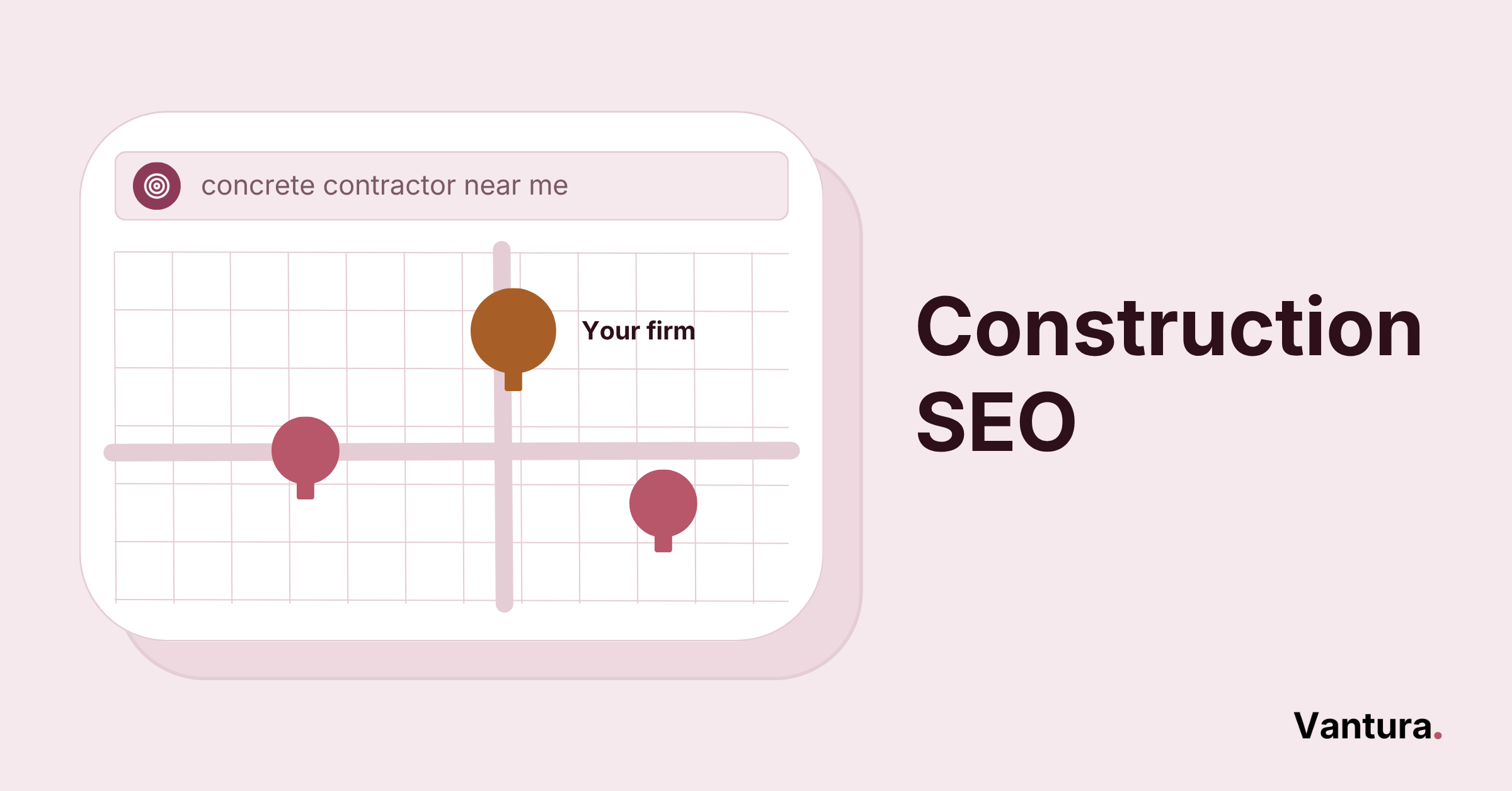
Construction SEO is the practice of improving a construction company’s website so it ranks higher in search results and earns steady organic leads. It covers on-page work, local search, technical fixes, content, and link building, all aimed at the terms your buyers type. Done well, it turns your site into a reliable source of qualified project inquiries.
Our Construction SEO track record
Our team brings 190+ combined years across 14 industries, and we’ve run more than 180 campaigns from first launch to full scale. Construction firms make up a steady share of that work, so the advice here comes from real projects, not theory.
Need help with construction SEO?
If your site isn’t pulling the inquiries it should, a clear digital marketing strategy is usually the missing piece. Reach out and we’ll map the quickest path to better rankings and more booked jobs.
What Is Construction SEO?
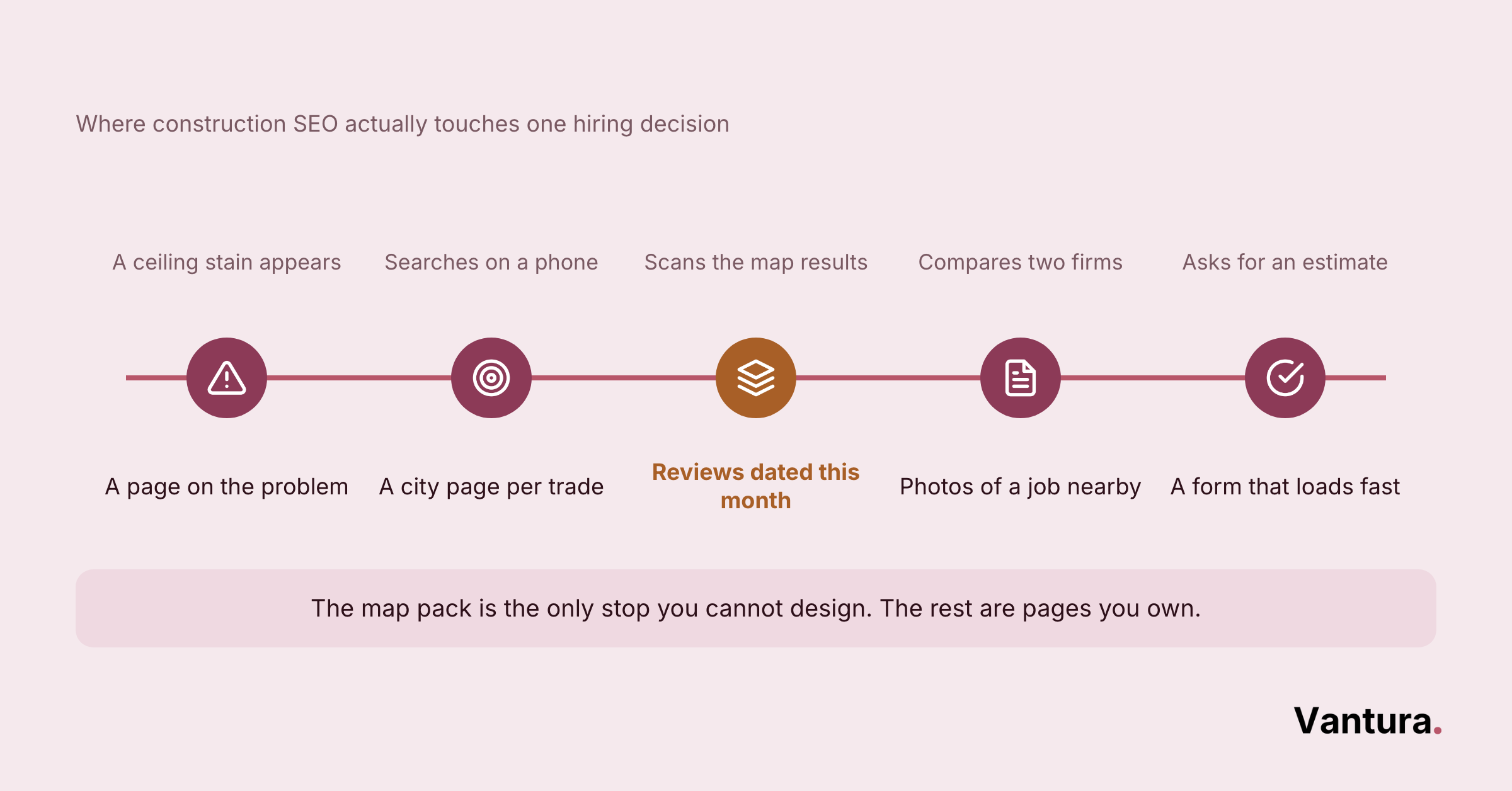
Construction SEO is search engine optimization built around how people find and hire builders. It blends local search, service pages, and trust signals. General contractors, remodelers, and specialty trades show up when nearby clients search for their next job.
Most construction searches carry strong local intent. Someone typing “commercial concrete contractor near me” wants a nearby firm that can start soon, not a national blog.
That local angle changes the whole playbook. You’re optimizing for map results, service areas, and reviews more than for broad national keywords.
The buying cycle is also long and high in value. A single won bid can be worth six figures, so even a handful of extra ranked pages can shift a whole quarter.
How Construction SEO Fits Into Your Wider Digital Strategy
SEO rarely works alone, and measuring it in isolation is a mistake. It feeds your paid ads with better landing pages and gives your email list something to share. It also lowers the cost of every other channel over time.
Teams are catching on to this cross-channel view. Nearly half of US brand and agency marketers, 46.9 percent, plan to invest in marketing mix modeling over the coming year, according to EMARKETER. That shows leaders want to see how search, paid, and social lift each other.
For a builder, the practical takeaway is simple. Treat SEO as one lane inside an integrated marketing approach, and judge it by pipeline, not by rankings alone.
Worth knowing: Rankings are a means, not the goal. Across our construction accounts, the sites that win share one habit. They tie every SEO task back to a booked estimate or a filled form, so the work stays pointed at revenue instead of vanity positions.
On-Page SEO Fundamentals for Construction Websites
On-page SEO is everything you control on your own pages, from titles to internal links. For construction sites, the fundamentals are less about clever tricks and more about being clear, fast, and specific about what you build and where.
Start with the basics that every page needs. These carry more weight for smaller firms, where small business marketing budgets reward tidy fundamentals over expensive campaigns.
- A title tag that names the service and the city.
- One clear H1 that matches search intent.
- Fast load times, since heavy project photos slow pages down.
- A layout that works on a phone, where most local searches happen.
- Internal links that connect related services.
Field note: Thin pages are the quiet killer here. Time and again we’ve watched a contractor stack ten near-identical service pages, each with two sentences, then wonder why none rank. One deep page usually beats five shallow ones.
Optimizing Construction Service, Location, and Product Pages for Search
Service, location, and product pages are where construction SEO is won. Each core service deserves its own page. Each city or region you serve deserves a page that speaks to that area, not a copy with the town name swapped in.
Service Pages
A roofer’s site and a general contractor’s site need different structures here, which is why roofing marketing leans harder on storm and repair pages. Match the page map to how your buyers search.
Location Pages
Write location pages with real proof. Name completed local projects, permits pulled, and neighborhoods served, so the page reads like a firm that truly works there.
Product Pages
Suppliers and builders who sell specific systems, like windows, cabinetry, decking, or modular units, need product pages too. Give each product line its own page with specs, pricing ranges, and real project photos, not one catalog dump covering everything.
Treat a product page like a mini service page, built around the questions a buyer asks before ordering. A manufacturing marketing approach to spec sheets and comparison content works well here, pairing technical detail with plain answers a homeowner or GC can act on.
Image and Video SEO for Construction Sites
Construction is visual, and your media can rank and load fast at the same time. Compress every project photo, add descriptive file names, and write alt text that says what the image shows.
Video pulls its weight too. Developers and real estate marketing teams love a clean walkthrough. A captioned build timelapse keeps visitors on the page longer, and search engines notice.
Structured Data and Schema for Construction SEO
Schema is code that tells search engines what your content means. For construction sites, LocalBusiness and Service schema help your address, service area, and reviews show up cleanly in results.
Add review and FAQ markup where it fits honestly. Done right, it can earn rich snippets that make your listing larger and more clickable than a plain blue link.
How Do You Build Off-Page Authority for Construction SEO?
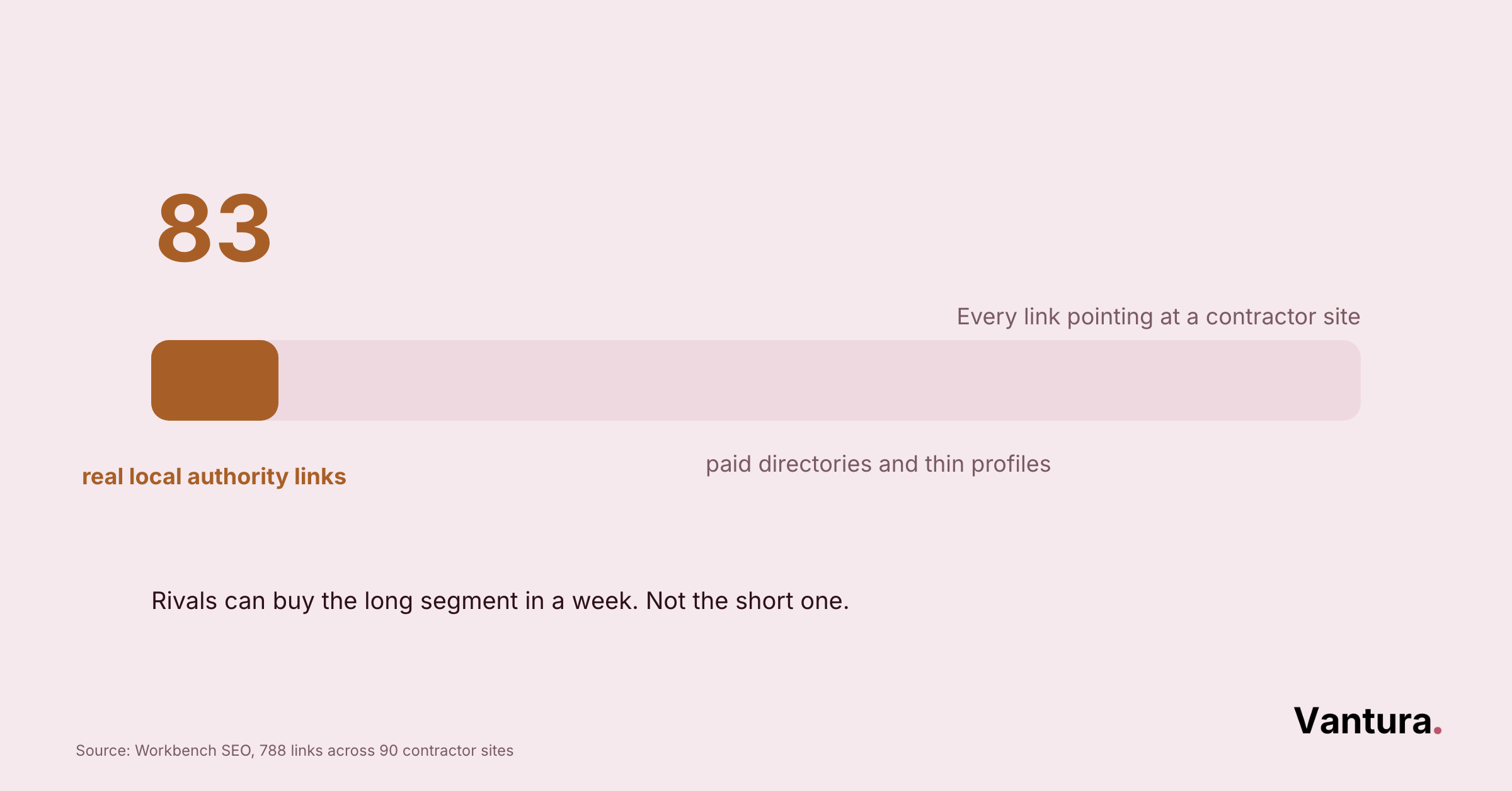
You build off-page authority by earning links and mentions from sites Google already trusts. For construction firms, the best sources are local, supplier directories, trade associations, chambers of commerce, and press about real projects.
Partnerships are an underused link source. HVAC subcontractors, architects, and suppliers all have websites. Firms that treat HVAC marketing partners as link partners tend to build authority faster than those chasing cold outreach.
Skip the shortcuts. Bought links and spammy directories are the fastest way to a manual penalty, and they age badly.
E-E-A-T and Construction SEO Authority Signals
E-E-A-T stands for experience, expertise, authoritativeness, and trust. Construction is a trade where credentials matter, so put them where both people and search engines can see them.
Show licenses, insurance, safety records, and named team bios with real experience. A licensed electrician marketing a specialty service earns trust faster by leading with credentials than by claiming to be the best in town.
Why Does Content Matter for Construction SEO?
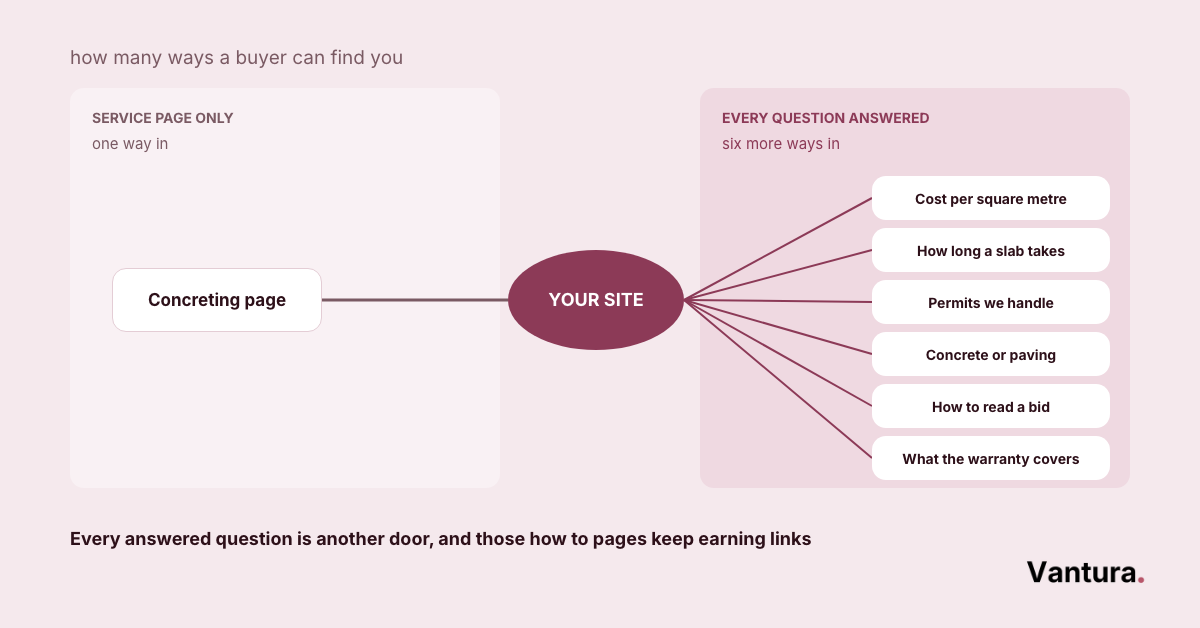
Content matters because it answers the questions buyers ask before they hire. Each answered question is another way to be found. For construction, that means cost guides, process explainers, and material comparisons, not generic filler.
Helpful content also earns links on its own. A plain how-to on reading a bid, like the ones strong marketing for plumbers produces, gets shared by the very homeowners you want as clients.
Keep it grounded in real jobs. The pieces that convert best usually pull straight from questions your estimators hear on site every week.
Which Construction SEO Ranking Factors Matter Most?
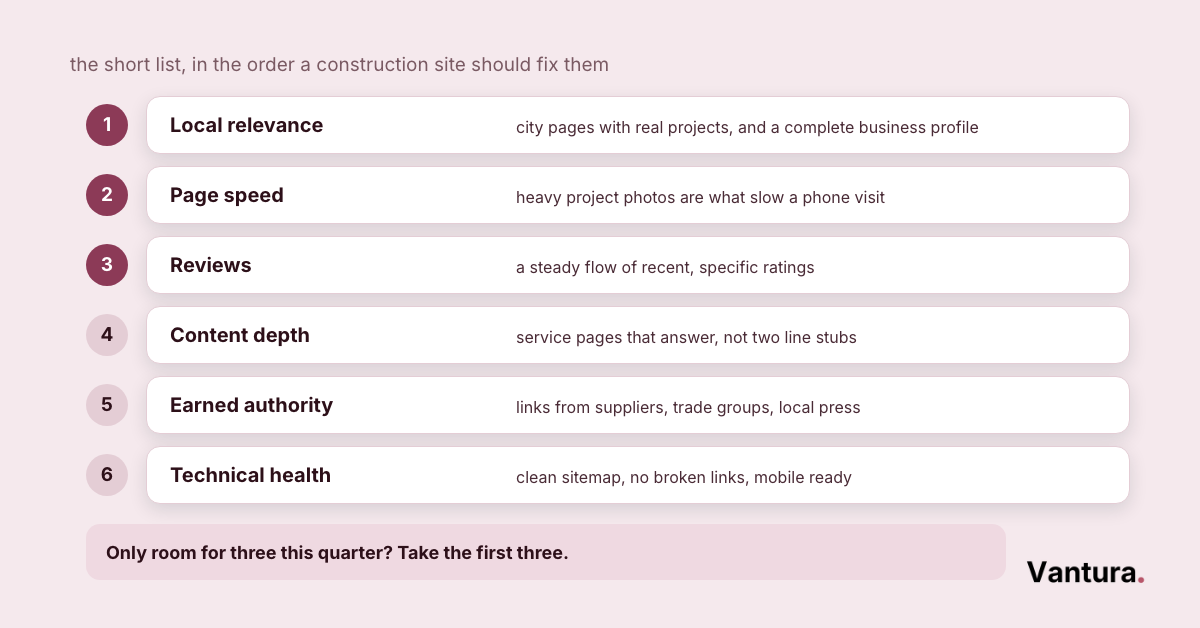
The factors that matter most for construction sites are local relevance, page experience, content depth, and earned authority. Search engines weigh dozens of signals, but for a builder these few move the needle most.
| Ranking factor | Why it matters for construction sites | What good looks like |
|---|---|---|
| Local relevance | Most searches want a nearby firm that can start soon | City pages with real projects and a complete business profile |
| Page experience and speed | Heavy project photos slow pages and lose mobile visitors | Fast loads under a few seconds on a phone |
| Content depth | Deep pages answer buyer questions and rank wider | Detailed service pages, not thin two-line stubs |
| Backlinks and authority | Local links tell Google you are established | Links from suppliers, trade groups, and local press |
| Reviews and reputation | Ratings shape both rankings and hiring decisions | A steady flow of recent, specific reviews |
| Technical health | Crawl and index errors quietly bury good pages | Clean sitemap, no broken links, mobile ready |
Quick gut check: If you could only fix three things this quarter, pick local relevance, speed, and reviews. In our experience they lift more construction sites, faster, than any amount of keyword tinkering.
Construction SEO or PPC: Which Should You Invest In First?
SEO and PPC solve different problems, and most construction firms need both over time. The honest answer is that PPC buys speed while SEO builds a compounding asset you own.
SEO vs PPC at a Glance
- Slower to start, often several months.
- Cost per lead drops as rankings hold.
- Best for steady, long-term pipeline.
- Keeps working when you pause spending.
- Leads on day one once approved.
- Great for a slow month or new service area.
- Costs stop the moment you pause.
- Rising clicks make it pricey to lean on alone.
A common pattern works well for builders with room to spend. Run ads to fill the calendar now, and invest in SEO. A year from now you’ll rely on paid clicks far less.
How Do You Run a Construction SEO Audit?
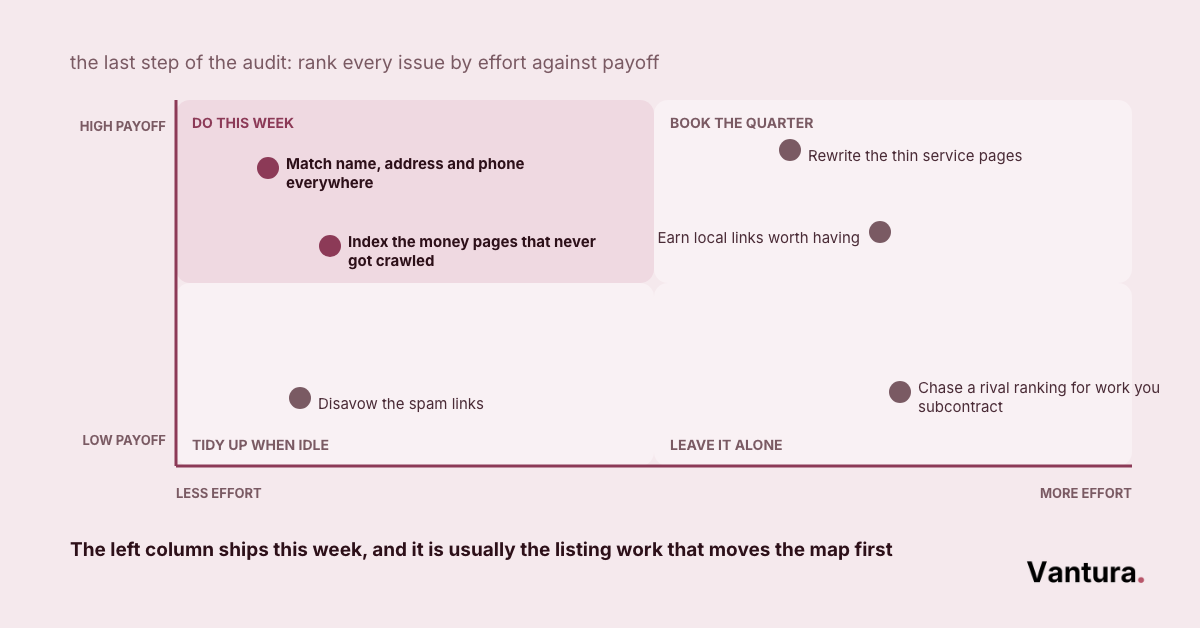
You run a construction SEO audit by checking how well your site can be crawled, ranked, and found locally. Then fix the highest-impact gaps first. A good audit is a punch list, not a report you file away.
Construction SEO Performance Benchmarks and Timelines
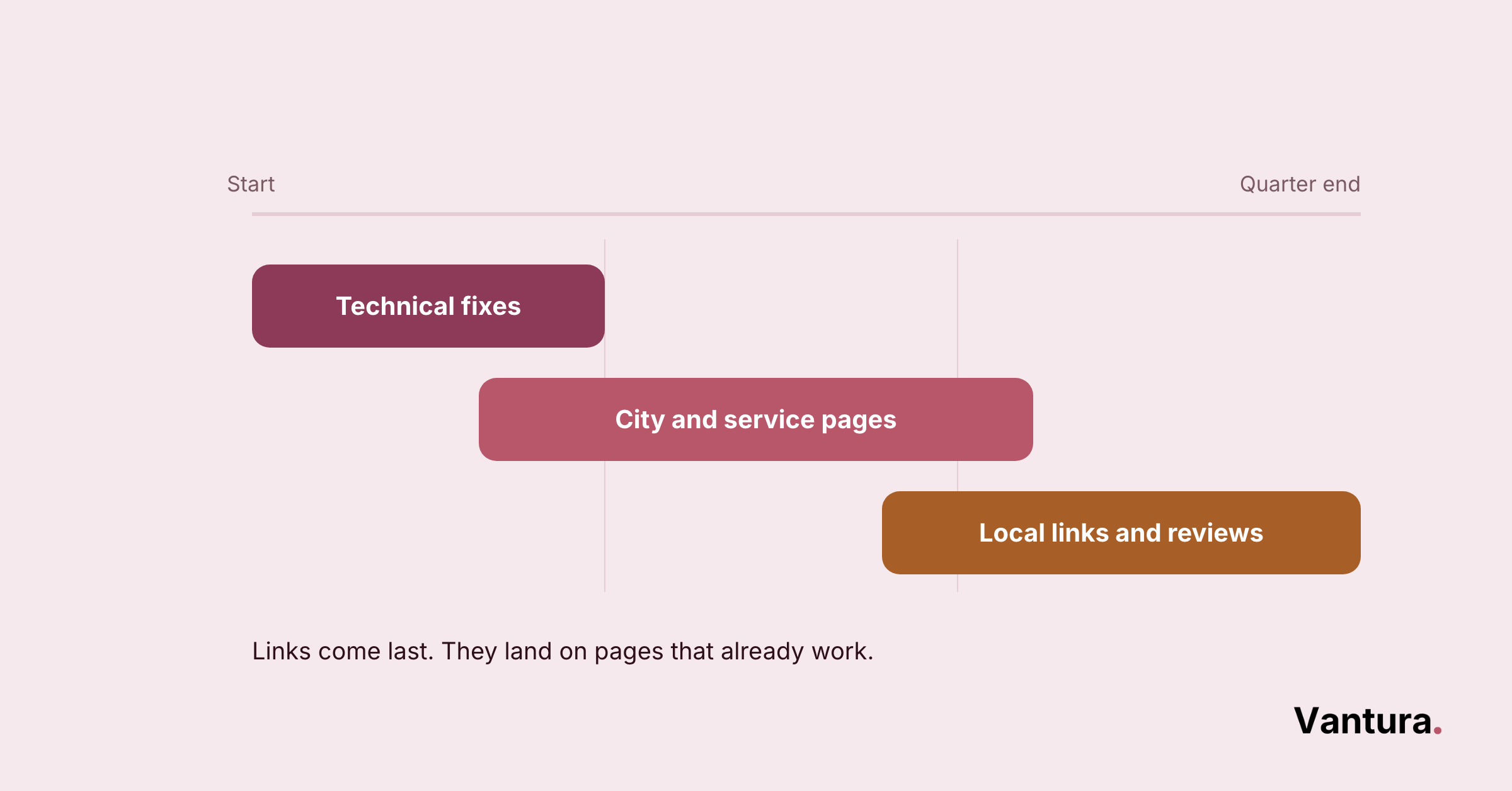
Construction SEO usually starts showing movement in three to six months, with stronger gains after six to nine. Local and low-competition terms come first, while competitive city keywords take longer to hold.
Typical benchmarks: Across our construction campaigns, well-built local pages often reach the top three map results within four months, and organic traffic to service pages tends to grow 30 to 50 percent over the first year once a cluster of pages matures. Form fills usually rise faster than raw traffic, since better-matched pages convert more of the visitors they already earn.
This slow ramp is also why last-click reporting undersells SEO. Only 11.7 percent of US marketers rate third-party multitouch attribution as the best way to identify what drives business outcomes, according to EMARKETER. Judging construction SEO on a single touch will nearly always shortchange it.
Newer firms should plan for patience. The same timeline that frustrates a startup builder is exactly why solid marketing for startups treats early SEO as an investment, not a quick tap.
Keep in mind: Momentum compounds. Across our projects, the biggest jumps rarely land in month two. They land once a cluster of pages, links, and reviews mature together, usually past the half-year mark.
How Do You Recover From a Construction SEO Penalty?
You recover by finding what triggered the penalty, fixing it fully, and asking Google to reconsider if the hit was manual. Most construction penalties trace back to spammy links or thin, duplicated pages.
Diagnose before you touch anything. A sudden drop after a bought-link campaign points one way, while a slow slide usually means an algorithm update reweighted quality.
Deep recovery work is often faster with help. Pairing this with a wider outsourced construction marketing plan to clean links and rebuild pages can save weeks a busy contractor doesn’t have.
Adapting Construction SEO to Algorithm Updates
Google updates its ranking systems constantly, and construction sites feel the ones that reward helpful, trustworthy content. You can’t chase every change, but you can stay on the safe side of them.
The durable move is boring and it works. Keep pages genuinely useful, credentials visible, and links honest, and most updates pass without drama.
International and Multi-Region Construction SEO
Multi-region SEO matters once a construction firm serves several metros, states, or countries. The goal is to rank in each area without spinning up near-identical pages that compete with each other.
Give each region its own real page and, where it makes sense, its own profile and phone number. Larger firms scaling this way lean on enterprise marketing structure to keep dozens of location pages consistent.
For true international work, handle language and regional targeting properly. Hreflang tags and local proof stop the wrong country’s page from ranking for the wrong audience.
Does Voice Search Change Construction SEO?
Voice search shifts how people phrase queries, but not the fundamentals you already build for. Spoken searches are longer and more conversational, like “who fixes foundation cracks near me,” and they lean heavily on local results.
The fix is content that answers real questions plainly. Clear FAQ answers and a complete business profile are what voice assistants pull from most.
Construction SEO Tools and Software
You don’t need a huge stack to run construction SEO well. A handful of tools covers tracking, research, and technical health, and most have a free or low-cost tier to start with.
| Tool | What it does | Where it fits best |
|---|---|---|
| Google Search Console | Shows how your pages appear and perform in search | Every site, from day one |
| Google Business Profile | Manages your map listing, reviews, and service areas | Local and map pack visibility |
| Ahrefs or Semrush | Keyword research and backlink analysis | Planning content and link building |
| Screaming Frog | Crawls the site to surface technical errors | Audits and large site cleanups |
| Google Analytics | Tracks traffic and which pages drive inquiries | Measuring real business impact |
| A review platform | Requests and collects client reviews at scale | Reputation and local ranking |
How Do You Hire a Construction SEO Specialist?
You hire a construction SEO specialist by looking for local search experience, clear reporting, and honest timelines, not the biggest promises. The right partner speaks in leads and booked jobs, not just rankings.
Ask a few pointed questions before you sign anything:
- Can you show construction or trade results, not just ecommerce wins?
- How will you report progress, and how often?
- Who owns the website and accounts if we part ways?
- What does the first ninety days involve?
Weigh an in-house hire against an agency or a specialist. Many builders start with marketing consulting to set direction, then decide who runs the day-to-day work once the plan is clear.
As an independent agency, our recommendations come down to what fits your firm, since no vendor holds a stake in the advice we give. That independence is what keeps the plan pointed at your growth, not someone else’s software.
Bottom line: Construction SEO rewards firms that stay patient and specific. Nail your local pages, earn real trust signals, and keep the site fast, and the qualified inquiries follow, quarter after quarter.
Disclaimer: This content is for general information only and is not professional marketing, legal, or financial advice. Your own results will depend on your market, competitors, and how well the plan gets executed, so treat every figure above as a working estimate, not a promise.