Taboola Ads vs Criteo: Which Fits Your Business?

The main difference between Taboola Ads and Criteo comes down to where each one meets your buyer. Taboola Ads places native promotions inside publisher articles, reaching people who have never heard of you. Criteo works from shopping behavior, so it wins back demand that already exists. Pick Taboola Ads for discovery, and Criteo for recovery.
Our Taboola Ads and Criteo experience:
We have delivered 180 campaigns across 14 industries with a team of 28 specialists, covering both native and commerce media. Most of what follows comes from budgets we managed ourselves, not vendor decks.
Need help picking?
Our Taboola Ads consulting team will look at your funnel and tell you which platform deserves the budget. Get in touch and we will send back a straight answer.
Taboola Ads vs Criteo at a Glance
Both platforms end up in the same budget meeting, but they solve different problems. Taboola Ads buys attention on editorial pages, where nobody arrived to shop.
Criteo starts with what shoppers already did, so it needs existing demand to work with. That single split explains almost everything below.
Short version: Taboola Ads sparks interest on publisher sites. Criteo converts interest that already exists across retail media. Your pick depends on whether the weak point sits at the top of your funnel or at the checkout.
Taboola Ads vs Criteo Comparison
| What to compare | Taboola Ads | Criteo |
|---|---|---|
| Advertiser platform | Realize | Commerce Media Platform, including Criteo GO |
| Primary job | Native discovery on publisher sites | Commerce media across retailers and the open internet |
| Where ads run | Publisher homepages, article pages, OEM device placements | Retailer properties and open internet inventory |
| Ad formats | Social style native, display, vertical video | Dynamic retargeting, product ads, video |
| Targeting engine | Publisher data signals plus Matchmaking AI | Commerce AI, Shopper Graph, predictive bidding |
| Creative tooling | AdMaker GenAI suite | Dynamic Creative Optimization+ |
| Pricing model | Cost per click or cost per thousand impressions, bid set by you | Not publicly stated |
| Billing options | Automatic billing, monthly invoice, prepayment | Not publicly stated |
| Reach | 600 million daily active users across publisher partners | More than 200 retailers in one platform |
| Measurement | Pixel based conversion tracking, Shopify app available | Standardized closed loop retail media measurement |
Taboola Ads vs Criteo: What’s Different?
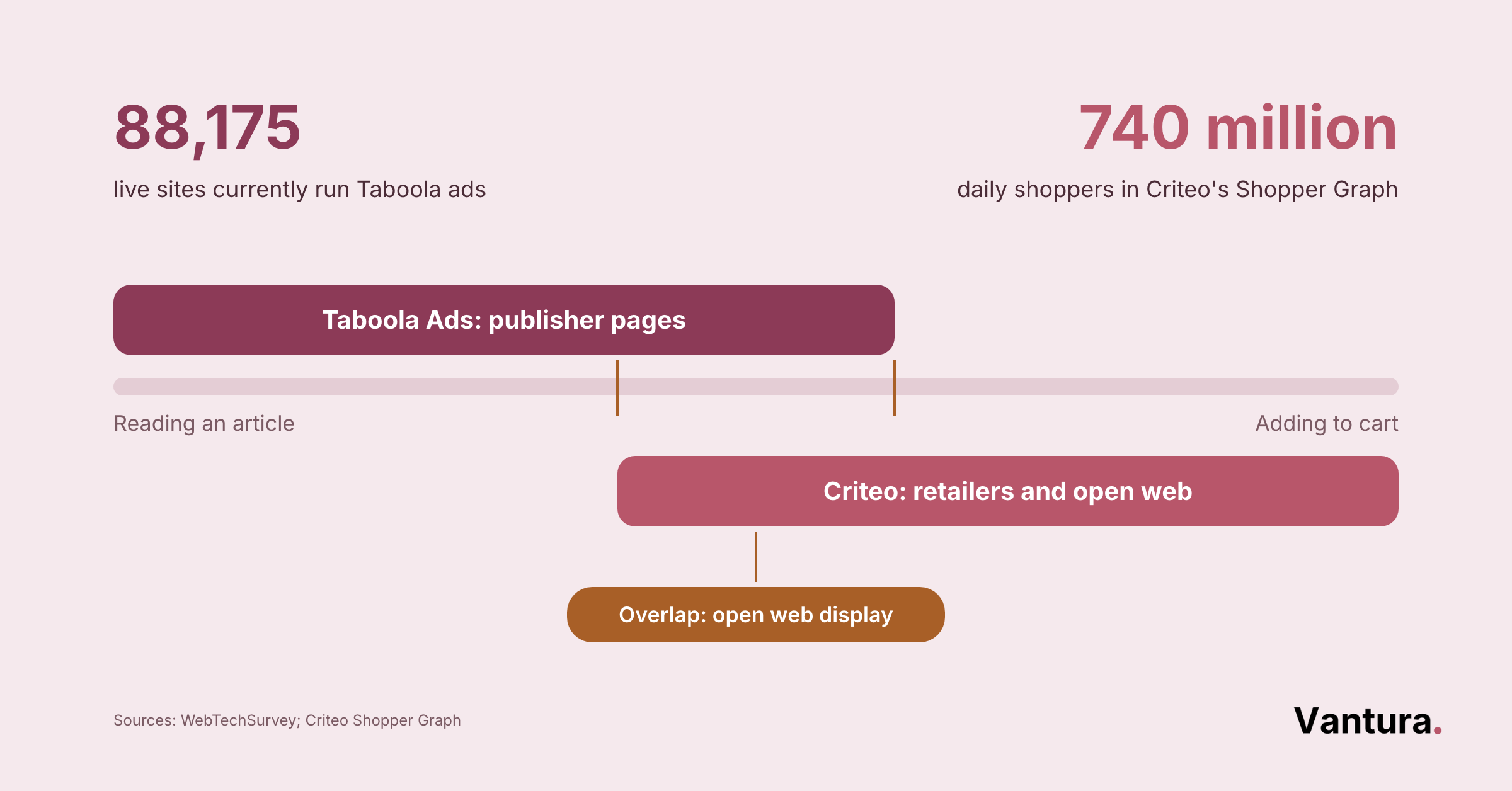
Strip away the sales language, and three real differences remain. They decide which platform can help your business.
- Taboola Ads reaches people mid article, Criteo reaches them mid purchase decision
- Taboola Ads sells on a bid you set, Criteo terms come out of a sales conversation
- Taboola Ads leans on publisher data signals, Criteo leans on shopper data from more than 200 retailers
That third point matters most. Shopper data wins for retargeting. Publisher data wins for finding someone new. No amount of native campaign management fixes a platform aimed at the wrong half of your funnel.
Where it bites: teams often pick whichever platform matches the reporting they already trust. Then they wonder why the numbers stall. Start from the gap in your funnel, not the dashboard you find comfortable.
Taboola Ads vs Criteo: What’s Similar?
The two platforms look less alike than they are. Underneath, both run the same kind of engine.
- Both bid in real time and optimize toward conversions you define
- Both need a pixel on your site before the targeting gets useful
- Both use their own AI to pick who sees an ad and which creative they get
That shared plumbing is why the setup feels familiar if you have run Taboola Ads for ecommerce before. Tracking, feed hygiene, and the creative refresh cycle all carry across.
Worth knowing: both platforms optimize on the same conversion events, so a sloppy pixel hurts them equally. We have watched more head to head tests collapse on tracking gaps than on any real difference between the two networks.
How Does Taboola Ads Work in Comparison to Criteo?
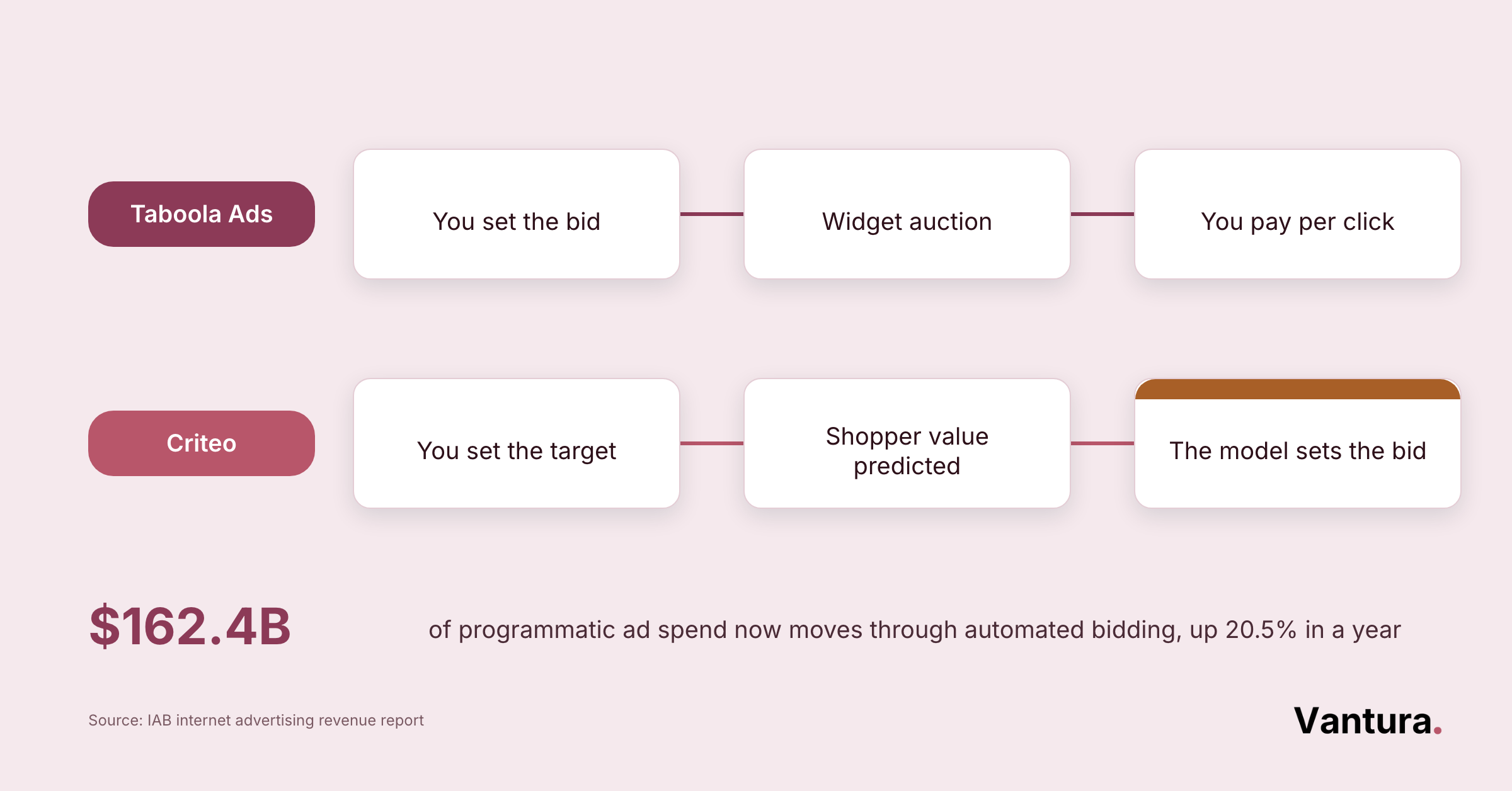
The mechanics diverge in three places. Each one changes what a first campaign can deliver.
Where each platform finds your buyer
Inventory is the first fork in the road. Taboola Ads buys space inside the reading experience on publisher sites. Criteo buys across retailer properties and the open internet.
That gap shows up fast in finance advertising programs, where buyers read trade coverage for months before anyone opens a cart.
Taboola Ads
Placements sit where people are already reading. The network reports 600 million daily active users across its publisher partners.
- Publisher homepages and article pages
- Partners including ABC News, USA Today and Business Insider
- OEM device placements outside the browser
- Social style native units, display and vertical video
Criteo
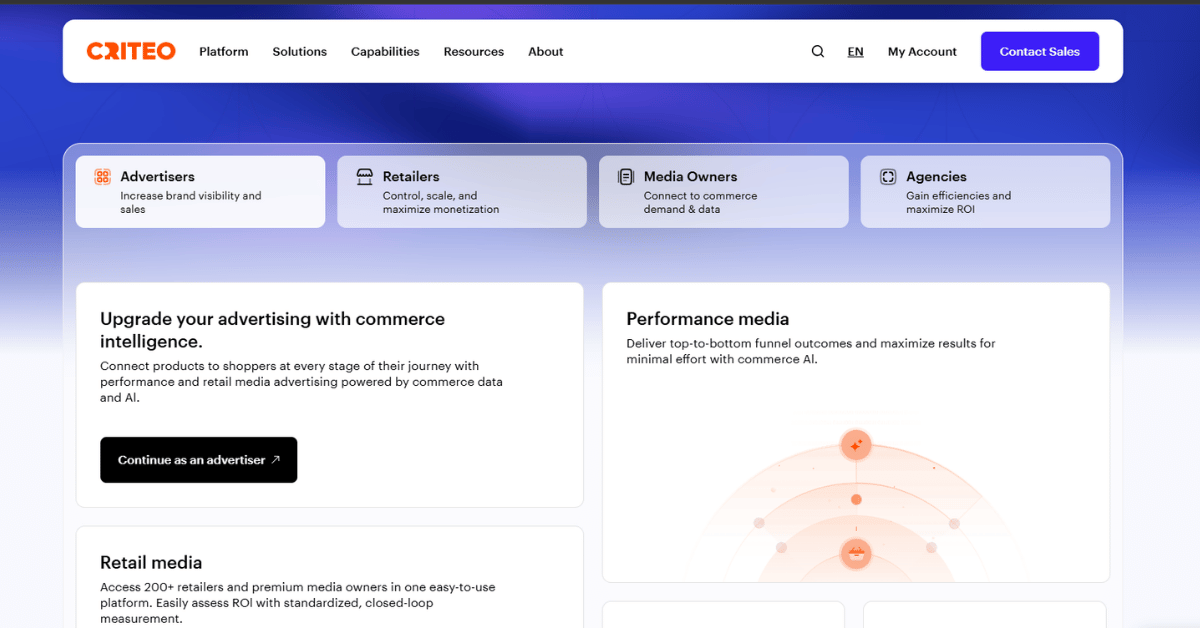
Criteo organizes its reach around commerce rather than editorial. Its solutions page describes access to more than 200 retailers in one platform with closed loop measurement.
- Retailer inventory through Commerce Max and Commerce Grid
- Open internet placements through the Commerce Media Platform
- Dynamic retargeting for people who already visited
- Video advertising alongside product ads
How each one decides who sees the ad
Both platforms hand targeting to a model. What that model learned from is where they split.
One learned from reading behavior. The other learned from buying behavior. That single fact shapes who you end up paying for.
Taboola Ads
Taboola Ads works from its own publisher data signals and a system it calls Matchmaking AI. Targeting spans consideration through conversion.
- First party signals drawn from the publisher network
- Matchmaking AI for delivery decisions
- Audience targeting aimed at higher intent readers
- Conversion tracking through the Taboola pixel
Criteo
Criteo runs on Commerce AI, trained on shopping behavior, with predictive bidding built around what a given user is worth. Its Shopper Graph feeds the optimization.
- Commerce AI trained on shopping activity
- Predictive bidding based on user value
- Shopper Graph for audience building
- Commerce Audiences built from real shopper data
How the creative gets made and served
Creative is the part most teams underestimate. Both platforms will generate or adapt assets for you, and both will happily spend money on a weak one.
If your team already ships strong visual assets for health and wellness campaigns, this rhythm will feel familiar.
Taboola Ads
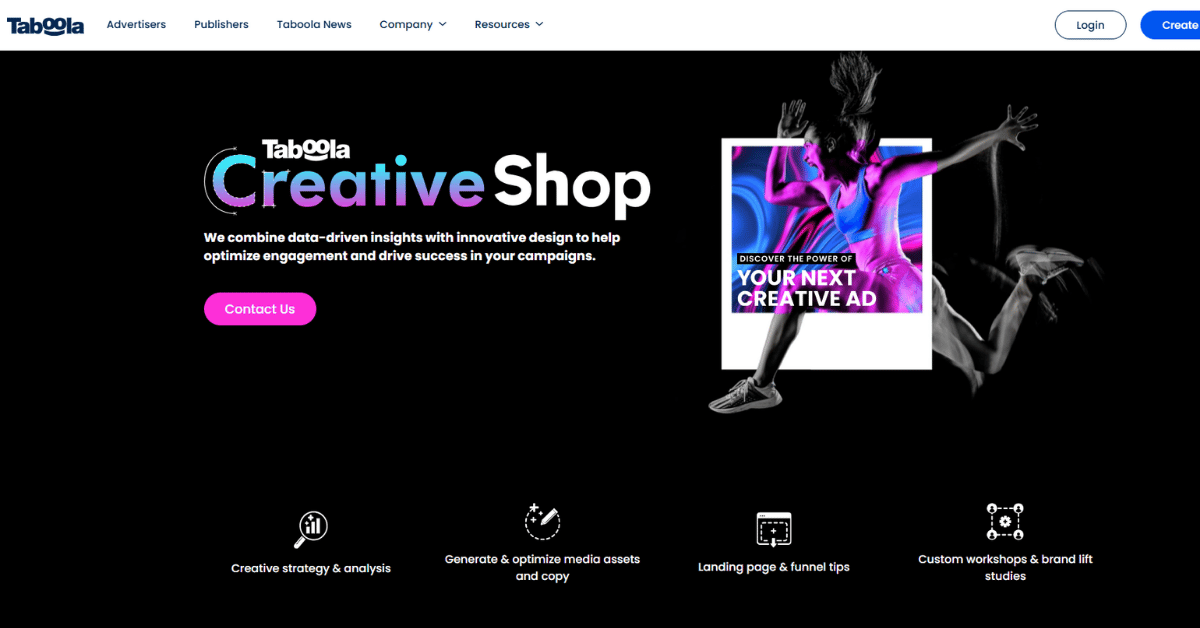
AdMaker is the GenAI creative suite built into the platform. It generates and adapts ad creative for native formats.
- Generates native creative from existing assets
- Adapts one concept across several formats
- Supports vertical video and display
- Feeds straight into campaign setup
Criteo
Criteo leans on Dynamic Creative Optimization+, which personalizes the ad in real time. The unit rebuilds itself around the products a shopper looked at.
- Real time creative personalization
- Product level ad assembly
- Pairs with dynamic retargeting audiences
- Applies across acquisition and retention campaigns
How Does Taboola Ads Pricing Compare to Criteo Pricing?

Pricing is where the two platforms separate fastest, so start the comparison here.
What Taboola Ads costs to run on the Realize platform
Taboola Ads bills through Realize, and the model stays simple. You set a bid and pay per click or per thousand impressions.
- Cost per click or cost per thousand impressions, with the bid set by you
- Automatic billing charges your card in $100 increments, with a monthly invoice
- Monthly invoice billing opens once you have an approved credit limit
- Prepayment billing takes funds by card or wire before campaigns launch
Taboola states no minimum spend and no floor price on its billing page. Treat other figures floating around online with suspicion. Across the native accounts we manage, a first month under a few thousand dollars rarely produces enough conversions to optimize on.
How Criteo buying and pricing works
Criteo does not put a rate card in front of you the way Realize does. You pick a route into the Commerce Media Platform, and commercial terms follow from there.
- Criteo GO for self service performance campaigns run by AI
- Commerce Growth for automated acquisition and retention
- Commerce Max for brands and agencies buying retail media
- Commerce Grid for programmatic buying across commerce inventory
In every Criteo engagement we have run, the numbers came from a sales conversation, not a public page. Budget two to three weeks for that step. Check your Taboola Ads integrations and tracking beforehand, so you negotiate with real figures.
The real cost bottom line for Taboola Ads vs Criteo
Cheaper to start is not the same as cheaper to learn from. Taboola Ads lets you spend small and see data fast. Criteo usually asks for a bigger commitment before its shopper data proves its worth.
Budget reality: across our native and commerce media accounts, the first month behaves like tuition, not performance. We plan for six to nine weeks of steady spend before either platform has earned a verdict.
Who Is Taboola Ads Best For?
Taboola Ads earns its place when your problem is that too few people know you exist. It suits advertisers with a story worth reading, since the click happens inside an article, not a shopping cart.
That makes it a natural fit for SaaS companies, insurance advertisers, publishers, and anyone with a long consideration window. It struggles when the offer needs no explaining and the buyer needs no persuading.
Taboola Ads fit check
Two short lists settle this faster than any feature table. Read them against your own account, not an ideal one.
- You need new audiences, not repeat visitors
- Your offer needs a paragraph to explain
- You can produce fresh creative every few weeks
- You track conversions past the first click
- You have budget to run past week two
- You only want to retarget cart abandoners
- Your whole budget is a few hundred dollars
- You need placements inside retailer sites
- Your creative library is one banner
- You judge a channel on week one numbers
Neither list is absolute. The pattern across several accounts matters more than any single row.
Who Is Criteo Best For?
Criteo makes sense when demand already exists and you keep losing it at the end. Its whole design assumes a shopper who browsed, compared, and drifted away.
Retailers, marketplaces, and brands selling through retailers get the most from it, especially once AdRoll-style retargeting budgets are already in play. It is a weak first choice when nobody knows the product yet.
Criteo fit check
The same two column test applies here, with different answers. Be honest about the traffic you already have.
- You sell products with a visible catalogue
- Retail media is part of your channel mix
- You have enough site traffic to retarget
- You want closed loop measurement across retailers
- You can commit past a single quarter
- You are launching a brand nobody searches for
- Your site traffic is thin
- You sell one service, not a catalogue
- You need published pricing before committing
- You want to start spending this week
Most of the disappointment we see with Criteo traces back to that first Misfit line. Retargeting cannot recover demand that was never created.
Does Taboola Ads Have Better Features Than Criteo?
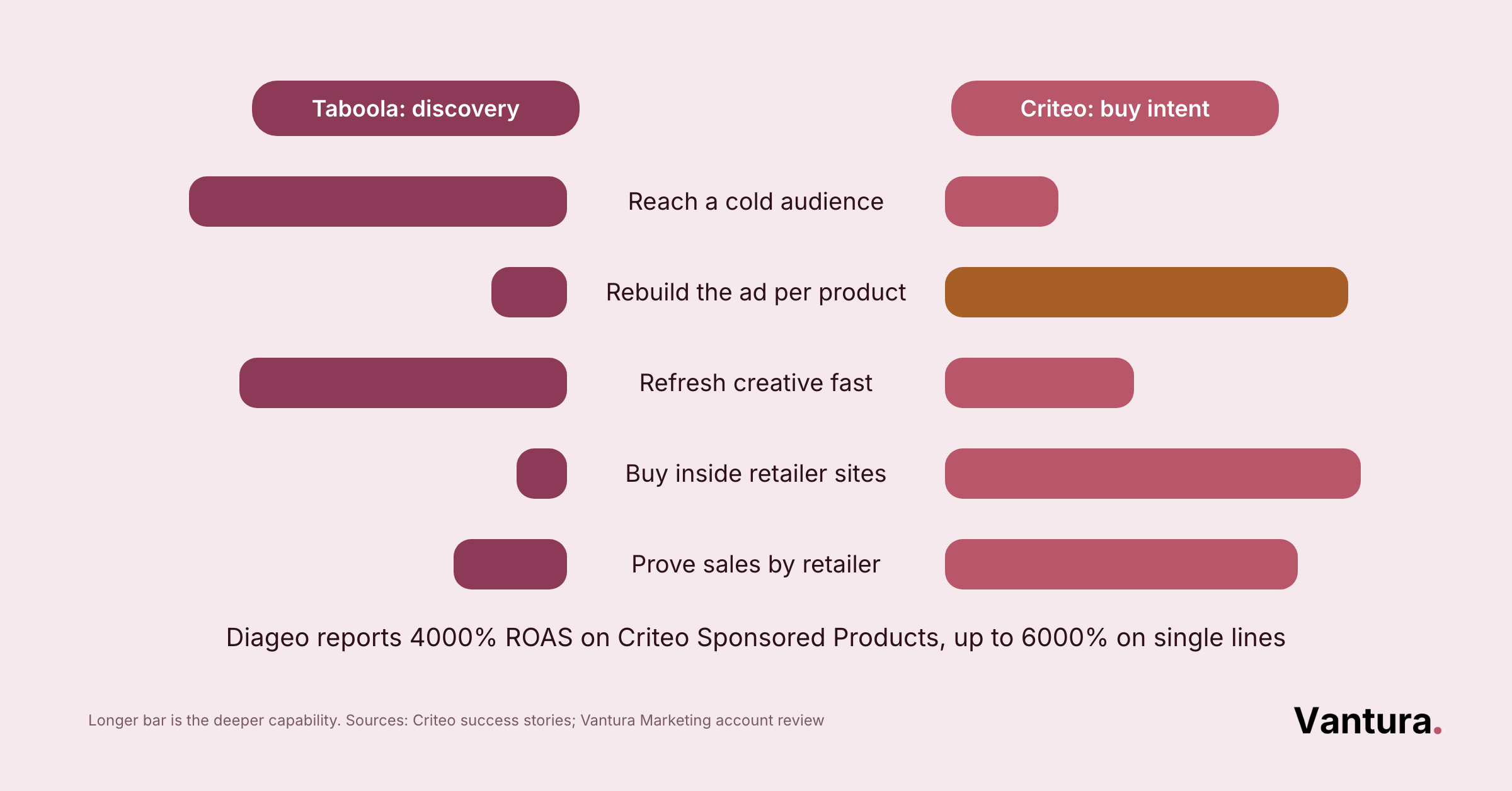
Better is the wrong frame. Each platform runs deep exactly where the other runs thin.
Where Taboola Ads leads
Discovery is the honest answer. Native units inside articles reach people who are not searching, not shopping, and nowhere near a retailer site.
The AdMaker suite also removes a real bottleneck. Most teams run out of creative long before they run out of budget. Turning one concept into vertical video and display in an afternoon changes how often you can refresh.
Placement variety helps too. Homepages, article pages, and device level placements give you three distinct moods to test. That is more room than a single retargeting unit ever offers.
Teams already running campaigns on comparable native alternatives tend to find that production rhythm familiar. The muscle transfers.
Where Criteo leads
Shopper data is the answer here, and it is not close. A model trained on buying behavior beats one trained on reading behavior when the goal is a purchase this week.
Dynamic Creative Optimization+ rebuilds the ad around the exact products someone viewed. Native formats do not attempt that level of personalization at all.
Access to more than 200 retailers in one place is the other real advantage. Standardized measurement across those retailers matters more than any single targeting feature once your budget crosses into retail media.
So which feature set wins
The winner is whichever platform is strong where your funnel is weak. Feature lists only look decisive to people who have not measured their own gap yet.
Our read: when a client can already generate demand but leaks it near checkout, Criteo usually wins the test. When the site is quiet in the first place, no amount of retargeting sophistication rescues the quarter.
Is Taboola Ads Easier to Use Than Criteo?
Slightly, at the start. Taboola Ads gives you a self service builder plus AdMaker creative help, so a first campaign can go live in an afternoon.
Criteo takes longer up front, mostly because the retail media setup asks more of your team than the interface itself does.
Taboola Ads and Criteo Compared Against the Competition
Neither platform gets shortlisted on its own. Three rivals show up in almost every one of these conversations.
Outbrain vs Taboola Ads and Criteo
Outbrain comes up most often, since it sits in the same native corner as Taboola Ads. The choice between the two native networks rarely turns on features.
Third party numbers back what we see in the field. A head to head platform comparison puts Taboola Ads at a measured 98% user satisfaction score, with no comparable figure published for Outbrain, even though both platforms carry the same 9.0 overall rating. Criteo barely enters this conversation, since it is not buying editorial attention in the first place.
Google Display Network vs Taboola Ads and Criteo
Display is the cheap default, and cheap traffic is exactly the problem. Across the accounts we have audited, display collects the clicks while native collects the reading time.
We usually keep display for broad remarketing and hand the discovery work to Taboola Ads. Criteo tends to beat display on product level retargeting, since its creative assembles itself around your catalogue.
Bringing in a Taboola Ads agency is often faster than rebuilding the display setup for a third time. That decision usually gets made a year later than it should.
AdRoll vs Taboola Ads and Criteo
AdRoll lands on shortlists for smaller ecommerce teams that want retargeting without a retail media commitment. It overlaps with Criteo far more than with Taboola Ads.
The pattern is consistent enough to plan around. Teams outgrow AdRoll once retail media enters the plan. They outgrow Taboola Ads only if they stop needing new audiences, which almost never happens.
What Happens When You Run Taboola Ads and Criteo Together?
Plenty of advertisers end up running both, and the pairing works well. The trouble starts in the reporting rather than the campaigns.
Why both dashboards claim the same sale
Taboola Ads brought the reader in on Tuesday. Criteo showed the product ad on Thursday. Both platforms count the Friday order.
Neither platform is lying about it. Two attribution windows are overlapping on one customer, and your reported return inflates by a wide margin.
The overlap problem
Left alone, this makes both channels look profitable while your blended numbers quietly break. On paired accounts we have seen combined reported revenue exceed actual revenue by roughly a third.
The fix is boring, and it works. Pick one source of truth outside both dashboards and judge everything there.
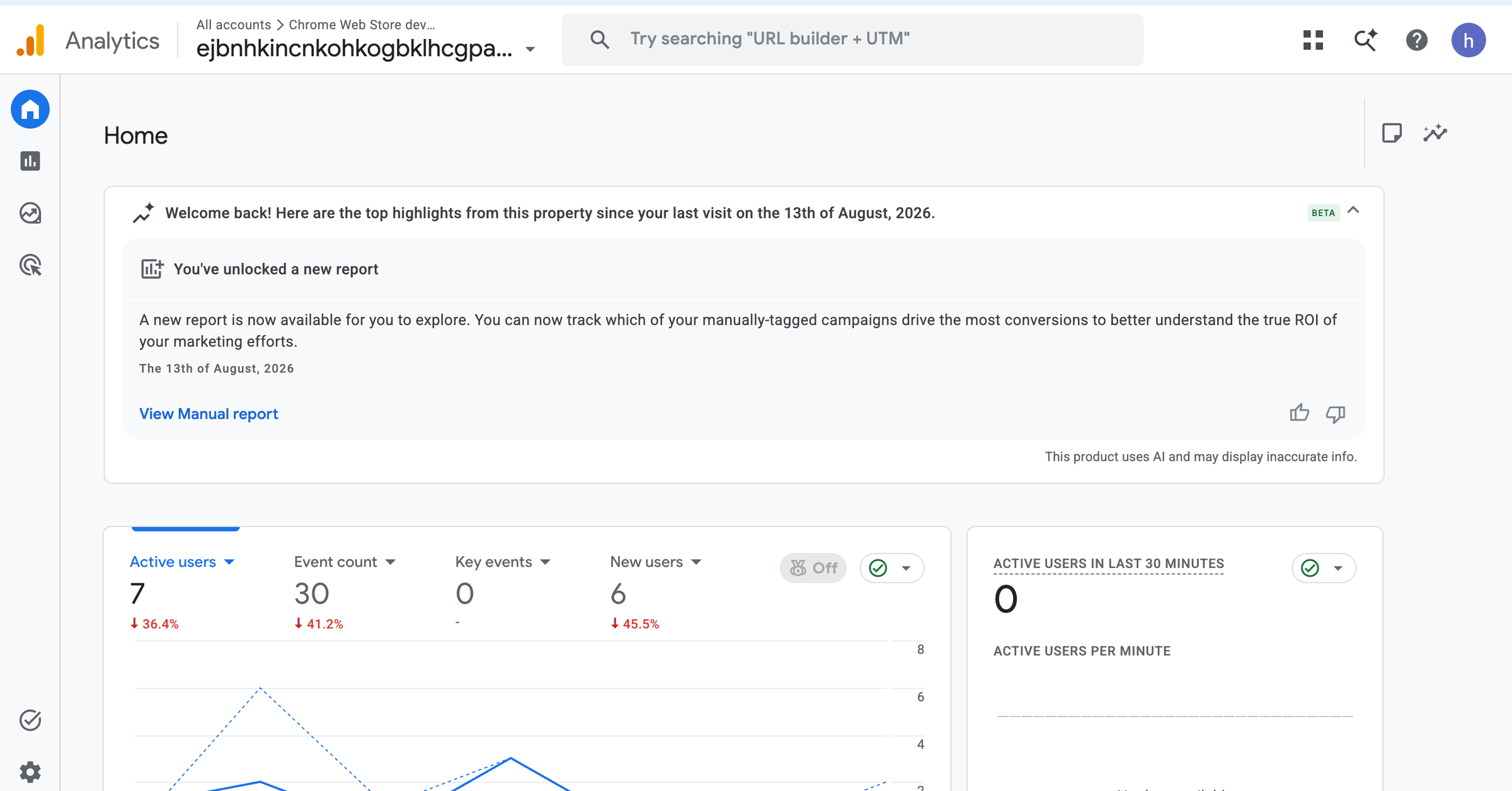
Analytics or your order system will both do the job. What matters is that neither vendor grades its own homework.
How we split credit
We give the first touch to whichever platform introduced the customer and treat the other as an assist. Then we watch total orders when one is paused. That is the only test that ever settles the argument.
What to change when budgets share a funnel
Running both is not a matter of stacking one budget on the other. The audiences meet, and the same person starts seeing you everywhere.
That gets expensive quietly. Frequency caps and audience exclusions do more for a shared funnel than any bid tweak, which is exactly the coordination integrated marketing is built for.
Frequency first
Cap the retargeting side before you cap the discovery side. Criteo will keep chasing a warm audience long after the interest has cooled.
Exclude recent converters from both platforms on the same schedule. Mismatched exclusion windows are the most common waste we find on paired accounts.
Creative handoff
Keep the story continuous across both platforms. The article someone read on Tuesday should shape the product ad they see on Thursday. Matching that language costs nothing.
How Should You Test Taboola Ads vs Criteo Without Wasting a Quarter?
Most head to head tests fail before they start. The setup decides the answer more often than the platforms do.
Build the test so the answer is readable
Pick one conversion event and one measurement window, then leave both alone. Changing either mid flight turns the whole exercise into an opinion.
Give each platform enough budget to exit the learning phase, which is a real constraint on both. A clear budget plan makes that call much less painful.
- One conversion event, defined before launch
- Equal budget on both sides
- A window long enough to catch repeat orders
- Matching creative themes, adapted per format
- No mid test changes to bids or audiences
Keep in mind: these tests usually end inconclusive when someone raises the budget on whichever platform looked better in week one. That quietly guarantees it wins by the end.
Two ways to fund a fair test
You can run the two platforms at once or one after the other. Both are defensible, and they answer slightly different questions.
Parallel is faster but noisier, since the audiences overlap. Sequential is cleaner, though seasonality can distort it, which hurts most on lean marketing budgets where every month looks different.
- Both platforms live at the same time
- Faster read, usually four to six weeks
- Audience overlap muddies attribution
- Best once your tracking is already clean
- One platform per period, equal length each
- Slower, usually ten to twelve weeks
- Seasonality can skew the comparison
- Best when your traffic is small
We default to sequence for smaller accounts and split for anything spending seriously. The more traffic you have, the less the overlap distorts.
Three signals that decide which one you keep
Ignore click through rate. Three numbers settle this, and none of them sit on the first screen of either dashboard.
#1 Cost per new customer
New customers, not orders. A platform that mostly re engages existing buyers can look brilliant while your customer base stays flat.
#2 What happens when you pause
Switch one off for two weeks and watch total orders. If nothing moves, you were paying for demand you already had.
#3 Repeat purchase rate
Check whether each platform’s customers come back. Discovery traffic often starts weaker and ages better. That is worth knowing before you move budget to another native rival, covered in our Taboola vs Outbrain comparison.
The Taboola Ads vs Criteo Verdict
Neither platform is better. They sit at opposite ends of the same funnel.
Pick Taboola Ads when too few people know you, and you have the creative to keep feeding a discovery channel.
Pick Criteo when demand already exists, your catalogue is real, and retail media belongs in the plan.
If both problems are true, run both. Just fix the attribution before you fund them.
Bottom line: the platform that wins your test is almost always the one aimed at the weaker half of your funnel. Measure that gap first, and let the comparison answer itself.
Taboola Ads vs Criteo FAQ
Still weighing the two? Reach out and we will look at your funnel before you commit a budget to either one.
Disclaimer: This post is for general information only. Platform features, pricing and terms change over time, and Vantura Marketing is not affiliated with Taboola or Criteo. Confirm current details with each vendor before making a buying decision.