Why Construction Firms Need Digital Marketing in 2026

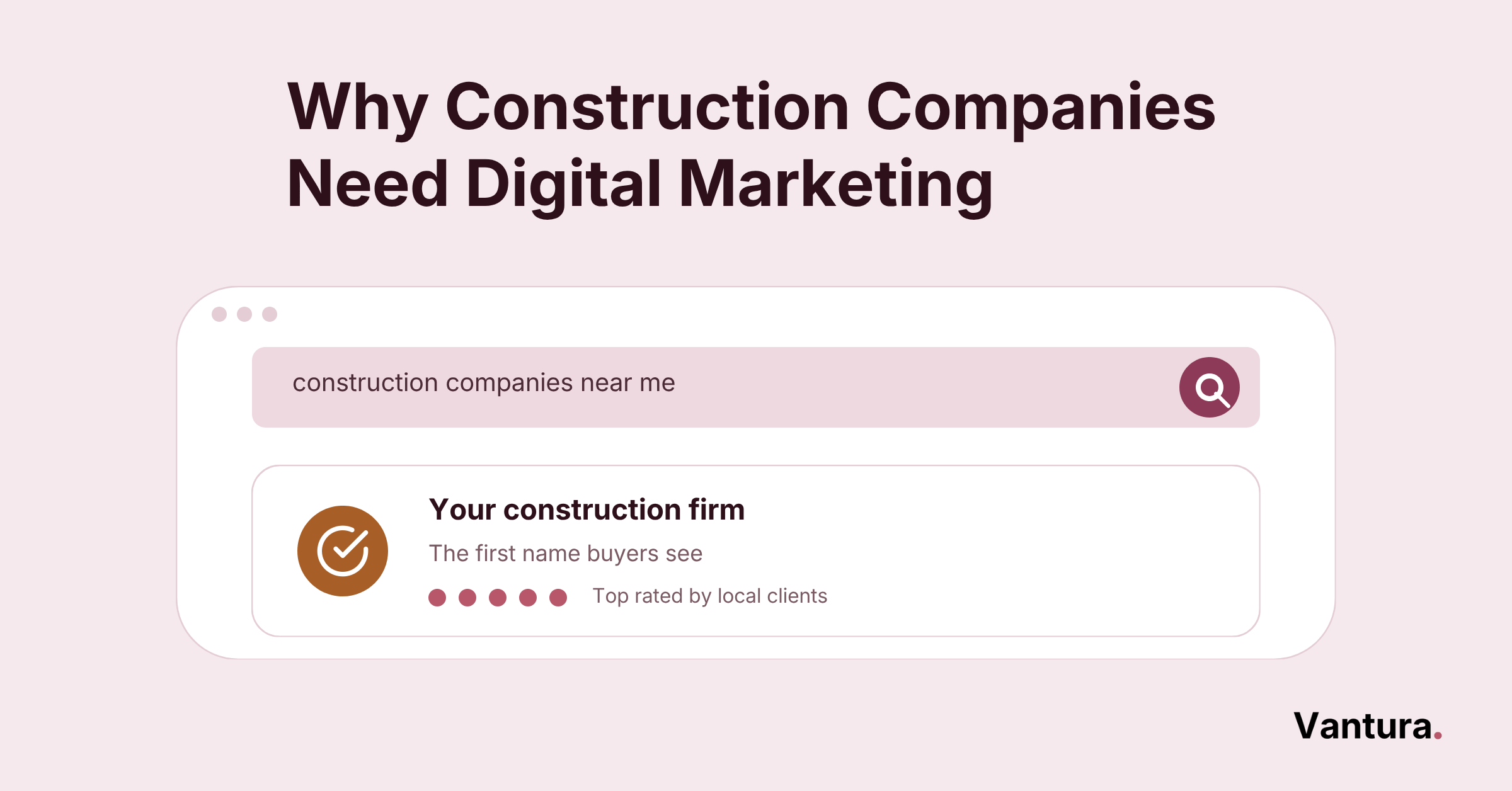
Construction companies need digital marketing because that’s why buyers now shortlist contractors online long before they ever pick up the phone. General contractors, home builders, and specialty trades face this shift together, since the first impression happens on a screen, not the jobsite. Skipping digital marketing means losing bids to competitors who simply show up first when owners and developers start searching.
Why Trust Us on Construction Digital Marketing
Our team of 28 specialists has run more than 180 campaigns across 14 industries, including construction and the trades. With over 190 combined years in marketing, we know what turns a jobsite reputation into steady online demand.
Need Help With Construction Digital Marketing?
If you’re weighing where to start, we can map a plan around your service area and your best jobs. Get in touch and we’ll build a practical digital marketing strategy that fits how construction buyers actually search.
How Has Construction Buyer Behavior Shifted Toward Digital?
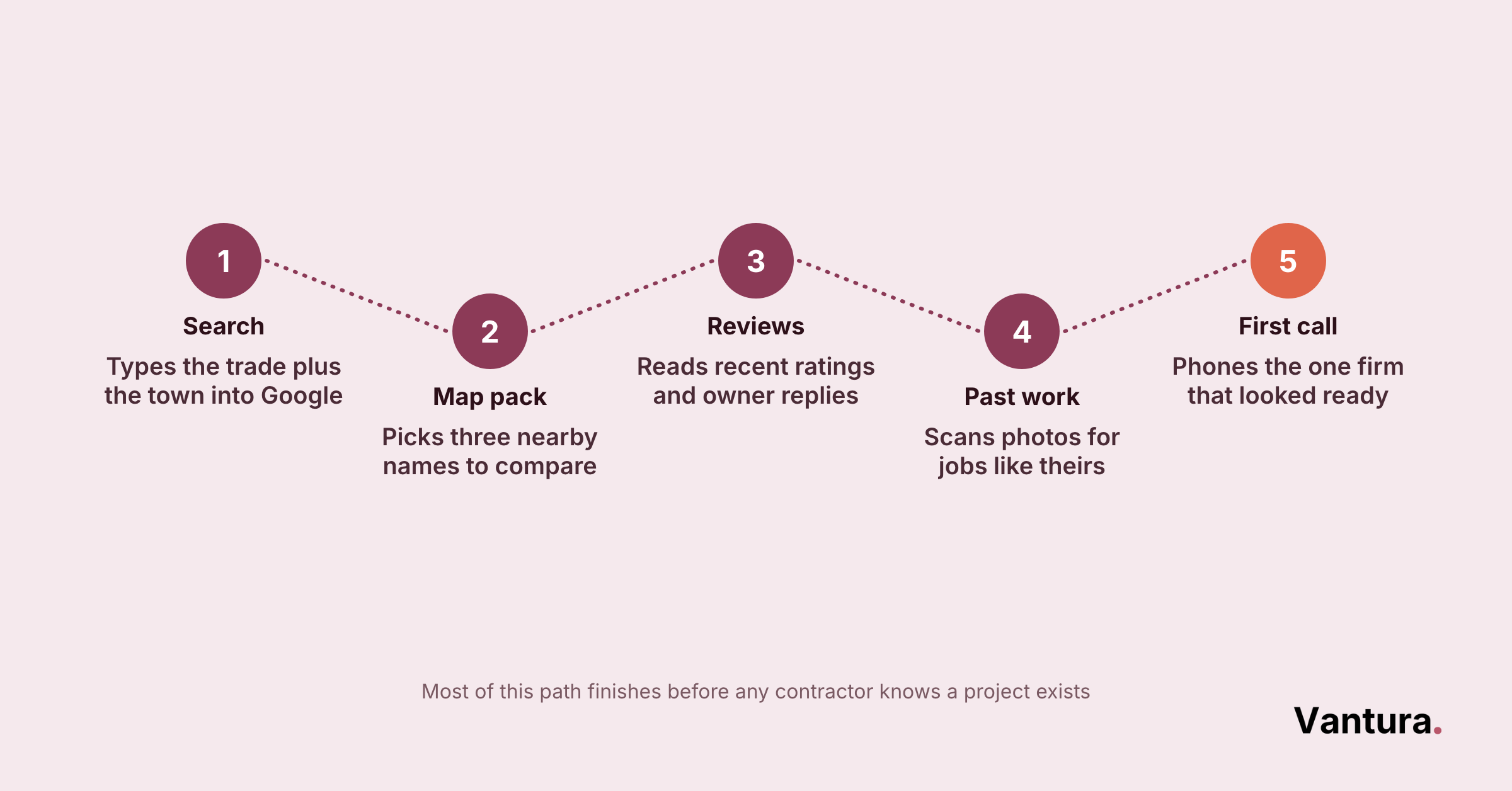
Construction buyers have moved almost entirely online for research, checking Google, review sites, and social profiles before they ever call. Owners, developers, and homeowners now build a shortlist from search results, not the phone book.
Most adults now carry a smartphone everywhere they go, so your next project often starts on a phone at the kitchen table. Buyers read reviews, scan photos of past work, and compare a few names before they reach out.
That shift reshaped how B2B digital marketing works for contractors and suppliers. The firms that win are simply the ones that are easy to find and easy to trust online.
What Competitors in Construction Are Already Doing Online
Your competitors are bidding on local search terms, posting project photos, and collecting reviews every week. Many started long ago, which means they already rank for the searches your buyers use.
Even smaller firms compete well with steady content and fast replies, the same approach we use in small business marketing. Sitting out doesn’t keep you neutral, it hands those buyers to whoever shows up.
Worth knowing: most construction buyers form an opinion about your firm before any conversation happens, based on what they find in search, reviews, and photos of your past jobs.
How Does Digital Marketing Grow Construction Revenue and Leads?
Digital marketing grows construction revenue by putting your firm in front of buyers at the exact moment they’re looking, then turning that attention into booked estimates. More qualified leads at a lower cost per job is the core outcome.
Revenue Growth Through Digital Channels
Search and social don’t just build awareness, they book work. When your pages rank for the services you sell, qualified requests arrive without paying for every click, the same engine behind strong industrial marketing.
Paid channels add speed when you need work in the pipeline now. Together, organic and paid keep revenue steady across busy and slow seasons.
Lead Generation Across Digital Touchpoints
Leads rarely come from a single click. Most construction buyers touch several points before they request a quote, so each one has to pull its weight.
The Touchpoints That Carry the Most Weight
- Search ads for high-intent, high-value jobs
- Local SEO and map listings
- Landing pages built for fast quote requests
- Retargeting for past website visitors
- Email follow-up for slow-moving bids
How Do Construction Firms Get Found in Search and Social?
Construction firms get found by combining local SEO, Google Ads, and active social profiles so they appear in both search results and feeds. Search captures buyers with intent, while social keeps your work in front of past and future clients.
The right mix depends on your jobs. A remodeler leans on photo-heavy social, while the fastest wins for electrical contractors usually come from local search.
| Channel | What it does | Best for construction |
|---|---|---|
| Local SEO | Ranks you in map and area searches | Steady inbound quote requests nearby |
| Google Ads | Buys top spots for high-intent terms | Emergency and high-value jobs, fast |
| Instagram and Facebook | Shows finished work to warm audiences | Remodels, custom builds, referrals |
| Reaches developers and property teams | Commercial and repeat B2B contracts | |
| YouTube | Explains process and builds trust | Complex projects with long decisions |
Paid vs Organic Search for Construction
Both belong in a healthy plan, and they solve different problems. Think of paid as the switch you flip for speed, and organic as the asset that keeps paying off.
- Google Search Ads for urgent, high-ticket jobs
- Local Services Ads with a screened badge
- Retargeting to warm site visitors
- An optimized Google Business Profile
- Clear service and location pages
- Project galleries and fresh reviews
Is Digital Marketing Cheaper Than Offline for Construction?
Digital marketing is usually cheaper per lead than print, radio, or billboards because you only pay to reach people who are already searching for your services. You can also track every dollar, which offline channels rarely allow.
Cost and Targeting, Channel by Channel
| Approach | Typical cost model | Targeting | Measurable |
|---|---|---|---|
| Google Search Ads | Pay per click | By keyword and location | Yes, down to the job |
| Local SEO | Fixed monthly effort | By service area | Yes, ranks and calls |
| Social media | Pay per view or click | By interest and area | Yes, per campaign |
| Print ads | Flat placement fee | Broad, by publication | Rarely |
| Billboards | Flat monthly rental | By road and region | No |
Offline still has a place for brand presence in a tight local market. A quick marketing audit often finds spend leaking into channels that no longer bring in jobs.
From our projects: across our construction and trades work, shifting even a third of an offline budget into search and local SEO usually cuts cost per qualified lead by about 20 to 30 percent within a few months.
How Does Digital Engagement Keep Construction Customers Coming Back?
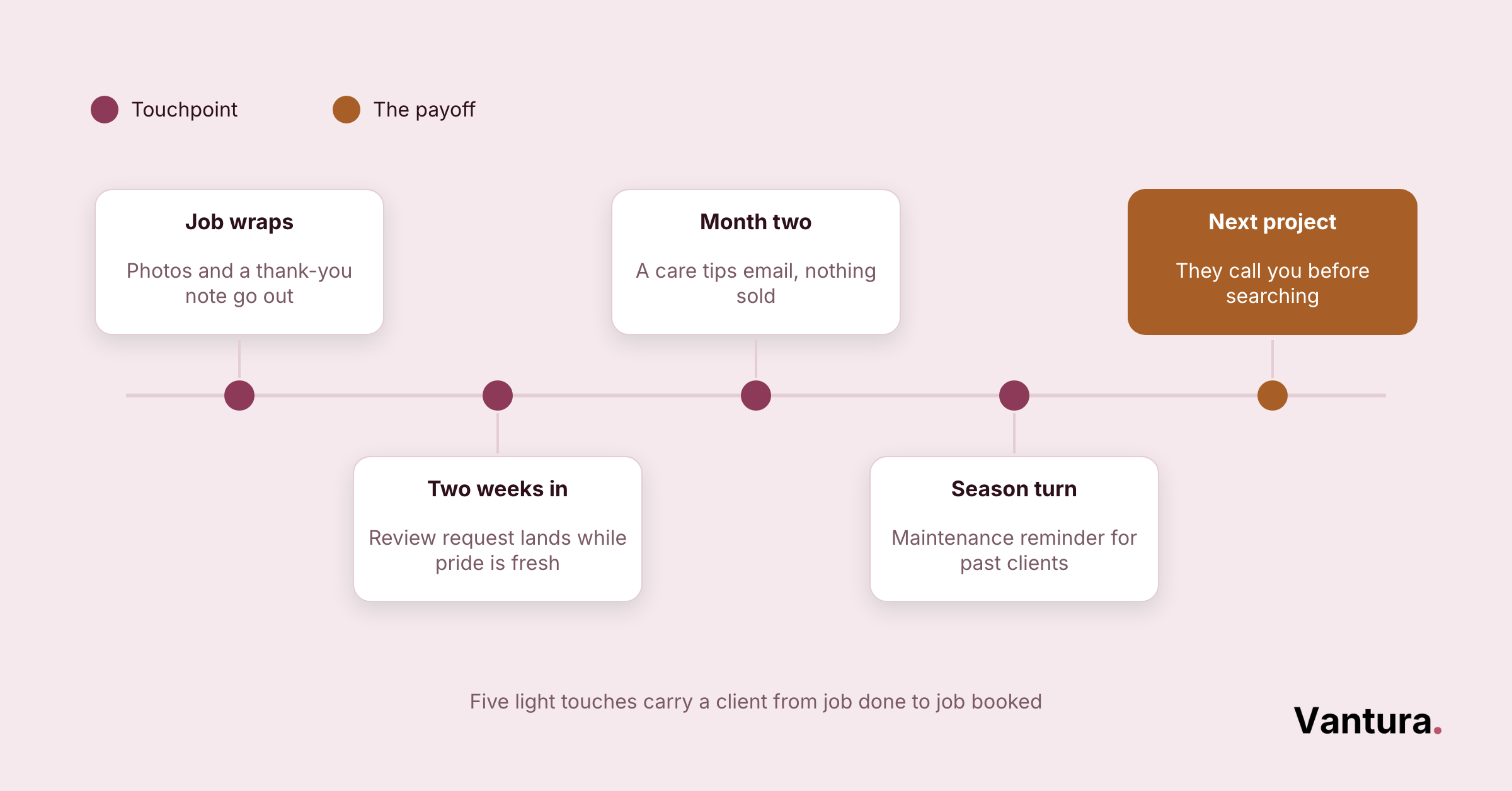
Digital engagement keeps construction customers coming back by staying useful between projects, not just at sale time. Steady contact turns one job into referrals, repeat work, and reviews.
Retention Through Digital Engagement
Repeat clients and referrals drive a large share of construction revenue. Email updates, seasonal reminders, and social posts do the quiet work of staying top of mind.
This is exactly how HVAC companies turn one install into years of service calls. The same rhythm works for builders who want owners to call them first next time.
Customer Education and Thought Leadership
Helpful content answers the questions buyers ask before a big spend, like permits, timelines, and realistic cost ranges. When you teach, you build trust, and trust shortens the path to a signed contract.
Over time, that content marks you as the firm that knows its craft. Buyers reward that with attention long before they compare bids.
Data and Customer Insights From Construction Digital Marketing
Every click, form, and call leaves a trail you can learn from. Over time that data shows which services sell, which areas convert, and which ads waste money.
Collecting the data is the easy part, acting on it is where most companies stall. Only 3 percent of marketers believe their organization is exceptionally effective in turning data and intelligence into actions, according to a Teradata CMO Council study, which is exactly why a simple review habit beats another dashboard nobody opens.
What the Data Actually Tells You
- Which keywords bring real quote requests
- Which neighborhoods and job types convert best
- Which pages turn visitors into leads
- Peak seasons for each service line
Keep in mind: data only helps if someone reviews it, so we set a simple monthly rhythm that turns the numbers into decisions instead of dashboards no one opens.
Can Construction Marketing Reach Beyond Local Boundaries and Scale?
Yes, digital lets construction marketing reach new towns and regions without opening a second office. You target the areas you want and grow into them one at a time.
Market Reach Beyond Local Boundaries
A location page for each service area tells Google exactly where you work. That approach helped several roofing companies we work with move into neighboring metros.
You can test a new region for a fraction of the cost of a physical branch. If demand holds, you expand, and if it doesn’t, you pull back with no lease on the line.
Scaling Construction Operations With Digital Marketing
As you grow, digital systems scale with you. Automated follow-up, booking, and reporting handle more volume without adding much overhead.
That means a bigger pipeline doesn’t have to mean a bigger back office. The same tools that book ten jobs a month can book fifty.
Does Digital Level the Playing Field for Smaller Construction Firms?
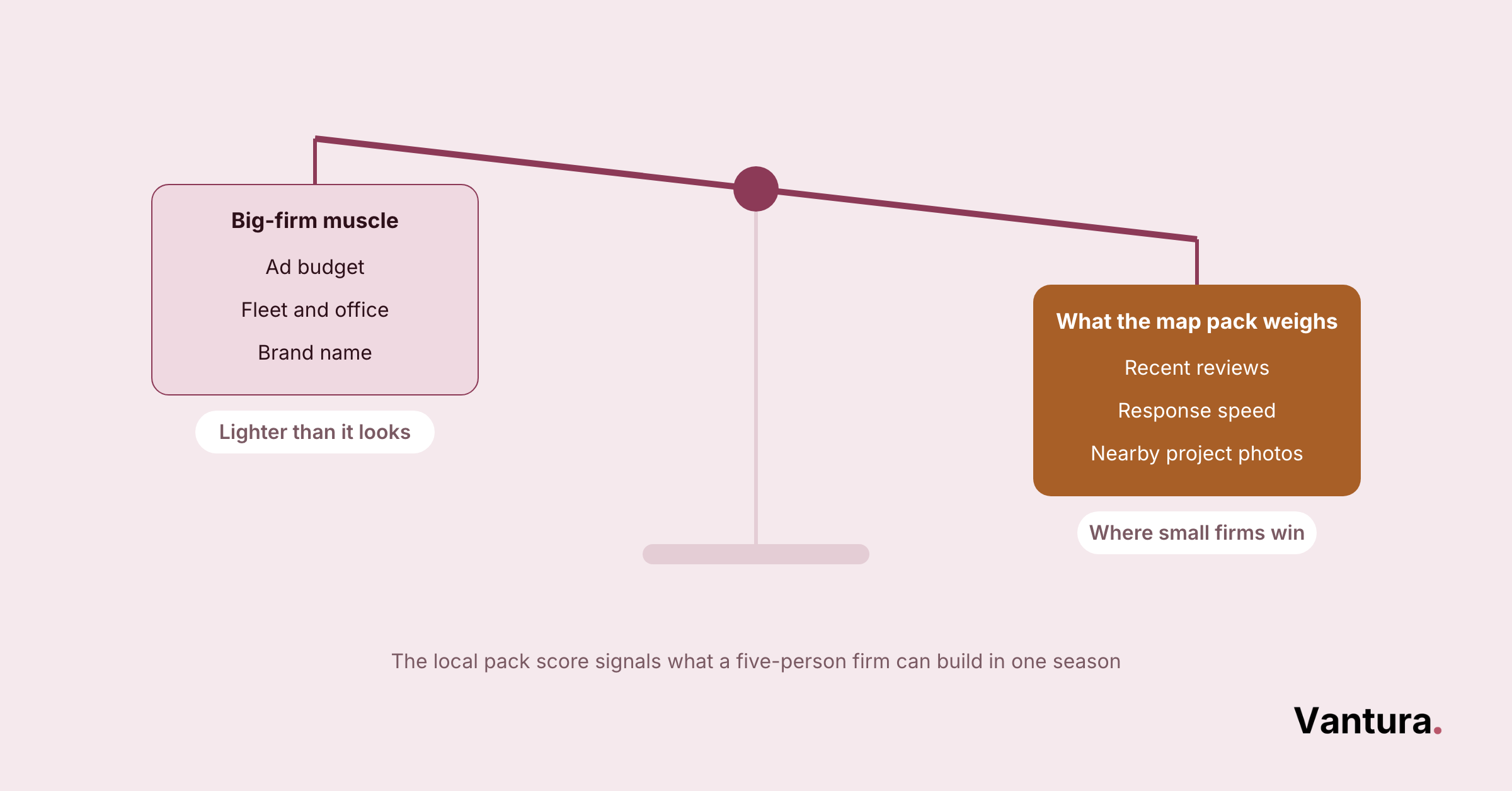
Yes, and this is where digital matters most for small and mid-size firms. A sharp local strategy can outrank a big regional player in your own zip codes.
Plenty of small firms already lean on outside help rather than building the function in-house, since 21% work with a marketing agency and another 42% lean on freelancers according to UpCity, so bringing in outside expertise is normal, not a sign you can’t compete.
You don’t need the budget of an enterprise marketing team to win nearby jobs. You need to be relevant and easy to reach where your buyers search.
Speed helps too, since the first firm to reply to a lead often wins it. A small crew that answers fast beats a slow giant more often than you’d think.
How Long Until Construction Digital Marketing Shows Results?
Paid search can bring calls within the first week, while SEO and content usually take a few months to build. In our experience, most construction clients see a clear lift somewhere between two and four months, depending on the channel.
First Results vs Full Traction, Channel by Channel
| Channel | First results (our experience) | Full traction |
|---|---|---|
| Google Ads | A few days to two weeks | One to two months |
| Local SEO | One to two months | Four to six months |
| Content and SEO | Two to three months | Six to nine months |
| Social media | Two to four weeks | Three to five months |
| Reviews | Ongoing from week one | Compounds over time |
Field note: the firms that win fastest pair paid ads for quick jobs with SEO for long-term reach, so something is always working while the slower channels catch up.
How Does Digital Build Reputation and Long-Term Growth in Construction?
Digital builds construction reputation through reviews, photos, and consistent presence, then compounds that trust into long-term growth. Each project you document becomes proof that wins the next one.
Reputation and Trust Building Through Digital
Reviews and photos are the new word of mouth in construction. In our experience, most buyers skim through recent reviews before they ever pick up the phone to call a contractor.
A steady stream of recent, specific reviews does more for trust than any slogan. That’s why we treat it as core work for plumbing businesses and builders alike.
How Digital Compounds Into Business Growth
Unlike a one-off ad, digital assets compound. A ranking page, a review profile, and an email list keep paying off long after you build them.
That is the difference between renting attention and owning it. Over a few years, owned assets often carry more leads than paid channels ever did.
What Are the Risks of Ignoring Digital Marketing in Construction?
The risk of ignoring digital marketing in construction is simple, you lose the buyers who are searching right now to firms that show up. Sitting out costs more than it saves.
Where the Cost Shows Up First
- Losing high-value jobs to more visible firms
- Depending on referrals that dry up in slow seasons
- No data to guide bids or budgets
- A thin online presence that raises doubt
The gap widens quietly, one missed search at a time. If it already feels wide, focused marketing consulting can prioritize the few fixes that matter first.
How Do Regulations Make Digital Marketing Critical in Construction?
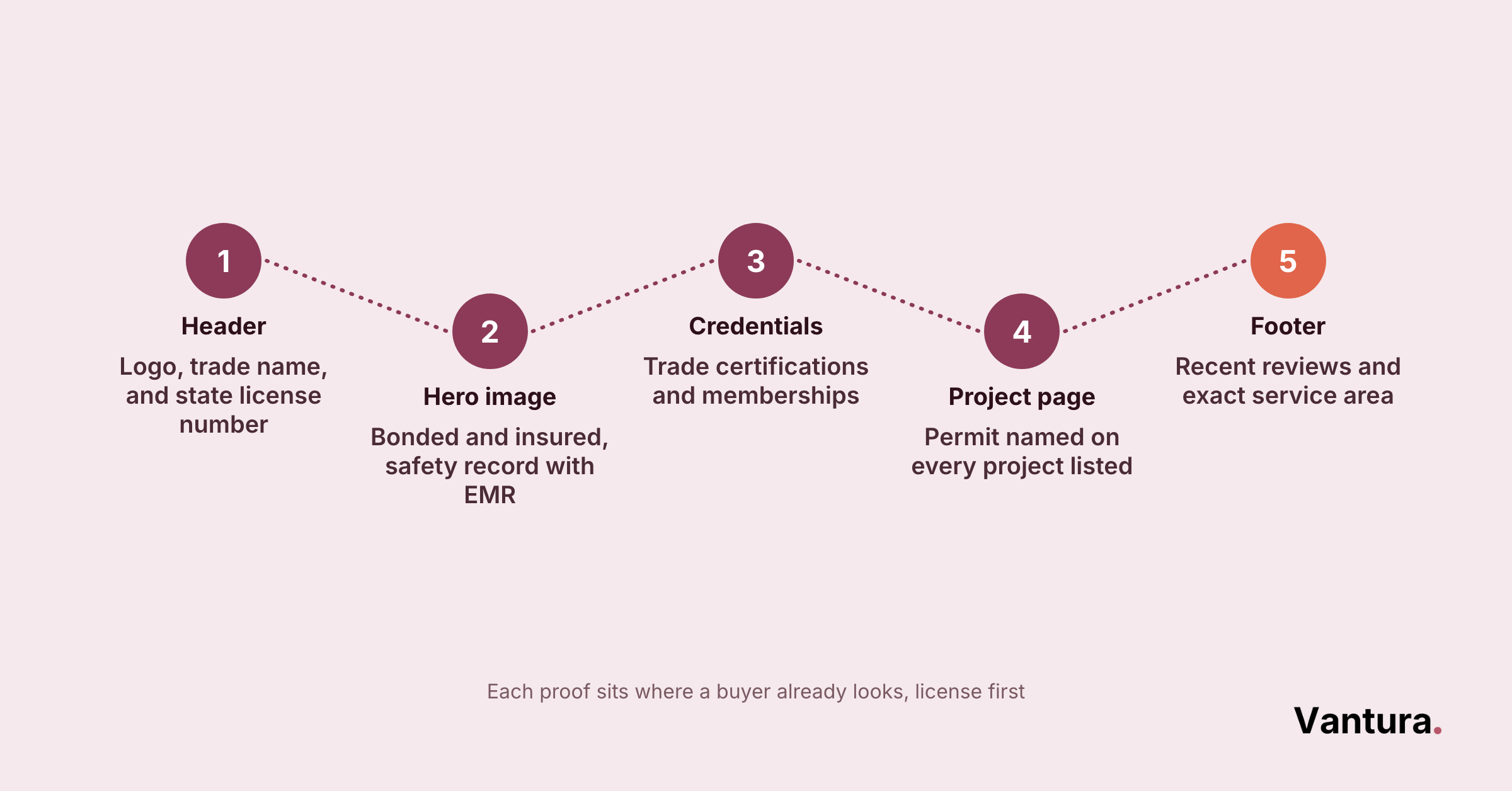
Licensing, permits, safety records, and honest advertising rules all shape construction marketing. A clear website and profiles make it easy to show the credentials buyers and inspectors expect.
Credentials as a Selling Point
Construction shares a lot with real estate here, where licensing, disclosures, and accurate claims govern what you can say. The same care we bring to real estate marketing keeps construction ads compliant and believable.
Handled well, compliance becomes a selling point, not a hurdle. Buyers trust the firm that shows its license and record without being asked.
How Do You Prove Digital Marketing ROI to Construction Stakeholders?
You prove ROI by tracking leads and revenue back to specific channels, then comparing cost per job to the value of that job. Owners care about booked work, so tie every report to signed contracts, not clicks.
Metric #1: Cost Per Qualified Lead
Divide channel spend by the number of real quote requests it produced. This shows which channels feed the pipeline cheaply and which just burn budget.
Metric #2: Booked Jobs by Source
Tag every won job with where the lead came from. Over a quarter, the pattern makes budget decisions obvious.
Metric #3: Average Project Value by Channel
Some channels bring small repairs, others bring full builds. Knowing the average value tells you where the profitable work hides.
Metric #4: Return on Ad Spend
Compare revenue from a channel against what you spent to earn it. In our experience, mature construction campaigns often return several dollars for each dollar spent once the tracking is clean.
Bottom line: when a stakeholder asks whether marketing works, the honest answer is a number, cost in versus revenue out per channel, and everything else is noise.
Common Construction Digital Marketing Myths, Debunked
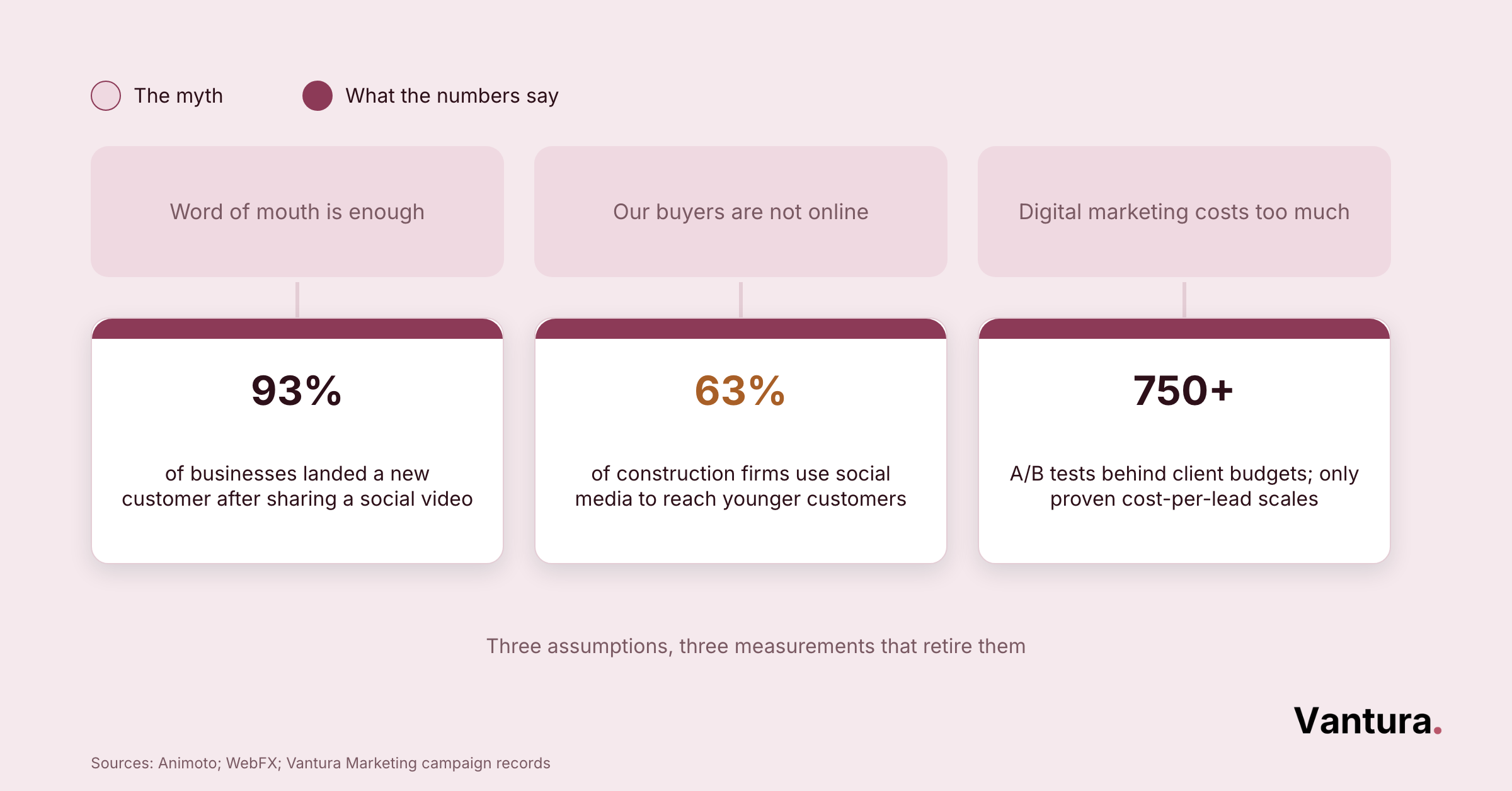
A few myths keep construction firms off the channels their buyers already use. Here are the ones we hear most, and why they no longer hold.
Disclaimer: This article is for general informational purposes only and does not constitute marketing, legal, or financial advice. Results vary by market, budget, and execution, and no specific outcome is guaranteed. Vantura Marketing is an independent agency, and any brands or platforms named are the property of their respective owners.