Construction Video Marketing: Strategy & Examples (2026)

Construction video marketing uses filmed content like project walkthroughs, drone flyovers, and client interviews to build trust and pull in qualified leads. It fits contractors, developers, and specialty trades whose buyers want to see real work before they reach out. Get the mix right, and a quick clip can turn a casual scroll into a booked estimate.
Why trust us with construction video
These recommendations come from real trade campaigns, not theory. Our 28 specialists carry more than 190 combined years of experience across 14 industries, so we know what makes contractors and their buyers click play.
Need help planning construction video?
Tell us your service area and goals, and we’ll shape a plan where video earns leads, not just views. Get in touch about our integrated digital marketing work whenever the timing feels right.
What Is Construction Video Marketing?
Construction video marketing is the practice of using video to promote a construction business, win trust, and generate work. It covers everything from a 30 second reel of a finished remodel to a full case study on a commercial build.
The goal is simple. You show the quality of your work so a stranger feels comfortable enough to ask for a quote.
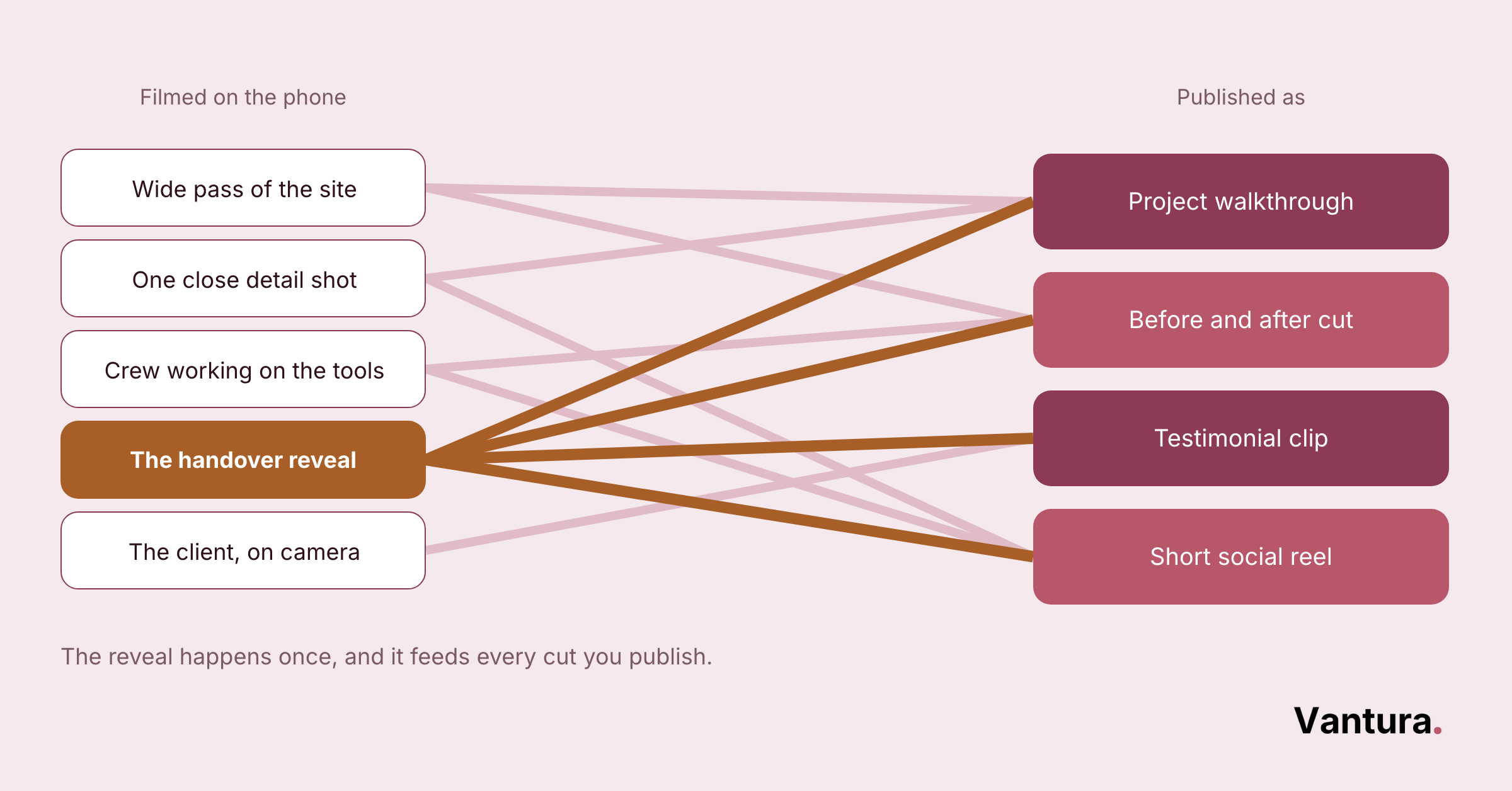
Most contractors already have the raw material on their phones. Site progress, crew work, and the big reveal at handover all make strong footage when you plan around them.
- Project walkthrough and reveal videos
- Drone footage of large sites
- Client testimonial clips
- Short social videos and reels
Worth knowing: buyers rarely watch to learn every spec. In our experience, a short clip with one clean before and after beats a polished five minute film that tries to cover the whole company. It does more for a first inquiry than a video that tries to explain everything at once.
Why Does Video Belong in Your Construction Marketing Mix?
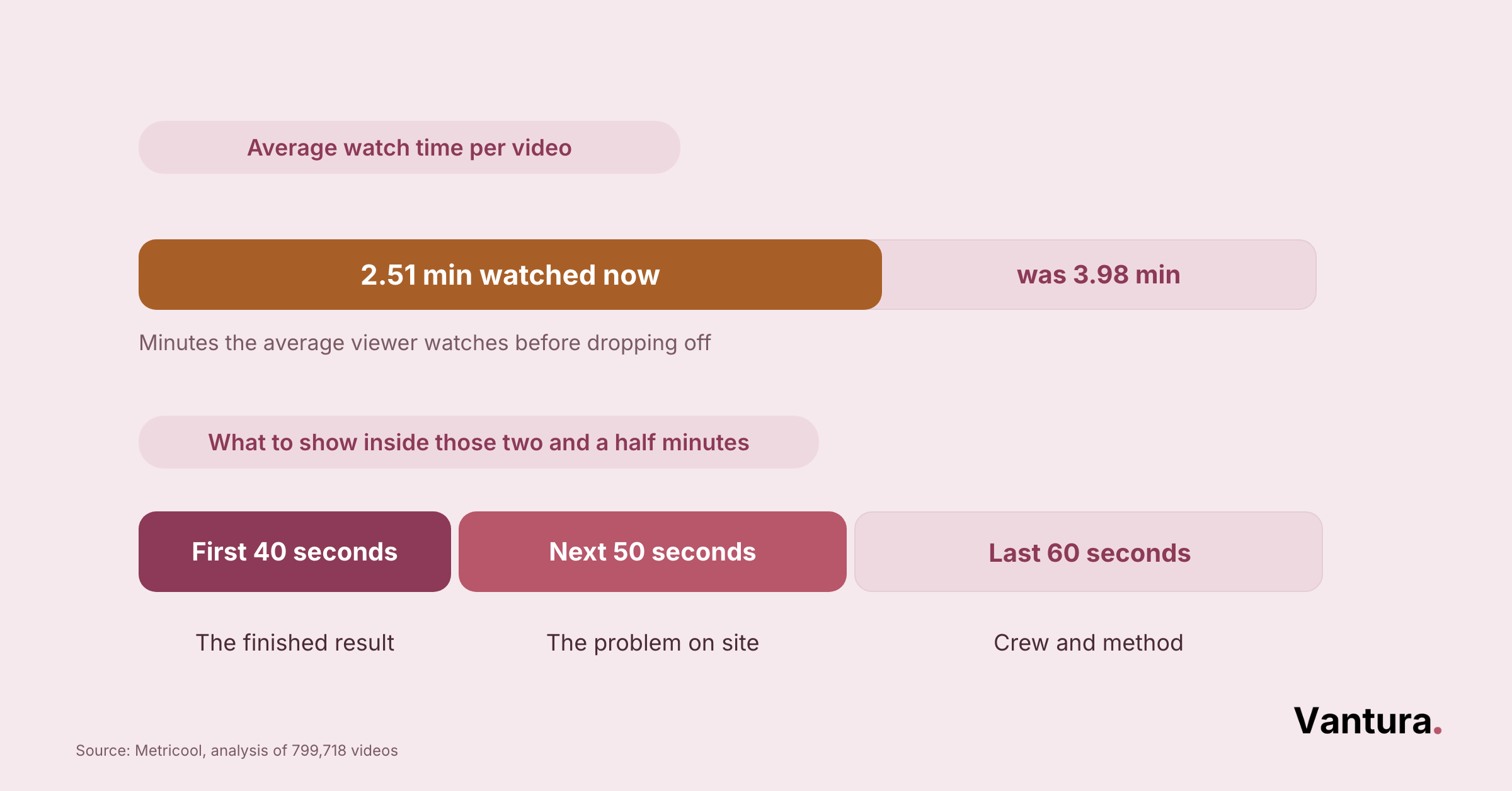
Video belongs in your mix because construction is a visual, high-trust purchase, and buyers want proof before they commit. A clear video answers the quiet question behind every inquiry, which is whether your crew can do the job.
Text and photos help, but they flatten the work. Video shows scale, finish, and the people on site.
That’s exactly what a nervous homeowner or a cautious project manager needs to see before trusting you with their biggest project of the year. It also gives your wider digital marketing strategy a format that travels across search, social, and email.
- Search results and your Google Business Profile
- Social feeds where contractors get discovered
- Sales follow-ups and proposal pages
- Service and project pages on your site
Construction also sits among the trades where digital adoption keeps climbing, based on the accounts we run year over year. Your buyers are already watching video on the channels you can reach.
The only question is whether they find yours, or a competitor’s.
What Types of Construction Marketing Videos Should You Produce?
Produce the types that match how buyers decide, which usually means walkthroughs, testimonials, explainers, and short social clips. Start with formats that show finished work, then add educational and behind the scenes pieces as your library grows.
| Video type | Best for | Where it fits |
|---|---|---|
| Project walkthrough | Showing finished quality | Website and YouTube |
| Drone site tour | Large or commercial jobs | Social and proposals |
| Testimonial | Trust and social proof | Service pages and ads |
| Explainer or demo | Complex or technical work | YouTube and email |
| Short social reel | Reach and discovery | Instagram, TikTok, Facebook |
Explainer and Demo Videos That Show the Work
Explainer and demo videos walk a buyer through something they cannot easily picture. Think a cutaway of a wall assembly, a demo of a smart home panel, or a step by step of how you handle a tricky foundation.
These earn their keep on technical or premium jobs, which is common in B2B digital marketing for commercial builders. A client paying for proper waterproofing wants to understand what they’re buying, and a two minute demo does that better than a wall of text.
Commercial jobs rarely close on one signature, and a good demo has to hold up when you are not in the room. Gong’s research found 77% of B2B deals are now multi-threaded, with twice the buyer contacts among the ones that close, so a clip that gets forwarded on its own carries real weight.
Customer Testimonial Videos That Build Trust
A testimonial video is the closest thing to a referral that scales. One honest client on camera, talking about a fear you fixed, beats any claim you make about yourself.
Keep them real and a little rough. We’ve seen overproduced testimonials backfire because they read as scripted, while a phone clip shot in the client’s finished kitchen feels believable.
Short-Form vs Long-Form: Which Construction Videos Win Attention?
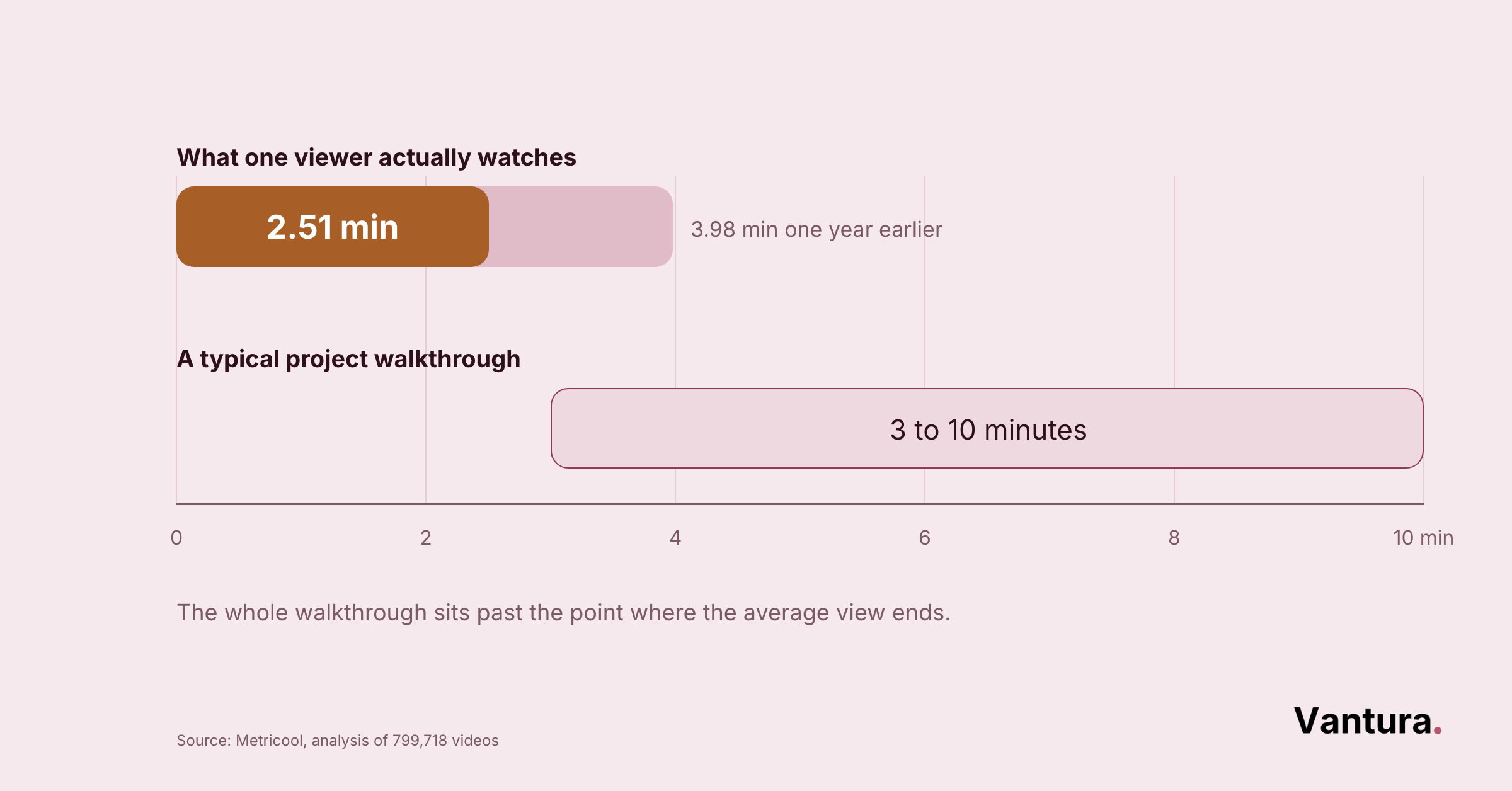
Both win, but at different jobs. Short-form grabs attention and builds reach, while long-form earns trust and closes considered buyers, so most contractors need a blend rather than a pick.
Which Format Fits the Job?
Multi-location shops running franchise digital marketing often need both formats live at once. Match the format to the goal, not to personal preference.
- Reels and clips under 60 seconds
- One idea, with the hook in the first two seconds
- Strong for reach, weak on detail
- Best on Instagram, TikTok, and Facebook
- Case studies, full walkthroughs, and webinars
- Runs three to ten minutes
- Strong for trust, weak on cold reach
- Best on YouTube, your site, and sales follow-ups
Field note: across our construction accounts, short clips bring the traffic and long videos close it. We’ve watched the same footage cut two ways, a 30 second teaser for the feed and a three minute cut for the project page. Together they outperformed either format used alone.
How Do You Optimize Construction Videos for YouTube and Search?
Optimize construction videos by treating each one like a page you want to rank. Use a clear title with the job and location, a keyword-rich description, chapters, and a thumbnail that shows the finished result.
YouTube is the second biggest search engine, so people look up “metal roof installation” the way they Google it. Match your titles to those real searches and you show up when intent is high.
- Put the main keyword near the front of the title
- Write a full description with steps and links
- Add chapters for longer walkthroughs
- Include captions so search can read the audio
If ranking video feels like a lot on top of running jobs, a round of marketing consulting can set the priorities before you film. That saves you shooting content no one searches for.
Thumbnails, Titles, and CTAs That Earn Clicks
Your thumbnail decides whether anyone watches. Use a bright, high-contrast still of the finished work, a couple of bold words, and a real human face when you have one.
End every video with one clear next step. Ask for the one action you want, whether that’s a quote request, a subscribe, or a tap through to the project gallery.
Which Social Platforms Work Best for Construction Video?
The best platforms are where your buyers already scroll, which for most construction firms means Instagram, Facebook, YouTube, and increasingly TikTok. Pick two to run well rather than five you run badly.
- Instagram and TikTok for reach and younger homeowners
- Facebook for local groups and older buyers
- YouTube for how-to content and high-intent search
- LinkedIn for commercial and B2B projects
Paid placement stretches reach further, and formats like Snapchat video ads can put a build in front of local buyers who never searched for you. Match the platform to the audience, not to whichever app you personally enjoy.
Live Streams and Webinars for Construction Audiences
Live video works better for construction than most people expect. A live site walk, a Q and A on permits, or a session on choosing a contractor lets you answer real questions in the moment.
Webinars suit bigger, slower decisions like a commercial fit-out or a full home build. We ran one 40 minute session on renovation planning that quietly fed a builder leads for months after the live date.
How Do You Produce Construction Videos on a Tight Budget?
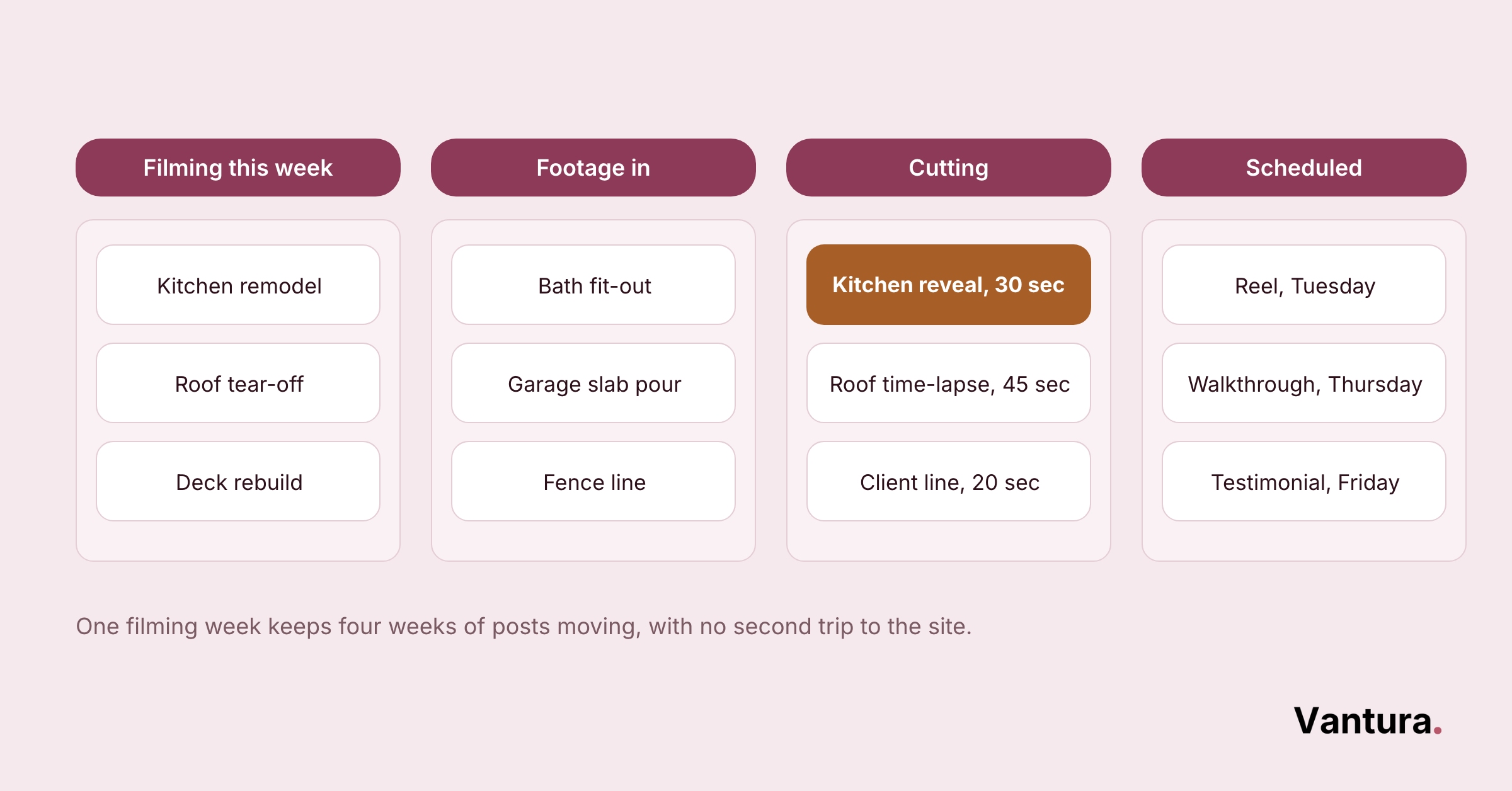
You can produce solid construction video on a phone and a small budget. Good light, stable footage, and clean audio matter more than an expensive camera, and the job site hands you the visuals for free.
This fits small-business digital marketing budgets especially well, since the raw footage costs nothing beyond time.
Four Steps to Solid Job-Site Video
Step 1: Plan Around the Job
Decide the shot before the crew starts. A five minute plan on site beats hours spent editing footage you never framed right.
Step 2: Capture As You Go
Film progress in short takes during the work. A wide shot, a detail or two, and the reveal at handover give you enough to cut almost anything.
Step 3: Fix the Audio
Bad sound loses viewers faster than shaky video. A cheap clip-on mic for interviews is the single best spend on this list.
Step 4: Edit for One Idea
Cut to the point and drop the rest. One clear message per video keeps it short and keeps people watching to the end.
Quick tip: batch your filming. In our experience, grabbing footage on three or four jobs in the same week gives you a month of content. That’s often the difference between a channel that sticks and one that stalls after two posts.
Which Construction Video Metrics Matter?
The metrics that matter tie video to leads, not vanity. Watch retention, click-through to your site, and inquiries per video tell you far more than raw view counts ever will.
| Metric | What it tells you | Rough range (our projects) |
|---|---|---|
| Average view duration | Whether the hook holds | 40 to 55 percent of length |
| Click-through rate | If the CTA works | 2 to 3 percent |
| Cost per lead (paid) | Efficiency of ad spend | 15 to 20 percent below search ads |
| Inquiries per video | Real business impact | Varies by offer and reach |
None of these mean much on their own. We pair them with the lead source in the CRM.
A video with modest views that books three jobs beats a viral clip that books none.
If your numbers look murky, a digital marketing audit usually finds where tracking breaks before you blame the content. Half the time the video was fine and the form was quietly broken.
Keep in mind: views are the easiest number to grow and the least useful to chase. Across our projects, the videos that drove the most work often sat in the low hundreds of views. They reached the right local buyer at the right moment, not a big anonymous crowd.
How Do You Distribute Construction Videos to Reach Buyers?
Distribute each video across search, social, email, and your website instead of posting once and moving on. One shoot should feed a YouTube upload, a few social cuts, an email, and a project-page embed.
Repurposing is where small teams win. The same walkthrough becomes a reel, a pull-quote, and a before and after, so one afternoon of filming works for weeks. Paid channels extend your best performers, and native advertising can push a strong performer onto industry sites your buyers already read.
Mapping Videos to the Construction Buyer Funnel
Different videos do different jobs across the funnel. Match the format to where the buyer sits. Otherwise you’ll pour reach on people who aren’t ready, and detail on people who already trust you.
- Awareness: short social clips and drone teasers
- Consideration: project walkthroughs and explainers
- Decision: testimonials and detailed case studies
- After the sale: thank-you and referral videos
Construction Video Marketing Tools and Software
You don’t need a big stack to start. A phone, a basic editor, and a hosting platform cover most contractors, and you add tools only when a real bottleneck shows up.
If editing eats your week, digital marketing outsourcing can take that off your plate.
| Category | Job | Options to look at |
|---|---|---|
| Filming | Capture footage | A recent phone, or a mirrorless camera for premium work |
| Editing | Cut and caption | CapCut, Descript, and heavier tools like Premiere |
| Hosting | Publish and rank | YouTube, plus Wistia or Vimeo for gated video |
| Captions | Accessibility and reach | Built-in tools, or specialist services for accuracy |
We stay independent, so these are starting points, not partnerships. The right pick depends on your volume and the trades you serve.
Sometimes a niche tool built for job-site video beats the big general one.
How Do You Make Construction Videos Accessible?
Make videos accessible by adding accurate captions, clean audio, and readable on-screen text. Most people watch on mute in a feed, so captions are not just for accessibility, they’re how most viewers watch.
- Add captions to every video
- Keep text large and high contrast
- Describe key visuals in the audio
- Avoid flashing effects and tiny fonts
Captions also help search. Because the platform can read the transcript, a well-captioned video is easier to surface for the exact job someone typed in.
Where Do Interactive and Shoppable Videos Fit for Construction Companies?
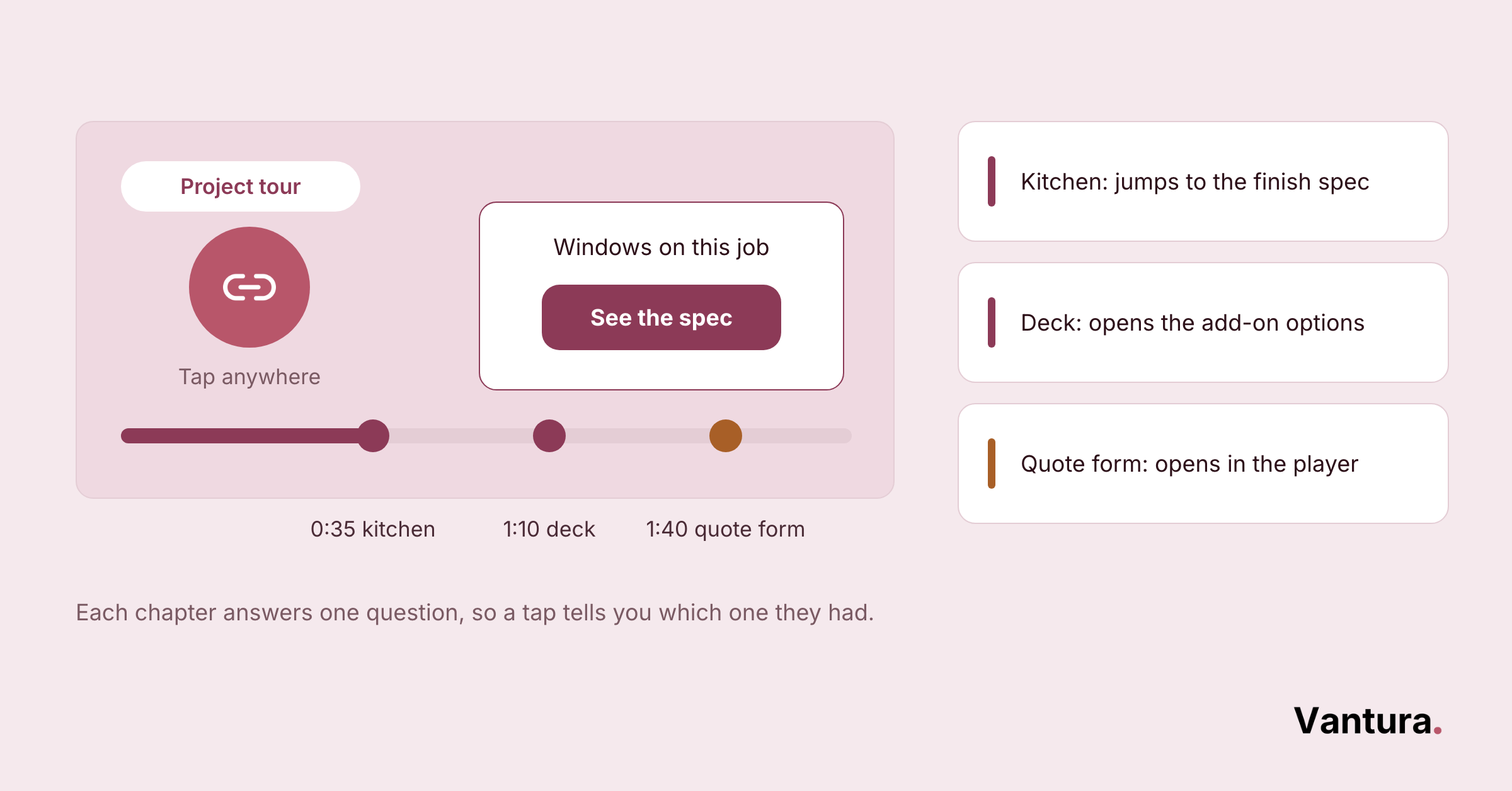
Interactive video adds clickable chapters, forms, or product links on top of the footage. For a builder, that can mean a project tour where viewers tap to jump to the kitchen, the deck, or a quote form.
Shoppable video matters most when you sell products alongside labor, like windows, fixtures, or materials. In maybe a third of our product-led clients, adding a link inside the player lifted inquiries without extra ad spend.
Construction Video Marketing Examples That Earn Leads
The best examples are simple and specific. A roofer’s 45 second storm-damage walkthrough, a remodeler’s before and after reel, and a developer’s drone tour all work because they show one clear outcome.
- The before and after reel that turns a finished kitchen into 30 seconds of proof
- The storm-response clip a roofer posts within a day of a big storm, a natural fit for roofing digital marketing
- The drone tour that gives a commercial developer a fly-through for investors
- The client story where a nervous homeowner explains why they’re glad they picked you
Developers and property teams get extra mileage here, which is why we often fold video into real estate digital marketing as much as construction. The footage sells the finished space and the process behind it.
The pattern behind all of them is the same. Show real work, keep it short, and end with one obvious next step.
How Is AI Changing Construction Video Production?
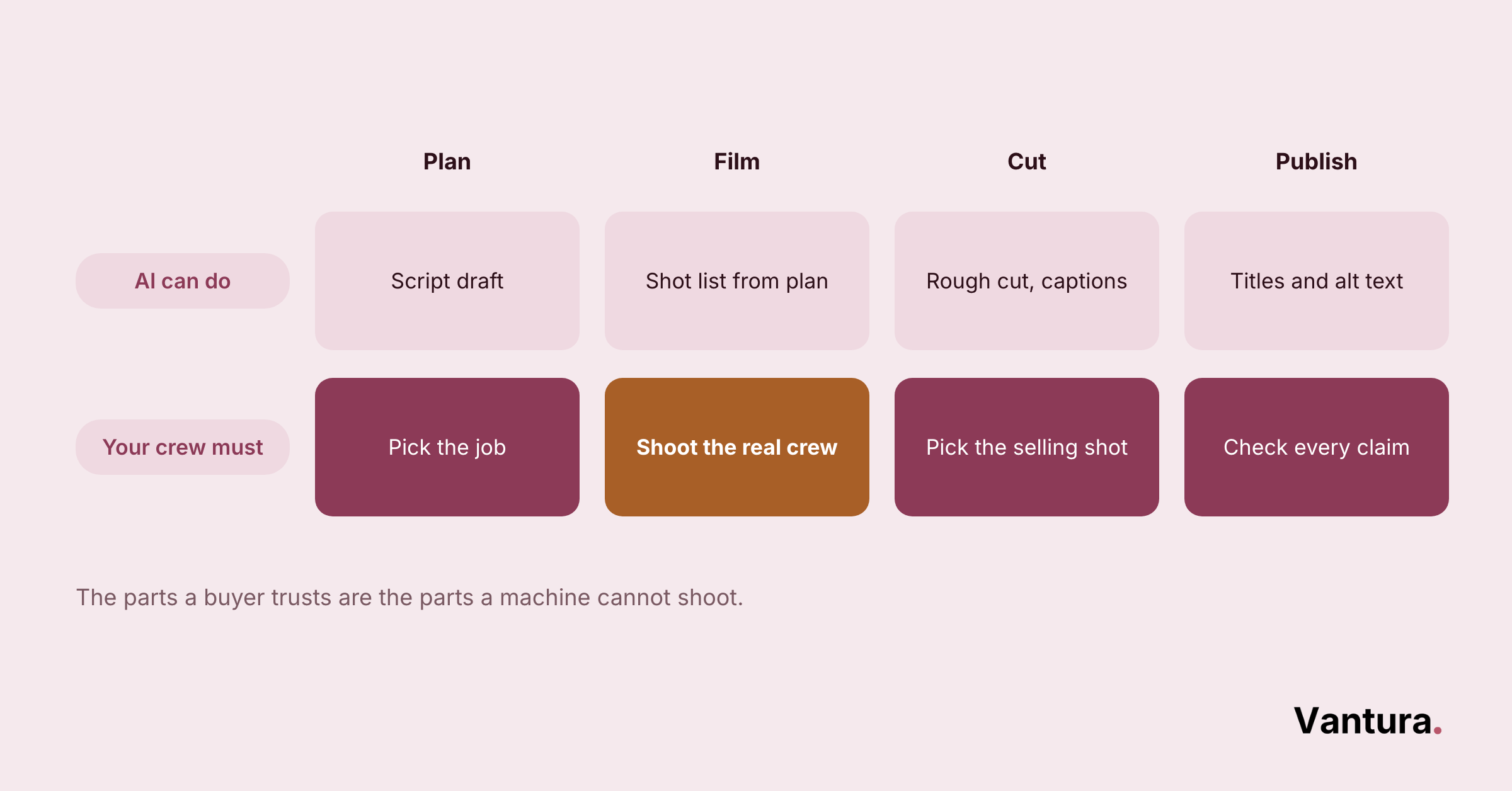
AI is making construction video faster and cheaper to produce, mainly by cutting editing time and generating captions, scripts, and rough cuts. It does not replace footage of your real crew, which is still the part buyers trust.
We use it to draft descriptions, auto-caption, and slice long walkthroughs into social cuts. The judgment about which shot sells the job still comes from someone who knows the trade. This shift lands hard in industrial digital marketing, where technical builders explain complex work without a full production team.
Bottom line: lean on AI for the grunt work and keep humans on the story. In our experience, the videos that flop feel machine-made. The ones that book jobs still open with a real face on a real site.
Disclaimer: This article is for general information only and does not constitute professional marketing, legal, or financial advice. Figures are illustrative ranges drawn from our own project work, and results vary by market and effort. Verify current pricing and features with the vendor before making decisions.