Construction Competitor Analysis: Framework & Tools

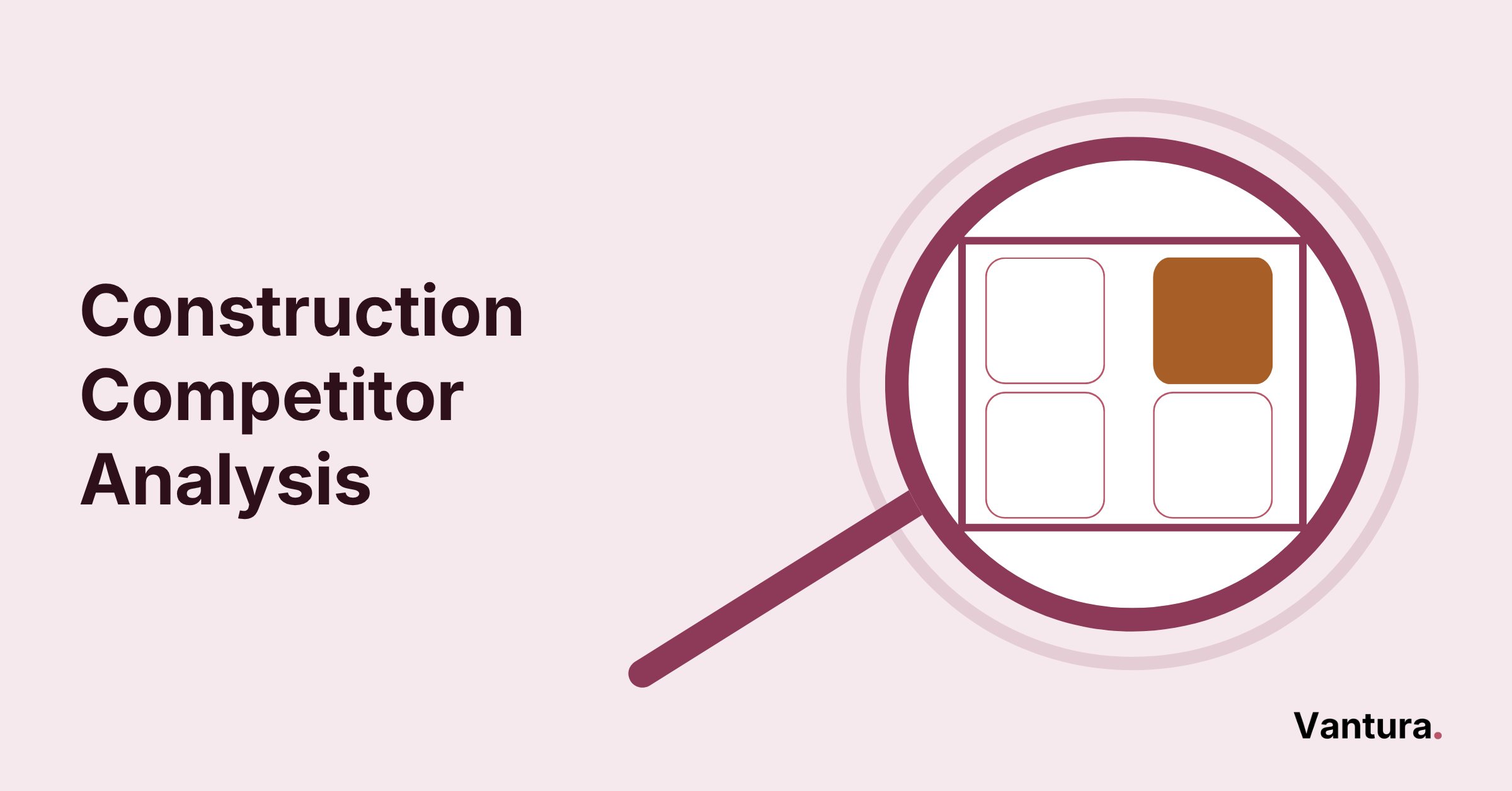
Construction competitor analysis is the work of studying how rival builders, contractors, and trades market themselves online, so you can copy what works and attack what doesn’t. It pulls their SEO, content, paid ads, social presence, and reviews into one view next to yours. Done well, it turns a vague sense of the market into a clear digital marketing plan for winning the same customers.
Why builders trust our read on the field:
Our team brings 190+ combined years of marketing experience across 14 industries, construction included. We’ve sat behind 180+ campaigns, so we know which competitor signals predict real bids and which are just noise.
Need a hand sizing up rivals?
Reach out and we’ll turn a crowded field into a short, ranked list of moves. A focused digital marketing strategy is what separates reacting to competitors from staying a step ahead.
What Is Construction Competitor Analysis in Marketing?
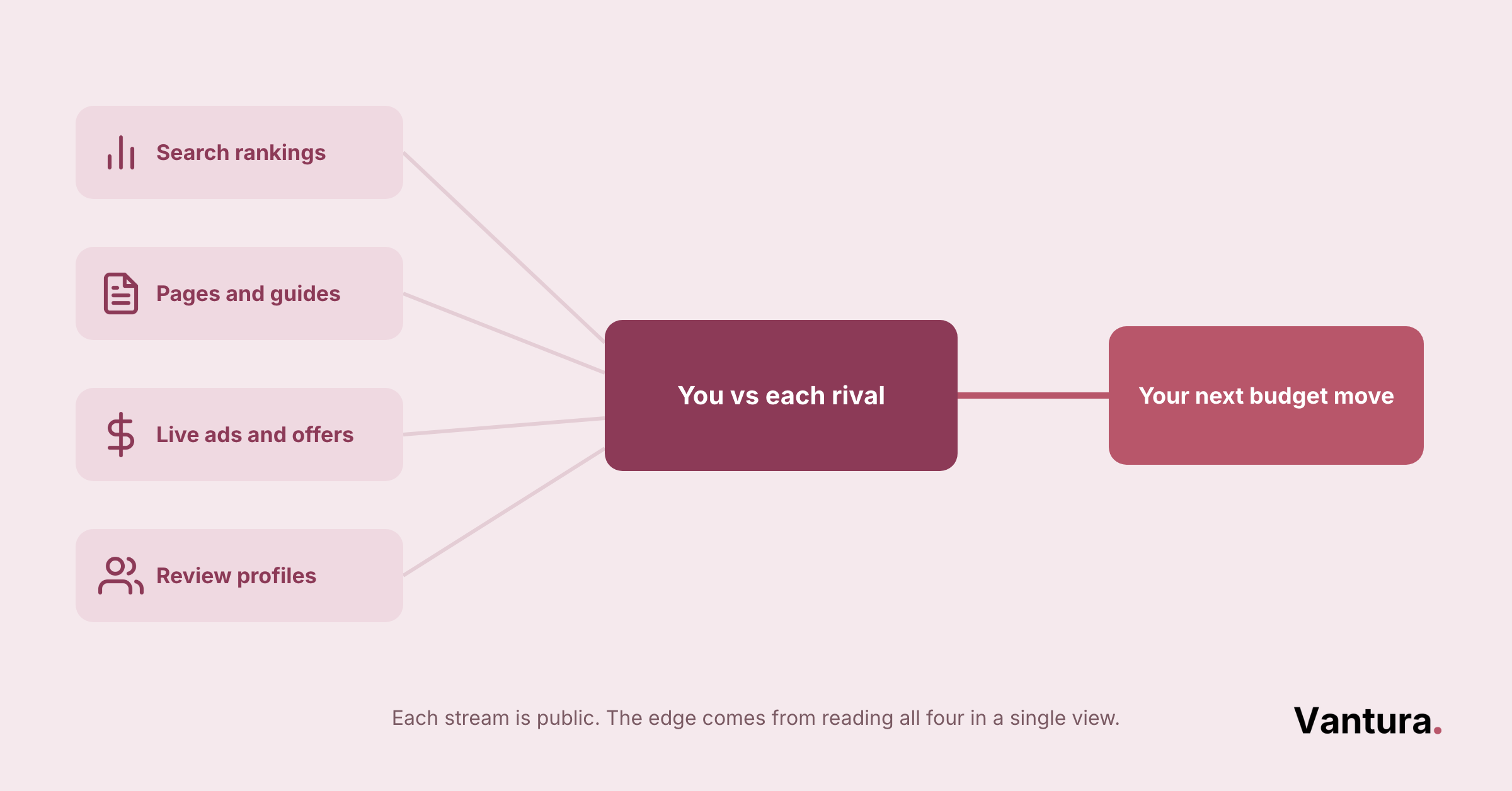
Construction competitor analysis in marketing is a structured look at how other firms in your trade attract and convert customers online. It compares their search rankings, content, ads, and reputation with yours to show where you’re ahead and where you’re exposed.
The goal isn’t to obsess over every rival. It’s to learn enough to make sharper choices about your own budget and message.
A solid analysis usually answers a handful of plain questions:
- Who ranks for the searches your buyers use
- What content and offers pull those buyers in
- Where they spend on ads, and where they don’t
- How their reputation reads to a nervous client
What this really means: most contractors lose work not because their building is worse, but because a competitor is easier to find and easier to trust online. Competitor analysis shows you exactly where that gap sits, so you can close it instead of guessing.
How Do You Identify Your Real Construction Competitors?
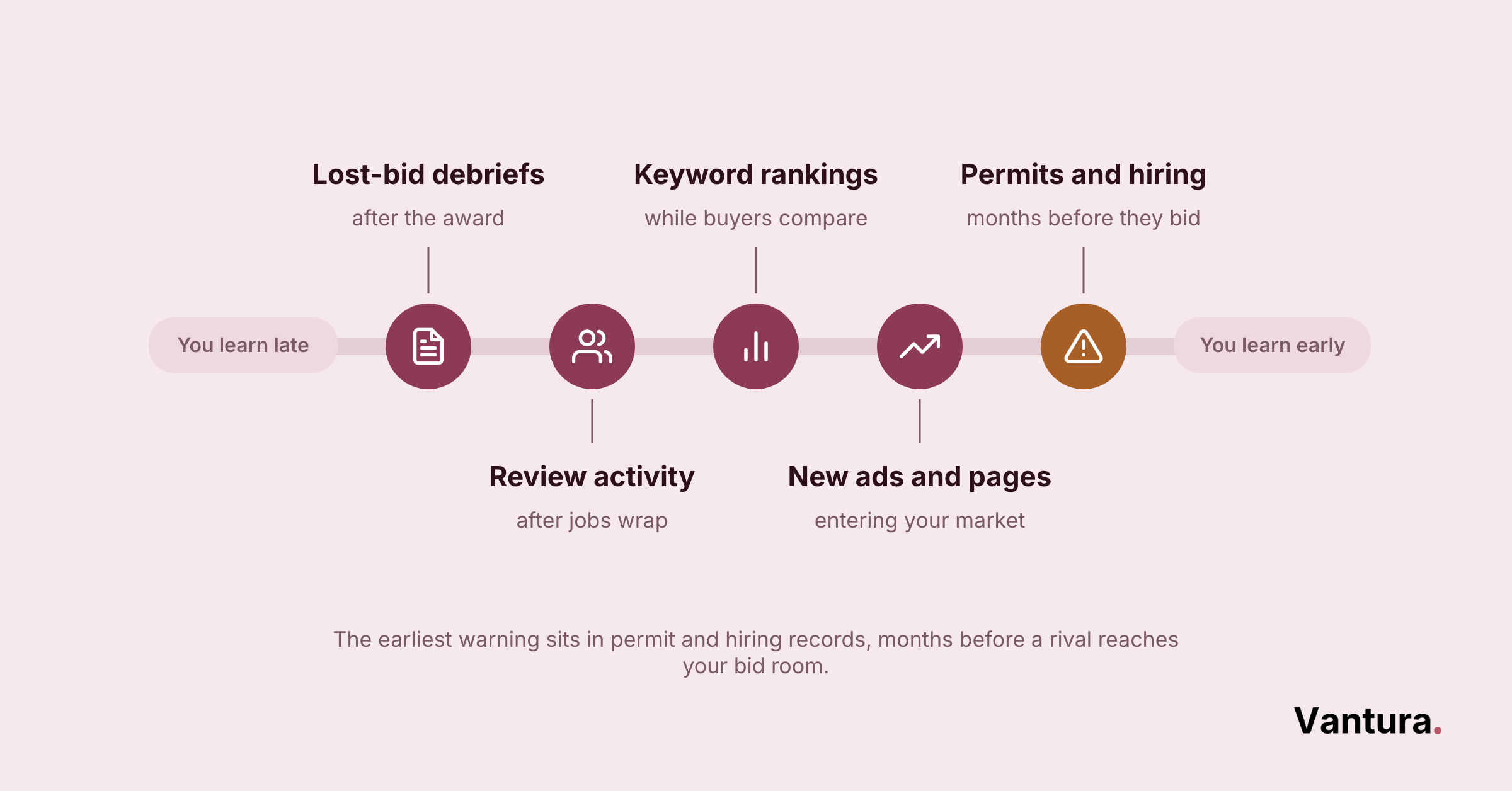
Your real construction competitors are the firms winning the customers you want, not the ones you chat with at trade shows. Some are direct builders nearby, others rank for your keywords without ever touching a site.
Search competitors and business competitors often differ, and both matter. Because construction overlaps with adjacent trades, a firm running strong industrial marketing can outrank you for local terms it barely serves.
The field keeps going digital, too. The National Association of Manufacturers reports that digital transformation across industrial firms is seeing explosive growth, so your quietest local rival may be the one investing most in getting found.
Three Steps to Find the Rivals That Matter
Step 1: List who you lose bids to
Start with names you already know. Your sales team can usually rattle off the three or four firms that keep beating you on price or speed.
Step 2: Search like your customer
Type your core services and city into Google and note who shows up in the map pack, the ads, and the top results. These are your visibility competitors, and they may surprise you.
Step 3: Group them by threat
Sort the list into firms that threaten your bread-and-butter work and firms that only nibble at the edges. You’ll spend most of your energy on the first group.
Group Rivals by Reach
Local and national rivals threaten your pipeline in different ways, so split your list before you plan a response.
- Nearby builders bidding the same projects
- Trades that upsell into your scope
- Regional firms expanding into your patch
- Directories and lead-gen sites ranking for your terms
- Franchises with big ad budgets
- Manufacturers marketing straight to your clients
From our projects: in our experience, a first competitor sweep for a regional contractor surfaces 6 to 9 rivals worth tracking, and usually 2 or 3 nobody on the team had flagged. The surprises are often the ones eating your search traffic.
Which Competitor Channels Should You Audit First?
You can’t audit everything at once, so start where buying decisions happen most. For most construction firms that’s search and content, then social, ads, and email.
Construction Competitor SEO and Keyword Gap Analysis
A keyword gap analysis lines up the terms competitors rank for against the terms you rank for, then flags the ones they own and you miss. Those gaps are your fastest route to more qualified traffic.
Look past vanity terms like “construction company” and hunt for buyer-intent phrases, service-plus-city combinations, and question searches. Pair this with a broader digital marketing audit so technical issues don’t cap your gains.
- Service terms they rank for and you don’t
- Local terms where they beat you
- Questions their blogs answer and yours ignore
Construction Competitor Content Strategy Audit
A content audit maps what topics competitors publish, how often, and which pages pull links and shares. It tells you where the conversation is happening and where it’s thin.
Read their best pages as a customer, not a marketer. If a rival’s guide answers the exact worry a client raised last week, that’s a template worth beating, especially for B2B digital marketing where trust is slow to earn.
Construction Competitor Backlink Profile Analysis
A backlink analysis shows which sites vouch for a competitor, from local news to supplier directories to trade associations. Those same sites are usually open to you too.
Focus on quality and relevance over raw counts. One link from a respected trade body outweighs fifty scraped directory listings.
How Do Competitors Show Up on Social, Paid, and Email?
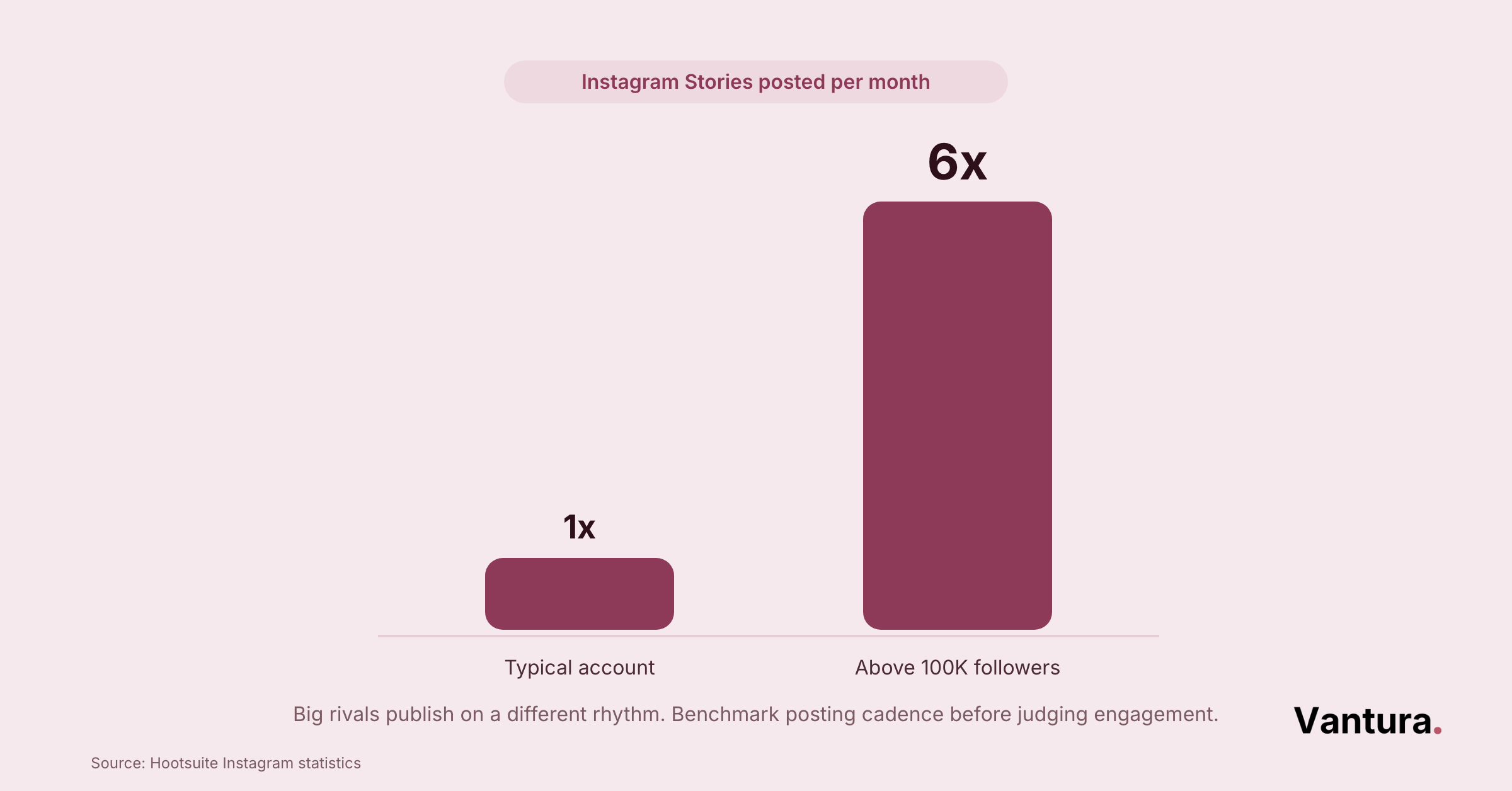
Beyond search, your rivals are courting the same buyers on social feeds, in paid ads, and in the inbox. Each channel leaves clues you can read for free.
Construction Competitor Social Media Benchmarking
Social benchmarking compares follower growth, posting rhythm, and engagement across your competitors’ profiles. For construction, the signal isn’t follower count, it’s whether project photos and reviews spark real comments.
Note which formats earn attention, like time-lapse builds or before-and-after reels. The same playbook often carries into B2C digital marketing when you sell to homeowners.
Construction Competitor Paid Advertising Analysis
Paid advertising analysis reveals where competitors buy attention and what they promise to get the click. Free tools show many of their live search and social ads.
Watch the offers and landing pages behind those ads, since that’s where budget turns into booked jobs. Tying the channels together through integrated marketing beats running each one in a silo.
Construction Competitor Email Marketing Review
An email review means signing up for competitors’ newsletters and lead magnets to see how they nurture prospects. Most contractors ignore email, so a good one stands out fast.
Track their cadence, subject lines, and the offers they push after a quote request. This is where sharp small business marketing often wins on effort alone, since so few rivals bother.
How Good Is a Competitor’s Website at Turning Visitors Into Leads?
A competitor website and conversion audit judges how easily a visitor can find services, trust the firm, and request a quote. Speed, mobile layout, and clear calls to action usually decide who gets the lead.
Click through a rival’s site on your phone as if you needed a roof fixed today. Count how many taps it takes to reach a contact form, and whether reviews and licenses show up early.
Conversion often beats traffic here. A slower-ranking competitor with a fast, clear site can still out-book a busier one, a lesson that carries into real estate marketing too.
Worth checking: load your top three competitors’ sites on a mid-range phone and time the path to their contact form. In our work, builders who cut that path from five taps to two lift quote requests by roughly 20 to 30 percent, with no extra traffic.
How Do You Read a Competitor’s Pricing and Positioning?
Reading pricing and positioning means figuring out who a rival is for, what they charge against, and the promise that justifies it. Few construction sites list prices, so you read the signals instead.
Look at the words they lead with. “Premium custom homes” and “affordable fast repairs” aim at very different buyers, and they tell you where the market is crowded.
Positioning gaps are gold. If every rival shouts about price, a firm that owns “on time, no surprises” can win a whole segment, the same way sharp manufacturing marketing carves out a niche.
What Do Reviews Reveal About Competitor Brand Perception?
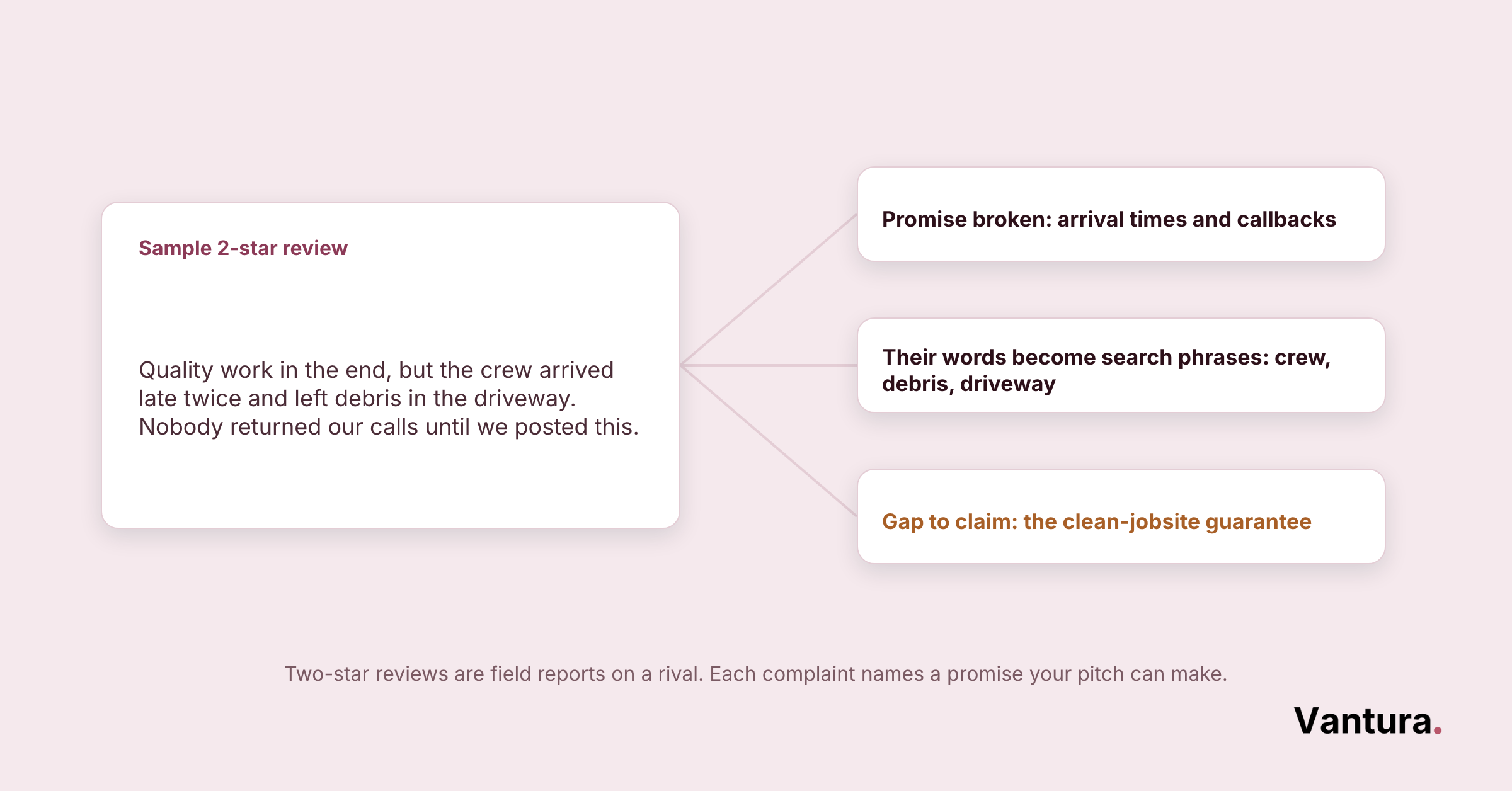
Competitor reviews reveal how the market really feels about a rival, in the customer’s own words. Patterns in praise and complaints expose strengths to respect and weaknesses to target.
Read the one and two-star reviews closely. Repeated gripes about missed deadlines or sloppy cleanup are openings you can promise to fix and then prove.
Reputation compounds over time, so track sentiment, not just star averages. A firm sliding from glowing to grumbling is one you can overtake.
Three things reviews expose fast:
- The promises rivals keep, and the ones they break
- Words customers use, which double as keywords
- Service gaps you can build a pitch around
Estimating Market Share and Mapping Where Competitors Stand
Market share estimation and competitive mapping turn your scattered notes into a picture of who owns what. You won’t get exact numbers, but you can rank rivals by visibility and reach.
Estimate share from proxies like search visibility, review volume, ad presence, and social following. Plot competitors on a simple grid, such as price against quality, to see where the field clusters and where it’s empty.
Bigger players will dominate some squares, and that’s fine. Even a small firm can own an empty corner, which is how challengers beat established enterprise marketing budgets.
Keep in mind: market share for local construction is won street by street, not nationally. A rival that looks huge online may barely compete in your specific city, so weight everything by your true service area.
Where Are the Gaps You Can Actually Exploit?
Competitor gaps are the openings where rivals are weak, absent, or lazy, and where you can win without a bigger budget. The best gaps sit where demand is real but the competition is thin.
Gaps show up in every channel you audited. The trick is picking the two or three you can act on now, not listing forty you’ll never touch.
| Gap type | What it looks like | Your move |
|---|---|---|
| Keyword gap | Rivals rank for a service term you don’t | Publish a focused service page |
| Content gap | Common client questions go unanswered | Write the guide they’re missing |
| Review gap | Competitors ignore their review replies | Reply fast and win the trust |
| Speed gap | Slow, clunky mobile sites | Ship a fast, simple quote flow |
Pick gaps you can defend, not just open. A one-off win fades, but a habit like faster replies compounds, which is where firms with tight franchise marketing systems pull ahead.
Which Tools Make Construction Competitor Analysis Easier?
The right tools turn days of manual digging into an afternoon, and most offer a free tier to start. You don’t need all of them, just one per job.
| Tool type | Examples | What it reveals |
|---|---|---|
| SEO and keywords | Semrush, Ahrefs, and niche local-SEO tools | Rankings and keyword gaps |
| Ad research | Meta Ad Library, SpyFu | Live competitor ads and offers |
| Traffic and tech | Similarweb, BuiltWith | Traffic sources and site stack |
| Reviews and social | Google Business Profile, native platform insights | Sentiment and engagement |
Start free and upgrade only when a tool saves real hours. We’re an independent agency with no vendor holding a stake in us, so we point clients to what fits the job, big names or niche picks alike.
How Do You Track Construction Competitor Marketing Over Time?
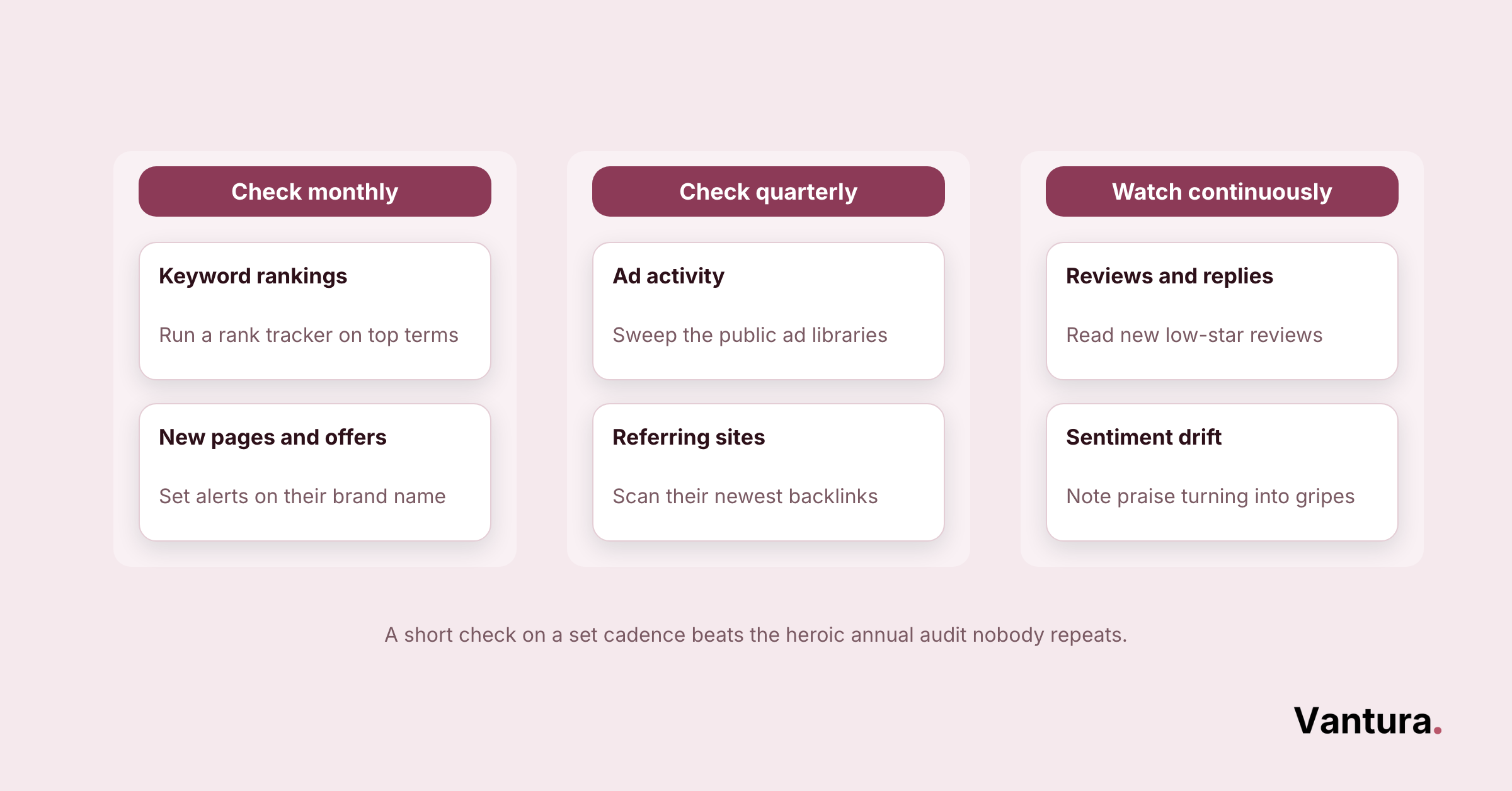
Tracking competitor marketing over time means turning a one-off audit into a light, repeatable check so you catch moves early. A short monthly review beats a giant annual one nobody reads.
Set alerts for competitor mentions, watch ranking shifts on your priority keywords, and skim their social monthly. Log changes in one simple sheet so trends jump out.
If this slips down the list every month, that’s a sign to hand it off. Many builders outsource their marketing monitoring so it gets done consistently, instead of dying in a busy season.
- Keyword rankings, checked monthly
- New pages and offers, checked monthly
- Ad activity, checked each quarter
- Reviews and sentiment, checked ongoing
Construction Competitor SWOT Integration
Competitor SWOT integration folds everything you found into strengths, weaknesses, opportunities, and threats, so the analysis drives decisions. It’s the bridge from raw notes to action.
Their strengths become your threats, and their weaknesses become your opportunities. Your own audit fills the strengths and weaknesses columns honestly.
Keep the SWOT to one page and revisit it each quarter. A working session with a marketing consulting partner can pressure-test it before you commit budget.
Construction Competitor Analysis Reporting Structure
A good competitor analysis report is short, visual, and built for decisions, not a data dump. If a busy owner can’t skim it in five minutes, it won’t get used.
- Snapshot: who the top rivals are and why they matter
- Channel findings: SEO, content, social, ads, email, and site
- Gaps and opportunities, ranked by effort and payoff
- Recommended moves for the months ahead
Close every report with a clear recommendation, not just findings. The point isn’t to admire competitors, it’s to decide what you’ll do differently.
Bottom line: a strong competitor report fits on two pages and ends with three moves, not thirty. Focus beats completeness, because a plan you finish always beats one you only admire.
Turning Construction Competitor Insights Into Strategy
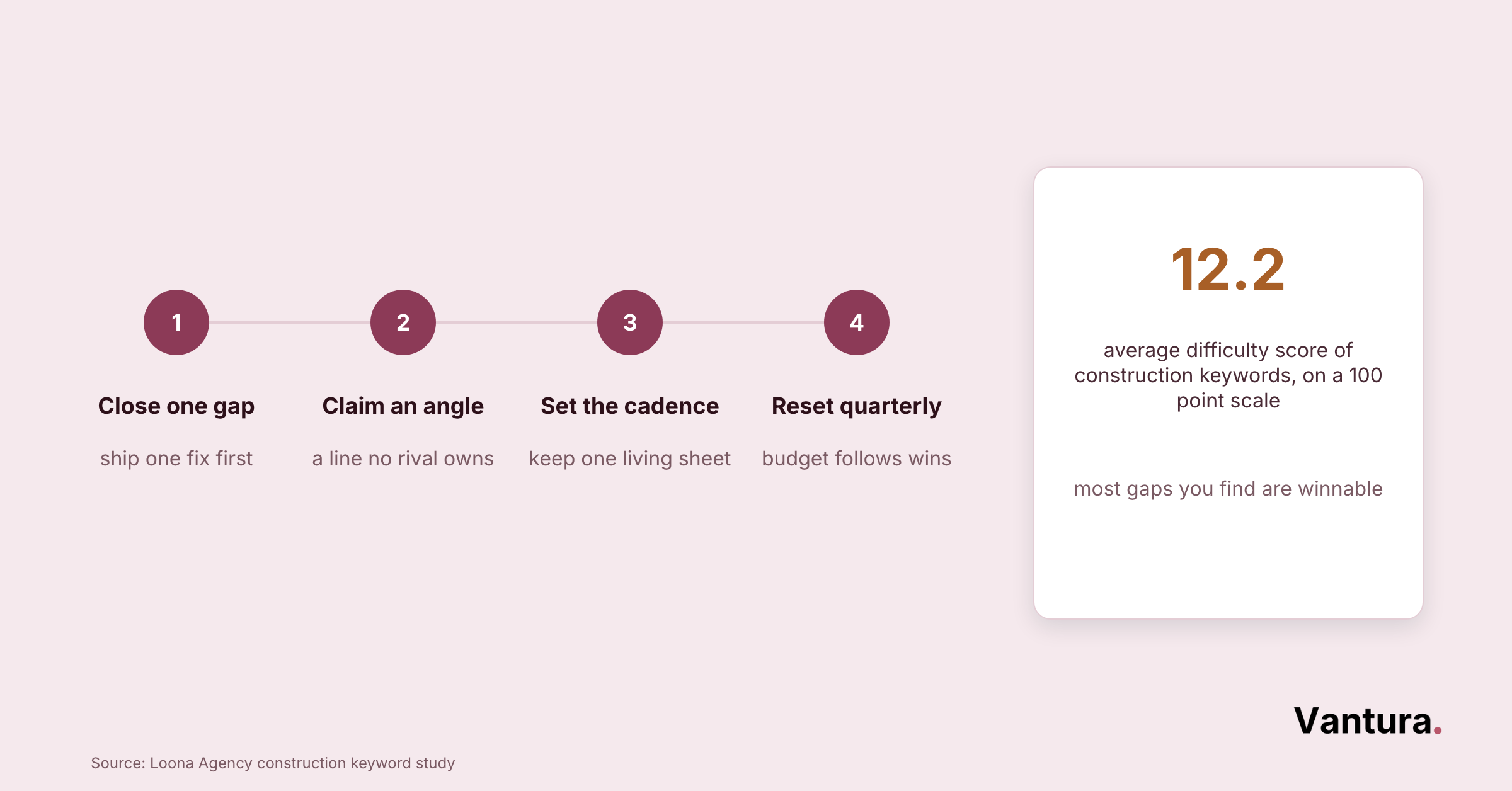
Turning insights into strategy is the whole point, and it comes down to choosing a few moves and committing. Analysis without action just makes you the best-informed firm still losing bids.
- Fix the one gap that costs you the most leads right now
- Claim a positioning angle no rival owns
- Set the light monthly check so you never fall behind again
Review the plan every quarter and adjust as rivals move. Markets shift, new competitors appear, and the firms that keep watching keep winning.
Disclaimer: This article is for general information only and does not constitute professional marketing, legal, or business advice. Vantura Marketing makes no guarantees about specific outcomes, and any figures reflect our own experience. Assess your own situation before acting on anything here.