Top 10 Taboola Ads Alternatives & Competitors in 2026

The strongest Taboola Ads alternatives are Outbrain, MGID, RevContent, Nativo and Sharethrough. AdRoll and Yahoo Native are also worth a look for retargeting and first party audience data. Each of these native advertising platforms buys placements a different way, and your budget floor, creative volume and appetite for manual control decide the fit. Pricing model and minimum spend separate them faster than feature lists do.
Why Trust Us on Taboola Ads Alternatives:
Our 28 specialists have delivered more than 180 campaigns across 14 industries, native discovery feeds included. We have run over 750 A/B tests, so the notes below come from spend we managed rather than vendor decks.
Need Help Picking a Taboola Ads Alternative?
Reach out if you would rather not burn a quarter testing five networks yourself. Our team handles migration, creative and site exclusions as part of Taboola ads management, and no vendor holds a stake in what we recommend.
3 Reasons Why Taboola Ads Might Not Be for You
Taboola is not a broken product. It holds a 4.5 rating from 68 verified reviews on Capterra, with ease of use and customer service both scored at 4.4.
The trouble is usually fit, not quality. Three things push advertisers to shop around.
- Pricing runs on bidding, not published tiers, so there is no number you can plan a budget around.
- A fresh account needs weeks of site exclusions before the traffic mix settles down.
- Review sites report support gaps during campaign setup and complaints that the traffic does not convert well.
Bottom line: Any one of those is workable. Two or three at once, on a budget under five figures a month, is when the shopping starts.
If the account setup is the real problem rather than the network, Taboola ads consulting almost always costs less than a full migration.
What Counts as a Taboola Ads Alternative?
A Taboola Ads alternative is any platform that buys the same native placements inside publisher content feeds. Some run their own publisher network, and others buy programmatically through a demand side platform. Three groups exist, and they price very differently.
The first group is the direct native networks, including Outbrain, MGID, RevContent and Adyoulike. You log in, fund an account, and buy clicks on their publisher inventory.
The second is publisher side native technology such as Nativo, Sharethrough and Media.net, where the ad is built to match the page it lands on. The third covers programmatic and retargeting buys like Zemanta, AdRoll and Yahoo Native, which reach native inventory through a DSP instead of a single network.
Which group you belong in is a digital marketing strategy question, not a shopping question. Pick the group first, then the platform.
Worth knowing: a swap inside the same group is a settings change, but a swap across groups is a new discipline. Moving from Taboola to Outbrain takes an afternoon. Moving from Taboola to a programmatic native DSP means learning bid strategies, inventory lists and reporting all over again.
What Are Native Ads Good At?
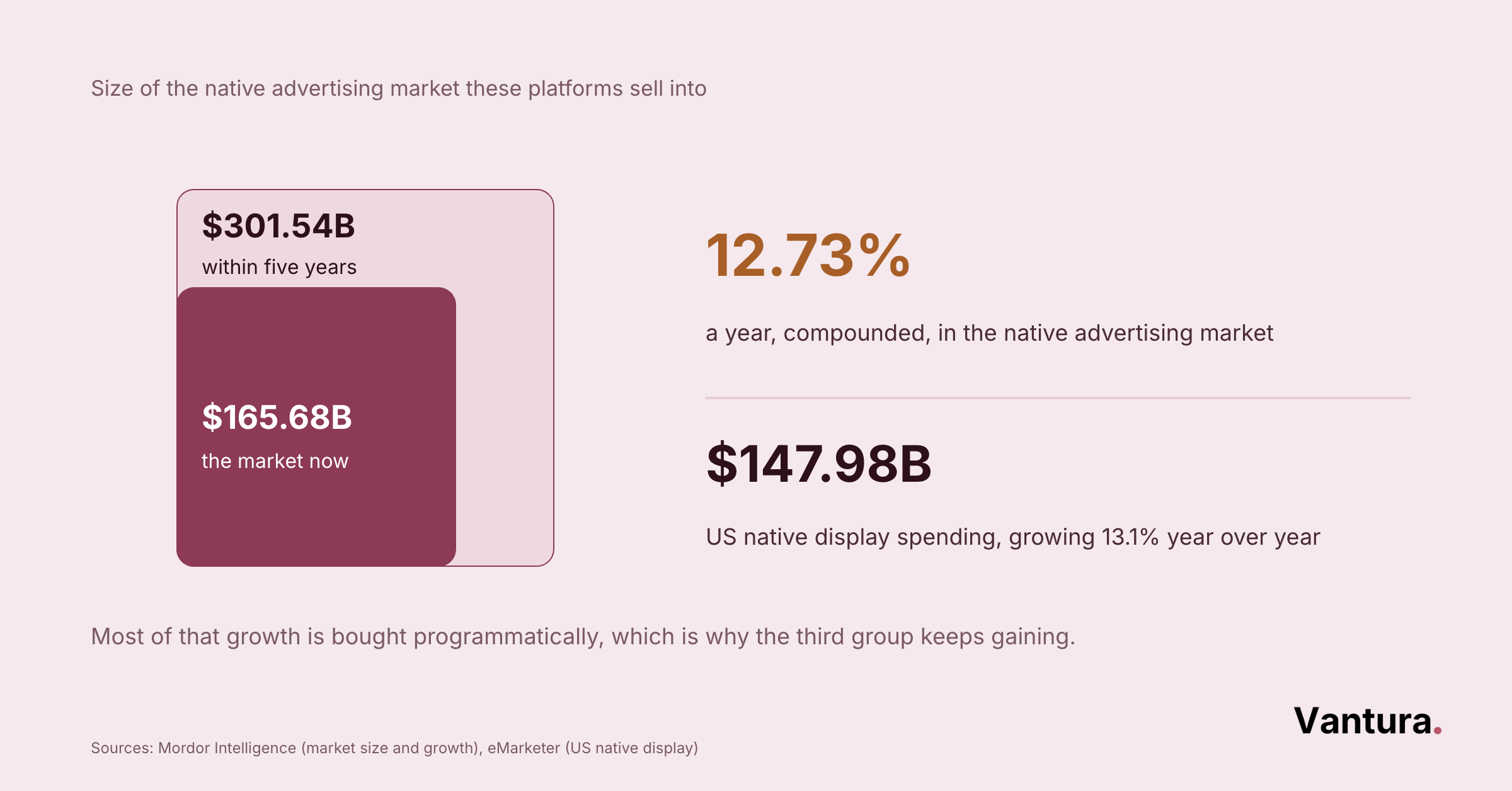
Native ads are good at putting something you wrote in front of people who were not searching for you. They are weaker at closing, which is why the click looks cheap and the sale often does not.
That makes them a reading channel before they are a buying channel. It also makes the content on the far side of the click matter more than the ad itself.
There is real commercial weight in that reading. LinkedIn and Edelman found that 70% of C-suite leaders say a piece of thought leadership has at least occasionally made them question their current supplier. That is a lot of influence for content nobody asked to see.
Consumer accounts behave differently again, and a B2C digital marketing plan usually leans on native for volume rather than persuasion. Across our own native accounts, roughly 20 to 30 percent of first month clicks come from a handful of sites. Most of those get excluded later.
Before you switch: check whether your last native campaign failed on placement or on the landing page. In our experience, six to nine of every ten native accounts we inherit are losing money on the page, not the network. Moving platforms just repeats the loss somewhere new.
Taboola Ads Alternatives Compared Side by Side
| Platform | How You Pay | What It Takes to Start | Where It Fits Best |
|---|---|---|---|
| Taboola Ads (Realize) | CPC, with CPM available for awareness buys | Not published, set by bidding | Broad reach across its own publisher network |
| Outbrain | CPC, plus about 3 percent on card payments | No minimum stated on its billing page | The closest swap for a running Taboola account |
| MGID | CPC, prepaid | $100 minimum deposit, $650 recommended | Small first tests on a tight budget |
| RevContent | CPC, no fixed monthly fee | No minimum spending requirement, per RevContent | High volume reach across many publisher sites |
| Nativo | CPM, with CPC, CPV, CPCV and CPE rate types | Contact sales | Ads that read like the article around them |
| Sharethrough | Entry level CPM | Contact sales | Native, social and video bought in one place |
| AdRoll | Dynamic CPM | No minimum spend amount | Retargeting led ecommerce accounts |
| Zemanta by Outbrain | Programmatic, bought through the DSP | Contact sales | N ative inventory inside a programmatic stack |
| Media.net | CPM | Contact sales | Contextual display and native together |
| Adyoulike | Not published | Contact sales | Semantic placement inside editorial content |
| Yahoo Native | Not published, available on request | Contact sales | Advertisers who want first party audience data |
The Top 10 Best Taboola Ads Alternatives
Here are the ten platforms worth shortlisting, with the fit notes we give our own clients.
1) Outbrain: For the Closest Like for Like Swap

Why Choose Outbrain Over Taboola Ads?
- Same buying model, so nothing new to learn
- Published billing rules you can read before you fund
- Strong behavioral targeting scores on G2
- A second network to test the same creative against
- Owns Zemanta, so there is a programmatic path later
How Outbrain Charges You
Outbrain runs on a cost per click model and charges you for the clicks a campaign receives at the CPC you set. Its own billing documentation works the math through plainly, using a $20 budget at a $0.03 CPC as the example.
There is a processing fee of roughly 3 percent on credit card payments, rising to 4 percent for clients based in Brazil. No minimum budget is stated anywhere on that page. Third party guides disagree wildly on what it really is, so treat any figure you read elsewhere as a guess.
The Pros and Cons of Outbrain
- Pricing and fees are documented publicly
- Behavioral targeting rated 10.0 on G2
- A/B testing rated 9.5 on G2
- Familiar interface for anyone leaving Taboola
- Roughly seven in ten Capterra reviews are positive
- No site exclusion option at campaign setup
- Live campaigns cannot be edited, only recreated
- Reviewers report low conversion rates
- Traffic quality and bounce rate concerns appear often
- Value for money scores lowest of its Capterra metrics
Our Honest Read on Outbrain
Outbrain is the safest first test because almost nothing about your process changes. Just budget for the same exclusion work, since the complaints that push people off Taboola show up here too. Our Taboola ads agency team usually runs both in parallel.
2) MGID: For Advertisers Who Want a Low First Deposit
Why Choose MGID Over Taboola Ads?
- You can open an account for $100
- Prepaid model, so overspend is impossible
- Published deposit rules, unlike most rivals
- Higher average G2 score than Taboola or Outbrain
- Useful for testing creative cheaply before a bigger buy
The Cheapest Way to Start Testing
MGID uses a prepaid cost per click model where you pay for the clicks your campaign receives at the rate you set. The company states a minimum deposit of $100, while recommending at least $650 to get a campaign moving properly.
That gap matters more than it looks. The $100 lets you check the interface, but the $650 is the number that buys enough clicks to tell you anything about performance.
The Pros and Cons of MGID
- Lowest documented entry cost of the ten
- Prepaid billing keeps spend controlled
- Rated 4.1 on G2
- Deposit rules are published, not quoted
- Good sandbox for creative testing
- Ratings vary sharply between review sites
- Reported as restrictive for smaller publishers
- Support responsiveness gets m ixed reviews
- No push notification ad format
- Daily budget minimums are unconfirmed
Where MGID Falls Short
The rating spread is the thing to watch. A 4.1 on G2 sits beside a much weaker Trustpilot score, so treat neither as the truth. It suits small budgets better than enterprise ones.
3) RevContent: For Scale Without a Published Spend Floor

Why Choose RevContent Over Taboola Ads?
- Over 9,000 publisher sites on the network
- Around a billion ad views every day
- No fixed monthly platform fee
- Dedicated account management is included
- Real time reporting rather than delayed exports
The Reach Behind the Network
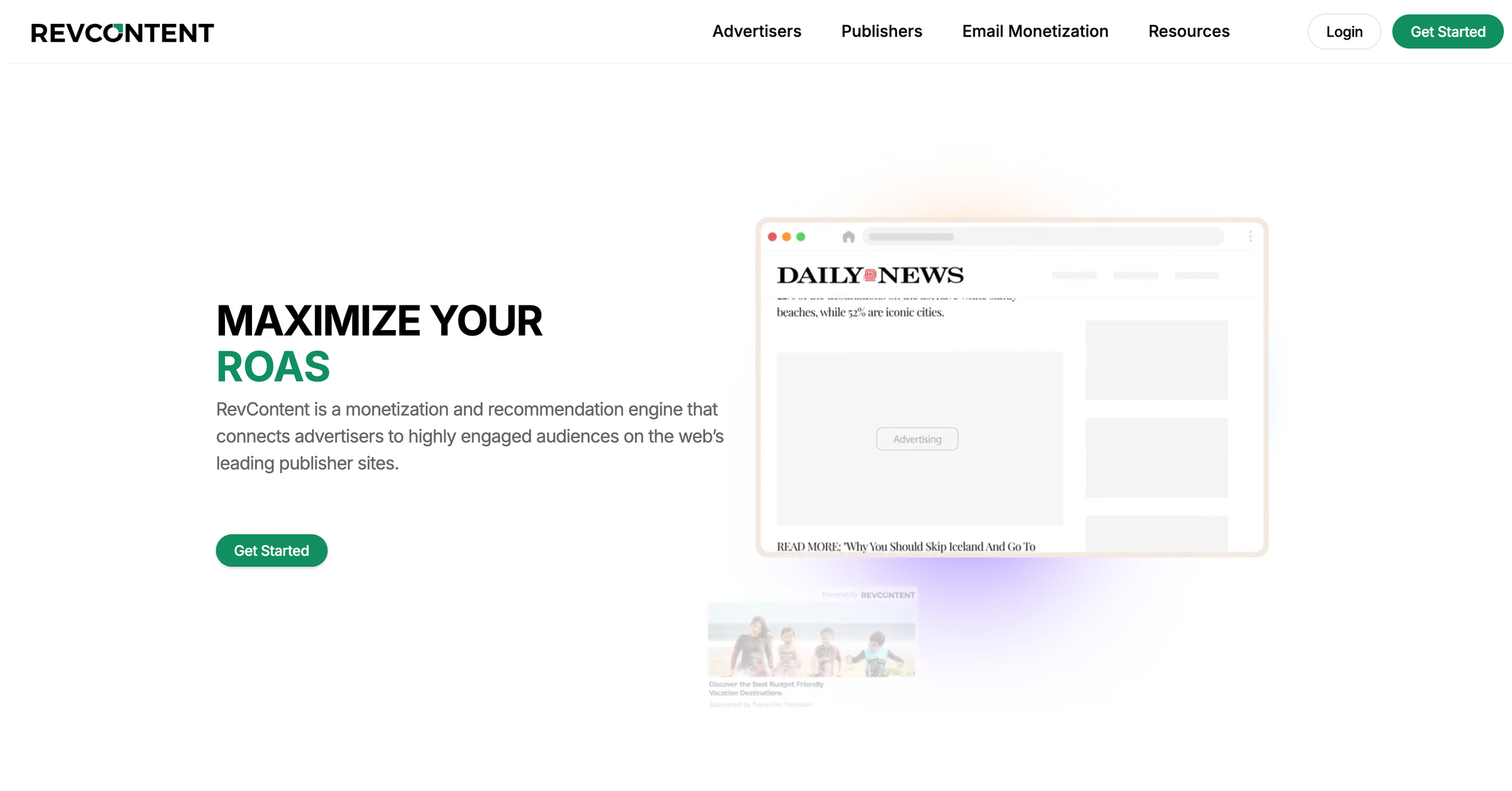
RevContent claims more than 9,000 publisher sites, roughly 1 billion daily ad views and over 130 million daily users. It also markets itself on a quick startup with no minimum spending requirements, which is unusual in this category.
Be careful with that claim. Several third party guides report a practical daily minimum in the low hundreds, which directly contradicts the company’s own wording. Confirm your floor with an account manager before you plan a budget.
The Pros and Cons of RevContent
- Very large publisher footprint
- Granular targeting controls
- Real time reporting dashboard
- Dedicated account management
- No fixed monthly fees to absorb
- The no minimum claim is contradicted elsewhere
- Lowest G2 score of the direct networks here
- Ratings differ hugely across review sites
- Reach volume can hide weak placements
- Little published pricing detail to plan against
Is RevContent Worth Testing?
Yes, if volume is your problem and you have someone watching placement quality daily. It has served our ecommerce digital marketing accounts well for top of funnel reach, and badly whenever nobody owned the exclusion list.
4) Nativo: For Ads That Read Like the Article
Why Choose Nativo Over Taboola Ads?
- Proprietary native article and video formats
- Highest verified G2 score in this list
- A generative AI suite for headline and copy testing
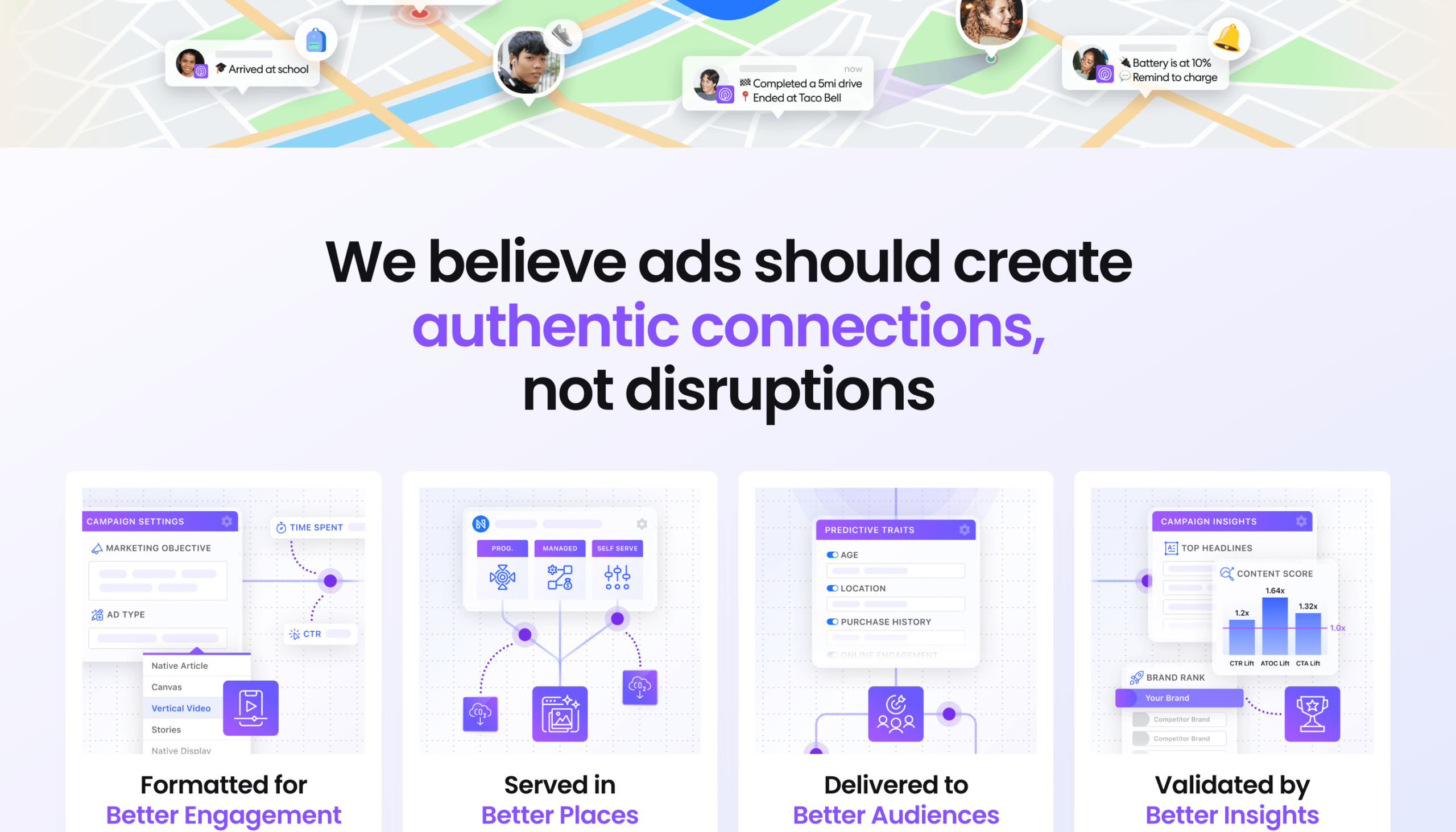
- Mid funnel measurement through Brand Rank
- Publisher first ad server and SSP behind it
Ads That Read Like the Page
Nativo builds native article, display, video, vertical video and stories formats rather than a headline and thumbnail. Its ContentAI suite handles headline and copy optimization, and predictive audiences and contextual targeting sit alongside it.
Integration is broad, covering Prebid, Google Open Bidding, Amazon, oRTB and code on page, with mobile SDKs for iOS and Android. Pricing is not published, and rate types range from CPM to CPC, CPV, CPCV and CPE depending on campaign scope.
The Pros and Cons of Nativo
- Rated 4.4 from 22 verified G2 reviews
- True in article formats, not just teasers
- Wide programmatic integration options
- Built in copy optimization tooling
- Mid funnel measurement built into the product
- No public pricing at all
- Sales conversation required before any test
- Small review sample compared with AdRoll
- Multiple rate types make forecasting harder
- Heavier creative requirement than a teaser network
Who Should Skip Nativo
Skip it if you cannot produce article length creative every month. It rewards teams already writing well, which is why it suits digital marketing for SaaS companies more than promotion led retail accounts.
5) Sharethrough: For Buying Native, Social and Video Together

Why Choose Sharethrough Over Taboola Ads?
- One buy across display, native, social and video
- Rated 4.5 from 88 G2 reviews
- Support quality scored 9.5 on G2
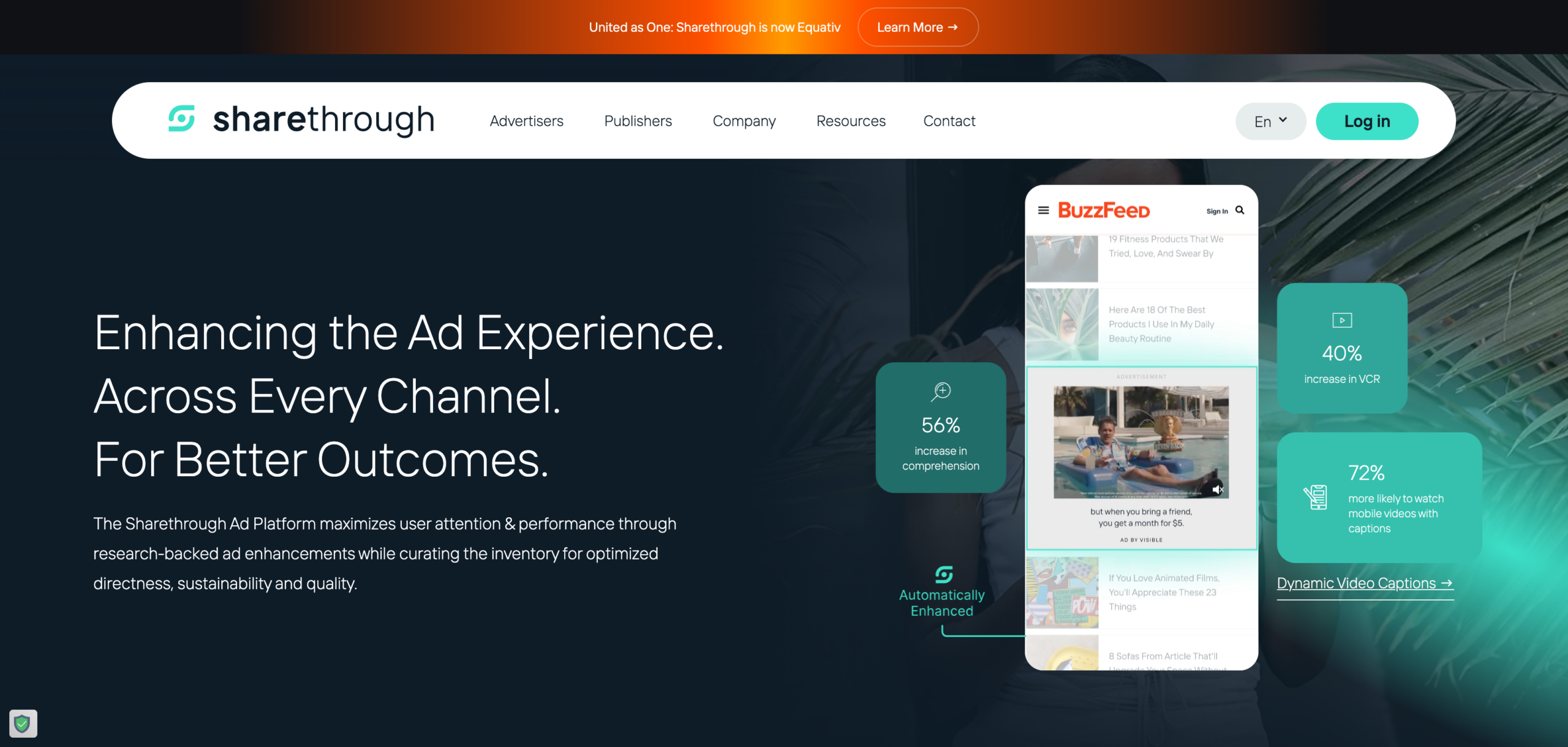
- Dynamic captioned video ads out of the box
- QR codes supported for connected TV
One Buy Across Native and Video
Sharethrough covers desktop display, mobile display, native, social and desktop video from an entry level CPM. Nearly 44 percent of its G2 reviewers are mid market, which tells you who the product is built around.
Ease of use scores 8.9 and support quality 9.5, both strong for this category. Exact dollar figures are not public, so the CPM you get depends on the conversation.
The Pros and Cons of Sharethrough
- Highest support score in this comparison
- Largest verified review sample after AdRoll
- Five channels under one platform
- Captioned video handled automatically
- Clear mid market positioning
- CPM buying, so clicks are not guaranteed
- No published pricing to plan against
- Less pure native depth t han Nativo
- Video creative adds production cost
- Smaller advertiser network than RevContent
The Catch With Sharethrough
CPM buying changes how you judge success, because a cheap impression is not a cheap visitor. Teams already running Snapchat ads adapt fastest, since they think in impressions already.
6) AdRoll: For Retargeting Led Accounts

Why Choose AdRoll Over Taboola Ads?
- No minimum spend amount at all
- Retargeting is the core product, not an add on
- Account based packages for B2B teams
- The largest review sample in this list
- Managed service available at qualifying spend

Retargeting Without a Spend Floor
AdRoll prices dynamically on a CPM basis and states plainly that it has no minimum spend amount. Plans split into Self Service, Managed Services and account based packages, though no dollar tiers are published for any of them.
It carries 4.1 across 776 G2 reviews, easily the biggest sample here. Pricing sentiment inside those reviews runs mixed to negative, and there is no free plan or free trial.
The Pros and Cons of AdRoll
- Genuinely no spend minimum
- Huge verified review base
- Cross channel attribution available
- Four account based marketing packages
- Free ad credits on the annual commitment tier
- Pricing sentiment in reviews runs mixed to negative
- No free plan and no free trial
- Attribution and social ads are paid add ons
- Not a publisher cont ent feed network
- Managed help needs qualifying spend
When AdRoll Makes Sense
Choose AdRoll when you have traffic to re engage rather than an audience to discover. Its account based packages make it the obvious pick for B2B digital marketing teams chasing named accounts.
7) Teads by Outbrain: For Programmatic Native Buying

Why Choose Teads Over Taboola Ads?
- One DSP reaching 30 or more native networks
- Programmatic controls rather than a single network panel
- Sits inside the Outbrain family
- Useful when native is one line of a bigger plan
- Reduces the number of platform logins to manage
Native Buying Inside a DSP
Zemanta is a programmatic native demand side platform, acquired by Outbrain. It reaches native inventory on Outbrain and more than 30 other native networks.
Zemanta markets itself on 35 percent lower CPCs and more than double the click through rate against buying native directly. That is the vendor’s own claim, not an independent finding.
Reporting is the trade off. On G2’s own comparison, Zemanta scores 7.3 on reporting and analytics against Outbrain’s 9.0, and 6.5 on behavioral targeting against Outbrain’s 10.0.
The Pros and Cons of Teads
- One buying point across many native networks
- Programmatic controls and bid strategies
- Backed by an established parent company
- Fits neatly into an existing media stack
- Removes duplicate work across networks
- Weaker reporting than Outbrain’s own platform
- Weaker behavioral targeting scores
- No published pricing anywhere
- Assumes programmatic knowledge on your team
- Performance claims come from the vendor
Our Verdict on Teads
It is the right answer only if native is one channel inside a larger programmatic plan. That usually means an in house trading desk, which is why we see it most on large enterprise accounts.
8) Media.net: For Contextual Display and Native Together
Why Choose Media.net Over Taboola Ads?
- Contextual targeting rather than behavioral only
- Desktop display, mobile display and native in one place
- Useful where cookie signals are weak
- Long standing advertiser network
- CPM buying suits awareness goals
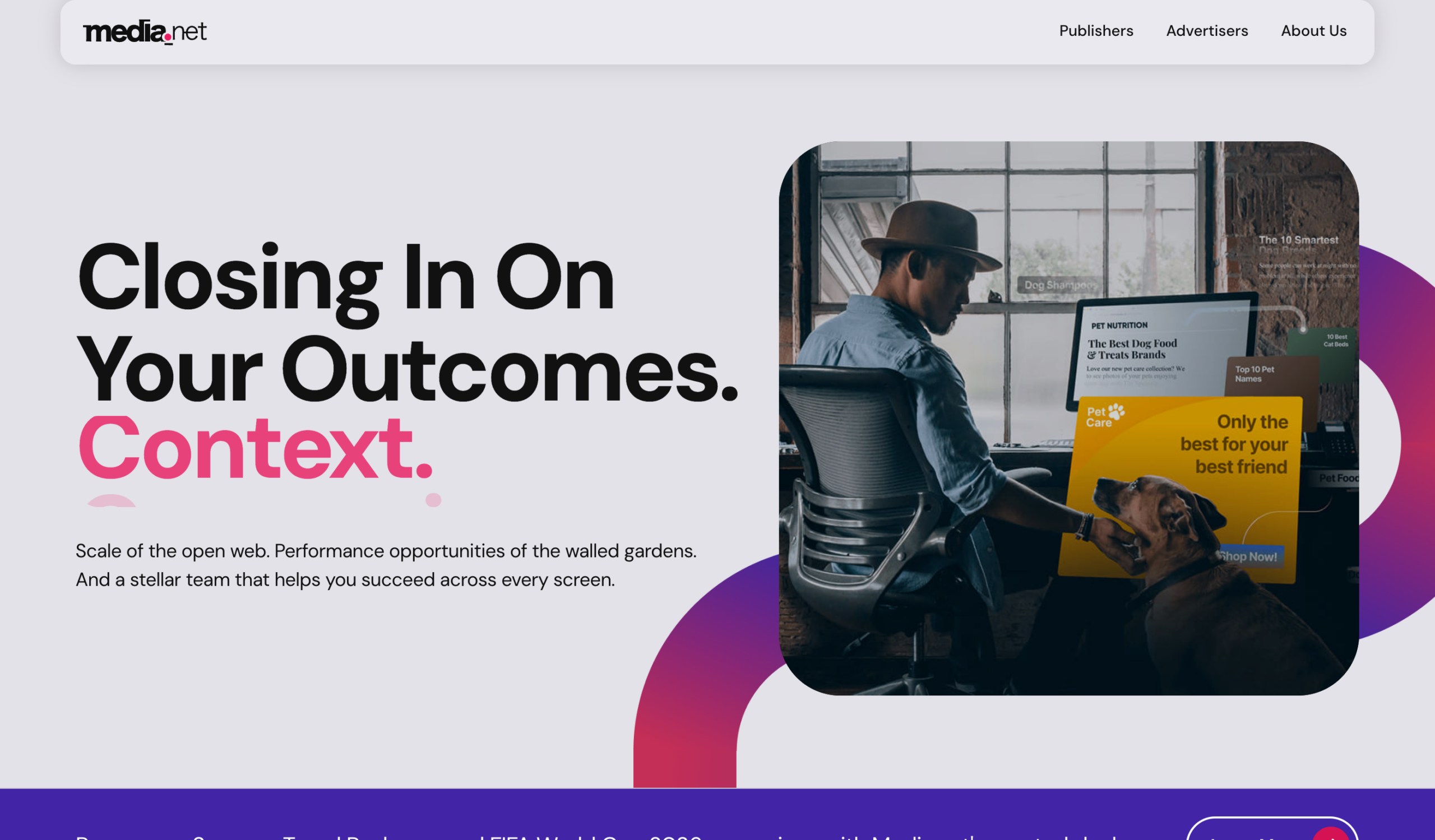
Contextual Placement at Scale
Media.net positions itself as a contextual advertising platform spanning search, display, mobile, native, local and video. It describes itself as one of the largest pools of advertisers, its own claim rather than an independently confirmed figure.
Advertiser pricing is not published and runs through sales. Its G2 score sits at 4.0, but from only 17 reviews, so treat it as a small sample rather than a settled verdict.
The Pros and Cons of Media.net
- Contextual approach ages well as cookies fade
- Three channels under one contract
- Established advertiser demand
- Straightforward CPM buying
- Works alongside a native network rather than replacing it
- Only 17 reviews behind the G2 score
- No public advertiser pricing
- Scale claims are self reported
- Less native specific tooling than Nativo
- Sales cycle before any test spend
What Holds Media.net Back
Thin public evidence is the honest problem here. It works best as one lane in a bigger digital marketing plan, not as your only native buy.
9) Adyoulike: For Semantic In Feed Placement
Why Choose Adyoulike Over Taboola Ads?
- Semantic reading of the page, not just the reader
- Sentiment recognition inside editorial content
- In feed formats built for editorial sites
- Reportedly a low funding threshold to begin
- A different placement logic to test against Taboola
Semantic Targeting Explained
Adyoulike is an in feed native platform that combines AI with semantic targeting. It uses keyword and sentiment recognition to read the editorial content around a slot.
In practice, the article decides the placement, not the browsing history. Some sources suggest a $100 minimum via PayPal to launch a first campaign, but we could not confirm that on an official page.
Its G2 average of 4.3 rests on only two seller reviews, too small a sample to mean much.
The Pros and Cons of Adyoulike
- Contextual logic survives cookie loss
- Sentiment matching protects brand safety
- Purpose built in feed formats
- Reported low barrier to a first test
- Genuinely different targeting to compare against
- Almost no verified review evidence
- Pricing is not officially published
- Smaller profile than the main networks
- The funding minimum is third party sourced
- Harder to benchmark against rivals
Should You Shortlist Adyoulike?
Only as a fourth or fifth test, once the bigger networks have given you a baseline. The evidence base is too thin to justify moving a live budget across on its own.
10) Yahoo Native: For First Party Audience Data

Why Choose Yahoo Native Over Taboola Ads?
- First party data from Yahoo Mail and Finance
- ConnectID handles targeting without cookies
- Owned properties rather than a rented network
- Useful for audiences that are hard to reach elsewhere
- Sits inside a full DSP
First Party Data as the Draw
Yahoo Native pulls first party signals from Yahoo Mail, Finance and its other properties. It uses ConnectID for targeting in a cookieless setting, and that combination is the whole reason to look at it.
Pricing is available on request only, and no minimum spend is confirmed on any official page. We also found no verified G2 or Capterra score for the product, so there is no independent rating to lean on.
The Pros and Cons of Yahoo Native
- Owned first party data at real scale
- Cookieless targeting through ConnectID
- Finance audiences are hard to buy elsewhere
- Full DSP capability behind the native buy
- Inventory quality is known rather than mixed
- No published pricing whatsoever
- No verified review rating available
- Minimum spend is unconfirmed
- Sales led onboarding takes time
- Narrower publisher reach than open networks
The Realistic Case for Yahoo Native
Take the sales call if your audience lives in finance or mail, and skip it otherwise. Without published pricing or reviews, the only way to size it is to ask.
Shortlist shortcut: if you want a straight swap, start with Outbrain. If you want the cheapest honest test, start with MGID. If retargeting is the actual job, start with AdRoll. Everything else on this list earns its place only after one of those three has given you a baseline.
How Do You Choose the Right Taboola Ads Alternative?
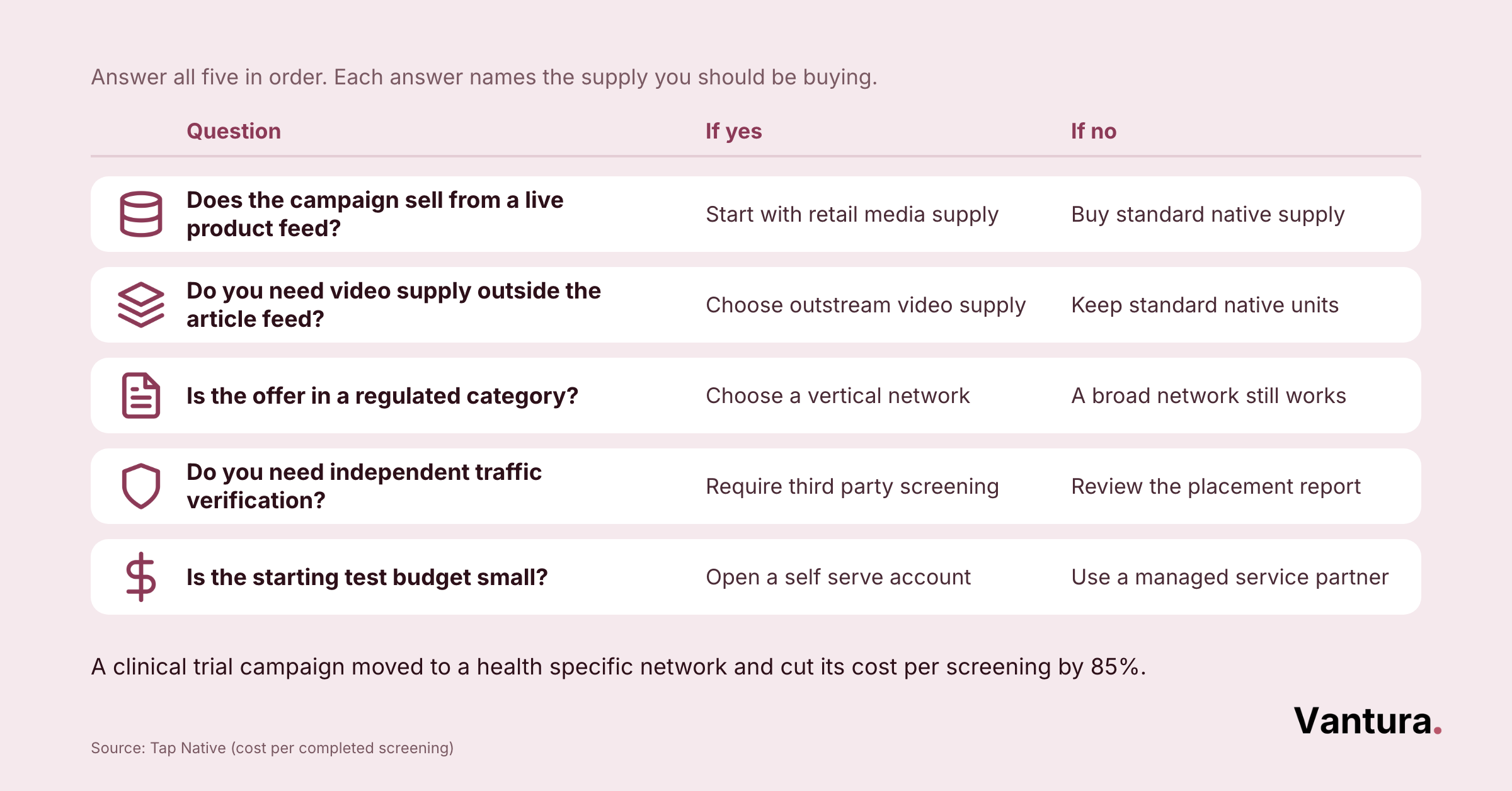
You choose by answering five questions about your own account before you look at a single feature list. Most bad switches happen because someone compared platforms instead of comparing them to their own constraints.
Work through these in order. A digital marketing audit answers most of them from data you already have.
Answer all five honestly and the shortlist usually shrinks to two names.
What Does Switching Native Ad Platforms Really Cost?
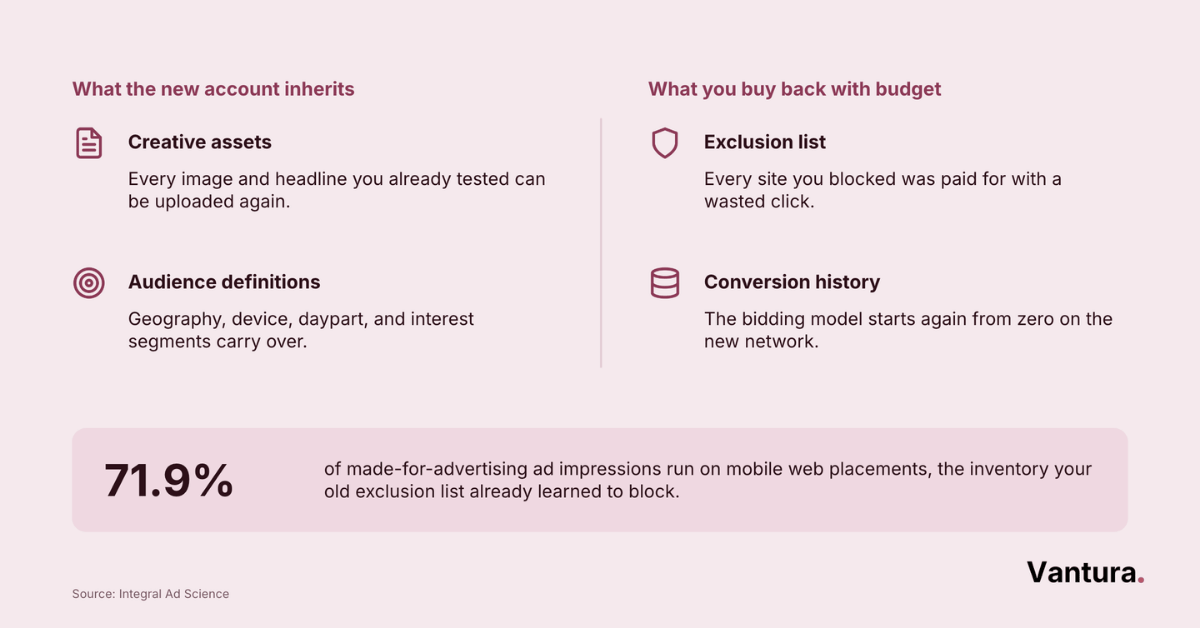
The invoice is the small part. The real cost is the learning you throw away and the setup work nobody puts in the plan.
We see the same two buckets on almost every migration, and a good outsourcing brief prices both of them up front.
The Data You Leave Behind
Every native account accumulates knowledge that does not travel. Your bid history, your blocked domains and your conversion patterns all belong to the platform you are leaving.
That is why month one on a new network almost always looks worse than month twelve on the old one. It is not a fair comparison, and treating it as one leads teams to switch back too early.
Exclusion Lists
A mature exclusion list is months of small decisions, and none of it exports cleanly to a rival network. Across our accounts, roughly 20 to 30 percent of a new platform’s first month budget goes to placements the old list would have blocked.
You can shorten that by seeding the new account with the domains you already know are bad. It will not eliminate it, because inventory differs between networks.
Conversion History
Optimization models need conversions before they help you, and the new one starts empty. Budget for a relearning window of two to three weeks before you judge anything.
The Work Nobody Budgets For
The second bucket is plain labor. Creative specs differ, tracking parameters differ, and someone has to redo both.
We used to quote migrations as a two day job. After enough of them we now quote a fortnight, because the tracking always takes longer than the ads.
Creative Rebuilds
Teaser networks want headlines and thumbnails. Nativo wants article length copy, and Sharethrough wants captioned video. Moving between those groups means new production, not new uploads.
Plan the creative before you plan the launch date. The platform is ready long before the assets are.
Tracking Setup
New pixels, new parameters and new conversion definitions all have to be checked against real traffic. Skip that and you will spend a month arguing about numbers that were never comparable.
How Do You Test a Taboola Ads Alternative Safely?
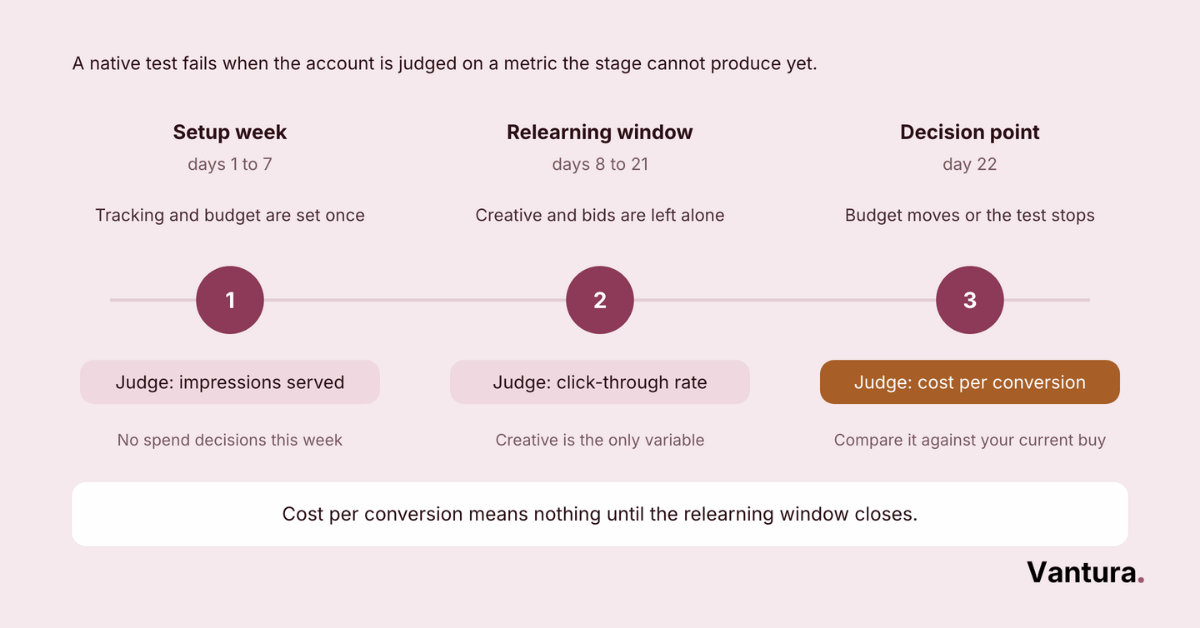
You test safely by fixing the rules of the test before you fund it. Decide the budget, the window and the single metric that settles the argument, then leave them alone.
Set the Test Up Before You Fund It
Most native tests fail on governance, not on media. Write the rules down while nobody is under pressure, because the moment spend starts everyone becomes an optimist.
A short brief covers it, and it is the same discipline we bring to any digital marketing consulting engagement.
- One test budget, ring fenced from the main account
- One decision metric, agreed in writing
- A named owner for the weekly exclusion review
- A fixed end date, not an open ended trial
- The same landing pages as the control campaign
Worth doing: agree the kill criteria in the same document as the launch criteria. A test with no defined failure point quietly becomes a permanent channel that nobody has ever justified.
Should You Move Everything or Run Both?
Running both costs more in the short term and tells you far more. A clean switch saves money but leaves you guessing about what changed.
Whichever route you take, the creative has to stay consistent or the comparison is worthless. Marq found that 85% of organizations have brand guidelines while only 30% enforce them consistently. That gap is exactly what wrecks a two platform test.
- Cheapest route, no duplicated spend
- Full budget behind one learning phase
- Simpler reporting for the finance team
- Riskier, since you lose the safety net
- Best when the old account is already failing
- A live control to measure against
- Lower risk to pipeline while you learn
- Costs more across the test window
- Needs strict creative parity to stay honest
- Best when the old account still performs
Pick one and commit, because switching approach halfway through invalidates both sets of numbers.
Three Numbers That Tell You It Worked
Cheap clicks are the easiest thing to buy and the least useful thing to celebrate. These three numbers, read together, are what we report on.
#1 Cost per qualified lead
Not cost per click, and not cost per form fill. Qualified means someone your sales team would actually call back.
#2 Share of spend on excluded sites
Track how much budget went to placements you later blocked. If that share is not falling week on week, nobody is doing the exclusion work.
#3 Time on the landing page
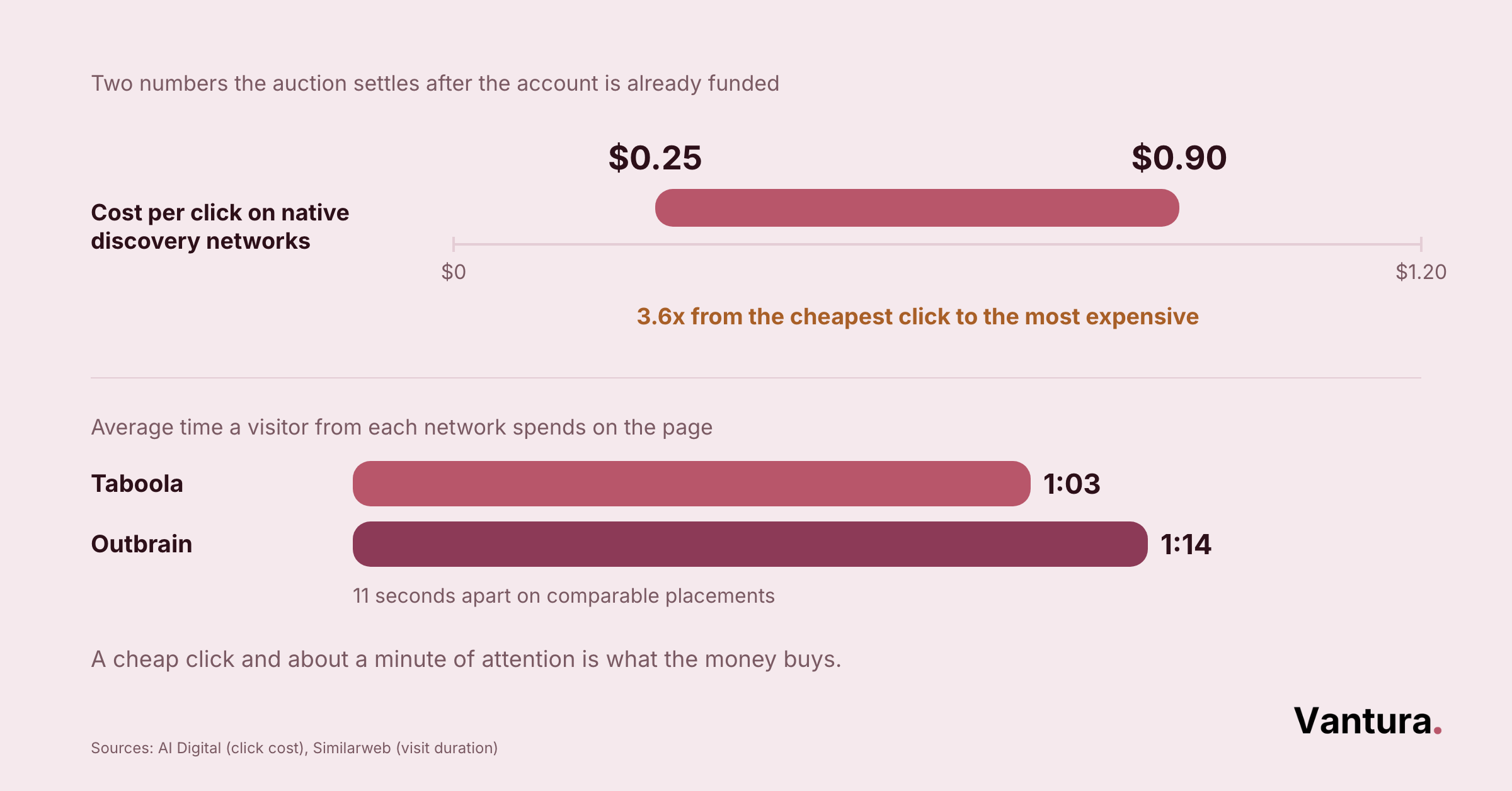
Native traffic that bounces in seconds is a placement problem, not a page problem. This is the earliest honest signal you get.
Taboola Ads Alternatives FAQ
If your question is not covered here, get in touch and we will answer it against your own account data rather than a generic benchmark.
Disclaimer: This article is for general information only. Vantura Marketing is an independent agency and no vendor named here holds a stake in our business. Platform features, pricing and review scores change without notice, so verify current terms directly with each provider before committing spend. Nothing above constitutes financial, legal or professional advice.