Construction Marketing Funnel: Stages & Tactics (2026)

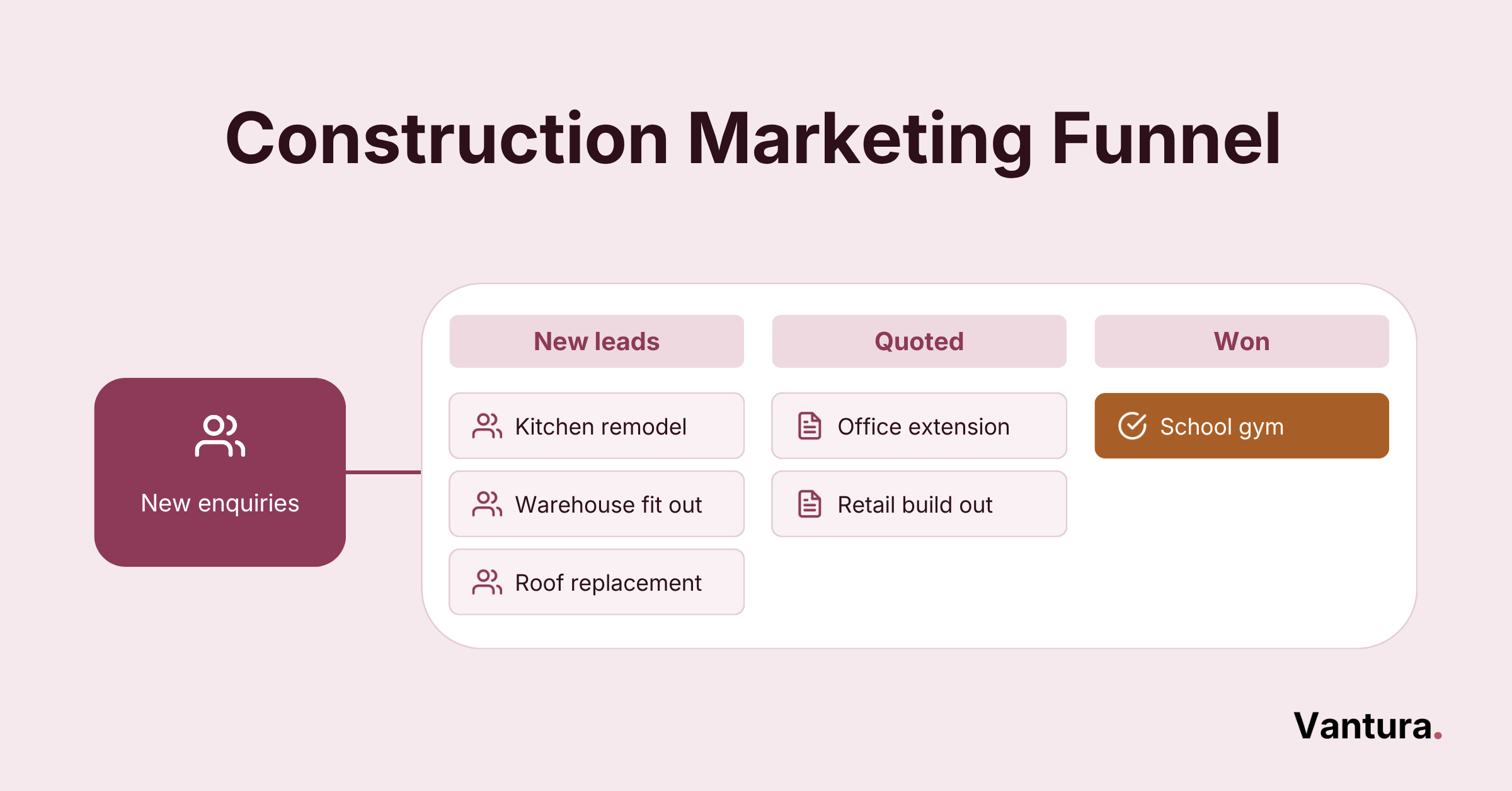
A construction marketing funnel is the path a lead takes from first noticing your firm to signing a project contract, split into awareness, consideration, and decision stages. It maps how a homeowner, developer, or general contractor moves from a stray search to a booked job. Get the stages right and your pipeline stops swinging between feast and famine.
Why builders trust our funnel advice:
Our 28 specialists have run 180+ campaigns across 14 industries, so construction pipelines are familiar ground. We’ve designed and tested 500+ landing pages, which quickly shows which stages actually convert. Every tactic here comes from that hands-on work.
Get help mapping your funnel:
Want a construction marketing funnel that keeps itself full? We can map your stages, seal the leaks, and wire up the tracking. Get in touch to see how our digital marketing strategy work could fit your firm.
What Is a Construction Marketing Funnel?
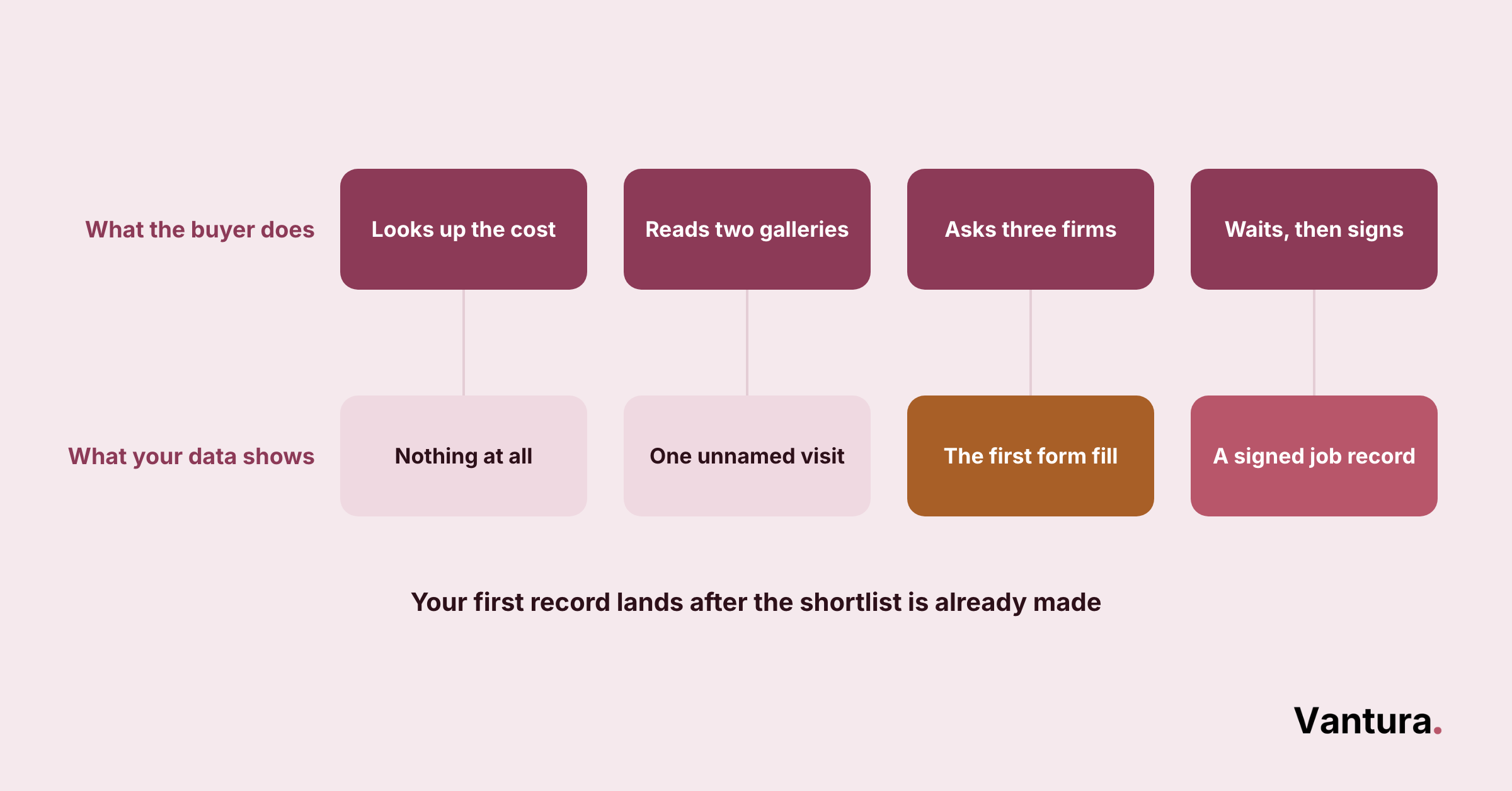
A construction marketing funnel is a simple model for buyer attention. It sorts every lead into a stage, then matches your message to where they stand.
Think of it as a map, not a straight line. At the top people barely know you exist, and by the bottom they’re ready to request a quote.
Construction sells trust before it sells work. That’s why a B2B marketing approach fits most contractors, developers, and trade firms.
Each stage needs its own content, offer, and follow-up. Skip one and leads stall or slip away before they ever call.
Worth knowing: A funnel is not a one-way trip. Most construction buyers loop back, compare bids, and return weeks later, so plan for repeat visits rather than one clean pass.
What Are the Stages of a Construction Marketing Funnel?
A construction marketing funnel runs in three core stages. The top builds awareness, the middle earns trust, and the bottom turns interest into a signed job.
| Funnel stage | Buyer mindset | Your main goal |
|---|---|---|
| Top of funnel | Just noticing a problem | Get found and start trust |
| Middle of funnel | Comparing a few firms | Prove skill and fit |
| Bottom of funnel | Ready to hire | Win the bid |
Buyers want proof before they commit, not just a pitch. More than 60% of business buyers now use some kind of trial or hands-on evaluation before choosing a vendor, according to Forrester, and a free on-site estimate or a sample walkthrough serves the same role in construction.
Bigger commercial builders run longer, messier funnels. Our industrial marketing work shows those cycles can span many months.
Which Tactics Work at Each Construction Funnel Stage?
Each stage needs a different play. The top gets you found, the middle builds trust, and the bottom closes the job.
Top of the Funnel: Getting Found
Top of funnel is about reach. You want strangers to find you when they search for a fix or a builder nearby.
Local search and a strong Google Business Profile do the heavy lifting here. Photo-led channels help too, since project photos sell construction better than words.
Visual channels suit remodelers and home builders well. Running Pinterest ad campaigns can put finished projects in front of planners early.
- Local search and map listings
- Helpful how-to guides and short videos
- Social posts of finished projects
Search keeps working long after you post it. A ranked page or map listing keeps pulling in calls without repeat spend.
Social moves faster and feels more personal. A short video of a crew mid-project often earns more shares than a polished ad.
Middle of the Funnel: Building Trust
The middle is where buyers compare. They’ve seen a few firms and now want proof you can deliver.
Case studies, spec sheets, and email nurture carry this stage. A weak middle is why warm leads go cold and pick a competitor.
Proof answers the buyer’s unspoken doubt. Photos, licenses, and past client names do more than any pitch.
Nurture keeps you visible while buyers compare bids. A short, useful email beats a sales-heavy one almost every time.
Bottom of the Funnel: Winning the Bid
Bottom of funnel is the close. The lead wants a quote, a timeline, and a reason to trust the number.
Fast replies matter most here. In our experience, following up within an hour lifts booked estimates by 20 to 30 percent.
Speed wins bids on its own. A quote sent same day often beats a cheaper one that arrives a week late.
Clarity closes the deal. A quote with clear line items and a firm timeline reads as more trustworthy than a vague estimate.
How Do You Map Construction Content to Funnel Stages?
Map content by matching each piece to a buyer mindset. Awareness content answers early questions, consideration content compares options, and decision content removes the last doubt.
| Funnel stage | Best content type | Construction example |
|---|---|---|
| Awareness | Educational | A “how to plan a home addition” guide |
| Consideration | Proof | A before and after project gallery |
| Decision | Conversion | A free on-site estimate offer |
One gap trips up most firms. They pour effort into awareness content, then offer nothing for the middle, so trust never builds.
A second set of eyes helps you spot those holes. Our marketing consulting help often starts with a quick content check.
Quick tip: Reuse one big project three ways. Turn it into an awareness blog, a consideration gallery, and a decision-stage reference call, and you cover all three stages from a single job.
Which Metrics Matter at Each Construction Funnel Stage?
Track one or two numbers per stage, not everything at once. Awareness watches traffic, consideration watches leads, and decision watches jobs won.
| Funnel stage | Key metric | What good looks like |
|---|---|---|
| Awareness | Search visits | Steady month over month growth |
| Consideration | Leads and reply rate | More qualified inquiries |
| Decision | Quote to win rate | A rising share of bids won |
Bigger firms need cleaner reporting. Larger contractors we help through enterprise marketing track these numbers in one shared view.
Dashboards That Keep It Simple
A good dashboard shows all three stages on one screen. That way you can spot trouble before the month even ends.
Keep it to a handful of tiles. A cluttered dashboard hides the drop-off point you most need to fix.
Where Do Construction Marketing Funnels Leak?
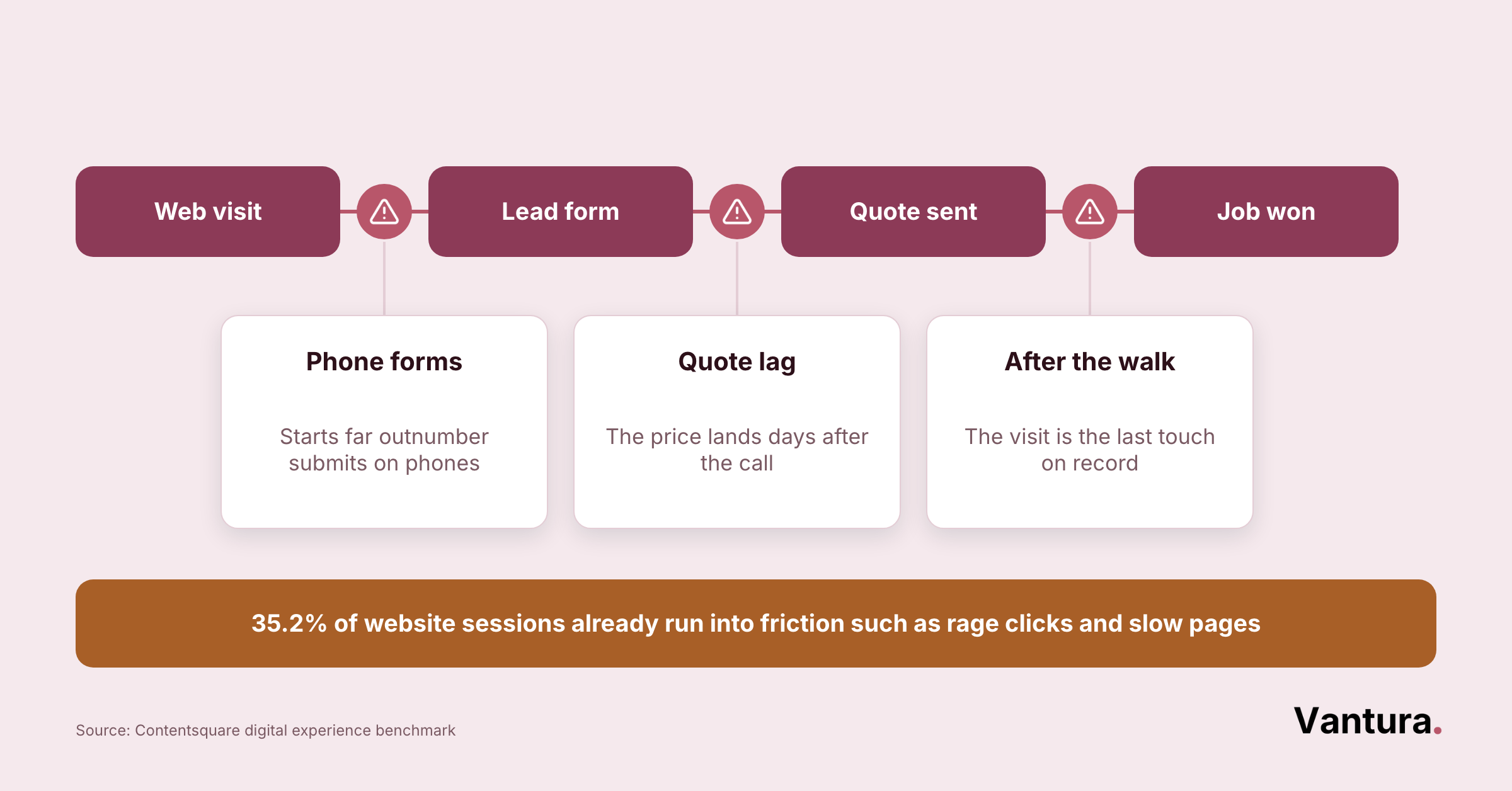
Funnels leak wherever one stage hands off to the next. Slow quotes, weak middle content, and no follow-up cause the biggest drops.
Most leaks hide in plain sight. A form that breaks on mobile can quietly sink a whole campaign.
A structured review catches these fast. A marketing audit checks each stage for the exact point where leads slip away.
- Contact forms that fail on phones
- Quotes that take days to send
- No email after a site visit
Keep in mind: One fixed leak beats ten new tactics. Plugging a single weak handoff often lifts booked jobs more than doubling your ad spend at the top.
How Do You Automate a Construction Marketing Funnel?
Automate the repeat work, not the relationship. Let tools send follow-ups and tag leads by stage while your team handles the calls.
Email Sequences by Stage
Email does the quiet nurturing. A short sequence keeps you present while a buyer weighs bids.
- Awareness, a welcome note and a helpful guide
- Consideration, a project story and a quick FAQ
- Decision, a clear estimate offer and a review link
Automation runs best with a hand. Many firms pass the setup to an outsourced marketing team rather than stretch a busy office manager.
Construction Sales Funnel vs Marketing Funnel, and B2B vs B2C
These two comparisons confuse a lot of teams. Sorting them out makes the whole funnel easier to plan.
Sales Funnel vs Marketing Funnel
The marketing funnel wins attention and trust. The sales funnel takes over once a lead is ready to talk numbers.
In construction the two overlap a lot. Firms that also build for developers often carry a lead for months before either funnel closes it out.
B2B vs B2C in Construction
B2B funnels serve builders, developers, and property managers. B2C funnels serve homeowners planning a project.
The split changes your tone and speed. A homeowner wants a friendly B2C marketing approach, while a developer wants specs and references.
- Emotional, photo-led messaging
- Faster decisions, smaller budgets
- Reviews and referrals drive trust
- Spec-led, proof-heavy messaging
- Slow decisions, larger budgets
- Case studies and bids drive trust
How Do You Retarget and Optimize a Construction Funnel?
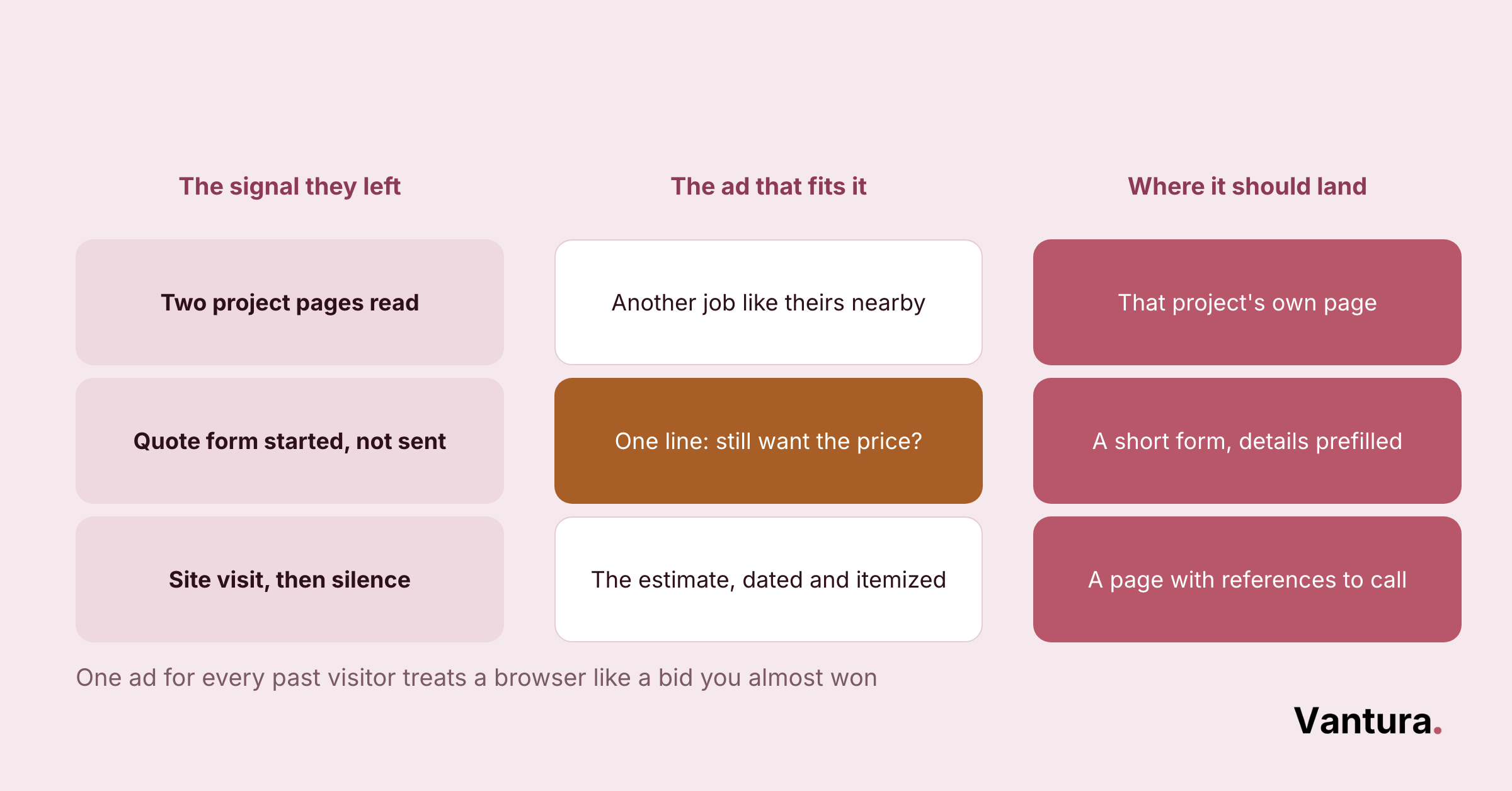
Retarget the people who already showed interest, then fix your weakest stage. Show past visitors your best work, and test one change at a time.
Retargeting keeps warm leads close. A gentle reminder ad after a site visit often brings back buyers who simply got busy.
Priority #1: Speed to Reply
Nothing lifts conversions like a quick reply. Aim to answer new leads within the hour, every time.
Priority #2: Proof on Every Page
Add reviews, photos, and license badges near each form. Trust marks calm the nerves right before someone hits send.
Priority #3: A Clear Next Step
Give every page one obvious action. A page with five choices usually gets none of them clicked.
Budgets shape what you can test. Smaller crews we support with small business marketing start with one fix and build from wins.
Construction Marketing Funnel Tools
You don’t need a huge stack to run a funnel. A few connected tools can cover the whole journey.
Pick tools that talk to each other. We stay independent, so our picks follow what fits your firm, not any vendor deal.
Firms that also build homes for buyers often lean on the same stack their real estate marketing partners use, since both sides track a long, relationship-driven sale.
- A CRM to track leads by stage, from big names like HubSpot to trade-specific tools such as Buildertrend
- An email platform for nurture sequences
- A landing page builder for offers and quotes
- A call tracker to catch phone leads
Bottom line: Start with a CRM and one email tool. You can add fancier software later, once the basic funnel is catching and sorting leads on its own.
How Do You Build a Construction Marketing Funnel From Scratch?
Build it stage by stage, not all at once. Start with one strong offer and a simple page, add tracking, then layer in traffic and follow-up.
The six-step build
- Pick one clear offer, like a free on-site estimate
- Build a simple landing page around that offer
- Add a short form and a call tracker
- Set up a three-email follow-up sequence
- Turn on local search and one paid channel
- Watch the numbers and fix the weakest stage
What Does Full-Funnel Construction Marketing Look Like?
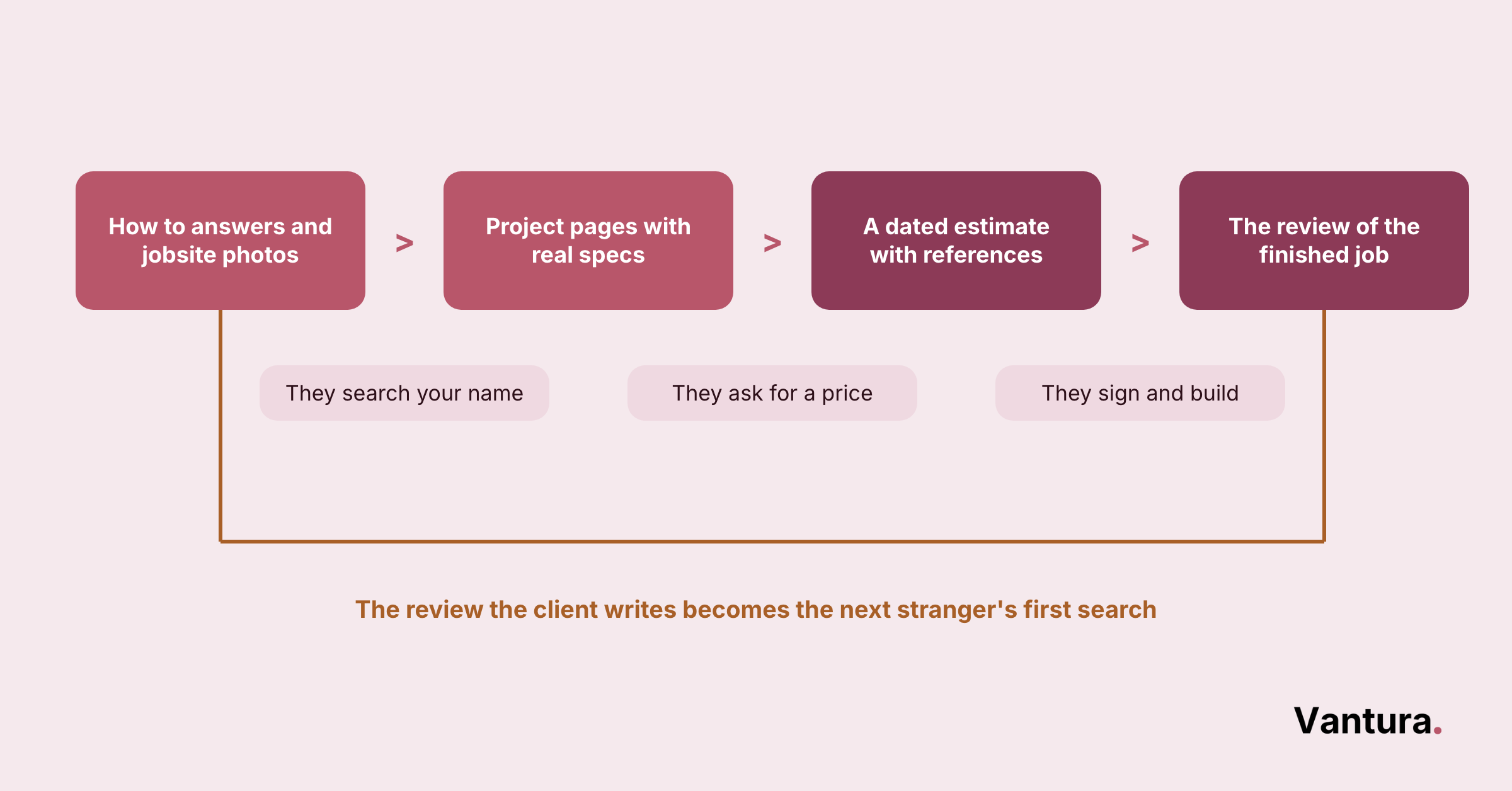
Full-funnel marketing runs all three stages at once, each feeding the next. Awareness fills the top, trust content warms the middle, and strong offers close the bottom.
The magic is in the handoffs. When every stage passes leads cleanly, growth feels steady instead of lucky.
Tying the channels together takes planning. Our integrated marketing work keeps search, social, and email pulling in one direction.
Worth remembering: Full-funnel does not mean full budget. Even a small firm can cover every stage by doing one simple thing well at each step.
Construction Marketing Funnel Benchmarks and Conversion Rates
Benchmarks give you a rough target, not a promise. Every market and offer shifts the numbers.
Across our construction projects, landing pages tend to turn visitors into leads at about 4 to 6 percent. Strong local pages can push higher.
| Funnel step | Rough conversion | What moves it |
|---|---|---|
| Visitor to lead | About 4 to 6 percent | Clear offer and fast pages |
| Lead to quote | Around half | Quick, personal replies |
| Quote to job | About 25 to 35 percent | Trust and follow-up speed |
Treat these as starting lines, not ceilings. Beat your own last quarter and the funnel is working.
Disclaimer: This content is for general information only and is not professional marketing, legal, or financial advice. Your own numbers will depend on your market, budget, and how well the plan gets executed, so treat every figure above as a working estimate, not a promise.